
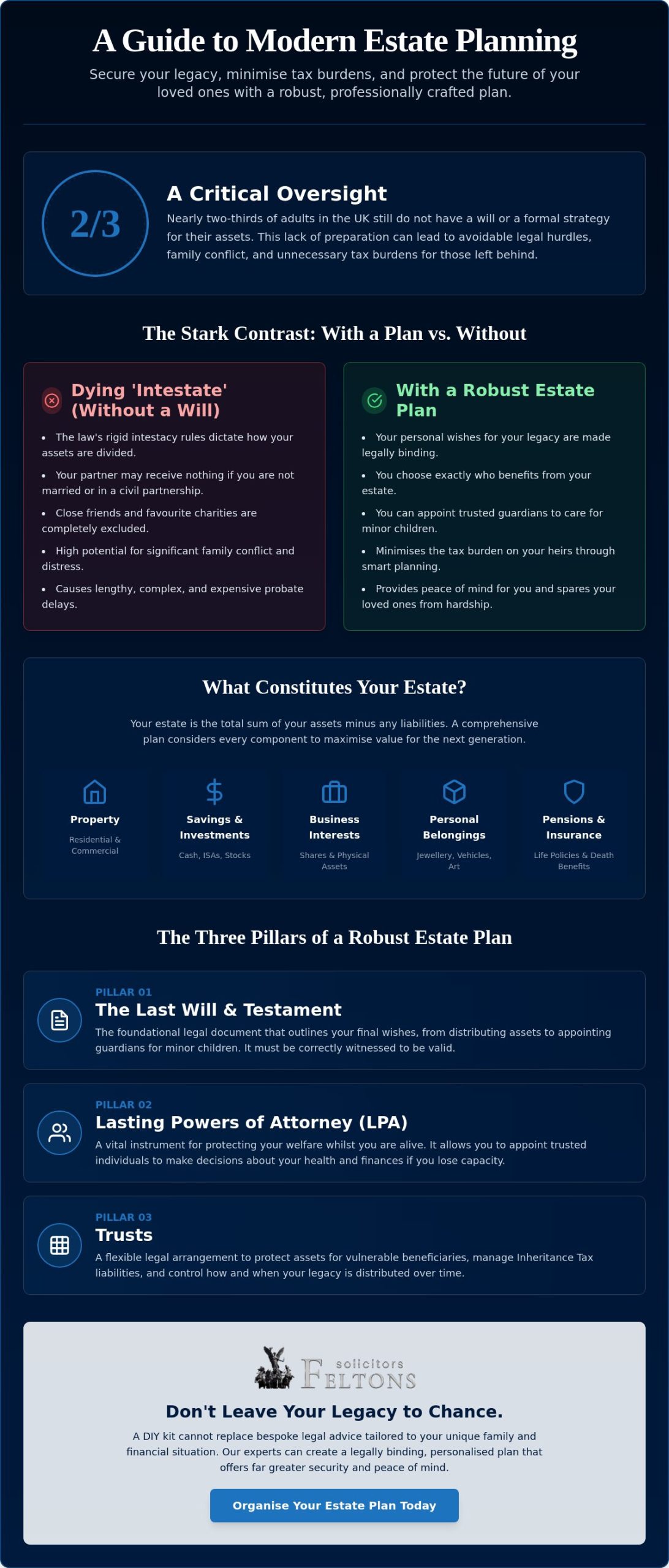
Nearly two-thirds of adults in the UK still do not have a will or a formal strategy for their assets. It’s a striking figure, especially when you consider that a lack of preparation often leaves families facing avoidable legal hurdles and unnecessary tax burdens. You likely want to ensure your hard-earned legacy reaches the right people without causing friction or confusion. Effective estate planning is about more than just drafting a document; it’s a process of securing your family’s future and ensuring your wishes remain legally binding.
We understand that the complexity of Inheritance Tax (IHT) rules and the anxiety of losing control can feel daunting. This guide provides a clear roadmap to help you organise your assets, minimise tax liabilities, and protect your loved ones. We’ll examine the 2026 landscape, including the nuances of nil-rate bands and the emerging role of digital executors. By the end, you’ll have the clarity needed to build a plan that offers both modern efficiency and traditional professional integrity.
Key Takeaways
- Understand why estate planning is a vital legal strategy for everyone, moving beyond a simple Will to provide a comprehensive roadmap for your assets.
- Identify the three essential pillars, consisting of Wills, Lasting Powers of Attorney, and Trusts, which create a robust shield for your financial and personal interests.
- Learn how to navigate complex Inheritance Tax rules and nil-rate bands to protect your family home and minimise the tax burden for your heirs.
- Discover how to adapt your strategy for modern life, including the management of digital assets and the nuances of blended family arrangements.
- Recognise the value of bespoke legal advice in creating a legally binding, personalised plan that offers far greater security than standard DIY kits.
Understanding Estate Planning: More than Just a Will
Estate planning is often mistakenly viewed as a task reserved for the exceptionally wealthy. In reality, it’s a proactive, life-long strategy designed to manage your affairs whilst you’re alive and ensure your legacy is handled exactly as you wish after you’re gone. Whilst a Will is a vital component, it’s only one piece of the puzzle. A truly robust approach involves a comprehensive overview of estate planning, covering everything from tax efficiency to the protection of vulnerable beneficiaries.
The primary objectives of this process are clear and practical. You’re looking to protect your assets from unnecessary erosion, ensure the taxman takes no more than is legally required, and provide a secure future for those who depend on you. It’s about maintaining control. Without a structured plan, you leave these critical decisions to chance or to rigid legal frameworks that may not reflect your personal values or modern family dynamics.
What constitutes your “Estate” in 2026?
Your estate is essentially the sum of everything you own, minus any debts or liabilities. In the current environment, this encompasses a diverse range of assets that require careful consideration:
- Residential and commercial property interests.
- Cash savings, ISAs, and traditional investments.
- Business interests, including shares and physical assets.
- Personal belongings, such as jewellery, vehicles, or art.
- Life insurance policies and pension death benefits.
Calculating your net worth is the first step in understanding your potential tax exposure. It’s a methodical process that brings clarity to your financial standing and highlights where protection is most needed. By identifying these assets early, we can help you organise them in a way that maximises their value for the next generation.
The consequences of dying intestate
Dying without a valid Will or estate planning strategy, known as dying “intestate,” can be a distressing experience for those left behind. When this happens, the law dictates how your assets are divided through strict UK intestacy rules. These rules are often inflexible. They don’t account for the nuances of modern life.
If you aren’t married or in a civil partnership, your partner may receive nothing at all, regardless of how long you’ve been together. Similarly, favourite charities or close friends are completely excluded under these regulations. This lack of direction often leads to significant family conflict and lengthy, expensive probate delays. Professional estate planning removes this uncertainty. It provides peace of mind that your wishes are legally binding and your loved ones are spared unnecessary hardship during a difficult time.
The Essential Components of a Robust Estate Plan
To build a truly resilient legacy, you must look beyond a single document. A 360-degree approach to estate planning relies on three distinct yet interconnected pillars. These components work in harmony to protect your interests, your assets, and your loved ones through every stage of life. When viewed through the legal framework of estate planning, these instruments form a unified shield that ensures your intentions are respected regardless of what the future holds.
Choosing the right people to uphold these instructions is just as critical as the documents themselves. Executors and trustees carry significant legal and emotional responsibility. Their role is to navigate the technical requirements of your plan with diligence and integrity. However, even the most meticulously drafted plan is only effective if it can be located when needed. A lost document is a silent one.
The Last Will and Testament
For a Will to be valid in England and Wales, it must be made by a person of sound mind, voluntarily, and signed in the presence of two witnesses. Beyond simple asset distribution, it’s the primary legal tool for appointing guardians for minor children. This ensures your children are cared for by people you trust rather than being left to the discretion of the courts. Professional storage is essential to prevent loss or damage. You should also ensure your family knows how to find a Will to avoid unnecessary stress during probate.
Lasting Powers of Attorney (LPA)
Lasting Powers of Attorney are vital for protecting your welfare whilst you’re still alive. There are two specific types: Health and Welfare, and Property and Financial Affairs. A common misconception is that these documents only “kick in” during old age. In reality, they offer vital protection if you temporarily lose capacity due to a sudden accident or illness. Without an LPA in place, your family may have to endure a costly, lengthy application to the Court of Protection just to manage your daily expenses or make medical decisions on your behalf.
Utilising Trusts for Asset Protection
Trusts offer a sophisticated layer of control by separating legal ownership from beneficial enjoyment. A Discretionary Trust provides flexibility, allowing trustees to decide how and when assets are distributed to beneficiaries based on their needs. Alternatively, a Bare Trust offers a more direct route for assets to pass to a specific person. These structures are particularly effective at preventing “sideways disinheritance,” which often occurs if a surviving spouse remarries and original family assets are diverted away from your children. If you would like to understand what is a family trust and how it can safeguard your assets for future generations, our detailed guide covers the specific roles, tax implications, and protections available. If you are considering these protections, our team can guide you through the Estate Planning process with the personal care your legacy deserves.
Navigating Inheritance Tax and Protecting Your Assets
Protecting your legacy involves more than just listing your assets; it requires a proactive approach to tax efficiency. Estate planning serves as your primary defence against the erosion of your wealth by Inheritance Tax (IHT). In 2026, the tax landscape continues to rely on the “nil-rate band” as a cornerstone. This threshold allows a specific portion of your estate to pass to beneficiaries tax-free. For many homeowners, the residence nil-rate band provides an additional allowance when a family home is left to direct descendants, potentially increasing the total tax-free threshold significantly. Working with a specialist residential property law firm can help ensure your home is correctly valued and structured within your estate plan to maximise these reliefs.
Accurate professional valuation is a critical part of this process. It isn’t enough to rely on rough estimates. Overvaluing assets can lead to your beneficiaries overpaying tax, whilst undervaluing them can invite unwanted scrutiny from HMRC. By ensuring your essential estate planning documents are supported by current, professional appraisals, you provide a clear and defensible record of your estate’s worth. This methodical approach ensures that every available relief is utilised effectively.
Strategic Gifting and Exemptions
Lifetime gifting is a powerful tool for reducing the eventual tax burden on your estate. Most gifts to individuals fall under the category of a “potentially exempt transfer” (PET). These gifts only become fully tax-free if you survive for seven years after making the transfer. If you pass away within this timeframe, the value of the gift may still be counted towards your estate, though taper relief may apply after three years.
You can also take advantage of smaller, immediate exemptions. The annual gift allowance remains a popular choice, allowing you to give away up to £3,000 each year without it being added to the value of your estate. Other allowances include gifts in consideration of a marriage or civil partnership, and small gifts of up to £250 per person, provided they haven’t received part of your £3,000 allowance. Organising these gifts early can make a substantial difference over time.
Business and Agricultural Reliefs
For those with commercial or farming interests, specific reliefs are available to ensure that family businesses can continue without being liquidated to pay tax bills. Business Property Relief (BPR) can reduce the value of a business or its assets by either 50% or 100% for IHT purposes, provided the assets qualify and have been owned for at least two years. Agricultural Property Relief (APR) works similarly for land or buildings used for farming.
These reliefs are not guaranteed. They require regular reviews to ensure the assets continue to meet the strict qualifying criteria. Changes in how a business is structured or how land is used can inadvertently disqualify you from these protections. We recommend a discreet, professional review of your holdings to confirm that your estate planning strategy remains aligned with current legislation and your long-term family goals.
Addressing Modern Complexity: From Digital Assets to International Interests
Life in 2026 is inherently more complex than it was for previous generations. Our assets are no longer confined to physical folders or domestic borders. Effective estate planning must now account for intangible wealth and global footprints to remain relevant. A modern strategy doesn’t just look at what you own; it considers where it’s held and who possesses the legal authority to access it.
Family structures have also evolved significantly. With the rise of blended families and international careers, the traditional “one size fits all” approach is often inadequate. Failing to address these nuances can lead to assets being frozen or distributed in ways you never intended. It’s about ensuring your plan reflects the reality of your life today whilst providing a steady foundation for tomorrow.
Managing Your Digital Legacy
Our digital footprint is often more extensive than we realise. It includes cryptocurrency, NFTs, social media accounts, cloud storage, and intellectual property. Industry research indicates that whilst the perceived value of digital holdings is rising, approximately 76% of individuals report having little or no knowledge of digital estate planning. Executors face significant hurdles when attempting to access password-protected accounts due to strict privacy laws and platform terms. We recommend creating a secure digital asset log. This should list your accounts and instructions for your “digital executor” without including sensitive passwords in the Will itself, as Wills become public documents.
Estate Planning After Divorce or Remarriage
If you’ve recently divorced, your existing Will remains valid, but the law treats your ex-spouse as if they had predeceased you. This can leave significant gaps in your distribution plan. Conversely, many are unaware of the “marriage trap”: entering a new marriage or civil partnership automatically revokes any existing Will unless it was specifically made in contemplation of that marriage. For those in blended families, protecting children from a previous relationship whilst providing for a new spouse requires careful balancing. You can find more detail on asset protection in our guide to Divorce and Financial Arrangements.
International Property and Overseas Entities
Owning property abroad introduces the concept of “Situs,” where the location of an asset determines which country’s laws apply. This can lead to conflicting legal requirements and unexpected tax liabilities. There are also strict requirements for the registration of overseas entities that own UK property, a factor that has become increasingly important for transparency. To ensure your wishes are carried out, you might require separate Wills in different jurisdictions, each drafted to work in harmony. If your circumstances involve international interests or complex family dynamics, contact our team for bespoke Estate Planning advice tailored to your unique situation.
Implementing Your Plan: The Value of Professional Legal Guidance
Implementing a strategy of this magnitude requires more than just filling in the blanks on a standard form. Whilst DIY kits are readily available, they often lack the technical precision needed to address the modern complexities we’ve discussed, such as the management of digital assets or international property interests. A single oversight in wording or a failure to follow strict signing protocols can render a document invalid, leaving your family in the exact position you sought to avoid. Professional estate planning provides a level of security that off-the-shelf solutions simply cannot match.
Choosing a boutique legal partner like Feltons Solicitors LLP ensures your plan is crafted with a deep understanding of your unique circumstances. We operate with a people-first philosophy, recognising that behind every asset list is a human story. Our work is backed by professional indemnity insurance and strict regulation, offering you the quiet confidence that your legacy is in capable, protected hands. It’s about more than just wealth distribution; it’s about providing a steady presence for your loved ones when they need it most.
Choosing a Specialist Private Client Solicitor
Finding a trusted advisor is about more than technical skill; it’s about building a personal rapport. You need an expert who understands your family dynamic and can anticipate potential friction before it arises. A specialist solicitor offers a holistic view, often managing related matters such as Residential and Commercial Conveyancing if your plan involves property transfers or restructuring business interests. If disputes do occur, having an advisor with experience in Litigation and Dispute Resolution ensures your interests remain defended. This integrated approach ensures every facet of your legal life works in harmony.
Reviewing and Updating Your Plan
Legislative changes can also impact your strategy. As thresholds shift and new digital asset rules emerge, a plan that was perfect a few years ago may be obsolete by 2026. Regular consultations allow us to refine your approach, ensuring your protections remain as effective as the day they were first drafted. If you’re ready to secure your future, contact us today to organise a discreet consultation and begin your estate planning journey with confidence.
Securing Your Family’s Future with Confidence
Effective estate planning is a profound act of care for those you leave behind. It transforms a complex array of assets into a clear, legally binding legacy that respects your wishes and provides for your family’s needs. By integrating robust Wills, Lasting Powers of Attorney, and strategic Trusts, you create a shield against modern uncertainties and unnecessary tax burdens. Whether you’re managing a traditional family home or complex international interests, a proactive approach ensures your hard-earned wealth remains protected.
At Feltons Solicitors, we believe in a boutique, people-first approach. Established in 2010 by Paula Felton, our firm offers specialist expertise in complex probate and property matters. We provide a bespoke, discreet service for both national and international clients, ensuring every detail is handled with professional integrity. You don’t have to face these technical hurdles alone. Our team is here to guide you through every step with quiet confidence and tailored advice. Begin your estate planning journey with Feltons Solicitors today and find the peace of mind that comes from knowing your legacy is secure.
Frequently Asked Questions
What is the difference between a Will and estate planning?
A Will is a single legal document that specifies how your assets are distributed after your death. In contrast, estate planning is a comprehensive, ongoing strategy that encompasses your Will, tax mitigation, trusts, and lifetime protections like Lasting Powers of Attorney. It’s about managing your affairs whilst you’re alive as much as it is about protecting your legacy later. This holistic approach ensures every facet of your financial and personal life is coordinated.
Do I need to pay Inheritance Tax on my family home?
Whether you pay Inheritance Tax (IHT) on your home depends on the total value of your estate and your chosen beneficiaries. Most individuals benefit from a standard nil-rate band, but you may also qualify for the “residence nil-rate band” if you leave your property to direct descendants like children or grandchildren. This can significantly increase your tax-free threshold, provided your estate stays within specific valuation limits set by HMRC.
Can I write my own estate plan without a solicitor?
Whilst you can technically draft your own documents, DIY kits often lack the sophistication required for modern family or financial situations. Small errors in wording or witnessing can lead to documents being contested or declared invalid in court. Professional guidance ensures your plan is legally robust and that you haven’t overlooked critical tax-saving opportunities or the complex requirements of digital asset management.
How often should I update my estate planning documents?
We recommend reviewing your estate planning documents every three to five years to ensure they remain aligned with current legislation and your personal wishes. You should also trigger an immediate review after major life events. These include marriage, divorce, the birth of children, or significant changes in your financial circumstances, such as buying a new property or starting a business.
What happens to my digital assets like social media and crypto when I die?
Digital assets are governed by a combination of legal instructions and practical access planning. Unlike physical property, crypto-assets and social media accounts are protected by strict encryption and terms of service that can block executors. You should maintain a secure, private record of your digital presence and consider appointing a digital executor. This person can handle the technical aspects of managing these assets according to your specific wishes.
Is a Lasting Power of Attorney only for the elderly?
Lasting Powers of Attorney (LPAs) are essential for any adult over the age of 18. Sudden illness or accidents can happen at any stage of life, potentially leaving you unable to manage your finances or make medical decisions. If you don’t have an LPA in place, your family might be forced to apply to the Court of Protection for a Deputyship order. This is a significantly more expensive and intrusive process than proactive planning.
How can I protect my children’s inheritance if I remarry?
You can protect your children’s interests by using specific trust structures within your Will, such as a Life Interest Trust. This allows a new spouse to live in a property or receive income during their lifetime whilst ensuring the capital eventually passes to your children. Without these protections, your assets could unintentionally pass to a new spouse’s own heirs through “sideways disinheritance” if you pass away first. Our comprehensive guide on what is a family trust explains how these structures can be tailored to balance the needs of a new spouse with the long-term interests of your children.
What are the costs involved in professional estate planning?
The investment required for professional assistance varies based on the complexity of your family dynamics and the diversity of your assets. A straightforward Will involves a different level of work than a comprehensive strategy involving multiple trusts, business interests, or international property. Our focus is on providing a transparent, boutique service where the true value lies in the long-term tax savings and the absolute legal security provided to your beneficiaries. If your family has also been affected by an industrial illness, you may wish to explore whether you are entitled to pursue a silicosis claim after death to secure the compensation your loved one was owed. Where an estate involves disputed assets, contested beneficiaries, or significant business holdings, engaging complex probate solicitors from the outset can help prevent costly delays and protect the estate’s full value for your beneficiaries.