

Silicosis Compensation Claims UK: Specialist Guide 2026

Silicosis Compensation Claims UK: Specialist Guide 2026

Imagine the moment a persistent breathlessness becomes more than just a sign of getting older, shifting from a minor annoyance to a life-altering diagnosis. For many workers across the UK’s construction and stone masonry sectors, this is the stark reality of living with silicosis. If you’re considering silicosis compensation claims UK, you’ve likely dedicated years of hard labour to your trade and now find it unsettling to realise your health was compromised. Feeling anxious about the three-year rule or the weight of complex legal jargon is natural when your family’s future feels uncertain.

We’re here to help you navigate this difficult transition with quiet confidence and professional authority. This specialist guide provides the clarity needed to secure the medical care and financial recognition you deserve. We’ll examine the impact of the latest 0.05 mg/m³ HSE exposure limits, the nuances of proving negligence against former employers, and the steps to achieving a smooth, discreet resolution that prioritises your personal recovery and long-term security.

Key Takeaways

  • Understand the legal framework surrounding Respirable Crystalline Silica (RCS) and how your employer’s failure to provide a safe system of work forms the basis of your claim.
  • Explore how expert solicitors meticulously reconstruct historical working environments to prove liability for industrial disease, regardless of how long ago the exposure occurred.
  • Learn how to value your claim using the Judicial College Guidelines to ensure you receive full recognition for both physical suffering and financial impact when pursuing silicosis compensation claims uk.
  • Follow a structured roadmap of the litigation process, from the initial diagnostic assessment to the formal notification of the defendant under the Pre-Action Protocol.
  • Recognise the importance of choosing a discreet, boutique legal partner that prioritises personal connection and family security over high-volume processing.

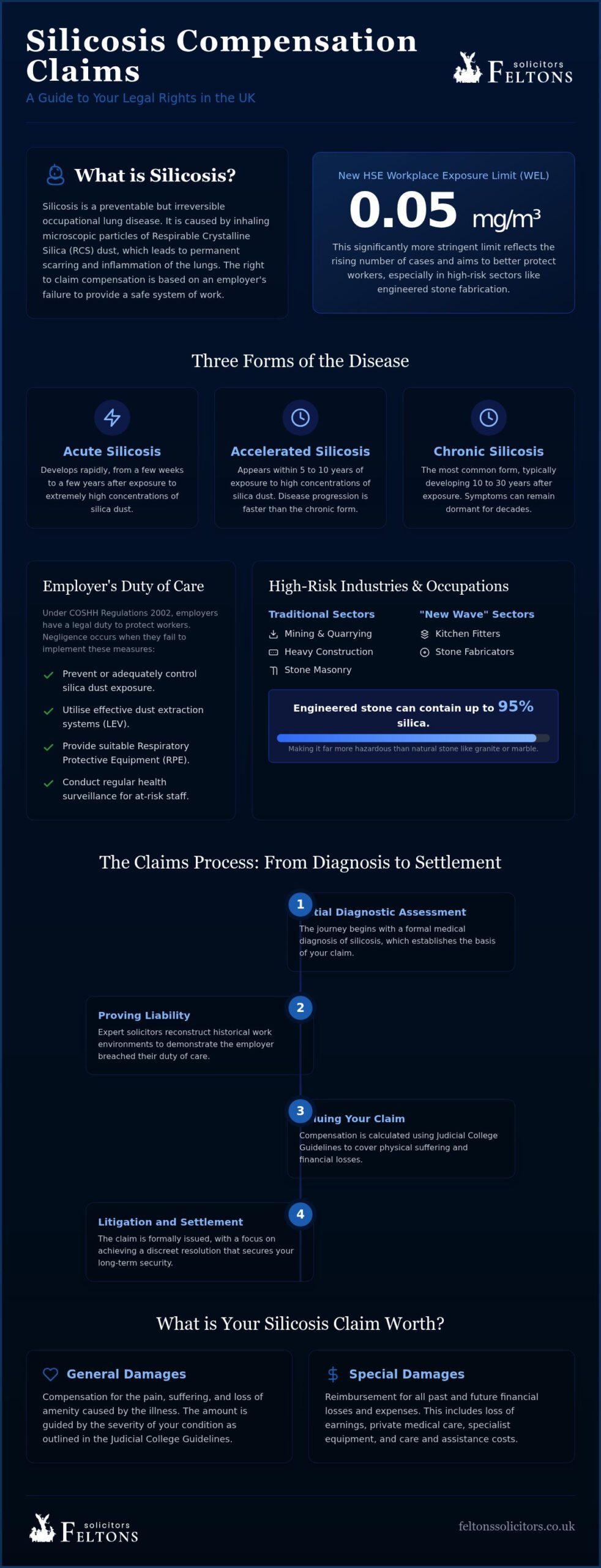
Silicosis is a debilitating, preventable occupational lung disease caused by the inhalation of Respirable Crystalline Silica (RCS). When these microscopic dust particles enter the lungs, they cause permanent scarring and inflammation. In 2026, the regulatory environment has become significantly more stringent. The Health and Safety Executive (HSE) has reduced the Workplace Exposure Limit (WEL) to 0.05 mg/m³, a move driven by the rising number of cases in the engineered stone sector. Legally, your right to seek Understanding Silicosis through litigation is based on a fundamental principle: your employer’s failure to provide a safe system of work.

The legal framework distinguishes between three types of the disease, each affecting the strategy for silicosis compensation claims uk. Acute silicosis develops rapidly after intense exposure, whilst accelerated silicosis usually appears within five to ten years. Chronic silicosis is the most frequent form, often remaining dormant for decades. Regardless of the timeline, if your illness resulted from an employer’s breach of duty, you have a legal right to pursue financial security and medical care.

The Duty of Care: COSHH Regulations and Employer Obligations

The Control of Substances Hazardous to Health (COSHH) Regulations 2002 mandate that employers must prevent or adequately control exposure to hazardous substances. This is not a suggestion; it’s a statutory obligation. Employers are required to utilise effective dust extraction systems, provide high-specification respiratory protective equipment (RPE), and conduct regular health surveillance for their staff. Negligence in this context is defined as an employer’s failure to implement these reasonable and legally required safety measures to protect workers from foreseeable harm. When these protocols are ignored, the human cost is high, and the legal responsibility is clear.

Common Industries and High-Risk Occupations

Whilst traditional sectors like mining, quarrying, and heavy construction remain high-risk, a significant trend in 2026 involves the “new wave” of silicosis amongst kitchen fitters and stone fabricators. Engineered stone, often used for modern worktops, can contain up to 95% silica, making it far more hazardous than natural granite or marble. This industry is currently under intense HSE scrutiny, with over 1,000 inspections scheduled this year to ensure compliance.

The “long-tail” nature of silicosis means that symptoms, such as persistent coughing and breathlessness, may not surface until long after you’ve moved on to different employment. Many clients find that their current, clean working environment masks a historical liability from a dusty workshop twenty years ago. Our role as a discreet partner is to help you trace these historical exposures and hold the responsible parties accountable, ensuring your family’s future is protected despite past negligence.

Establishing Liability: Did Your Employer Breach Their Duty?

Proving liability in industrial disease litigation hinges on demonstrating that your exposure to silica dust was both excessive and preventable. The burden of proof rests with the claimant to show that the employer’s duty of care was breached. This involves more than just proving you worked with stone; we must establish that the safety measures in place fell below the required statutory standards. Forensic engineering experts play a vital role here. They reconstruct historical working conditions, using contemporary data to model likely dust concentrations from twenty or thirty years ago. This technical evidence is often the cornerstone of silicosis compensation claims uk, providing a scientific basis for claims involving exposure from a previous era.

Employers often attempt to reduce their liability by claiming “contributory negligence.” They might argue that a worker failed to wear provided respiratory equipment or ignored safety signs. We counter these defences by investigating whether the equipment was actually suitable for the task, if the worker received adequate training, and if the employer actively enforced safety protocols on the shop floor. If you are concerned about how your past actions might affect your case, speaking with a specialist silicosis solicitor can provide the professional clarity you need to move forward.

Claiming Against Defunct or Dissolved Companies

Many industrial disease cases involve companies that have long since ceased trading. This does not mean your path to justice is blocked. We utilise the Employers’ Liability Tracing Office (ELTO) to identify the specific insurance provider active at the time of your exposure. Legally, the claim is pursued against the insurer’s funds rather than former directors personally. If a company has been dissolved, we manage the legal mechanism for restoring it to the Companies House register for the sole purpose of litigation. This methodical approach ensures that a defunct business does not prevent you from accessing the care you deserve.

The Three-Year Limitation Rule and Its Exceptions

The three-year limitation period is a frequent source of anxiety, but it is more flexible than it first appears. In English law, the clock typically begins on the “Date of Knowledge” rather than the date of exposure. This is the point at which you realised, or should have reasonably realised, that your breathlessness was significant and linked to your past work. Because symptoms often emerge decades after you have left a job, the limitation period usually starts from the date of your formal medical diagnosis. Even if this window seems to have passed, Section 33 of the Limitation Act 1980 grants the court discretion to allow a claim to proceed if it is equitable to do so.

Calculating Compensation: What is Your Silicosis Claim Worth?

Determining the financial value of a claim requires a meticulous assessment of both your current health and your future needs. In the context of silicosis compensation claims uk, settlements are categorised into two primary areas: General Damages and Special Damages. Every case is unique. A stone fabricator diagnosed with accelerated silicosis will have vastly different requirements than a retired miner with a slow-progressing chronic condition. Our role is to ensure every facet of your experience is quantified with precision, providing a steady foundation for your family’s future.

General Damages: Valuing Pain, Suffering, and Loss of Amenity

General damages compensate you for the physical and psychological impact of the disease. We rely on comprehensive medical reports from independent respiratory consultants to establish the severity of your condition. These specialists use the Judicial College Guidelines to benchmark figures. For 2026, these guidelines suggest awards between £51,420 and £65,710 for silicosis resulting in a significant decline in lung function. Understanding your legal rights involves recognising how reduced life expectancy influences these figures. Loss of amenity refers to the inability to enjoy former hobbies or daily activities, such as being unable to play with grandchildren or attend social events due to severe breathlessness.

Special Damages: Recovering Financial Losses and Care Costs

Special damages focus on the tangible financial burdens caused by your diagnosis. This includes immediate losses like unpaid leave and long-term deficits such as lost pension contributions. We also consider the “Smith v Manchester” award. This specific head of damage compensates you for a “handicapped” earning capacity. It’s designed for situations where your condition makes you less competitive in the labour market, even if you’re currently still working. Recoverable costs often include:

  • Private medical treatments and pulmonary rehabilitation sessions.
  • Home adaptations, such as installing stairlifts or walk-in showers.
  • Specialised equipment, including portable oxygen concentrators and mobility aids.
  • Gratuitous Care: This allows you to secure compensation for the time family members spend providing essential support, recognising that their time has a significant value.

Future-proofing is essential. A sophisticated legal strategy must account for potential deteriorations that might necessitate expensive interventions like lung transplants or 24-hour oxygen therapy. We ensure your settlement provides a lifetime of security, rather than just covering immediate expenses. This methodical approach reflects our commitment to high-standard, personalised care for every client we represent.
Silicosis Compensation Claims UK: Specialist Guide 2026

The Claims Process: From Diagnosis to Settlement

The journey toward justice begins with a calm, thorough assessment of your circumstances. During your initial consultation, we evaluate the viability of your claim and discuss bespoke funding options to ensure you face no unnecessary financial risk. Once we establish a clear path forward, we initiate the Pre-Action Protocol for Disease and Illness. This is a formal notification to the defendant or their insurer, setting out the allegations of negligence and establishing a strict timetable for their response. It’s a methodical phase designed to bring the responsible parties to the table early in the process.

Gathering evidence is a collaborative effort. We work with you to compile a detailed work history, obtain witness statements from former colleagues, and secure your full medical records. For those with urgent financial needs, we prioritise securing interim payments. These are advance sums paid before the final settlement to cover immediate costs like private pulmonary rehabilitation or essential home modifications. This ensures you don’t have to wait years for the care you need today.

Securing Robust Medical Evidence

A standard GP report rarely suffices in the complex arena of silicosis compensation claims uk. To build an unshakeable case, we require high-resolution CT (HRCT) scans interpreted by a specialist known as a B-Reader. This is a consultant radiologist with specific expertise in identifying the subtle patterns of occupational lung disease. We organise independent medical examinations with leading UK consultants who understand the nuances of silica exposure, ensuring your diagnosis is documented with the technical precision required for litigation.

Negotiation vs. Litigation: Will You Have to Go to Court?

Most clients feel apprehensive about the prospect of a courtroom battle. It’s reassuring to know that the vast majority of industrial disease claims are settled through negotiation. We utilise “Part 36 Offers” as a strategic tool to encourage the defendant to settle fairly and promptly. If liability is admitted but the value is disputed, we often arrange a Joint Settlement Meeting (JSM). This is a face-to-face negotiation between legal teams where most cases reach a conclusion without ever entering a courtroom. If you’re ready to discuss your options, you can contact our specialist silicosis team for a discreet, professional consultation.

Industrial disease litigation is not a commodity. Unlike high-volume “claims factories” that often prioritise speed over substance, a boutique firm offers a level of personal connection that’s vital when you’re facing a chronic illness. We understand that behind every case file is an individual dealing with physical suffering and the unsettling fear of an uncertain future. Our “people-first” philosophy ensures that technical legal excellence never overshadows the human impact of our work. By maintaining a steady, deliberate pace, we ensure no detail is overlooked in your silicosis compensation claims uk, providing the high-standard reliability you expect from a trusted advisor.

Pragmatic advice is the cornerstone of our service. We don’t just process paperwork; we provide the clarity needed for families to make informed decisions about their long-term security. This involves a sophisticated blend of professional authority and empathetic reassurance. We act as a calm, steady presence during what is often a stressful period, ensuring that your voice is heard and your employer’s negligence is fully recognised. Our commitment to traditional professional integrity, combined with modern delivery, means your case is handled with both heritage and efficiency.

A Tailored Approach to Complex Litigation

Navigating the specific challenges of stone masonry and kitchen fitting cases requires more than general legal knowledge. A bespoke strategy is essential to address the unique exposure profiles of engineered stone, where silica levels are exceptionally high. We act as your sophisticated guide through the UK legal system, translating complex jargon into clear, actionable steps. For those navigating the heart-wrenching process of claiming on behalf of a loved one, our specialist guide on a Silicosis Claim After Death provides the discreet support needed during bereavement.

Securing Your Family’s Future

The true value of expert representation lies in the peace of mind it affords. Knowing that your financial arrangements are professionally organised allows you to focus on your health and your family. We don’t just secure a settlement; we help you protect it. Our broader expertise in Estate Planning ensures that your compensation is managed in a way that protects your legacy for years to come. We value privacy and personal rapport, acting as a discreet partner throughout the entire process.

If you’re seeking a partner who prioritises your well-being alongside your legal success, we’re here to help. Contact our specialists today for a discreet, professional consultation to discuss how we can secure the care and recognition you deserve.

Securing Your Future and Restoring Peace of Mind

A silicosis diagnosis brings significant physical and emotional challenges, but you don’t have to face the legal complexities alone. By understanding the latest 2026 HSE regulations and identifying the responsible insurers, you can establish the firm foundation needed for a successful claim. Whether you’re dealing with historical exposure or the “new wave” of illness in the stone fabrication sector, silicosis compensation claims uk require a meticulous, expert-led approach to ensure every future care need is fully funded.

Our boutique service prioritises personal connection and pragmatic advice, guiding you through each stage of the litigation process with quiet confidence. We focus on achieving a discreet resolution that respects your privacy whilst securing the financial recognition you deserve. If you’re ready to take the next step toward family security, speak to our specialist silicosis solicitors today for a discreet consultation. You’ve dedicated your career to your craft; now, let us dedicate our expertise to protecting your health and your legacy. We’re here to support you every step of the way.

Frequently Asked Questions

Can I still claim if I was a smoker?

Yes, being a smoker does not prevent you from pursuing a claim. Whilst the defence may argue that smoking contributed to your respiratory symptoms, silicosis is specifically caused by silica dust exposure, not tobacco. Medical experts can differentiate between types of lung damage. If smoking played a role, your compensation might be slightly adjusted through “apportionment,” but your right to hold a negligent employer accountable remains entirely intact.

How much does it cost to make a silicosis claim?

We provide clear, pragmatic advice on various funding options to ensure you face no unnecessary financial risk. Most silicosis compensation claims uk are handled via a Conditional Fee Agreement, often referred to as “No Win No Fee.” This arrangement means you generally don’t pay legal fees if the claim is unsuccessful. To better understand how your expenses are covered, you can explore Third-party legal cost recovery fees with specialists like Scotland Claims Injury Lawyers, ensuring the process remains transparent and accessible from the outset.

The duration of a claim typically ranges from 12 to 36 months, depending on the complexity of the medical evidence and the defendant’s response. Cases involving defunct companies or disputed liability often take longer due to the need for historical insurance tracing. We prioritise securing interim payments where possible to provide immediate support. Our methodical approach ensures the process moves at a reassuring pace without sacrificing the thoroughness required for a maximum settlement.

Can I claim for silicosis on behalf of a family member who has passed away?

Yes, you can pursue a claim on behalf of a loved one’s estate. These are known as fatal claims and allow families to seek recognition for the suffering endured and the financial impact of the loss. This often includes recovering funeral expenses and securing a statutory bereavement award. Our team acts as a discreet partner during this sensitive time, handling the legal technicalities so you can focus on your family’s well-being.

What happens if my former employer has gone out of business?

You can still claim if your former employer has ceased trading. We utilise the Employers’ Liability Tracing Office (ELTO) to identify the insurance provider that was active during your period of exposure. Legally, the compensation is paid by the insurer, not the former company directors. If necessary, we can also restore a dissolved company to the register for the specific purpose of litigation, ensuring your path to justice remains open.

Will making a claim affect my current employment?

Making a claim against a current employer should not negatively affect your employment status. UK law protects workers from being dismissed or treated unfairly for exercising their legal rights. Employers are required by law to have insurance specifically for these situations, so the compensation is paid by the insurer rather than the company’s daily operating budget. We handle all communications with quiet confidence to maintain a professional atmosphere throughout the process.

What is the “3-year rule” for silicosis claims?

The “3-year rule” refers to the limitation period for starting legal proceedings. For silicosis compensation claims uk, this clock usually begins on the “Date of Knowledge,” which is when you first received a formal diagnosis or realised your illness was work-related. It is not necessarily three years from when you left the job. However, because industrial diseases develop slowly, we recommend seeking specialist legal advice as soon as you suspect a link.

Do I need to have a formal diagnosis before I speak to a solicitor?

You don’t need a formal diagnosis before your initial consultation. If you have symptoms like persistent breathlessness and a history of working with silica dust, we can assist in arranging independent medical assessments. We work with leading respiratory consultants to secure the high-resolution CT scans and B-Reader reports necessary to confirm your condition. Contacting us early allows us to begin investigating your work history whilst your medical evaluation is underway.

Personal Injury Solicitors: A Comprehensive Guide to Compensation Claims in 2026

Personal Injury Solicitors: A Comprehensive Guide to Compensation Claims in 2026

The most effective personal injury litigation is a restorative journey, not just a financial transaction. When you’ve suffered an injury, the physical pain is often compounded by the weight of financial uncertainty and the confusing jargon of legal proceedings. It’s natural to feel overwhelmed by “No Win, No Fee” terms or the worry that you’ll be treated as just another file in a high-volume claim factory. Choosing the right personal injury solicitors shouldn’t add to your stress; it should be the moment you finally feel heard.

We understand that you’re looking for more than just a settlement; you’re looking for a way to rebuild your life. This guide provides the expert clarity you need to handle these complexities, ensuring you secure the compensation and support you deserve. We’ll examine the latest 2026 legal updates, including the 18th edition of the Judicial College Guidelines and the shifting landscape of the small claims track. By the end of this article, you’ll have a clear roadmap for your claim, from understanding the latest Solicitors Regulation Authority transparency rules to finding a boutique partner who puts your recovery at the centre of the process.

Key Takeaways

  • Understand the legal principle of “Duty of Care” and how identifying a breach is the essential first step in securing your compensation.
  • Learn why complex occupational conditions like silicosis require a specialist litigation approach compared to standard injury claims.
  • Discover how professional personal injury solicitors calculate General and Special Damages to ensure your settlement covers both physical pain and future financial security.
  • Explore the step-by-step process of evidence gathering, from medical assessments to witness statements, to build a robust and viable case.
  • Recognise the benefits of a boutique, partner-led service that offers pragmatic guidance tailored to your specific circumstances rather than high-volume processing.

What is a Personal Injury Claim and Who Can Benefit?

Understanding what is a personal injury claim starts with the concept of Tort law. In the United Kingdom, this legal framework allows an individual to seek a remedy for a civil wrong that has caused them harm. Whilst many associate these cases solely with physical accidents, the scope is much broader. It encompasses psychological trauma and long-term occupational illnesses, such as silicosis, which are often more complex than standard accident claims. The core objective is simple: to restore you, as far as money can, to the position you would have occupied had the injury never occurred. Engaging expert personal injury solicitors ensures that your case is treated with the focus of a boutique firm, rather than being processed through a high-volume claim factory.

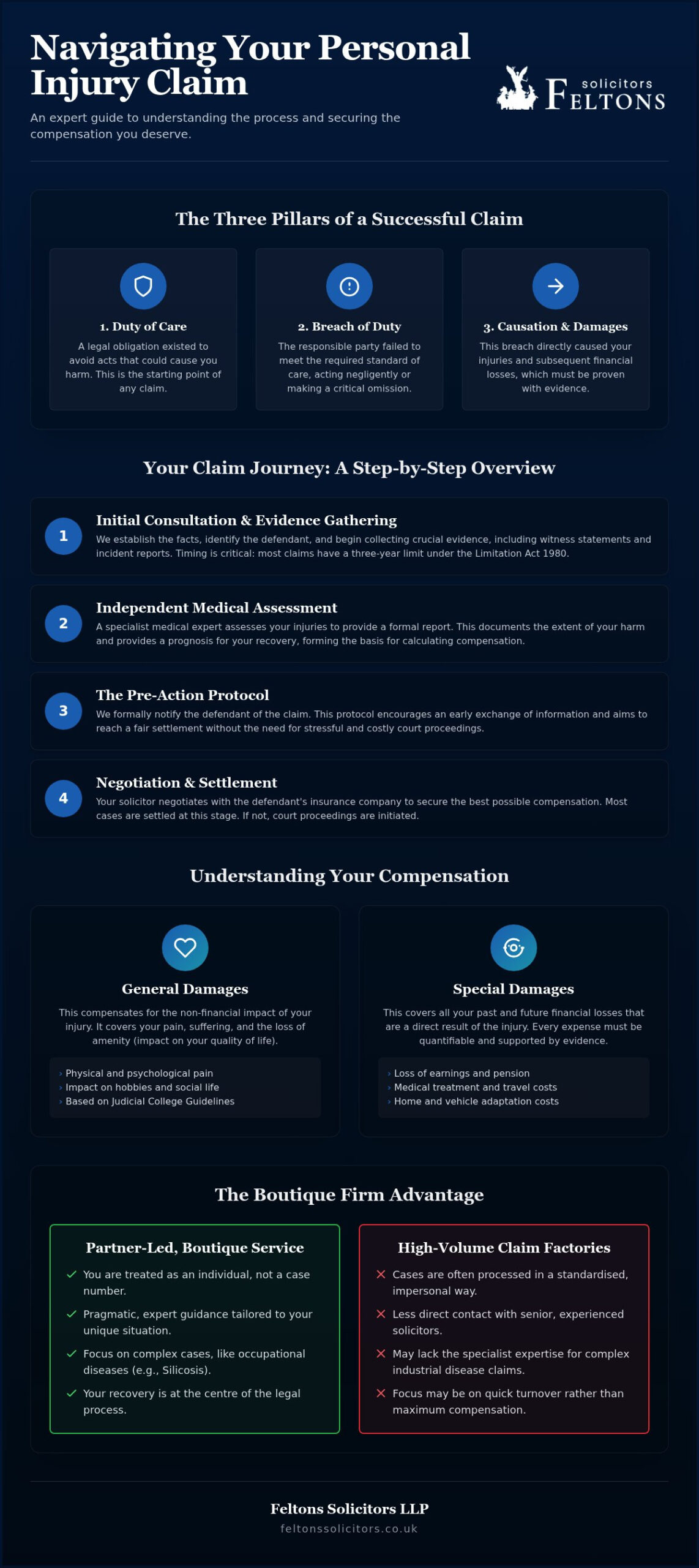
At the heart of every case lies the principle of the “Duty of Care”. This is a legal obligation to avoid acts or omissions that could reasonably be foreseen to cause harm to others. When a person or organisation fails to meet this standard, they have breached their duty. However, a breach alone isn’t enough for a claim. You must also prove that this failure directly caused your injuries and subsequent financial losses. This link between the breach and the harm is known as causation, and it’s the foundation upon which every successful claim is built.

The Legal Basis for Compensation

Proving negligence requires a methodical approach. Your personal injury solicitors must establish four key elements: duty, breach, causation, and damages. Most cases begin under the Pre-Action Protocol. This set of rules encourages parties to exchange information early and settle disputes without the need for a stressful court hearing. It’s a pragmatic way to ensure transparency from the outset and provides a structured path toward a fair settlement.

Timing is critical. Under the Limitation Act 1980, most claimants have a three-year window from the date of the accident or the “date of knowledge” of an injury to issue court proceedings. For occupational diseases that develop over decades, this clock often starts only when a medical professional provides a formal diagnosis. Missing these deadlines can permanently bar you from seeking the compensation you deserve, so early legal advice is vital.

Who Can You Claim Against?

Liability can rest with various parties depending on where the incident occurred. Identifying the correct defendant is essential for a successful outcome:

  • Employers: They have a statutory duty to provide a safe working environment, making them responsible for workplace accidents or failures in occupational health.
  • Public authorities and private landowners: These entities are accountable for maintaining safe premises, such as pavements or shopping centres, under the Occupiers’ Liability Act.
  • Road users and insurance companies: This is the most common category, covering RTA claims where a driver’s negligence has caused harm to others.

In every instance, the aim is to hold the responsible party to account whilst securing the financial support you need for your recovery. Whether you’re dealing with a local council or a multinational corporation, the legal principles remain focused on your restoration.

Specialist Personal Injury Claims: Silicosis and Occupational Diseases

Occupational diseases demand a distinct legal strategy compared to sudden physical accidents. Whilst a trip or fall is immediate, industrial illnesses often simmer for decades before symptoms emerge. This long latency period means that personal injury solicitors must act as investigators, tracing exposure back through a claimant’s entire working history. It’s a complex process. It requires more than just legal knowledge; it requires a deep understanding of industrial processes and medical pathology to prove exactly when and where the damage occurred.

Silicosis has become a focal point of high-stakes litigation, often cited as the “new asbestos” within the UK construction and stone masonry sectors. The damage is often irreversible. Unlike a one-off incident, silica dust exposure is a cumulative harm that permanently scars the lung tissue. We focus on these intricate matters, providing the partner-led attention that high-volume firms often struggle to maintain. This boutique approach ensures that the human impact of your diagnosis is never overshadowed by the technicalities of the law.

Understanding Silicosis and Silica Dust Exposure

Stone masons and construction workers are frequently exposed to respirable crystalline silica (RCS) when cutting or grinding materials like engineered stone. Employers have a strict legal duty under the Control of Substances Hazardous to Health (COSHH) regulations to suppress dust and provide adequate respiratory protective equipment. If they failed to do so, even thirty years ago, they may be held liable. For those who have lost a loved one to this condition, our guide on Silicosis Claim After Death: A Legal Guide for Bereaved Families in 2026 explains the specific steps for seeking justice on behalf of an estate.

Other Occupational Lung Diseases

Beyond silicosis, we handle claims for occupational asthma, COPD, and pleural thickening. These respiratory conditions often involve multiple past employers, some of whom may no longer exist. Our role involves tracking down historical insurers and securing expert medical evidence from leading chest physicians to support your case. This meticulous approach ensures that every contributor to your condition is held accountable. If you believe your health has been impacted by industrial negligence, reaching out to specialist personal injury solicitors can help you understand your options for a secure future.

The Personal Injury Claim Process: Step-by-Step

The journey from injury to compensation is a methodical build, rather than a sprint. It begins with an initial consultation where the merits of your case are scrutinized. Unlike high-volume firms that might use automated checklists, boutique personal injury solicitors provide a partner-led review to assess the viability of your claim. This stage is about more than just legal theory; it’s about understanding the specific ways your life has been altered and identifying a clear path toward restoration.

Once the merits are established, your legal team begins the formal process of notification. A Letter of Claim is sent to the defendant, outlining the allegations of negligence and the nature of your injuries. Under the current Pre-Action Protocol, the defendant generally has three months to investigate and provide a reasoned response regarding liability. This structured exchange of information is designed to keep the process transparent and moving toward a resolution without unnecessary delays.

Gathering Vital Evidence

Evidence is the bedrock of any successful litigation. Whilst your personal recollection is important, the legal strength of your case relies on objective documentation that leaves little room for dispute. This involves a three-pronged approach:

  • Medical Expert Reports: We instruct independent specialists to assess your injuries. Their professional opinion provides the basis for valuing your pain, suffering, and loss of amenity.
  • Special Damages Documentation: This involves a meticulous record of financial losses. You should retain every receipt, invoice, and travel log related to your injury, as these form the basis of your financial recovery.
  • Liability Evidence: Photographs of the accident scene, witness statements, and CCTV footage are gathered early to ensure the facts remain clear before memories fade or scenes change.

Settlement Negotiations and Court

Most people fear a confrontational day in court, but the reality is quite different. The vast majority of claims settle through negotiation long before a trial date is set. A key tool in this process is the “Part 36” offer. This is a formal settlement offer that carries significant cost consequences if rejected. If a defendant refuses a reasonable Part 36 offer and you later achieve a better result at trial, they may be ordered to pay additional interest and higher legal costs. It’s a pragmatic mechanism that encourages both sides to be realistic.

If the defendant denies liability or offers an inadequate settlement, the case may progress toward litigation. Even then, the focus remains on reaching an agreement. Litigation is a tool to apply pressure and ensure the defendant takes your claim seriously. Throughout this process, your solicitors act as a steady guide, ensuring you’re informed of every risk and opportunity so you can make decisions with confidence.

Personal Injury Solicitors: A Comprehensive Guide to Compensation Claims in 2026

Calculating Compensation and “No Win, No Fee” Explained

Securing a fair settlement requires a meticulous breakdown of how the injury has impacted both your health and your finances. Professional personal injury solicitors categorise these losses into two distinct areas: General Damages and Special Damages. Whilst the former addresses the intangible impact of the injury, the latter focuses on the quantifiable financial strain you have endured. This dual approach ensures that your compensation package is comprehensive, covering every facet of your recovery journey.

General Damages, often referred to as compensation for Pain, Suffering, and Loss of Amenity (PSLA), are calculated based on the severity of your condition and the length of your recovery. Special Damages, by contrast, aim to reimburse you for out-of-pocket expenses. This includes lost earnings, prescription costs, and even the value of care provided by family members. For complex cases involving long-term conditions, we also factor in future losses, such as diminished pension contributions or the cost of ongoing private medical treatment.

How Much is My Claim Worth?

To estimate the value of PSLA, we look to the 18th edition of the Judicial College Guidelines, published in April 2026. This latest update included an approximate 8.26% inflationary uplift across most injury brackets. For instance, a moderate ankle injury now carries a recommended range between £18,150 and £35,130. These figures serve as a starting point, but the final award depends on the specific nuances of your medical evidence.

The total award can be adjusted through the principle of “contributory negligence”. If the defendant proves that you were partially responsible for the incident or failed to mitigate your losses, the court may reduce your compensation by a corresponding percentage. Our role is to build a robust case that minimises these arguments and protects your full entitlement.

Demystifying No Win, No Fee

Access to justice should never be limited by your immediate financial situation. Most claims are handled via a Conditional Fee Agreement (CFA), commonly known as “No Win, No Fee”. This arrangement means that if your case is unsuccessful, you don’t pay your solicitor’s fees. To provide total protection against the defendant’s legal costs, we typically arrange “After the Event” (ATE) insurance, ensuring you face no personal financial risk during the litigation.

If you win, the solicitor’s success fee is capped by law at 25% of the compensation awarded for PSLA and past financial losses. This cap does not apply to damages for future losses, ensuring the bulk of your long-term support remains intact. Transparency is a core value of our boutique service. Following the Solicitors Regulation Authority warning notice in January 2026, we prioritise clear, plain-English explanations of all costs from the outset. If you’re ready to discuss the specifics of your case, you can speak with our expert personal injury solicitors today for a straightforward assessment of your claim.

Why Choose a Boutique Firm for Your Personal Injury Claim?

High-volume law firms often prioritise turnover, treating legal matters as a series of administrative tasks. At Feltons, we reject this “claim factory” model in favour of a boutique service that puts your recovery first. Since our establishment in 2010 by Paula Felton, our focus has remained on providing pragmatic, straightforward advice that cuts through unnecessary legal jargon. We understand the emotional weight an injury carries. It’s not just a legal file, but a significant life event that requires empathy and discretion.

Our deep-rooted expertise in dispute resolution is a significant advantage in complex personal injury settlements. It allows us to anticipate the defendant’s tactics and negotiate from a position of quiet confidence. When you choose Feltons as your personal injury solicitors, you’re partnering with a firm that values personal rapport as much as technical excellence. We believe that the human impact of our work is just as important as the technical legal outcome.

The Value of Personalised Legal Support

The most significant benefit of a boutique firm is the level of direct access you receive. You won’t be passed between junior paralegals or anonymous case handlers. Instead, you’ll have a consistent point of contact who understands every nuance of your journey. This personal connection is especially vital in high-value or complex litigation, where a tailored strategy can make the difference between an average settlement and one that truly secures your future. We take the time to listen, ensuring that sensitive family-related injury matters are handled with the worldly experience and privacy they deserve. This standard of dedicated, partner-led representation is one we share with other specialist practices internationally, including the D’Intino Law Firm, LLC in Philadelphia, who provide tailored legal support for personal injury and criminal defence matters.

Getting Started with Feltons

Taking the first step shouldn’t feel like a commitment you’re not ready to make. We offer a free, no-obligation initial assessment to discuss the viability of your claim and explain your options in plain English. This is a chance for you to experience our “people-first” philosophy before deciding how to proceed. We believe in transparency, so you’ll know exactly where you stand from the very first conversation.

If you’re currently unhappy with your current firm, you aren’t stuck. Many clients find that high-volume firms don’t provide the level of care they need, particularly in specialist areas like silicosis claims. We can handle the entire process of transferring your files, making the transition seamless and stress-free. Your recovery deserves the focus of dedicated personal injury solicitors who see you as a person, not a statistic. Contact our team today to organise your consultation and begin the journey toward the restoration you deserve.

Securing Your Path to Restoration

Restoring your quality of life after an injury requires more than just a legal settlement; it demands a partnership based on trust and expert guidance. We’ve explored how the 2026 legal landscape prioritises transparency and how a methodical approach to General and Special Damages ensures your long-term security. Whether you’re handling a straightforward accident or a complex occupational disease, the focus should always remain on your individual recovery rather than high-volume processing.

Choosing the right personal injury solicitors is the most critical decision you’ll make during this journey. At Feltons, we bring decades of combined legal experience and specialist silicosis litigation expertise to every case we handle. Our partner-led boutique service ensures you receive the discreet, high-standard care you deserve. We treat every client as an individual, never as a case number.

If you’re ready to take the next step, we invite you to contact Feltons Solicitors for a confidential discussion about your claim. We are here to provide the steady, professional support necessary to navigate these complexities with confidence. You don’t have to face this transition alone.

Frequently Asked Questions

How long do I have to make a personal injury claim in the UK?

You generally have three years from the date of the accident or the “date of knowledge” of your injury to start a claim. For occupational diseases that develop slowly over time, this period begins only when you first receive a formal medical diagnosis. If the claim involves a child, the three-year limit doesn’t start until their 18th birthday, giving them until they are 21 to take action.

Can I still claim if the accident was partly my fault?

Yes, you can still seek compensation even if you were partially responsible for the incident. This legal principle is known as contributory negligence, and it results in your final settlement being reduced by a percentage that reflects your share of the blame. For example, if you are found to be 25% at fault for not wearing a seatbelt, you would still receive 75% of the total damages awarded.

What is the average payout for a personal injury claim?

There is no fixed “average” payout because every settlement is calculated based on your unique physical and financial circumstances. Expert personal injury solicitors use the Judicial College Guidelines to value the “pain and suffering” element, whilst financial losses like lost wages are calculated separately. A minor injury might settle for several thousand pounds, whereas life-altering conditions can result in settlements exceeding £500,000 to cover long-term care.

Do I have to go to court to win my personal injury case?

It’s highly unlikely that you’ll need to attend a court hearing to resolve your case. Most claims are settled through structured negotiations or formal “Part 36” offers long before a trial date is ever set. Court proceedings are typically a last resort used only when the defendant entirely denies liability or refuses to offer a settlement that reflects the true extent of your losses.

Can I make a claim for an injury that happened years ago?

You can make a claim for an older injury if you only recently became aware that it was caused by someone else’s negligence. This “date of knowledge” rule is particularly vital for industrial diseases like silicosis, where symptoms often appear decades after the initial exposure. If you are within three years of receiving that medical diagnosis, a claim is usually still viable despite the time passed.

How much will a personal injury solicitor charge me?

Most personal injury solicitors operate on a “No Win, No Fee” basis, which means you don’t pay any legal fees upfront. If your claim is successful, the solicitor’s success fee is capped by law at 25% of your compensation for pain and past financial losses. If the case is lost, you’re protected from paying the solicitor’s fees, provided you’ve acted honestly and followed their professional advice throughout.

Can I claim compensation for an illness caused by my former workplace?

Yes, you’re entitled to claim for illnesses caused by hazardous working conditions, even if you left that employment many years ago. Employers have a statutory duty to protect your health and are required by law to hold insurance to cover such claims. We specialise in tracing these historical insurers to ensure you receive the financial support you deserve for respiratory conditions or other industrial diseases.

What happens if the person or company responsible for my injury has gone bust?

You can still pursue a claim if a company has ceased trading because the compensation is usually paid by the insurers they held at the time of the incident. In road accidents involving untraced or uninsured drivers, the Motor Insurers’ Bureau (MIB) acts as a safety net to provide the necessary payout. Even if a defendant has gone bust, the mandatory insurance they held remains accessible to satisfy your claim.

Silicosis Compensation Claims UK: A Specialist Guide to Legal Redress in 2026

Silicosis Compensation Claims UK: A Specialist Guide to Legal Redress in 2026

Could a diagnosis that feels like an ending actually be the starting point for securing your family’s future? For many workers, the discovery of an occupational lung disease brings immediate concerns about physical health and long-term financial stability. Understanding the landscape of silicosis compensation claims uk is essential for anyone facing this reality in 2026, as the legal framework provides a clear pathway to both accountability and essential care.

It’s understandable to feel overwhelmed by the complexities of litigation, especially when you are managing symptoms whilst trying to decipher the strict three-year “date of knowledge” rule. We believe that you deserve a discreet, professional partner to handle the legal burden so you can focus on your wellbeing. This guide offers expert clarity on the 18th Edition Judicial College Guidelines, updated Industrial Injuries Disablement Benefit rates, and the precise steps required to hold negligent parties responsible. You will learn how to navigate the claims process with confidence; ensuring your family’s financial security is protected through tailored legal redress and specialist support.

Key Takeaways

  • Identify how employer breaches of the Health and Safety at Work Act 1974 and COSHH regulations form the legal foundation of a successful claim.
  • Understand the complexities of silicosis compensation claims uk by identifying the strict three-year limitation period and the “date of knowledge” rule.
  • Explore how the 18th Edition Judicial College Guidelines are used to assess general damages for pain, suffering, and loss of amenity in 2026.
  • Learn the vital difference between general and special damages to ensure every aspect of your future care and financial loss is recovered.
  • Discover the benefits of a bespoke, partner-led legal service that prioritises personal rapport and expert guidance throughout the litigation process.

Silicosis is a debilitating condition characterised by irreversible lung scarring. It occurs when respirable crystalline silica (RCS) is inhaled, leading to inflammation and permanent tissue damage. Crucially, the UK legal system views this as an avoidable occupational illness. If you’ve been diagnosed, understanding What is Silicosis? from a legal perspective is the first step toward justice. Every worker has a fundamental right to a safe environment where dust exposure is strictly controlled. When employers fail to provide adequate ventilation or protective equipment, they may be liable for silicosis compensation claims uk.

Legal redress often depends on the clinical presentation of the disease. Chronic silicosis typically develops after decades of low-level exposure, whilst accelerated silicosis appears within five to ten years of more intense work. Acute silicosis is the most severe, often manifesting within months of extreme exposure. Courts recognise that each form requires a different approach to evidence, but all stem from the same failure to manage workplace hazards. The UK legal system treats silica dust as a significant health hazard, and the Health and Safety Executive (HSE) maintains strict workplace exposure limits to protect workers from these life-altering outcomes.

The Emerging Crisis: Engineered Stone and Modern Exposure

The rise of artificial stone kitchen worktops has created a modern “front line” for silicosis cases. These products can contain up to 95% silica, far exceeding the levels found in natural granite or marble. In August 2024, the first UK cases linked to this industry were identified in young men, highlighting a systemic failure in dust suppression during the cutting and polishing phases. If you work in fabrication or fitting, you may have been exposed to lethal dust levels without proper warning. The legal implications for this sector are profound, as many manufacturers have failed to adapt their safety protocols to the high silica content of modern materials.

Traditional Industries at Risk amongst UK Workers

Whilst engineered stone dominates recent headlines, traditional sectors continue to see high rates of illness. Construction, demolition, and stone masonry remain high-risk environments. Workers in pottery, ceramics, and sandblasting are also frequently exposed. Even historical exposure in mining and quarrying leads to silicosis compensation claims uk in 2026. The long latency period of chronic silicosis means symptoms often appear years after a worker has left the industry. This makes early legal advice essential to ensure that evidence from past workplaces is preserved and historical negligence is correctly identified.

Establishing Employer Negligence and the Duty of Care

Proving negligence is the cornerstone of any successful legal redress. Under the Health and Safety at Work etc. Act 1974, your employer carries a statutory duty to ensure your health and safety “so far as is reasonably practicable.” This is not a mere suggestion; it’s a legal mandate. For those pursuing silicosis compensation claims uk, this duty means providing a workplace where the risk of inhaling crystalline silica is managed with forensic precision. When a company fails to maintain these standards, they’re not just being negligent; they’re breaking the law.

The Control of Substances Hazardous to Health (COSHH) Regulations 2002 provide the specific technical framework for this duty. Employers must prevent exposure or, where that’s impossible, adequately control it. This usually requires the installation of “local exhaust ventilation” (LEV) to capture dust at the source. If an employer relies solely on basic masks without addressing the environment itself, they’ve likely breached their duty. The current Workplace Exposure Limit (WEL) for respirable crystalline silica is 0.1 mg/m³ over an eight-hour period. Exceeding this limit is a clear indicator of systemic failure and provides strong grounds for a claim.

Breach of Duty: What Constitutes Negligence?

Negligence often manifests through a lack of proper equipment or oversight. In many silicosis compensation claims uk, we see a recurring pattern of failure in three specific areas:

  • Respiratory Protective Equipment (RPE): Failing to provide high-specification masks that are face-fit tested for the individual worker.
  • Inadequate Training: Not educating staff on the “invisible” dangers of silica dust or the correct way to use suppression systems.
  • Health Surveillance: Ignoring the legal requirement under COSHH to provide regular lung function tests for at-risk employees.

The Role of the HSE and Regulatory Standards

HSE guidance documents, particularly the L5 Approved Code of Practice, are frequently used as benchmarks in court to establish what a “reasonable” employer should have done. In January 2025, the HSE published updated guidance specifically for those working with stone, clarifying the rigorous steps required to control exposure in modern fabrication shops. Proving that an employer “knew or ought to have known” about these risks is simpler in 2026, as the medical evidence and NHS guidance on silicosis have made the dangers common knowledge in industrial sectors. If you’re concerned about how these regulations apply to your specific work history, consulting a specialist in industrial disease litigation can provide the clarity you need to proceed.

Assessing Claim Value: General vs Special Damages

Determining the financial value of a claim is a methodical process that balances your immediate suffering with your future requirements. In the UK legal system, compensation is divided into two distinct categories: General and Special Damages. General Damages are awarded for pain, suffering, and loss of amenity (PSLA). This figure compensates you for the physical and psychological impact of the disease itself. According to the 18th Edition of the Judicial College Guidelines published in April 2026, a younger person experiencing severe disability and a heightened chance of premature death may receive between £123,000 and £166,000. For significant decline in lung function and impaired breathing, the brackets typically range from £67,000 to £86,000.

These figures reflect the clinical reality of the condition. The irreversible nature of lung scarring, as detailed in NHS information on silicosis, means that courts must account for a permanent reduction in quality of life. Whilst General Damages address the injury, they’re often only one part of silicosis compensation claims uk. To truly secure your family’s future, we must look closely at the financial losses that stem directly from your diagnosis.

Quantifying Special Damages and Future Losses

Special Damages aim to reimburse you for every penny lost due to your illness. This calculation is often complex and requires expert forensic accounting. We prioritise the recovery of lost earnings, including future wages and the impact on your pension contributions. Beyond income, we secure funding for essential medical interventions that go beyond standard care. This includes private pulmonary rehabilitation, oxygen therapy, and the cost of professional caregivers. As the disease progresses, we also account for necessary home adaptations, such as the installation of stairlifts or specialised bathroom equipment, ensuring you can maintain your independence and dignity at home.

Claims on Behalf of Families and Dependants

When a diagnosis results in a fatal outcome, the legal focus shifts to protecting the dependants left behind. The law allows for the recovery of a Statutory Bereavement Award and the reimbursement of funeral expenses. More importantly, we can claim for the “loss of dependency,” which covers the financial support the deceased would have provided to their spouse or children. Securing this accountability provides a vital safety net for families during an exceptionally difficult time. If you are handling the affairs of a loved one, our specialised guide on silicosis claim after death provides a compassionate and detailed overview of the legal steps available to you.

The Claims Process: A Step-by-Step Path to Justice

Timing is often the most critical factor in successful silicosis compensation claims uk. The law dictates a strict three-year limitation period for starting a claim. This clock begins ticking on the “date of knowledge,” which is typically the day you received a formal diagnosis or the moment you reasonably suspected your respiratory issues were work-related. Because the symptoms of chronic silicosis can take decades to manifest, this rule ensures that the path to justice remains open long after the initial exposure occurred. However, waiting until the final months of this period can make evidence gathering more difficult, so early intervention is always advisable.

A robust case relies on the testimony of independent medical experts. We work closely with leading pulmonologists who specialise in occupational lung diseases to provide a definitive link between your workplace conditions and your clinical health. These experts use advanced CT imaging and specialist lung function tests to quantify the extent of your impairment. This medical evidence serves as the foundation for your claim, ensuring that your compensation reflects the true severity of your condition rather than a generic estimate.

Many claimants worry about what happens if their former employer has ceased trading or cannot be traced. This is a common scenario in industrial disease litigation. If the original company is gone, we can often trace their historical insurers who remain liable for the claim. In cases where no insurer can be found, you may still be eligible for a lump-sum payment under the Pneumoconiosis etc. (Workers’ Compensation) Act 1979. As of April 2026, these government-backed payments have been increased to ensure workers aren’t left without support simply because a business has closed its doors.

Gathering Evidence to Support Your Claim

Success in court requires a meticulous reconstruction of your working life. We begin by obtaining your full employment history from HMRC to identify every period of potential exposure. Witness statements from former colleagues are equally vital; they provide first-hand accounts of the dust levels, the lack of ventilation, or the absence of protective equipment. Combined with your medical records and CT imaging, this creates a comprehensive evidence trail that is difficult for defendants to dispute.

Navigating the Pre-Action Protocol

The formal legal journey begins with a Letter of Claim sent to the defendant or their insurer. They have a set period to investigate and provide a response regarding liability. Our personal injury solicitors manage this entire dialogue, aiming for a fair settlement through negotiation whilst remaining fully prepared to issue court proceedings if a defendant is uncooperative. We prioritise a smooth, discreet process that protects your privacy whilst pursuing the maximum redress. If you’re ready to begin this process, you can contact our specialist team for a confidential consultation to discuss your options.

Why Choose Feltons Solicitors for Silicosis Litigation?

Selecting the right legal representation is the most consequential decision you’ll make following a diagnosis. At Feltons Solicitors, we understand that you aren’t just looking for a lawyer; you’re seeking a discreet partner to guide you through a period of profound uncertainty. We specialise in silicosis compensation claims uk by combining high-level professional authority with a genuine, empathetic reassurance. Our firm intentionally avoids the high-volume approach of larger practices, opting instead for a boutique service where your case receives the individualised attention it requires. We prioritise your peace of mind, ensuring that the legal process remains a supportive experience rather than an additional burden on your health.

Our expertise in complex litigation allows us to maintain a national reach whilst preserving the personal rapport of a trusted advisor. We believe in pragmatic, expert advice delivered in plain English. You won’t find dense, archaic legalese here; we prefer transparent communication that keeps you informed and empowered. Our people-first philosophy means that whilst the technical legal work is paramount, we never lose sight of the human impact of your condition. We’re committed to securing the financial security you need for long-term care and family stability, managing every detail with the quiet confidence that comes from years of specialist experience.

A Discreet and Supportive Legal Partnership

We position ourselves as a calm, steady presence in the face of stressful situations. Our partner-led approach ensures that your claim is managed by a senior expert from start to finish, providing a level of reliability that high-volume firms simply cannot match. We focus on minimising the burden on you by handling all negotiations and evidence gathering with methodical precision. This allows you to focus on your wellbeing whilst we work discreetly to secure the maximum redress for your suffering and future needs.

Securing Your Future with Feltons

Our firm provides access to a hand-picked network of the UK’s leading medical experts and pulmonary rehabilitation specialists. This ensures your clinical evidence is beyond reproach. Beyond industrial disease, our team possesses the worldly experience necessary to handle complex matters involving significant assets. You can explore our expertise in divorce and financial arrangements to see how our broader commitment to asset protection and bespoke legal care benefits all our clients. Whether you’re seeking accountability from a negligent employer or looking to protect your family’s financial future, we’re here to provide a sophisticated, high-standard service tailored to your unique circumstances.

Securing Your Future and Restoring Your Peace of Mind

Navigating a diagnosis of occupational lung disease is an immense challenge, but you don’t have to face it alone. We’ve explored how identifying employer negligence through COSHH breaches and understanding the 2026 Judicial College Guidelines are essential steps toward justice. Success in silicosis compensation claims uk hinges on early action and the meticulous gathering of medical evidence from specialist pulmonologists. By respecting the strict three-year limitation period and focusing on both general and special damages, you can ensure your family’s financial security is preserved whilst you focus on your health.

Feltons Solicitors provides the calm, steady guidance needed to manage these complex litigation matters. Our boutique, partner-led service ensures you receive individualised attention whilst benefiting from our national reach across the United Kingdom. We’re committed to transparent, plain English communication and a people-first philosophy that prioritises your wellbeing at every stage. We invite you to Arrange a discreet consultation with our specialist silicosis solicitors today. Taking this first step is the most effective way to hold negligent parties accountable and secure the specialist care you deserve. Your future stability is our primary concern.

Frequently Asked Questions

What is the time limit for making a silicosis compensation claim in the UK?

You must generally start your claim within three years of the date you first became aware you had the condition. This is known as the “date of knowledge,” which is often the day you received a formal clinical diagnosis from a specialist. Because the symptoms of chronic silicosis can take decades to appear, the court focuses on when you reasonably should have known about the illness rather than when the original dust exposure occurred.

Can I still claim if the company I worked for no longer exists?

Yes, you can still pursue legal redress even if your former employer has ceased trading or been dissolved. We specialise in tracing historical liability insurers who remain responsible for industrial disease claims many years after a business closes. If an insurer cannot be located, you may still be eligible for a lump-sum payment from the government under the Pneumoconiosis etc. (Workers’ Compensation) Act 1979, which provides a vital safety net for workers.

How much compensation am I likely to receive for a silicosis diagnosis?

The value of silicosis compensation claims uk depends on the severity of your symptoms and the financial impact on your future. Under the 18th Edition Judicial College Guidelines (2026), general damages for pain and suffering can range from £39,000 for moderate breathing difficulties to over £166,000 for severe disability. Special damages for lost earnings, private medical care, and home adaptations are calculated separately and often form a significant portion of the final settlement.

Do I need to go to court to secure silicosis compensation?

Most silicosis cases are settled through detailed negotiation without the need for a full court hearing. Our approach is to build such a robust evidence base that the defendant’s insurers recognise the necessity of a fair settlement. Whilst we prepare every case with the diligence required for a trial, a formal court appearance is rare. We prioritise a discreet process that achieves the maximum redress whilst minimising the stress on you and your family.

Can I make a claim on behalf of a family member who has passed away?

You can make a claim for a loved one who has died as a result of occupational silica exposure. The three-year limitation period usually begins from the date of death or the date a post-mortem confirms the condition. These claims are designed to provide financial security for dependants, covering the loss of the deceased’s income and pension, alongside a Statutory Bereavement Award and the recovery of funeral expenses.

What evidence do I need to prove my employer was negligent?

Proving negligence requires a combination of medical records and occupational history. We obtain your HMRC employment records to verify your work history and secure witness statements from former colleagues to describe the working conditions. Specialist medical reports from independent pulmonologists are also essential to link your lung damage to the specific dust levels at your workplace. This evidence proves that the employer failed to implement necessary controls like local exhaust ventilation.

Will making a claim affect my current employment or benefits?

It’s illegal for an employer to dismiss you or treat you unfavourably because you’ve started a compensation claim. Pursuing silicosis compensation claims uk is a protected legal right. Furthermore, a civil claim is distinct from state benefits like the Industrial Injuries Disablement Benefit (IIDB). Whilst some state benefits may be recovered by the DWP from the final settlement to avoid “double recovery,” the primary goal of your claim is to secure the long-term financial support the state cannot provide.

How long does a typical silicosis compensation case take to resolve?

A typical claim usually takes between 12 and 24 months to reach a conclusion, depending on how quickly the defendant admits liability. Cases involving companies that have ceased trading can take slightly longer as we must trace the historical insurance providers. We work at a steady, deliberate pace to ensure that every aspect of your future care needs is quantified, ensuring you don’t settle for less than you’re entitled to.