

In May 2026, a jury awarded $17.45 million to a stone worker diagnosed with silicosis, a landmark figure that highlights the shifting legal landscape for stone masonry silicosis claims. If you’re a mason or fabricator facing a similar diagnosis, you’re likely grappling with the fear of financial instability and the overwhelming complexity of medical evidence. It’s a heavy burden to carry, especially when you’re focused on your health and your family’s wellbeing.
We understand that seeking legal redress feels daunting, particularly when questioning if a former employer is still liable for your condition. This specialist guide is designed to help you navigate the process of securing compensation with confidence. You’ll gain a clear understanding of how to obtain essential funds for private medical treatment and loss of earnings. We’ll examine the 2026 regulatory updates, the process of gathering robust evidence, and the steps required to hold negligent employers accountable through a tailored, professional approach.
Key Takeaways
- Understand the specific legal obligations employers have under COSHH regulations to protect stone masons from hazardous respirable crystalline silica.
- Learn how to distinguish between high-volume “claims factories” and boutique firms that provide the partner-led, discreet attention your case deserves.
- Navigate the procedural journey of stone masonry silicosis claims, including how to secure the specialist medical evidence required for a successful outcome.
- Discover the pathways to securing vital compensation for private medical treatment and loss of earnings to protect your family’s financial future.
- Gain insights into why a bespoke legal strategy is essential for addressing the modern risks associated with engineered stone and high-silica materials.
Understanding Stone Masonry Silicosis in the Modern Industry
Silicosis is a devastating, irreversible, and entirely preventable occupational lung disease. It occurs when respirable crystalline silica particles are inhaled, causing deep-seated damage to the lungs. For decades, the condition was largely associated with traditional quarrying. Today, however, stone masons and fabricators represent the primary group at risk. To understand the clinical background of this condition, one might ask, What is Silicosis? Essentially, it is a condition where the body’s natural defences are overwhelmed by microscopic dust, leading to permanent respiratory impairment.
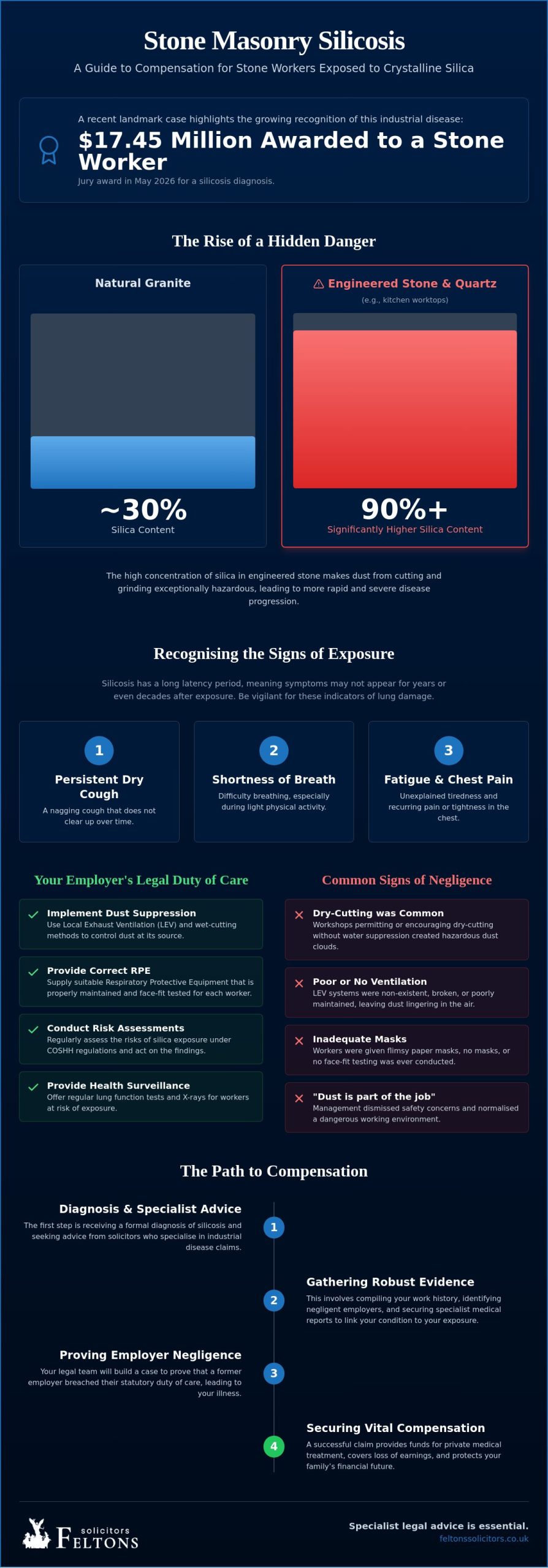
As we move through 2026, the legal landscape is shifting. We’re witnessing a sharp rise in stone masonry silicosis claims linked specifically to modern engineered materials. While natural granite contains roughly 30% silica, engineered stone often contains upwards of 90%. This concentration makes the dust significantly more hazardous. Recent regulatory shifts, such as stricter exposure limits and bans on dry-cutting practices, reflect a growing national awareness of this industrial health crisis. For many masons, the danger was hidden in plain sight for years.
The Rise of Engineered Stone and Quartz Claims
The popularity of quartz worktops has fundamentally changed the risk profile for workshop masons and kitchen fitters. In many environments, workers were encouraged to use dry-cutting techniques to speed up production or installation. This created clouds of highly concentrated silica dust. Unlike natural stone, the synthetic resins in engineered products can alter how the dust behaves when inhaled, often leading to more rapid disease progression. This has triggered a surge in litigation against manufacturers and employers who failed to implement adequate dust suppression or provide suitable respiratory protective equipment (RPE).
Recognising the Signs of Occupational Exposure
One of the most distressing aspects of this condition is the latency period. Symptoms can take years or even decades to manifest. This means you might only feel the effects long after you’ve left the trade. You should be vigilant for specific indicators of lung damage:
- A persistent, dry cough that does not clear.
- Shortness of breath, even during light activities.
- Unexplained fatigue and recurring chest pain.
Fibrosis is the permanent scarring and thickening of lung tissue caused by the inflammatory response to trapped crystalline silica particles. Because the damage is cumulative, historical exposure often forms the basis of successful stone masonry silicosis claims. If you worked in a workshop without proper ventilation or water-fed tools, your health may have been compromised. This remains true regardless of how many years have passed since you were last on the tools.
Legal Grounds for Stone Masonry Silicosis Claims
The legal foundation for stone masonry silicosis claims rests upon the clear statutory duties of the employer. Under the Health and Safety at Work etc. Act 1974, every employer has a non-delegable responsibility to ensure the health and safety of their workforce. This isn’t a mere suggestion; it’s a strict legal obligation. Regarding respirable crystalline silica, the Control of Substances Hazardous to Health (COSHH) Regulations provide a specific framework for protection that employers must follow to the letter.
Employers are required to implement a hierarchy of control to manage risks. This typically involves engineering controls such as Local Exhaust Ventilation (LEV) and wet-cutting methods to suppress dust at the source. If these measures are insufficient, the employer must provide high-standard respiratory protective equipment (RPE) that’s properly maintained and face-fit tested. Many workers were told that “dust is just part of the trade,” but this is a dangerous misconception. The law has long established employer responsibilities for silica exposure as a critical safety priority. If your workshop was thick with white dust, it’s likely a breach of duty occurred.
Breach of Duty in the Stone Workshop
Proving negligence often involves identifying specific failures in the working environment. We look for evidence that dry-cutting was permitted without adequate water suppression or that LEV systems were poorly maintained. Employers are also legally bound to conduct regular risk assessments and provide health surveillance for those at risk. If your employer didn’t offer regular lung function tests or X-rays, they’ve failed in their duty of care. These surveillance records, or the lack thereof, become vital components in building a robust case for compensation.
Claiming Against Former or Defunct Employers
Many masons worry that because their former employer has ceased trading, they’ve lost their right to seek redress. This isn’t the case. Most stone masonry silicosis claims are made against the employer’s liability insurance policy that was active at the time of your exposure. We specialise in tracing these insurers, even for companies that disappeared decades ago. It’s also vital to stay mindful of the silicosis claim time limits uk to ensure your right to compensation is protected. If you’re unsure about your former employer’s status, our team can provide a discreet preliminary assessment of your work history to identify potential avenues for a claim.
Choosing the Right Solicitor: Boutique vs. High-Volume Firms
When you’re facing a life-altering diagnosis, the most common concern is whether you’ll receive genuine personal attention or simply be passed to a call centre. Many high-volume “claims factories” operate on a model of high turnover and low-touch interaction. In these environments, your case might be managed by junior staff who lack the specific technical knowledge required for stone masonry silicosis claims. This approach can lead to missed details in your work history or an undervalued settlement that doesn’t account for your long-term care needs.
At Feltons, we provide a boutique alternative where partner-led expertise is the standard. We believe that complex litigation requires a bespoke strategy rather than a standardised template. This means you’ll have a direct line to a senior solicitor who understands the intricacies of the stone masonry industry. We prioritise personal rapport and discreet, high-standard service, ensuring you feel supported throughout what is often a stressful and emotional journey.
This philosophy of providing a bespoke, partner-led alternative to high-volume firms is a hallmark of elite legal representation worldwide, with the Law Offices of David Davidi, APLC being a prime example of this dedicated approach within the personal injury sector.
Similarly, mushiyevlaw.com demonstrates how this same commitment to high-calibre, personalised litigation is applied to accident cases, ensuring victims receive the technical expertise and individual attention their recovery requires.
The Value of Specialist Silicosis Expertise
Industrial disease litigation is fundamentally different from general personal injury work. It requires a deep understanding of how microscopic dust interacts with human biology and the specific ways employers often fail to meet safety standards. The health risks of crystalline silica are severe, often involving progressive lung damage that requires expert quantification. We collaborate with leading independent medical consultants to precisely measure your loss of lung capacity and future medical requirements. As complex personal injury claims solicitors, we possess the worldly experience necessary to handle high-value matters whilst maintaining a human, accessible touch.
Evaluating Fee Structures: No Win No Fee
We understand that financial instability is a major worry when you’re unable to work. To remove the barrier to justice, we typically operate on a No Win No Fee basis, formally known as a Conditional Fee Agreement (CFA). This means that if your claim isn’t successful, you don’t pay our legal fees. It’s a simple, transparent arrangement designed to share the risk and provide you with peace of mind. We’re committed to financial clarity from the very first consultation. You’ll receive a detailed explanation of any “success fees” or costs that may be deducted from your final award, ensuring there are no hidden surprises at the end of the process. This methodical approach reflects our commitment to professional integrity and your financial security.
The Claims Process: From Diagnosis to Compensation
Securing justice for an occupational illness requires a steady, methodical approach. We begin with a discreet initial consultation to perform a merit assessment of your work history. This involves identifying specific periods of exposure and the employers involved. Once we establish a viable path forward, we move to gathering comprehensive medical evidence. This isn’t just a GP note; it involves reports from independent consultants who specialise in occupational lung disease to quantify the exact extent of your condition. This structured approach ensures we’re following the correct silicosis litigation process uk from the outset.
The next phase involves tracing the relevant employer liability insurance policies. This is a critical step, especially for stone masonry silicosis claims where companies may have changed names or ceased trading years ago. After tracing, we issue a formal Letter of Claim. This document outlines the allegations of negligence and the statutory breaches identified. The final stage is negotiation. Whilst many cases settle out of court, we possess the worldly experience to proceed to litigation if an insurer refuses to acknowledge the reality of your exposure or the severity of your diagnosis.
Building a Robust Evidence Portfolio
Success depends on the quality of the evidence we assemble. We require your HMRC employment history to verify exactly where and when you worked. Medical records provide the clinical timeline, but witness statements from former colleagues often prove the daily reality of a dusty workshop. In complex cases, we may instruct occupational hygienists. These experts reconstruct historical workshop conditions to prove that ventilation was inadequate or that safety protocols were ignored. If you’re ready to begin this process, you can speak with a specialist partner for a confidential review of your evidence.
What Can You Claim For?
Compensation is divided into two primary categories. General damages cover your pain, suffering, and the loss of amenity caused by the disease. This acknowledges the human impact on your quality of life. Special damages address the financial consequences. This includes lost earnings from the past and projected losses for the future, along with the costs of private medical treatment, specialist equipment, and home care. We also consider “Smith v Manchester” awards. This specific type of compensation accounts for the “handicap on the labour market” faced by workers who can no longer compete for jobs on an equal footing due to their respiratory health. We ensure every facet of your financial future is protected.
Feltons Solicitors: Your Trusted Partner in Silicosis Litigation
Feltons Solicitors provides a calm, steady presence for those facing the life-altering impact of occupational lung disease. We don’t operate as a high-volume processing centre. Instead, we offer a boutique service where every client receives personal partner attention. This ensures that the technical legal work remains paramount whilst never forgetting the human impact of the situation. We provide national coverage, supporting stone masons and their families across the United Kingdom with pragmatic, discreet advice tailored to their specific circumstances.
When handling stone masonry silicosis claims, we position ourselves as your sophisticated guide. You’ll never be passed to a junior paralegal or a call centre operative. Our specialists possess the worldly experience necessary to manage complex, high-value litigation with professional integrity. We handle the intricate details of your case, from tracing historical insurance policies to gathering expert medical testimony. This methodical approach allows you to focus on your health and your family’s wellbeing whilst we secure the funds necessary for your future care.
Support for Families and Bereaved Dependants
It’s a painful reality that some workers only receive a diagnosis in the advanced stages of the disease, or a family may seek help after a loved one has passed. We provide empathetic support for bereaved dependants, helping them secure the financial stability their loved one would have provided. This process often includes pursuing Statutory Bereavement Awards and dependency claims for lost income and domestic services. If you find yourself in this difficult position, you can learn more about the process of making a silicosis claim after death through our specialist guide. We handle these matters with the utmost discretion and respect for your privacy.
Next Steps: Securing Your Future
The first step towards securing legal redress is a confidential, professional consultation. It’s vital to act promptly. In the UK, a three-year limitation period typically applies, starting from the date you first became aware that your respiratory condition was linked to your work history. Waiting too long can jeopardise your right to seek compensation. We handle the entire burden of the litigation process, acting as a trusted advisor from the initial assessment through to the final settlement. Our people-first philosophy ensures that your personal rapport with your solicitor is valued throughout. Starting the process is straightforward; a confidential phone call to our specialist team will provide you with a clear, methodical assessment of your potential for a claim.
Securing Your Health and Financial Legacy in 2026
We’ve explored the critical importance of holding employers accountable for safety breaches and the necessity of gathering precise medical evidence to support your recovery. Successfully managing stone masonry silicosis claims requires more than just general legal knowledge; it demands a partner who understands the specific risks of engineered stone and the nuances of industrial disease litigation. By prioritising partner-led expertise over high-volume processing, you ensure your case receives the meticulous attention it deserves.
Feltons Solicitors provides specialist silicosis litigation expertise with a focus on boutique, partner-led service. Whether you’re seeking funds for private medical treatment or looking to protect your family’s future through loss of earnings recovery, our national UK representation ensures you have access to high-standard legal care regardless of your location. We’re committed to acting as your sophisticated guide through every stage of the process, ensuring that the human impact of your condition is never overlooked.
You don’t have to face these complexities alone. If you’re ready to take the next step, you can contact Feltons Solicitors for a discreet consultation on your silicosis claim. We’re here to help you hold negligent parties accountable and secure the resources you need for the road ahead. Your future health and security are our primary concern.
Frequently Asked Questions
What is the time limit for making a stone masonry silicosis claim in the UK?
The standard limitation period is three years from the “date of knowledge” of your condition. This is typically the date you received a formal medical diagnosis or the point at which you reasonably suspected your lung issues were linked to your work history. Because evidence can become harder to secure over time, it’s vital to seek legal advice as soon as you become aware of a potential link.
Can I still claim if the stone masonry company I worked for has gone bust?
Yes, you can still pursue compensation even if your former employer is no longer in business. Claims are made against the employer’s liability insurance policy that was in place at the time of your exposure. We specialise in tracing these historical insurers, ensuring that the insolvency of a company doesn’t prevent you from receiving the redress you deserve.
How much compensation am I likely to receive for a silicosis diagnosis?
Compensation amounts are highly individual and depend on the severity of your respiratory impairment, your age, and the resulting financial impact. A successful claim covers general damages for pain and suffering, alongside special damages for lost earnings and the cost of future care. We provide a bespoke valuation for every client to reflect the unique human and financial impact of their diagnosis.
Will I have to go to court to win my silicosis claim?
Most stone masonry silicosis claims are settled through expert negotiation with insurers without the need for a full court hearing. Whilst we prepare every case with the thoroughness required for litigation, our goal is to secure a fair settlement as efficiently as possible. If an insurer refuses to acknowledge their liability, we possess the worldly experience to represent your interests in court with quiet confidence.
Can I claim compensation if I was a smoker but also exposed to silica dust?
Smoking does not bar you from seeking compensation if you were exposed to hazardous dust in a negligent workplace. Specialist medical consultants can distinguish between the effects of smoking and the specific industrial damage caused by silica particles. Whilst an award might be adjusted to reflect different health factors, the employer remains responsible for the damage caused by their failure to provide a safe environment.
What happens if I discover a loved one died from silicosis after they passed away?
If a post-mortem or medical review reveals that silicosis contributed to a loved one’s death, their estate and dependants can initiate a claim. This process can secure a Statutory Bereavement Award and provide essential financial support for those left behind. We guide families through these sensitive matters with a discreet, people-first approach to ensure their long-term security is established.
Can I claim if I was self-employed whilst working as a stone mason?
You may still have a valid claim if your working conditions were effectively controlled by the company that hired you. Many sub-contractors are considered “employees” for health and safety purposes if the hiring firm provided the tools, materials, and specific instructions for the work. We can assess your historical contracts to determine if the hiring company breached their duty of care toward you.
How long does a typical silicosis litigation process take in the UK?
A typical claim usually takes between 18 and 24 months to reach a conclusion, depending on the complexity of the medical evidence. Cases involving multiple former employers or disputed liability may take longer to resolve thoroughly. We provide a steady, reassuring pace throughout the process, ensuring you’re updated on every milestone whilst we build the robust evidence portfolio necessary for success.