

A buy-to-let purchase is ready to proceed when the property’s legal position, its letting terms and any mortgage conditions have been considered together. A flat may look ideal as an investment, but a lease restriction or title condition could affect your plans to let it. A residential mortgage may also have terms that do not fit your intended use. A buy to let conveyancing solicitor UK investors appoint can help identify these issues before you become contractually committed.
Although the process has similarities to buying a home, a rental purchase brings extra questions. You need to understand whether the property documents raise issues for letting and whether the lender’s requirements reflect your plans. Addressing those points before exchange gives you a clearer basis for deciding how to proceed.
This guide explains the solicitor’s role, the title, lease and mortgage matters that may affect a buy-to-let purchase, and how conveyancing fits into the wider process. It also sets out what information to prepare and which decisions to consider before exchange.
Key Takeaways
- A buy to let conveyancing solicitor UK buyers appoint reviews the contract, title and relevant enquiries in light of the property’s intended rental use.
- Before exchange, consider whether title conditions, lease terms or other property-specific matters could affect your plans to let.
- If you are using a mortgage, consider the lender’s requirements alongside the property’s legal position and your intended use.
- Prepare the transaction details, property information and lender correspondence, then review the legal advice before deciding whether to exchange.
- Feltons Solicitors LLP provides tailored residential and commercial conveyancing, with pragmatic guidance shaped around the circumstances of your purchase.
Role of a buy-to-let solicitor in a UK property purchase
Buy-to-let conveyancing is the legal work involved in transferring a property to a buyer who intends to rent it out. A solicitor reviews the contract and transaction documents, investigates the legal title and raises relevant enquiries. This helps you understand what you are buying and identify legal matters that could affect your plans.
Buy-to-let conveyancing examines the legal position of the property and purchase in light of the buyer’s intended use. The work depends on the property, its tenure, the transaction and the jurisdiction. It does not predict rental income or guarantee that a property will be suitable as an investment.
How does buy-to-let conveyancing differ from a home purchase?
The core process is still a property transaction, but your intended use affects which questions need particular attention. For example, the solicitor may consider whether title conditions or lease terms affect letting, and whether the mortgage arrangements reflect your plans. There is no identical checklist for every rental purchase: enquiries should respond to the documents and circumstances of the specific property. Conveyancing procedures also vary across England and Wales, Scotland and Northern Ireland.
What can a solicitor help you understand before exchange?
Before exchange, your solicitor reviews the contract and title, considers relevant search results and replies to enquiries, and explains legal issues that arise. If a document appears to restrict letting, for example, you can understand what it says and why it may matter before deciding how to proceed. This legal due diligence informs your decision, but does not assess likely rent, investment returns or future property values.
For a purchase with mortgage funding, the conveyancer also deals with the lender’s legal requirements as part of the transaction. The lender assesses the borrowing under its own criteria, while the solicitor handles the legal work and reports relevant matters in line with the transaction requirements. These responsibilities are connected but distinct. If the property’s legal position or your intended use raises a question, clear advice can help you consider it before exchanging contracts.
It is useful to separate three kinds of decision:
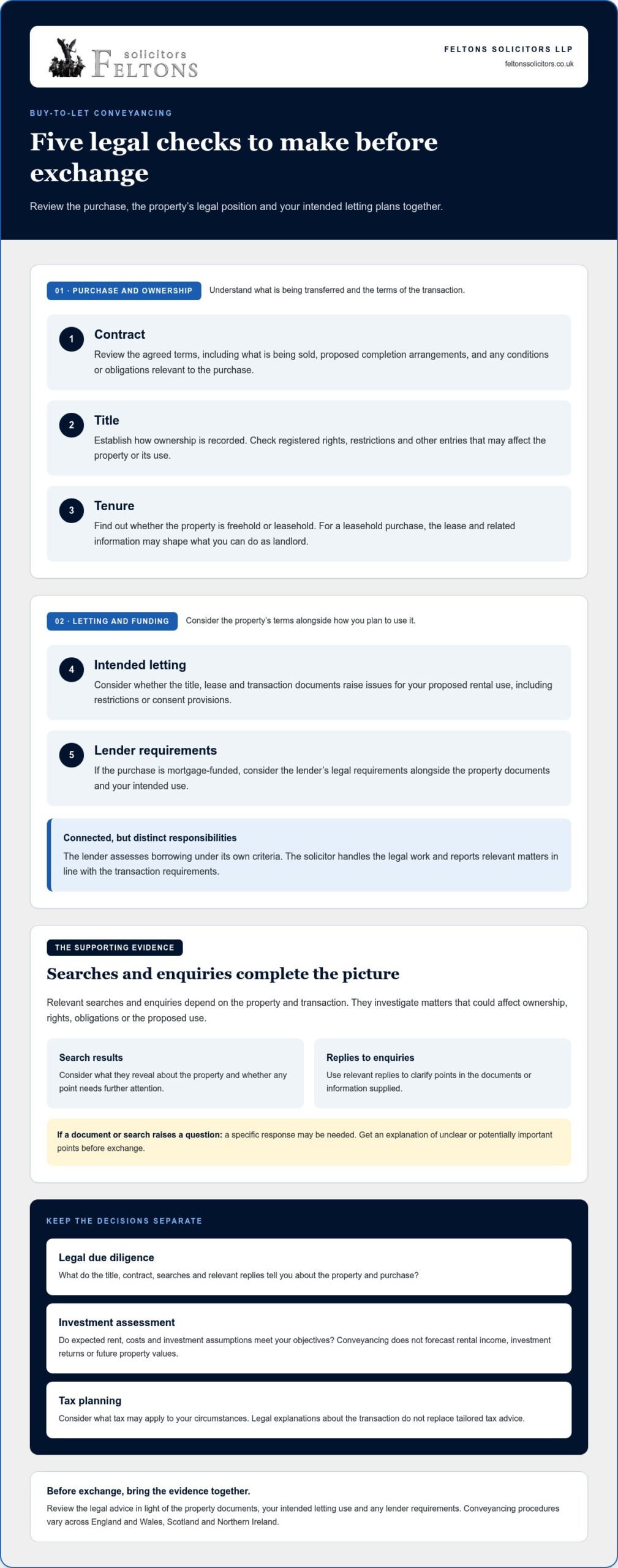
- Legal due diligence: What do the title, contract, searches and relevant replies tell you about the property and purchase?
- Investment assessment: Do the expected rent, costs and investment assumptions meet your objectives? Conveyancing does not forecast these.
- Tax planning: What tax may apply to your circumstances? Legal explanations about the transaction do not replace tailored tax advice.
A buy to let conveyancing solicitor UK buyers instruct can explain the legal documents and flag issues relevant to the proposed purchase. Feltons provides residential and commercial conveyancing, with pragmatic guidance tailored to the details of the transaction. The focus is on helping you understand the legal issues, not promising rental performance or a particular outcome.
Which legal checks matter most when buying a UK buy-to-let property?
For a landlord buyer, the title and contract checks establish what rights come with the property and what obligations or restrictions may shape its use. The relevant enquiries depend on the property and your plans. A buy to let conveyancing solicitor UK buyers instruct can focus the legal review on those circumstances, rather than applying the same checklist to every purchase.
Before exchange, consider these connected parts of the transaction:
- Contract: Review the agreed terms, including what is being sold, the proposed completion arrangements and any conditions or obligations relevant to the purchase.
- Title: Establish how ownership is recorded and identify registered rights, restrictions or other entries that may affect the property or its use.
- Tenure: Understand whether the property is freehold or leasehold. For a leasehold purchase, the lease and related information may shape what you can do as landlord.
- Intended letting: Consider whether the title, lease and transaction documents raise issues for the proposed rental use, including relevant restrictions or consent provisions.
- Lender requirements: If the purchase is mortgage-funded, consider the lender’s legal requirements alongside the property documents and your intended use.
Searches and enquiries add to the picture. Which are relevant depends on the property and transaction; they investigate matters that could affect ownership, rights, obligations or the proposed use. If a search or document raises a question, a specific response may be needed before you decide whether to proceed.
What should the title and contract review cover?
The title review helps explain who owns the property, what rights are recorded in connection with it and whether any entries appear to limit or qualify its use. The contract sets out the terms on which the seller proposes to transfer the property. Enquiries can clarify points in the documents or information supplied. Since the documents differ from one purchase to another, the review should respond to what they reveal.
If something is unclear or potentially important, get an explanation before exchange. You can then weigh the legal information against your plans and make an informed decision about proceeding.
How can letting restrictions affect the purchase?
A title entry or lease term may affect whether, or on what terms, a property can be rented out. A lease might contain covenants about occupation or letting, or set out a process for seeking consent. The wording and context matter: consent is not automatically required in every case, and different restrictions can have different effects. Your conveyancer can explain the relevant provision and any issue it raises for your proposed use.
Where legal checks prompt questions, tailored residential conveyancing guidance can help you understand the documents and consider next steps before exchange. Resolve the legal picture as far as possible before committing. Do not assume a restriction is harmless or that it automatically prevents letting.
Freehold, leasehold or mortgage-funded: how should buyers compare the legal issues?
Tenure and funding raise different legal questions, so a standard residential checklist may not cover every concern relevant to a rental purchase. Freehold and leasehold describe the property interest being bought; mortgage-funded describes how the purchase is financed. Consider all three together, while keeping property permissions separate from the lender’s conditions.
| Purchase type | Legal focus | Question for a landlord buyer |
|---|---|---|
| Freehold | Review the title, registered rights, restrictions and contract terms affecting the property. | Could any right or restriction recorded against the title affect the intended letting or use? |
| Leasehold | Consider the lease, including relevant covenants, consent provisions and obligations attached to the property. | Do the lease terms affect whether or how the property may be rented out? |
| Mortgage-funded | Consider the lender’s legal requirements and the terms of the proposed borrowing. | Do the lending terms reflect the plan to let, as well as the transaction being carried out? |
The property documents and lending conditions answer different questions. A title or lease may affect your rights in relation to the property; mortgage terms govern your relationship with the lender. Satisfying one does not automatically resolve the other. A buy to let conveyancing solicitor UK buyers instruct considers the legal details of the transaction in context, while mortgage suitability and investment decisions remain separate considerations.
What changes between a freehold and leasehold buy-to-let?
With a freehold purchase, the title review focuses on ownership and registered rights or restrictions. A leasehold review also considers the lease’s wording and obligations, including provisions that may relate to letting. If the terms raise questions, you can understand their significance before exchange. A lease variation or leasehold enfranchisement is a distinct legal matter, not an automatic step in buying a leasehold property.
Why must the mortgage match the intended use?
Read the proposed lending terms in light of your plan to rent out the property. Lenders do not necessarily use identical conditions or eligibility tests, so the relevant requirements depend on the borrowing. The conveyancer deals with the legal aspects of the transaction and lender requirements; this is not an assessment of whether a mortgage is financially suitable or the investment is likely to perform well.
Tax is another separate consideration, and terminology differs across the UK. Buyers may encounter Stamp Duty Land Tax in England and Northern Ireland, Land and Buildings Transaction Tax in Scotland, or Land Transaction Tax in Wales. The applicable treatment depends on the jurisdiction and the buyer’s circumstances, so do not assume one nation’s terminology or rates apply elsewhere. Keep tax planning distinct from title, lease and mortgage checks, and consider the rules that apply where the property is located.
Compare the transaction on its own facts: identify the tenure, understand any letting-related provisions and consider the lender’s requirements against your intended use. This joined-up view can help reveal questions to address before exchange without treating every freehold, leasehold or mortgage-funded purchase as legally identical.
How can you prepare for buy-to-let conveyancing before exchange?
Good preparation gives your conveyancer a clearer picture of the purchase and what you intend to do with the property. Share the relevant details early, including your letting plans and any concerns already raised by the seller or agent. A buy to let conveyancing solicitor UK buyers instruct can then consider the transaction in light of the proposed use and follow up on points that need attention.
Use this sequence to organise your preparation:
- Clarify your intended use. Set out whether you plan to let the whole property or only part of it, and describe the expected occupancy arrangement as clearly as you can.
- Gather the property information. Collect the property particulars, sale details, available title or lease documents, and information about the property’s current use or tenure.
- Share purchase and lender details. Provide the agreed transaction information and relevant mortgage correspondence or lender requirements if the purchase is mortgage-funded.
- Flag concerns promptly. Tell your solicitor about known title or lease terms, proposed alterations, occupancy plans or anything you have been told could affect letting.
- Review the legal advice before exchange. Make sure you understand material enquiries, outstanding points and their implications before deciding whether to proceed.
What information should you have ready?
Bring together documents you already hold rather than trying to obtain every record yourself. Useful items may include the sale memorandum or other purchase details, property particulars, available title information and the lease if the property is leasehold. Add mortgage correspondence relating to the proposed borrowing. A concise note of your intended letting arrangement and any known concerns about use or permissions can help your solicitor focus enquiries on the transaction.
Which decisions should you make before exchange?
Before exchange, consider whether you understand the answers to important enquiries and any unresolved issue that could affect your intended use. If a permission or lender condition is unclear, raise it with your conveyancer and ask them to explain its legal significance. Broader residential property law guidance can help put the purchase process in context, while advice on your transaction should address its specific documents and circumstances.
Preparation does not mean deciding every investment question through conveyancing. It means giving your solicitor accurate information, reading the advice carefully and considering the legal position before becoming committed. If an answer changes your plans, discuss the implications before exchange rather than relying on assumptions about the property or lender requirements.
Feltons provides tailored residential and commercial conveyancing, with pragmatic guidance shaped around the details of each transaction. Discuss your conveyancing requirements with Feltons as you prepare for a buy-to-let purchase.
How Feltons supports buy-to-let conveyancing across the UK
Buying a rental property involves decisions specific to the property, its legal documents and your intended use. Feltons provides residential and commercial conveyancing with pragmatic, tailored guidance to help you understand the legal work involved. The firm serves national and international clients and takes a bespoke approach that keeps the circumstances of each purchase in view.
A buy to let conveyancing solicitor UK buyers work with should make the legal position understandable, especially when documents or enquiries raise questions. Feltons combines modern delivery with traditional values, offering discreet support as you consider the legal implications of your purchase. The focus is on the transaction and relevant legal advice, not on predicting rental returns or promising a particular result.
What can a tailored conveyancing approach offer?
A tailored approach considers the property and transaction on their own facts. A leasehold flat, for example, may raise different document questions from a freehold house, while the proposed letting use can influence which enquiries are relevant. Clear explanations help you understand what an issue means legally and which decisions may need your attention before exchange.
Practical guidance can also help you distinguish a legal concern from a wider investment or management decision. Feltons’ bespoke service model addresses the specific circumstances of your purchase, with advice delivered in a considered, approachable way. This supports informed discussion without implying that every transaction follows the same route.
What is the next step for your property purchase?
To begin a focused discussion, outline the property, whether it is freehold or leasehold, and how you intend to let it. Mention whether you are buying with mortgage funding and share any known concerns about the title, lease or proposed use. These details help frame the conversation around the legal support relevant to your transaction.
Feltons can discuss your conveyancing requirements and explain how the firm can support the purchase. Home visits are available at clients’ convenience, offering another way to discuss your matter. Discuss your buy-to-let conveyancing matter with Feltons and outline the property and your plans for it.
Take your next step with clarity
Before your purchase moves forward, prepare a clear brief: what you want to buy, how you intend to let it and which points still need a legal answer. This gives your conveyancer a practical starting point and helps you focus on decisions that matter to the transaction. A buy to let conveyancing solicitor UK buyers appoint can help clarify the legal position so you can decide how to proceed with a better understanding of the issues.
You do not need to have every answer before beginning. Raise the questions you do have, particularly any uncertainty about the property’s terms, permissions or the relationship between your intended use and the purchase arrangements. Addressing these carefully can help you approach the next stage with a clearer view.
Feltons offers a bespoke approach to conveyancing, with guidance shaped around your circumstances. Discuss your buy-to-let conveyancing with Feltons and take a considered step towards your property purchase.
Frequently Asked Questions
What does a buy-to-let conveyancing solicitor do?
A buy-to-let conveyancing solicitor handles the legal work for transferring a rental property to you. They review the purchase documents, check ownership information and deal with relevant enquiries, including matters raised by your proposed letting use. For example, they can explain a title entry or lease clause in plain English. Their role is to clarify the legal position, not forecast rent or assess whether the investment meets your financial goals.
Do I need a buy-to-let conveyancing solicitor to purchase a rental property?
Whether you must instruct a solicitor depends on the jurisdiction and purchase arrangements, including any lender requirements. A mortgage lender may require a conveyancer to act on the legal transaction, and the process can differ across the UK. Even if you are considering handling matters yourself, conveyancing involves formal documents and legal obligations. Establish early what representation your purchase requires, particularly if you are borrowing or buying in a jurisdiction with distinct conveyancing procedures.
Can a leasehold property be used as a buy-to-let?
Potentially, but the lease terms matter. A lease may contain provisions about subletting, occupancy, use of the property or obtaining consent, and their effect depends on the wording and circumstances. For example, permission to let a whole flat may not answer whether a different occupancy arrangement is allowed. Have the relevant clauses explained before committing, and distinguish lease requirements from separate rules or practical obligations that apply to landlords.
Can I rent out a property with a residential mortgage?
Do not assume a residential mortgage permits you to let the property. The terms depend on your lender and borrowing, and letting without any required agreement could create problems under the mortgage contract. If your plans change after purchase, review the loan terms and obtain the lender’s decision before granting a tenancy. A conveyancer can explain the legal documents involved in the purchase, but mortgage suitability and permission are matters to address with the lender.
How much does a buy-to-let conveyancing solicitor cost in the UK?
There is no single fee that applies to every purchase. The legal work can vary depending on factors such as whether the property is leasehold, the complexity of its title and the enquiries needed. When reviewing a proposed legal fee, consider what work it covers and whether separate transaction expenses apply. The requirements can differ from one transaction to another.
Does buy-to-let conveyancing work the same way across the UK?
No. The core aim is to complete a legal property transfer, but conveyancing procedures and property-law terminology vary between England and Wales, Scotland and Northern Ireland. For instance, the point at which a buyer becomes contractually committed is not described identically in every jurisdiction. If you are purchasing outside the jurisdiction where you normally live, identify where the property is situated and make sure the advice addresses the rules and process that apply there.
What should I check before exchanging contracts on a buy-to-let?
Before exchange, make sure you understand any outstanding legal enquiry, the effect of relevant title or lease provisions and whether the transaction documents reflect the agreed purchase. If the seller has said a letting issue will be resolved, establish what evidence or explanation is available and what it means for your decision. Also make sure your intended use has been considered alongside any lender conditions. Raise uncertainty with your conveyancer before becoming contractually committed.