
A trust is not a blanket shield for every asset. Trust creation and asset protection solicitors can explain how a trust may hold property, business interests or agricultural assets, and the practical and tax considerations involved. The right structure depends on what you own, who should benefit and how much control you want to retain.
It is understandable to want to protect assets while planning clearly for the people who may inherit or benefit from them. A trust can organise how assets are managed and passed on, but it needs careful consideration rather than being treated as a one-size-fits-all solution.
This article explains which assets may be placed in a trust, how trusts can relate to property, business and agricultural holdings, and what to consider about inheritance tax. It also outlines common trust arrangements and trustees’ roles, helping you approach the decisions with a clearer understanding of what may suit your circumstances.
Key Takeaways
- Start by matching the assets you want to place in trust with the people who should benefit and the way they should benefit.
- Factor in trustee responsibilities and the possibility of tax, including inheritance tax considerations, before settling on an arrangement.
- Consider how property, business interests and agricultural assets are managed, and whether they may generate income within the trust.
- Compare the purpose of discretionary, income-entitlement, Will, lifetime and disability trusts when considering which structure may fit your plans.
Trusts and inheritance tax considerations
Trust planning involves identifying assets, intended beneficiaries and tax considerations. Inheritance tax treatment depends on the arrangement and your circumstances.
Inheritance tax considerations
HM Revenue & Customs says trusts may have to pay tax. Tax is therefore a planning consideration, not an automatic outcome. Consider which assets would enter the trust, who could benefit and how trustees would manage them. For example, a home and an investment account need separate consideration because their uses and income differ.
Trustees manage trust assets in beneficiaries’ best interests. Before creating a trust, define its purpose and intended beneficiaries, then consider how its terms will affect asset management and future benefits. A beneficiary might receive income, inherit assets later or live in a trust property. These decisions help shape questions about inheritance tax.
Trust set-up and administration costs
There is no single charge that applies to every trust. Solicitors’ charges depend on the work and complexity involved, with a fee provided after a quote request. The trust’s assets, terms, beneficiaries and management arrangements can all affect the work required to prepare its documentation.
Administration is separate from setting up a trust. Trustees must manage its assets and act in beneficiaries’ best interests. A trust holding a rented home, for example, involves different practical management from one holding assets that produce no income. Consider the set-up and ongoing work separately.
Start by reviewing the assets and purpose. List what the trust may hold, who should benefit, and whether they need income, a future inheritance or use of a property. Then consider who will act as trustee and how decisions will be managed. The person establishing a trust may appoint themselves as trustee, while naming a successor can clarify who takes over if they die.
Finally, review the trust document against the intended arrangements. It records how a lifetime trust is to be managed. Clarifying responsibilities, beneficiaries’ needs and tax considerations before creation gives the arrangement a defined purpose. This helps frame a practical discussion about whether a trust suits your estate planning.
Trusts for property, business and agricultural assets
A trust can hold different assets, but each requires practical planning. Consider how ownership, management and beneficiaries’ needs fit together.
To compare solicitors near you, look for clear advice on the assets involved, trustee duties and trust terms. Ask how the proposed arrangement would address your aims, including ongoing management and tax considerations.
For property, consider who can use it and how it will be managed. A home held in trust might provide a place for a beneficiary to live or generate rental income. A business interest may require decisions about control and continuity. Agricultural assets may include land, buildings or business interests, each with distinct management needs.
Challenges to asset transfers
Yes, transferring assets into a trust can be challenged as deliberate deprivation. The circumstances and purpose of the transfer matter, including what was intended at the time. A trust should not be treated as a guaranteed way to prevent assets being considered in other decisions. Consider the reason for transferring each asset and record how the arrangement supports your wider plans.
Limits and risks of asset protection trusts
A trust does not remove every risk or guarantee that assets will be protected. Transferring an asset can also change who controls or manages it under the trust’s terms. Consider whether trustees can meet beneficiaries’ needs, how property or business interests will be handled, and whether the arrangement remains suitable as circumstances change.
According to the UK Government, assets held in a trust can generate income, such as rent from a home. That income and the practical work of managing the property should form part of the planning. For a business or farm, consider how trust ownership could affect day-to-day decisions and future continuity.
For property-related planning, Wills, Probate, and Estate Planning can help shape decisions about assets and beneficiaries.
Assets that can be placed in a trust
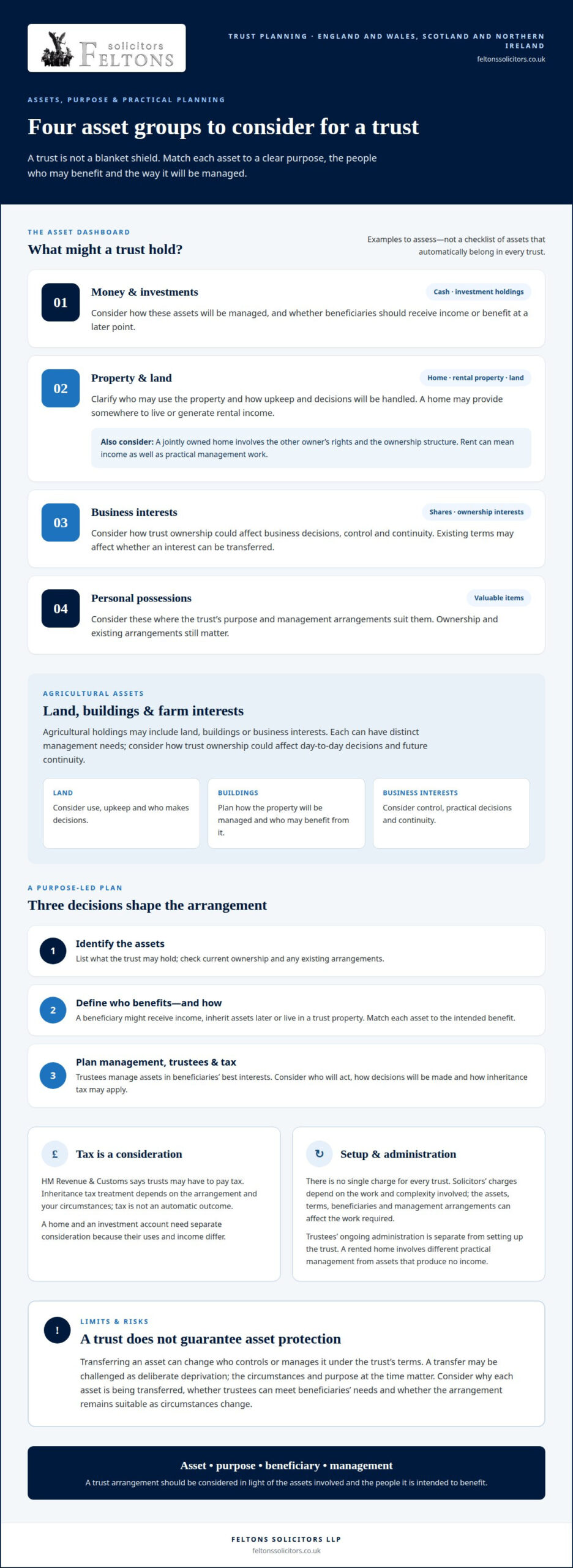
A trust can hold money or other assets for beneficiaries. Suitable assets depend on ownership, intended use and the trust’s terms. Trust creation and asset protection solicitors can help assess how each proposed asset fits your aims. Start by identifying what the trust may hold and what benefit it should provide. A cash fund, investment holding and family home each raise different management questions.
Examples of assets to consider include:
- Money and investments: cash or investment holdings can form part of a trust. Consider how they will be managed and whether beneficiaries should receive income or benefit later.
- Property and land: a home, rental property or land may be considered. Clarify who can use it and how decisions about its upkeep will be handled.
- Business interests: shares or an ownership interest may be relevant. Consider how trust arrangements fit with business decisions and continuity.
- Personal possessions: valuable items can be considered where the trust’s purpose and management arrangements suit them.
These examples are not a checklist of assets that automatically belong in every trust. Current ownership and existing arrangements matter. For a jointly owned home, for example, the other owner’s rights and the ownership structure need consideration. Business interests may also have existing terms that affect how they can be transferred.
Next, match each asset to a clear purpose. Decide whether the trust should provide income, preserve an asset for a future inheritance or allow a beneficiary to use it. Then consider who will manage it and what decisions they may need to make. This helps distinguish assets that support the trust’s purpose from those that complicate administration.
Set out the proposed assets and beneficiaries together. A home intended for a beneficiary’s use needs different management planning from cash intended to provide income. A business interest may require attention to decision-making, while land may need ongoing oversight. Trust creation and asset protection solicitors can help clarify how the proposed terms should reflect these practical responsibilities.
Finally, consider how each proposed transfer affects your wider estate plan. Reviewing an asset, its ownership and its intended role together gives you a clearer basis for deciding what to include.
What types of trusts are available in England and Wales, Scotland and Northern Ireland?
Trust options include discretionary, income-entitlement, Will, lifetime and disability trusts. For plans involving England and Wales, Scotland or Northern Ireland, establish the relevant jurisdiction before settling on a structure.
A discretionary trust gives trustees discretion over how beneficiaries benefit. This can suit plans where trustees need to consider beneficiaries’ differing needs over time. The trust document should clearly set out its purpose and management arrangements.
A trust with income entitlements gives a beneficiary an entitlement to income from trust assets. Consider who receives that income and how the underlying assets are managed. For example, both rental income and the property generating it need clear oversight.
A Will trust is created through a will and takes effect as part of estate planning. A lifetime trust is established during the settlor’s lifetime, using a trust document that records how it should be managed. Their timing and purpose distinguish these options. Consider whether the arrangement should form part of a will or begin during your lifetime.
A trust for a person with disabilities is designed around the beneficiary’s circumstances. Consider the person’s needs, the assets intended to support them and how trustees will manage those assets. The terms should connect the trust’s purpose with the support it is intended to provide.
Compare options by asking what beneficiaries need, who should make decisions and when benefits should be available. Then consider the assets involved and how trustees will manage them. A property intended for someone’s use may need different terms from investments intended to provide income. The structure should reflect the practical purpose, not rely on a trust label alone.
Since England and Wales, Scotland and Northern Ireland each form part of the UK’s trust-planning context, identify where the relevant assets and people are based. That helps frame advice on the appropriate structure and its terms. To discuss how trust choices fit your estate plans, arrange a conversation about your estate planning.
Feltons Solicitors LLP
Feltons Solicitors LLP can help you consider trust decisions within your wider estate and property plans. If you’re weighing how assets should benefit family members, its Wills, Probate, and Estate Planning service can support related planning discussions. Where property ownership forms part of your plans, Residential and Commercial Conveyancing may also be relevant.
Bring together the assets you are considering, your intended beneficiaries and the outcome you hope to achieve. This provides a clearer starting point for discussing how trust planning connects with your will, estate and property arrangements. A focused conversation about your circumstances and priorities is a practical next step.
Contact Feltons Solicitors LLP to discuss your estate planning questions.
Make your next planning decision with clarity
Before taking action, set out what you want the trust to achieve and how it fits your wider plans. Consider who should benefit, what role you want trustees to have, and whether your property or family circumstances may change. A clear outline of these priorities can make your next discussion more focused.
Trust creation and asset protection solicitors can help you consider how these decisions connect with your estate and property arrangements. Feltons Solicitors LLP’s work in Wills, Probate, and Estate Planning, Residential and Commercial Conveyancing, and Divorce and Financial Arrangements may be relevant where those matters intersect.
Bring your questions and the decisions you are weighing to a conversation. You can contact Feltons Solicitors LLP about trusts to discuss a practical next step. Thoughtful planning can help you move forward with greater confidence.
Frequently Asked Questions
Need help with a Trust?
Yes, a solicitor can help assess whether a trust fits your aims and circumstances. Prepare a brief outline of the assets involved, who you want to benefit and what you want them to receive. For example, a family home intended for a child’s future use raises different practical questions from investments intended to support someone now.
How do I set up a lifetime trust?
Begin by defining the trust’s purpose, intended beneficiaries and assets. Decide who should act as trustees, then establish how they should manage the trust and make decisions. A lifetime trust is created using a trust document that records its management arrangements. Consider how the terms will work in practice, including how trustees should respond if beneficiaries’ needs change.
What are settlors, trustees, and beneficiaries?
The settlor is the person who creates the trust and places assets into it. Trustees manage those assets under the trust’s terms, while beneficiaries receive the intended benefit. For example, a parent could establish a trust for a child, appoint trustees to manage its assets and set out how the child may benefit.
What can a family trust and asset protection solicitor do?
A solicitor can help a family understand trust options, clarify what the arrangement should achieve and consider how it fits with estate planning. They can also identify practical questions about beneficiaries, trustee roles and asset management. For instance, a family planning for a relative’s future support may need to consider who makes decisions and how those decisions are guided.
What does a trust and asset protection solicitor do in the UK?
A solicitor can explain trust structures, help consider suitable terms and discuss how a proposed arrangement fits your wider plans. This may involve considering asset ownership, beneficiaries, trustee responsibilities and tax implications. Feltons Solicitors LLP offers Wills, Probate, Trusts and Estate Planning, which can be relevant when considering how trust questions connect with your estate arrangements.
How can trusts protect assets from care fees, creditors or divorce in the UK?
A trust does not automatically protect assets from care-fee assessments, creditors or divorce-related claims. The purpose and timing of a transfer, the settlor’s control and the trust’s terms may all matter. Treat a trust as an estate-planning arrangement, not a guaranteed shield. Get advice on your circumstances before transferring assets or relying on a trust for protection.