

A grant of probate gives an executor legal authority to administer an estate, but it does not mean the inheritance can be paid out straight away. If you’re considering what to do when probate is granted in the UK, the next steps are to identify and value assets, settle debts and taxes, then distribute what remains under the will or the intestacy rules.
It’s understandable to expect the grant to bring matters to a close. In practice, it marks the start of estate administration. The executor remains responsible until the assets have been dealt with and passed on. This article explains what the grant allows, how to collect and value assets, and what must be addressed before beneficiaries receive their inheritance. It also covers why timing varies and when legal support may help keep the administration clear and orderly.
Key Takeaways
- A grant gives the personal representative authority to deal with estate assets, but distributing the inheritance comes later.
- Property sales can have tax-reporting deadlines: HM Revenue & Customs says Capital Gains Tax must be reported and paid within 60 days of completion.
- HM Revenue & Customs states that Inheritance Tax applies when an estate is over the £325,000 threshold; the estate’s tax position should be addressed before distribution.
- Legal advice can help manage complex assets, liabilities or beneficiary disputes and reduce the risk of mistakes during administration.
How can a probate professional collect and value the estate’s assets?
After the grant, a probate professional can organise the estate’s assets and administration. This includes identifying what the person who died owned and what liabilities remain.
Collecting estate assets
Collecting estate assets means locating and bringing together the money, property and investments belonging to the person who died. This is essential because beneficiaries cannot receive an accurate account until the assets and liabilities are identified. Send copies of the grant to organisations holding assets, such as banks, so they can release or transfer them. Banks, building societies and investment providers may require a grant of representation before acting. Gather information from each asset holder, then record every asset and its value in the estate accounts. Include any claims or outstanding amounts when assessing the estate’s overall position.
Reporting estate value and tax
Reporting means documenting the estate’s value, income and tax liabilities during administration. Accurate records help establish what the estate owes and what can eventually pass to beneficiaries. A professional gathers valuations and financial information, reports relevant details to HM Revenue & Customs, and deals with the estate’s tax position. This can involve Inheritance Tax, Income Tax and, where relevant, Capital Gains Tax. HM Revenue & Customs says Capital Gains Tax on property sales must be reported and paid within 60 days of completion. Estate accounts can then show assets, liabilities, income, capital changes, tax and distributions. This gives beneficiaries a clear record of how the estate was handled.
Managing property and bank accounts
Managing property and bank accounts means safeguarding estate assets while decisions about sale or transfer are made. This matters because property, cash and investments may need different arrangements before distribution. After receiving the grant, an executor can close the person’s bank and building society accounts, encash or transfer shares, and sell or transfer property. Where there are co-representatives, they should agree where financial assets are held, how withdrawals or payments are managed, and which assets to sell and when. The professional coordinates these decisions, records transactions and pays estate debts and taxes before distributing the remaining estate under the will or intestacy rules.
What happens before inheritance is paid out?
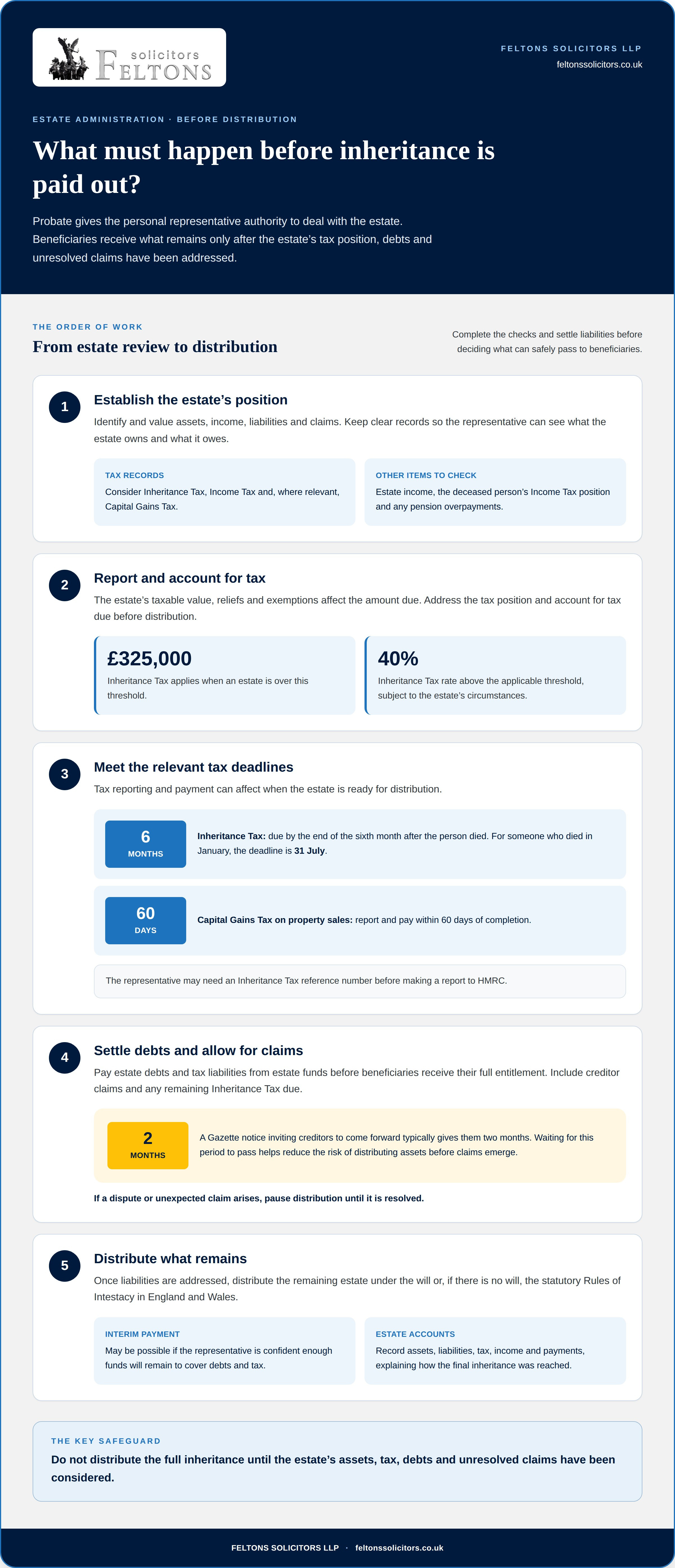
Before beneficiaries receive an inheritance, the estate’s tax position, debts and unresolved claims must be addressed. The personal representative needs a clear record of the estate’s value and liabilities before deciding what can safely be distributed.
HM Revenue & Customs states that Inheritance Tax applies when an estate is over the £325,000 threshold. HM Revenue & Customs also states that the Inheritance Tax rate is 40% above the applicable threshold. The amount due depends on the estate’s taxable value and any reliefs or exemptions that apply. A professional assesses the estate information, prepares the relevant tax reporting and accounts for tax due before distribution.
Timing matters. HM Revenue & Customs says Inheritance Tax must be paid by the end of the sixth month after the person died. For someone who died in January, the deadline is 31 July. The representative may need an Inheritance Tax reference number before making a report to HMRC, so this work can affect when the estate is ready for distribution. Estate income and the deceased’s Income Tax position also need attention, including any pension overpayments identified during administration.
Settle debts and tax liabilities from estate funds before beneficiaries receive their full entitlement. This includes creditor claims and any remaining Inheritance Tax due. If a dispute or unexpected claim arises, pause distribution until it is resolved. A notice in the Gazette inviting creditors to come forward typically gives them two months. Waiting for that period to pass helps reduce the risk of distributing assets before claims emerge.
Once liabilities are addressed, distribute the remaining estate under the will or, if the person died without one, the statutory Rules of Intestacy in England and Wales. An interim payment may be possible if the representative is confident enough funds will remain to cover debts and tax. Estate accounts record assets, liabilities, tax, income and payments, giving beneficiaries a clear explanation of their final inheritance.
Legal advice for executors and beneficiaries
An executor has duties to beneficiaries, creditors, the Probate Registry and HM Revenue & Customs. Legal advice can clarify these responsibilities before the executor distributes assets or responds to a claim.
Deciding whether to seek legal advice
Deciding whether to seek advice means assessing the estate’s complexity and the decisions the executor must make. Errors in reporting, paying liabilities or distributing assets can affect both beneficiaries and the executor. Advice is particularly relevant if the estate includes trusts, numerous assets, disputed claims or possible insolvency. If debts may exceed assets, seek professional help before taking further action. A beneficiary may also need advice about concerns with how the will is being administered.
Getting professional advice
Professional advice can help an executor understand their authority and manage their duties throughout administration. A solicitor can explain how the will affects distribution, what to include in estate accounts, and how to respond to beneficiaries’ questions. Advice can also help with HMRC reporting, the deceased person’s Income Tax position or pension overpayments. Provide the grant, will, asset information and details of any debts or claims so the adviser can understand the estate and identify the decisions that need attention.
Administration costs and fees
Administration costs are expenses involved in dealing with the estate after probate. The costs of professional administration depend on the case and are provided after a quote request. Relevant factors include the number and type of assets, tax work, property transactions and disputes. Executors should understand what work is covered and how expenses will be recorded against the estate. This helps beneficiaries see how administration affects the amount available for distribution, without confusing professional charges with the deceased’s debts or taxes.
Executors’ risks and personal liabilities
An executor is responsible for administering the estate properly, so decisions can have personal consequences. Distributing funds before addressing debts, tax or known claims may leave a shortfall that requires explanation or remedial action. Pause distribution if a dispute is unresolved, and seek advice before taking further steps if the estate may be insolvent. Keep a clear record of decisions, payments and reports to show how the estate was handled. Beneficiaries can seek advice if they need to understand a decision or raise a concern.
Legal authority granted by probate
A grant of probate is the formal document confirming an executor’s authority to administer an estate. For executors considering what to do when probate is granted in the UK, it defines which estate matters they can handle. It does not make the estate’s assets their personal property.
In England and Wales, a grant of probate is issued when someone dies leaving a will. The named executor applies to the Probate Registry, which issues the grant after approving the application. If there is no will, personal representatives apply for letters of administration instead. Letters of administration with a will annexed may be issued if the will names no executor or the named executor cannot apply.
The grant enables an executor to deal with assets held by banks, building societies and investment providers. For example, it can support closing accounts, transferring shares, or selling or transferring property. Asset holders may request a copy before releasing funds or changing ownership. Knowing what to do when probate is granted in the UK also means recognising that this authority does not remove the executor’s responsibility to administer the estate properly.
Property illustrates the difference between preparation and authority. An executor can list a property for sale before probate is granted, but cannot complete the sale until the grant arrives. This distinction shapes sale planning: marketing may begin earlier, while completion must wait. The grant also does not resolve disputes or give the executor personal entitlement to estate funds.
Probate procedures differ across the UK. This section describes England and Wales. Scotland and Northern Ireland have separate procedures, so the applicable process and terminology depend on where the estate is being administered.
In England and Wales, up to four executors can be named, and they must agree who applies. For support understanding the grant’s scope or managing the estate, discuss probate administration.
Feltons Solicitors LLP: Wills, Probate, and Estate Planning
Feltons Solicitors LLP assists with probate and estate administration after a grant has been issued. Its Wills, Probate, Trusts and Estate Planning service can support executors with gathering assets, addressing liabilities, preparing estate accounts and distributing an inheritance. Legal guidance may also help where the estate includes property, complex tax matters or a beneficiary dispute, as these can affect administration and the timing of payments.
With professional support, executors can understand their responsibilities and keep the process orderly, while beneficiaries can gain clarity about the estate’s progress and decisions. To discuss support with probate administration, contact Feltons Solicitors LLP.
Choose a clear next step for the estate
Knowing what to do when probate is granted in the UK is only part of an executor’s role. Establish who is handling each decision, how beneficiaries will receive updates and which matters need attention before the estate can be closed. Clear communication can prevent misunderstandings, particularly when family members have different expectations or administration takes time.
If you’re an executor weighing up your responsibilities, or a beneficiary seeking clarity about the process, tailored legal advice can help you decide how to proceed. Arrange a discussion with Feltons Solicitors LLP about your probate and estate administration needs, and take the next step with a clearer understanding of your options.
Frequently Asked Questions
What does a grant of probate allow you to do?
A grant allows the executor to deal with estate assets held by financial institutions and manage estate property. For example, it can support closing accounts, transferring shares or selling a property. It does not give the executor personal ownership of those assets. An executor can list a property before the grant arrives, but completion must wait until the grant has been received.
How long does estate administration take after probate?
Estate administration often takes six to 12 months, though the estate’s circumstances affect the timescale. A straightforward estate with few assets may be settled within a few months. Overseas property, business interests, tax matters or legal claims can extend the process to a year or longer. The grant starts the administration stage, but asset sales, reporting and unresolved issues can influence when it ends.
How long does it usually take to receive an inheritance?
For a straightforward estate in England and Wales, beneficiaries may receive an inheritance within about six to nine months of the person’s death. This is not necessarily six to nine months after probate is granted. The executor must first establish the estate’s position and arrange distribution. Foreign property, tax payments or legal claims can mean beneficiaries wait a year or longer for their full entitlement.
What debts and taxes must be paid before distribution?
The executor deals with the person’s outstanding debts and relevant taxes before distributing the estate. These may include Inheritance Tax, Income Tax and, where applicable, Capital Gains Tax. The deceased’s tax position up to the date of death is distinct from tax on estate income during administration. Pension overpayments and creditor claims may also need resolution, so the amount available to beneficiaries depends on the estate’s liabilities.
What documents do you need to access accounts?
Financial institutions commonly require a copy of the grant of probate or, where appropriate, letters of administration before releasing funds or transferring assets. The grant identifies the personal representative authorised to act. Each organisation may have its own process for handling an estate, so provide the requested probate document and follow its account-closure or transfer procedure. Keep copies of relevant correspondence with the estate records.
What happens if a will is found after probate?
If a valid will is discovered after probate has been granted, the existing grant may need to be cancelled and replaced. The newly found document could affect who is entitled to administer the estate and who inherits under its terms, changing the basis for earlier decisions. Obtain legal advice before continuing distributions so the estate can be dealt with in light of the will.