

Severe spinal cord injury compensation claims in the UK can reach six or seven figures. A claim may seek compensation if another party’s negligence caused the injury, including for pain and suffering, care, treatment, lost earnings and housing adaptations. The value depends on how the injury affects everyday life and the support needed over time.
It’s understandable to want a clear idea of what a claim could cover, especially when the effects may be long-lasting. A sound assessment looks beyond the injury itself to its impact on independence, finances and future care.
This guide explains what a spinal injury claim involves, how compensation for severe injuries is assessed, and what support and costs may be included. It also covers how compensation could affect means-tested benefits and practical steps to take after an accident.
Key Takeaways
- Understand the evidence a claim needs, including how responsibility for the injury and its impact are assessed.
- See how care, rehabilitation, lost earnings and home adaptations can contribute to a claim’s value beyond compensation for pain and suffering.
- Learn why guideline figures don’t include lifelong care or lost earnings, and what that means when assessing severe injury compensation.
- Find out how compensation may affect means-tested benefits and how a personal injury trust may help protect entitlement.
Can compensation cover lifelong care and support?
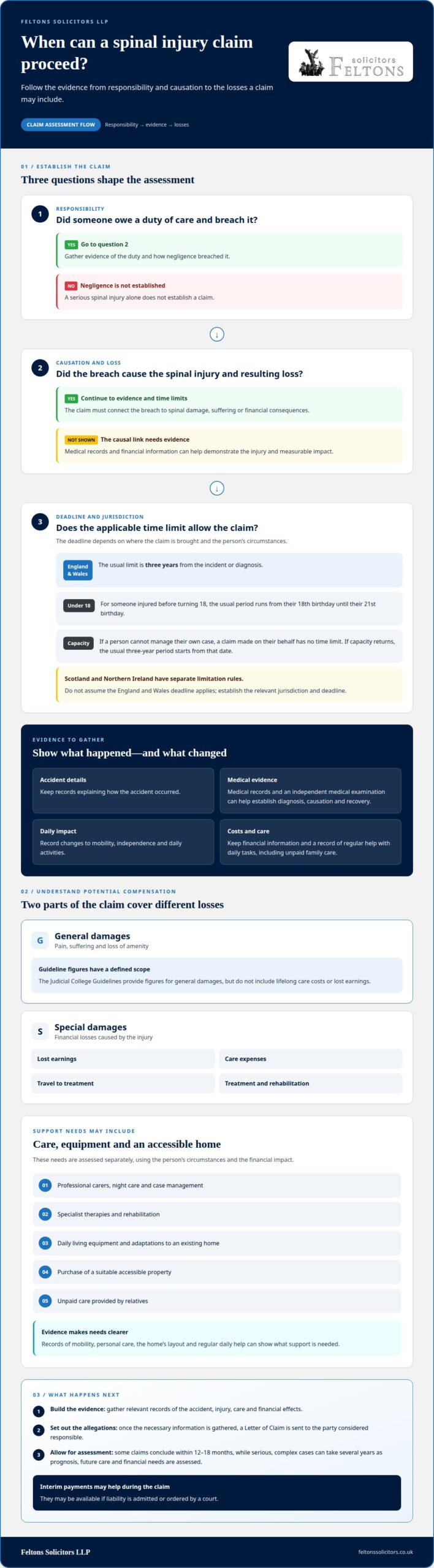
Yes. Compensation may cover care, medical treatment and rehabilitation after a spinal injury. In spinal cord injury compensation claims in the UK, special damages can include financial losses caused by the injury, such as lost earnings, care expenses and travel to treatment. General damages address pain, suffering and loss of amenity. The Judicial College Guidelines provide figures for general damages, but exclude lifelong care costs and lost earnings. These expenses need separate assessment based on the person’s needs and financial impact.
Support may include professional carers, night care, case management or specialist therapies. A claim can also cover daily living equipment, adaptations to an existing home or the purchase of a suitable accessible property. For example, evidence about mobility, personal care and the home’s layout can help demonstrate the support needed. Rehabilitation planning can identify suitable treatment and practical assistance as the person’s needs become clearer.
Care from relatives may also be valued as part of a claim. In spinal cord injury compensation claims in the UK, this can recognise unpaid help from family members rather than limiting the assessment to paid carers. A solicitor can help gather records of care, treatment and expenses, and show how the accident affects the injured person and their family. Keeping a record of regular help with daily tasks makes those needs easier to assess.
A claim must establish a duty of care, breach of duty, causation and measurable damages. It must show that someone owed a duty, negligence breached it, and the breach caused the injury and resulting loss. Evidence can include medical records and financial information. Serious spinal cord injury compensation claims in the UK often take several years, allowing time to assess the medical prognosis and long-term needs. If liability is admitted or ordered by a court, interim payments may help meet costs while the claim continues.
What should I do after an accident that causes a spinal injury?
After an accident, keep relevant records and document how the injury occurred. Eligibility depends on evidence linking someone’s negligence to the spinal injury and its effects.
Claim eligibility and negligence
A claim must show that someone owed a duty of care, breached it, and caused the injury or measurable loss. The evidence must connect the breach to the spinal damage, suffering or financial consequences. A serious injury alone does not establish negligence. In a clinical negligence claim, a healthcare provider must have failed to meet an acceptable standard of treatment, diagnosis or care, causing or materially contributing to the injury.
Starting a claim
Start by preserving records that explain the accident and its consequences. Evidence may include medical records, obtained with your permission, and an examination by an independent medical expert. These can help establish the diagnosis, the link between the accident and injury, and the effect on recovery. Once the necessary information has been gathered, a Letter of Claim is sent to the party considered responsible. An injury solicitor can assess the evidence and set out the allegations clearly.
Keep details of treatment and how the injury affects daily activities. For example, records can show whether your mobility or independence has changed since the accident.
Claim time limits
In England and Wales, the usual time limit is three years from the incident or diagnosis. For someone injured before turning 18, the period typically runs from their 18th birthday until their 21st birthday. If a person cannot manage their own case, a claim made on their behalf has no time limit. If they regain mental capacity, the usual three-year period starts from that date.
Scotland and Northern Ireland have separate limitation rules, so don’t assume the England and Wales deadline applies. Establish the relevant jurisdiction and deadline promptly. A solicitor handling a personal injury claim can help identify the applicable time limit and assess the evidence.
Does spinal cord injury compensation affect benefits?
Compensation can affect means-tested benefits because a damages award may change your financial circumstances. A personal injury trust may help protect benefit entitlement by holding compensation separately. The effect depends on your benefits and how the award is managed, so seek specialist advice before receiving or using damages.
Funding is another practical concern after a serious injury, particularly if earnings have fallen or care costs have increased. Many spinal injury claims use a no-win, no-fee arrangement. Under a Conditional Fee Agreement, the solicitor’s success fee is payable only if the claim succeeds. The agreement sets out how the fee works and what other costs or insurance arrangements apply.
With this funding arrangement, you don’t usually pay legal fees upfront, and no solicitor’s fee is payable if the claim fails, provided appropriate insurance is in place. Read the agreement carefully: it should explain the success fee, insurance and any costs that could remain your responsibility. A solicitor can assess the funding terms alongside the evidence and work involved, helping you understand the financial arrangements before deciding whether to proceed.
How do claims differ across the UK? The assessment considers responsibility, injury and resulting losses, but the applicable legal rules depend on the nation where the claim is brought. The time limit is a key difference: in England and Wales, the usual personal injury deadline is three years from the incident or diagnosis. Scotland and Northern Ireland have separate rules, so advice should reflect the correct jurisdiction.
How long do spinal cord injury claims take to settle? Some claims conclude within 12-18 months, while serious, complex cases can take several years. Time is needed to assess medical prognosis, future care and financial needs. An interim payment may help during the claim where liability is admitted or ordered by the court, supporting urgent needs before final damages are agreed.
Compensation ranges for severe spinal injuries
For paraplegia, the Judicial College Guidelines bracket is £267,340 to £346,890. For tetraplegia, the bracket is £396,140 to £493,000. These figures relate to pain, suffering and loss of amenity, not the entire value of a personal injury claim.
What affects compensation for paraplegia or tetraplegia? The assessment considers the injury’s severity, its effect on function and independence, and the care and support needed. Evidence about lost earnings, treatment, equipment and home adaptations can also affect the claim’s total value.
Special damages may cover financial losses caused by the injury. These can include professional care, rehabilitation, specialist equipment, lost earnings and home adaptations. For example, evidence of ongoing night care or a suitable accessible property can help explain future needs. The Judicial College Guidelines don’t include these costs, so they must be assessed separately.
Incomplete injuries can also lead to substantial claims when pain, reduced mobility or long-term support needs continue. The extent of recovery and the person’s likely future function help shape the assessment. In severe cases, spinal cord injury compensation claims may reach six or seven figures when full financial losses and care requirements are included. The amount depends on evidence of the injury’s personal and financial impact.
Before settlement, medical evidence and financial records help build a picture of ongoing needs. Serious claims can take several years to conclude while prognosis and future costs are assessed. Interim payments may be available during the claim once liability is admitted or ordered by the court. They can provide support before final damages are determined.
For a considered assessment of the injury, evidence and losses, discuss a personal injury claim.
Feltons Solicitors LLP: Personal Injury and Silicosis Claims
Feltons Solicitors LLP handles personal injury claims, including spinal injury claims. If an accident or another person’s negligence has caused a spinal cord injury, legal advice can help you understand how responsibility, medical evidence and future needs affect your claim.
For a serious injury, the assessment may need to consider more than the initial diagnosis. Care requirements, rehabilitation, changes to independence, lost earnings and adaptations can all be relevant to the losses claimed. A solicitor can explain the evidence needed and the steps involved, helping you make informed decisions about pursuing a claim.
To discuss a spinal injury claim, contact Feltons Solicitors LLP.
Choose a considered next step
After a life-changing injury, legal decisions sit alongside practical choices about family finances, housing and longer-term arrangements. For people considering spinal cord injury compensation claims in the UK, a focused conversation can help clarify which issues belong to the injury claim and which may need separate attention. You don’t need to have every detail resolved before seeking guidance.
Feltons Solicitors LLP handles Personal Injury and Silicosis Claims, Divorce and Financial Arrangements, Wills, Probate, and Estate Planning, and Residential and Commercial Conveyancing. These services may become relevant as an injury affects wider personal or property matters. Understanding how each issue is treated can help you set priorities and make informed decisions without assuming every concern forms part of a compensation claim.
A measured next step is to talk through your circumstances and identify the questions that matter most to you. Contact Feltons Solicitors LLP to discuss your next steps. With clear guidance, you can approach the decisions ahead with greater confidence.
Frequently Asked Questions
What is a spine injury claim?
A spine injury claim seeks compensation for harm caused by someone else’s negligence. It may relate to a road collision, workplace accident or negligent medical treatment. For example, a claim could address spinal damage and its effects on mobility, daily activities and finances. An injury alone isn’t enough: the claim must connect the harm and resulting losses to another party’s responsibility.
Can interim payments be claimed before the case ends?
Yes. Interim payments may be available before the final settlement if the responsible party admits liability or a court orders payment. A court may award them when it considers the claim has a high chance of succeeding. They can help meet needs during the case, such as treatment or support, while evidence about the longer-term impact is still being assessed. They are not the final damages award.
What spinal cord injury cases have settled successfully?
Reported outcomes include a roofer’s spinal injury claim after a fall, which settled for almost £2.7 million, and a catastrophic motorbike injury claim reported at £10 million. These examples show how outcomes can differ considerably; each reflects its own injury, evidence and financial losses.
Can family members be paid for providing care?
Yes. Care provided by relatives can be valued as part of a spinal injury claim, even when family members aren’t professional carers. To support this part of a claim, record the help provided, such as assistance with washing, dressing, meals or appointments, and how often it is needed. This information helps describe the care involved and its effect on family life.
How much compensation can I expect?
Judicial College Guidelines figures for pain, suffering and loss of amenity include £267,340 to £346,890 for paraplegia and £396,140 to £493,000 for tetraplegia. These figures don’t cover the whole claim. Care, lost earnings, rehabilitation, equipment and housing adaptations are assessed separately, so the overall value depends on the injury’s effects and the evidence supporting future needs.
What happens if liability is partly disputed?
If responsibility is shared, compensation may be reduced to reflect the claimant’s share of responsibility. For example, if a claimant is found 20% responsible for the accident, their compensation is reduced by 20%. The parties may negotiate over the evidence and each person’s contribution. If negotiations don’t reach agreement, the claim may go to court for a judge to decide liability and damages.