
Silicosis Compensation Claims UK: A Specialist Guide to Legal Redress in 2026

Silicosis Compensation Claims UK: A Specialist Guide to Legal Redress in 2026

Could a diagnosis that feels like an ending actually be the starting point for securing your family’s future? For many workers, the discovery of an occupational lung disease brings immediate concerns about physical health and long-term financial stability. Understanding the landscape of silicosis compensation claims uk is essential for anyone facing this reality in 2026, as the legal framework provides a clear pathway to both accountability and essential care.

It’s understandable to feel overwhelmed by the complexities of litigation, especially when you are managing symptoms whilst trying to decipher the strict three-year “date of knowledge” rule. We believe that you deserve a discreet, professional partner to handle the legal burden so you can focus on your wellbeing. This guide offers expert clarity on the 18th Edition Judicial College Guidelines, updated Industrial Injuries Disablement Benefit rates, and the precise steps required to hold negligent parties responsible. You will learn how to navigate the claims process with confidence; ensuring your family’s financial security is protected through tailored legal redress and specialist support.

Key Takeaways

  • Identify how employer breaches of the Health and Safety at Work Act 1974 and COSHH regulations form the legal foundation of a successful claim.
  • Understand the complexities of silicosis compensation claims uk by identifying the strict three-year limitation period and the “date of knowledge” rule.
  • Explore how the 18th Edition Judicial College Guidelines are used to assess general damages for pain, suffering, and loss of amenity in 2026.
  • Learn the vital difference between general and special damages to ensure every aspect of your future care and financial loss is recovered.
  • Discover the benefits of a bespoke, partner-led legal service that prioritises personal rapport and expert guidance throughout the litigation process.

Silicosis is a debilitating condition characterised by irreversible lung scarring. It occurs when respirable crystalline silica (RCS) is inhaled, leading to inflammation and permanent tissue damage. Crucially, the UK legal system views this as an avoidable occupational illness. If you’ve been diagnosed, understanding What is Silicosis? from a legal perspective is the first step toward justice. Every worker has a fundamental right to a safe environment where dust exposure is strictly controlled. When employers fail to provide adequate ventilation or protective equipment, they may be liable for silicosis compensation claims uk.

Legal redress often depends on the clinical presentation of the disease. Chronic silicosis typically develops after decades of low-level exposure, whilst accelerated silicosis appears within five to ten years of more intense work. Acute silicosis is the most severe, often manifesting within months of extreme exposure. Courts recognise that each form requires a different approach to evidence, but all stem from the same failure to manage workplace hazards. The UK legal system treats silica dust as a significant health hazard, and the Health and Safety Executive (HSE) maintains strict workplace exposure limits to protect workers from these life-altering outcomes.

The Emerging Crisis: Engineered Stone and Modern Exposure

The rise of artificial stone kitchen worktops has created a modern “front line” for silicosis cases. These products can contain up to 95% silica, far exceeding the levels found in natural granite or marble. In August 2024, the first UK cases linked to this industry were identified in young men, highlighting a systemic failure in dust suppression during the cutting and polishing phases. If you work in fabrication or fitting, you may have been exposed to lethal dust levels without proper warning. The legal implications for this sector are profound, as many manufacturers have failed to adapt their safety protocols to the high silica content of modern materials.

Traditional Industries at Risk amongst UK Workers

Whilst engineered stone dominates recent headlines, traditional sectors continue to see high rates of illness. Construction, demolition, and stone masonry remain high-risk environments. Workers in pottery, ceramics, and sandblasting are also frequently exposed. Even historical exposure in mining and quarrying leads to silicosis compensation claims uk in 2026. The long latency period of chronic silicosis means symptoms often appear years after a worker has left the industry. This makes early legal advice essential to ensure that evidence from past workplaces is preserved and historical negligence is correctly identified.

Establishing Employer Negligence and the Duty of Care

Proving negligence is the cornerstone of any successful legal redress. Under the Health and Safety at Work etc. Act 1974, your employer carries a statutory duty to ensure your health and safety “so far as is reasonably practicable.” This is not a mere suggestion; it’s a legal mandate. For those pursuing silicosis compensation claims uk, this duty means providing a workplace where the risk of inhaling crystalline silica is managed with forensic precision. When a company fails to maintain these standards, they’re not just being negligent; they’re breaking the law.

The Control of Substances Hazardous to Health (COSHH) Regulations 2002 provide the specific technical framework for this duty. Employers must prevent exposure or, where that’s impossible, adequately control it. This usually requires the installation of “local exhaust ventilation” (LEV) to capture dust at the source. If an employer relies solely on basic masks without addressing the environment itself, they’ve likely breached their duty. The current Workplace Exposure Limit (WEL) for respirable crystalline silica is 0.1 mg/m³ over an eight-hour period. Exceeding this limit is a clear indicator of systemic failure and provides strong grounds for a claim.

Breach of Duty: What Constitutes Negligence?

Negligence often manifests through a lack of proper equipment or oversight. In many silicosis compensation claims uk, we see a recurring pattern of failure in three specific areas:

  • Respiratory Protective Equipment (RPE): Failing to provide high-specification masks that are face-fit tested for the individual worker.
  • Inadequate Training: Not educating staff on the “invisible” dangers of silica dust or the correct way to use suppression systems.
  • Health Surveillance: Ignoring the legal requirement under COSHH to provide regular lung function tests for at-risk employees.

The Role of the HSE and Regulatory Standards

HSE guidance documents, particularly the L5 Approved Code of Practice, are frequently used as benchmarks in court to establish what a “reasonable” employer should have done. In January 2025, the HSE published updated guidance specifically for those working with stone, clarifying the rigorous steps required to control exposure in modern fabrication shops. Proving that an employer “knew or ought to have known” about these risks is simpler in 2026, as the medical evidence and NHS guidance on silicosis have made the dangers common knowledge in industrial sectors. If you’re concerned about how these regulations apply to your specific work history, consulting a specialist in industrial disease litigation can provide the clarity you need to proceed.

Assessing Claim Value: General vs Special Damages

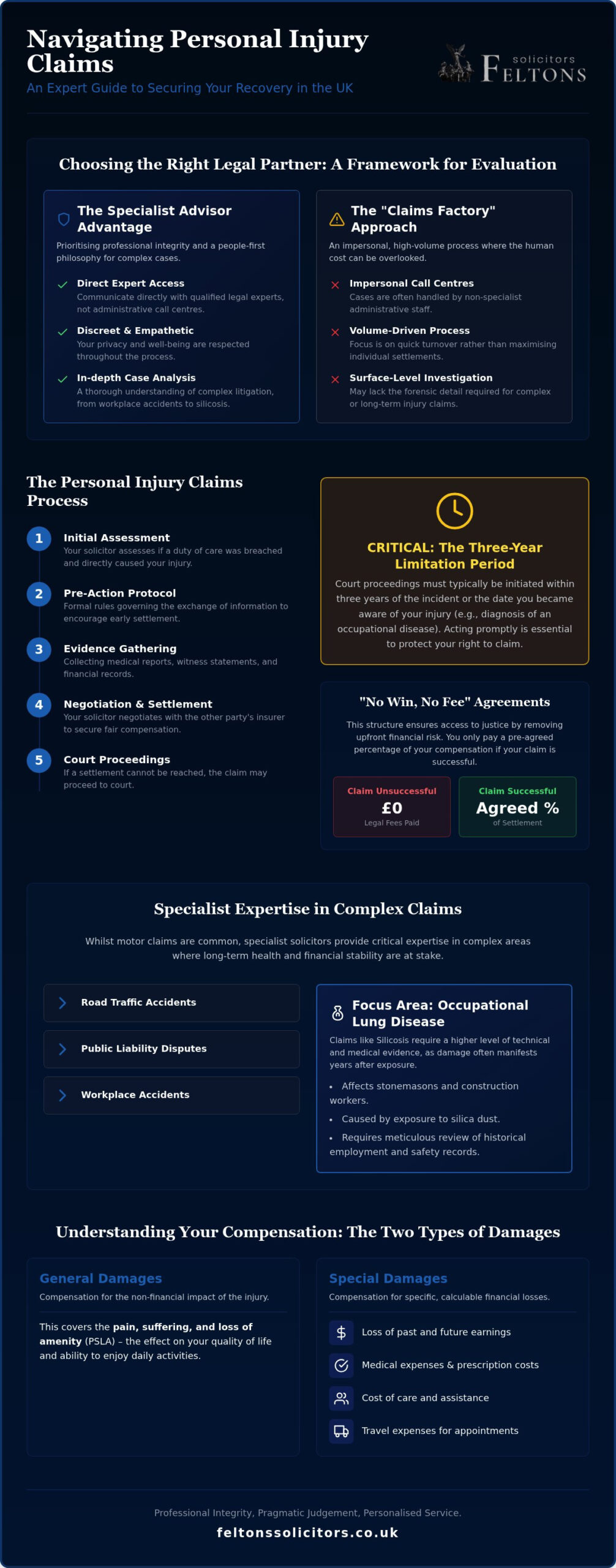
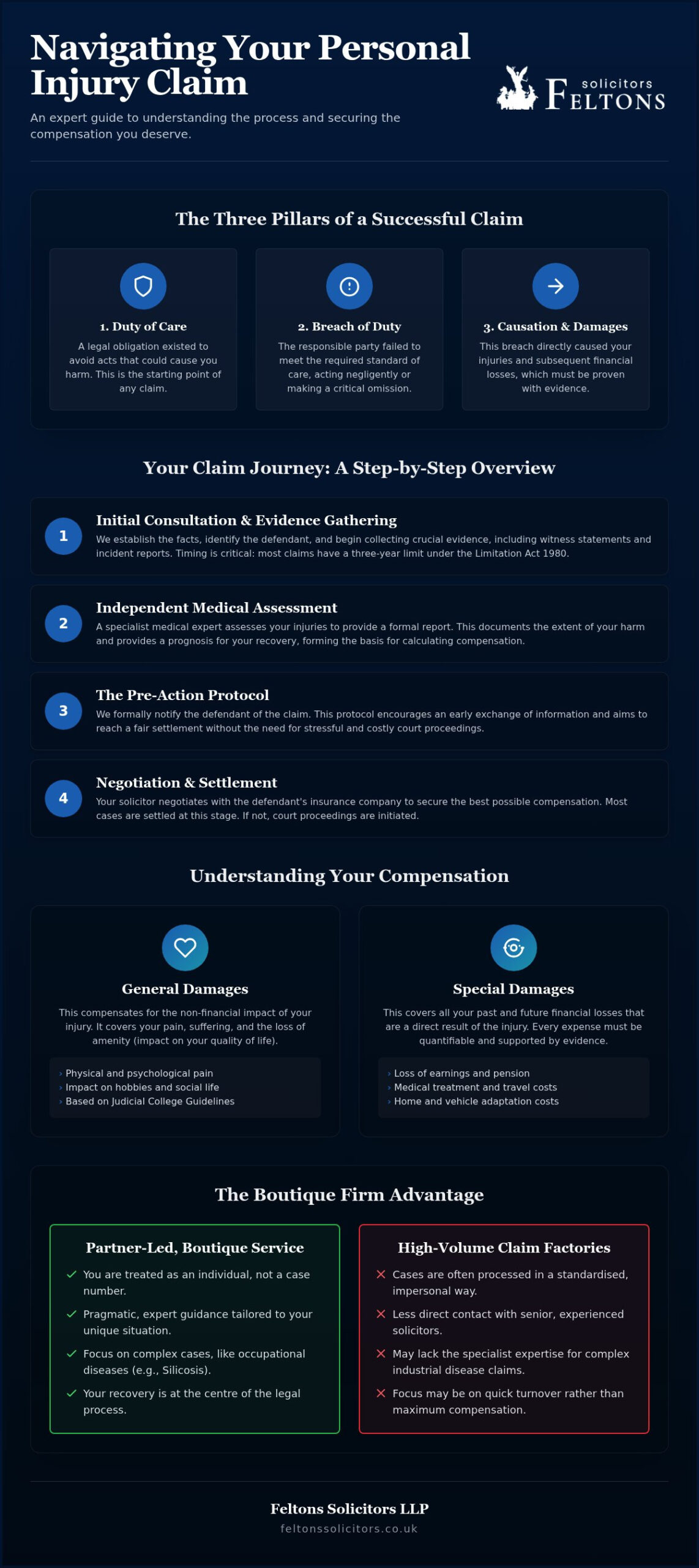
Determining the financial value of a claim is a methodical process that balances your immediate suffering with your future requirements. In the UK legal system, compensation is divided into two distinct categories: General and Special Damages. General Damages are awarded for pain, suffering, and loss of amenity (PSLA). This figure compensates you for the physical and psychological impact of the disease itself. According to the 18th Edition of the Judicial College Guidelines published in April 2026, a younger person experiencing severe disability and a heightened chance of premature death may receive between £123,000 and £166,000. For significant decline in lung function and impaired breathing, the brackets typically range from £67,000 to £86,000.

These figures reflect the clinical reality of the condition. The irreversible nature of lung scarring, as detailed in NHS information on silicosis, means that courts must account for a permanent reduction in quality of life. Whilst General Damages address the injury, they’re often only one part of silicosis compensation claims uk. To truly secure your family’s future, we must look closely at the financial losses that stem directly from your diagnosis.

Quantifying Special Damages and Future Losses

Special Damages aim to reimburse you for every penny lost due to your illness. This calculation is often complex and requires expert forensic accounting. We prioritise the recovery of lost earnings, including future wages and the impact on your pension contributions. Beyond income, we secure funding for essential medical interventions that go beyond standard care. This includes private pulmonary rehabilitation, oxygen therapy, and the cost of professional caregivers. As the disease progresses, we also account for necessary home adaptations, such as the installation of stairlifts or specialised bathroom equipment, ensuring you can maintain your independence and dignity at home.

Claims on Behalf of Families and Dependants

When a diagnosis results in a fatal outcome, the legal focus shifts to protecting the dependants left behind. The law allows for the recovery of a Statutory Bereavement Award and the reimbursement of funeral expenses. More importantly, we can claim for the “loss of dependency,” which covers the financial support the deceased would have provided to their spouse or children. Securing this accountability provides a vital safety net for families during an exceptionally difficult time. If you are handling the affairs of a loved one, our specialised guide on silicosis claim after death provides a compassionate and detailed overview of the legal steps available to you.

The Claims Process: A Step-by-Step Path to Justice

Timing is often the most critical factor in successful silicosis compensation claims uk. The law dictates a strict three-year limitation period for starting a claim. This clock begins ticking on the “date of knowledge,” which is typically the day you received a formal diagnosis or the moment you reasonably suspected your respiratory issues were work-related. Because the symptoms of chronic silicosis can take decades to manifest, this rule ensures that the path to justice remains open long after the initial exposure occurred. However, waiting until the final months of this period can make evidence gathering more difficult, so early intervention is always advisable.

A robust case relies on the testimony of independent medical experts. We work closely with leading pulmonologists who specialise in occupational lung diseases to provide a definitive link between your workplace conditions and your clinical health. These experts use advanced CT imaging and specialist lung function tests to quantify the extent of your impairment. This medical evidence serves as the foundation for your claim, ensuring that your compensation reflects the true severity of your condition rather than a generic estimate.

Many claimants worry about what happens if their former employer has ceased trading or cannot be traced. This is a common scenario in industrial disease litigation. If the original company is gone, we can often trace their historical insurers who remain liable for the claim. In cases where no insurer can be found, you may still be eligible for a lump-sum payment under the Pneumoconiosis etc. (Workers’ Compensation) Act 1979. As of April 2026, these government-backed payments have been increased to ensure workers aren’t left without support simply because a business has closed its doors.

Gathering Evidence to Support Your Claim

Success in court requires a meticulous reconstruction of your working life. We begin by obtaining your full employment history from HMRC to identify every period of potential exposure. Witness statements from former colleagues are equally vital; they provide first-hand accounts of the dust levels, the lack of ventilation, or the absence of protective equipment. Combined with your medical records and CT imaging, this creates a comprehensive evidence trail that is difficult for defendants to dispute.

Navigating the Pre-Action Protocol

The formal legal journey begins with a Letter of Claim sent to the defendant or their insurer. They have a set period to investigate and provide a response regarding liability. Our personal injury solicitors manage this entire dialogue, aiming for a fair settlement through negotiation whilst remaining fully prepared to issue court proceedings if a defendant is uncooperative. We prioritise a smooth, discreet process that protects your privacy whilst pursuing the maximum redress. If you’re ready to begin this process, you can contact our specialist team for a confidential consultation to discuss your options.

Why Choose Feltons Solicitors for Silicosis Litigation?

Selecting the right legal representation is the most consequential decision you’ll make following a diagnosis. At Feltons Solicitors, we understand that you aren’t just looking for a lawyer; you’re seeking a discreet partner to guide you through a period of profound uncertainty. We specialise in silicosis compensation claims uk by combining high-level professional authority with a genuine, empathetic reassurance. Our firm intentionally avoids the high-volume approach of larger practices, opting instead for a boutique service where your case receives the individualised attention it requires. We prioritise your peace of mind, ensuring that the legal process remains a supportive experience rather than an additional burden on your health.

Our expertise in complex litigation allows us to maintain a national reach whilst preserving the personal rapport of a trusted advisor. We believe in pragmatic, expert advice delivered in plain English. You won’t find dense, archaic legalese here; we prefer transparent communication that keeps you informed and empowered. Our people-first philosophy means that whilst the technical legal work is paramount, we never lose sight of the human impact of your condition. We’re committed to securing the financial security you need for long-term care and family stability, managing every detail with the quiet confidence that comes from years of specialist experience.

A Discreet and Supportive Legal Partnership

We position ourselves as a calm, steady presence in the face of stressful situations. Our partner-led approach ensures that your claim is managed by a senior expert from start to finish, providing a level of reliability that high-volume firms simply cannot match. We focus on minimising the burden on you by handling all negotiations and evidence gathering with methodical precision. This allows you to focus on your wellbeing whilst we work discreetly to secure the maximum redress for your suffering and future needs.

Securing Your Future with Feltons

Our firm provides access to a hand-picked network of the UK’s leading medical experts and pulmonary rehabilitation specialists. This ensures your clinical evidence is beyond reproach. Beyond industrial disease, our team possesses the worldly experience necessary to handle complex matters involving significant assets. You can explore our expertise in divorce and financial arrangements to see how our broader commitment to asset protection and bespoke legal care benefits all our clients. Whether you’re seeking accountability from a negligent employer or looking to protect your family’s financial future, we’re here to provide a sophisticated, high-standard service tailored to your unique circumstances.

Securing Your Future and Restoring Your Peace of Mind

Navigating a diagnosis of occupational lung disease is an immense challenge, but you don’t have to face it alone. We’ve explored how identifying employer negligence through COSHH breaches and understanding the 2026 Judicial College Guidelines are essential steps toward justice. Success in silicosis compensation claims uk hinges on early action and the meticulous gathering of medical evidence from specialist pulmonologists. By respecting the strict three-year limitation period and focusing on both general and special damages, you can ensure your family’s financial security is preserved whilst you focus on your health.

Feltons Solicitors provides the calm, steady guidance needed to manage these complex litigation matters. Our boutique, partner-led service ensures you receive individualised attention whilst benefiting from our national reach across the United Kingdom. We’re committed to transparent, plain English communication and a people-first philosophy that prioritises your wellbeing at every stage. We invite you to Arrange a discreet consultation with our specialist silicosis solicitors today. Taking this first step is the most effective way to hold negligent parties accountable and secure the specialist care you deserve. Your future stability is our primary concern.

Frequently Asked Questions

What is the time limit for making a silicosis compensation claim in the UK?

You must generally start your claim within three years of the date you first became aware you had the condition. This is known as the “date of knowledge,” which is often the day you received a formal clinical diagnosis from a specialist. Because the symptoms of chronic silicosis can take decades to appear, the court focuses on when you reasonably should have known about the illness rather than when the original dust exposure occurred.

Can I still claim if the company I worked for no longer exists?

Yes, you can still pursue legal redress even if your former employer has ceased trading or been dissolved. We specialise in tracing historical liability insurers who remain responsible for industrial disease claims many years after a business closes. If an insurer cannot be located, you may still be eligible for a lump-sum payment from the government under the Pneumoconiosis etc. (Workers’ Compensation) Act 1979, which provides a vital safety net for workers.

How much compensation am I likely to receive for a silicosis diagnosis?

The value of silicosis compensation claims uk depends on the severity of your symptoms and the financial impact on your future. Under the 18th Edition Judicial College Guidelines (2026), general damages for pain and suffering can range from £39,000 for moderate breathing difficulties to over £166,000 for severe disability. Special damages for lost earnings, private medical care, and home adaptations are calculated separately and often form a significant portion of the final settlement.

Do I need to go to court to secure silicosis compensation?

Most silicosis cases are settled through detailed negotiation without the need for a full court hearing. Our approach is to build such a robust evidence base that the defendant’s insurers recognise the necessity of a fair settlement. Whilst we prepare every case with the diligence required for a trial, a formal court appearance is rare. We prioritise a discreet process that achieves the maximum redress whilst minimising the stress on you and your family.

Can I make a claim on behalf of a family member who has passed away?

You can make a claim for a loved one who has died as a result of occupational silica exposure. The three-year limitation period usually begins from the date of death or the date a post-mortem confirms the condition. These claims are designed to provide financial security for dependants, covering the loss of the deceased’s income and pension, alongside a Statutory Bereavement Award and the recovery of funeral expenses.

What evidence do I need to prove my employer was negligent?

Proving negligence requires a combination of medical records and occupational history. We obtain your HMRC employment records to verify your work history and secure witness statements from former colleagues to describe the working conditions. Specialist medical reports from independent pulmonologists are also essential to link your lung damage to the specific dust levels at your workplace. This evidence proves that the employer failed to implement necessary controls like local exhaust ventilation.

Will making a claim affect my current employment or benefits?

It’s illegal for an employer to dismiss you or treat you unfavourably because you’ve started a compensation claim. Pursuing silicosis compensation claims uk is a protected legal right. Furthermore, a civil claim is distinct from state benefits like the Industrial Injuries Disablement Benefit (IIDB). Whilst some state benefits may be recovered by the DWP from the final settlement to avoid “double recovery,” the primary goal of your claim is to secure the long-term financial support the state cannot provide.

How long does a typical silicosis compensation case take to resolve?

A typical claim usually takes between 12 and 24 months to reach a conclusion, depending on how quickly the defendant admits liability. Cases involving companies that have ceased trading can take slightly longer as we must trace the historical insurance providers. We work at a steady, deliberate pace to ensure that every aspect of your future care needs is quantified, ensuring you don’t settle for less than you’re entitled to.

Complex Personal Injury Claims Solicitors: Navigating High-Value Litigation in 2026

Industrial background

If the total number of personal injury claims in the United Kingdom has reached a record low, why is the demand for specialist, high-value litigation actually increasing? It is because whilst minor cases are often diverted to automated portals, life-changing injuries require the technical precision of complex personal injury claims solicitors. You are likely feeling the weight of this complexity; perhaps you are worrying that a standard settlement won’t cover the rising costs of long-term care or feeling lost amongst international liability rules.

We understand that when your life has been fundamentally altered, you don’t just need a lawyer; you need a sophisticated legal architect. By choosing specialist expertise, you ensure that every nuance of your future needs is meticulously accounted for. This article reveals how a bespoke, partner-led approach secures the immediate interim payments and full financial restoration required for your recovery. We will examine the shifting legal landscape of 2026, from interest rate adjustments on special damages to the critical importance of discreet, empathetic representation that prioritises your personal connection over high-volume processing.

Key Takeaways

  • Learn how complex personal injury claims solicitors navigate multi-party liability and international legal hurdles to ensure no detail of your case is overlooked.
  • Understand the critical role of early evidence preservation and the instruction of high-calibre expert witnesses in building a robust high-value claim.
  • Discover how interim payments can provide immediate funding for specialist rehabilitation and housing modifications whilst your final settlement is being negotiated.
  • Identify the risks associated with high-volume legal practices and why a partner-led approach is essential to prevent the under-settling of life-changing injuries.
  • Explore how to safeguard your financial future by integrating your compensation with Personal Injury Trusts and comprehensive estate planning.

Understanding the Nature of Complex Personal Injury Claims

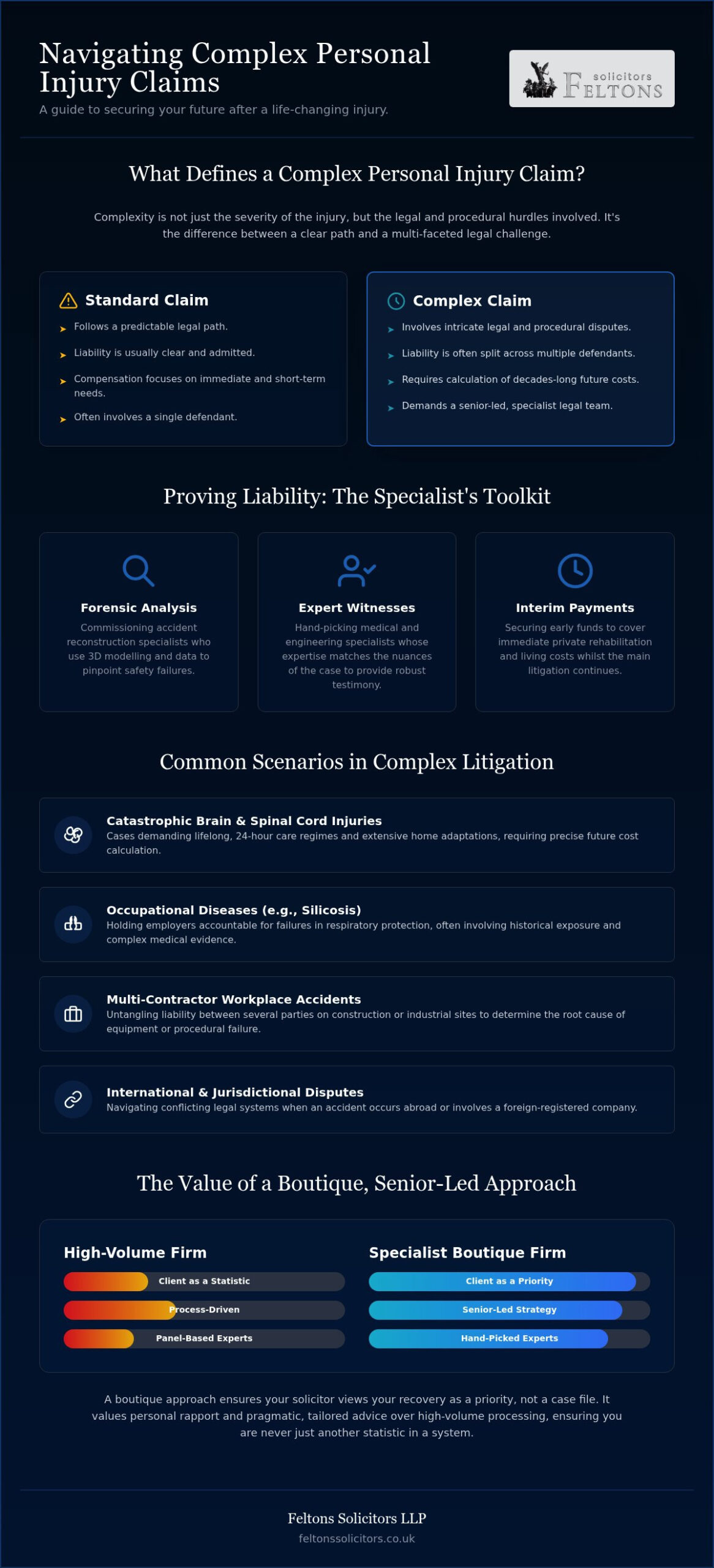
Complexity in litigation is a multifaceted concept. It isn’t just about the severity of a physical trauma; it’s about the intricate legal and medical hurdles that follow. Whilst foundational personal injury claims often follow a predictable path, high-value litigation requires a more sophisticated architectural approach. Instructing complex personal injury claims solicitors ensures that these intricacies are handled with the precision they demand, particularly when liability is disputed or multiple parties are involved.

A truly complex case involves a multi-layered investigation into causation and long-term prognosis. This often requires the coordination of a multi-disciplinary team, including neurosurgeons, vocational consultants, and architectural experts who specialise in home adaptations. As your sophisticated guide, Feltons Solicitors LLP manages these experts to build a cohesive narrative of your future needs. We act as a steady presence, ensuring that the technical legal work never loses sight of the human impact.

What Qualifies as a Complex Claim?

A claim is typically classified as complex when it involves catastrophic injuries, such as traumatic brain injuries or spinal cord damage, which necessitate lifetime care and assistance. These cases often involve significant “General Damages” for pain and suffering alongside substantial “Special Damages” for future loss of earnings and medical costs. Complexity also arises in several specific scenarios:

  • International Jurisdictions: Claims with cross-border elements have become increasingly difficult since Brexit. Claimants now require court permission to serve claims outside the UK, leading to potential procedural delays that only an expert can manage.
  • Occupational Diseases: Cases such as Silicosis involve historical exposure and often multiple defendants. Pinpointing liability across decades of employment requires a methodical, evidence-led mindset.
  • Multi-Party Litigation: When several entities share responsibility, the legal process becomes a delicate balancing act of negotiation and forensic investigation.

The Distinction Between Standard and Complex Litigation

Volume-based legal practices are designed for efficiency in straightforward cases, often using automated systems that can overlook the nuances of a life-changing injury. These “claims factories” carry a significant risk of under-settling, as they may lack the resources to fund the extensive expert evidence required for high-value claims. In contrast, the boutique approach at Feltons Solicitors LLP prioritises personal connection and bespoke evidence gathering.

This high-standard service is essential for managing the emotional and psychological burden placed on a claimant’s family. We recognise that whilst the technical litigation is paramount, your family needs a discreet partner who values privacy and personal rapport. By focusing on quality over volume, specialist solicitors can secure the interim payments necessary to fund immediate rehabilitation, providing a sense of security long before the final settlement is reached.

Strategic Litigation: The Anatomy of a High-Value Claim

High-value litigation is a precise science. It demands more than just filing paperwork; it requires a strategic blueprint designed to withstand the rigours of the High Court. For complex personal injury claims solicitors, the work begins long before a claim form is served. Early evidence preservation is the cornerstone of success. This involves securing CCTV footage, obtaining witness statements whilst memories are fresh, and ensuring that the accident scene is forensically documented. Without this foundation, even the most severe injury can be undermined by a lack of causal proof.

Navigating the Civil Procedure Rules (CPR) in cases exceeding £100,000 requires a methodical eye. Since the extension of fixed recoverable costs in late 2023, the procedural path for high-value claims has become even more distinct from standard litigation. A key tactical tool in this environment is the Part 36 offer. By making a well-timed, realistic offer, we can put significant pressure on the defendant. If they fail to beat that offer at trial, they may face substantial interest penalties and additional costs, often maximising the final settlement beyond the initial expectations.

Instruction of Expert Witnesses

The strength of a high-value claim often rests on the calibre of the experts instructed. It is not enough to simply have a medical report. You need a suite of specialists who can bridge the gap between physical trauma and financial quantification.

  • Neurologists and Spinal Surgeons: To provide a definitive long-term prognosis.
  • Care Experts: To detail the exact cost of lifetime assistance and home modifications.
  • Forensic Accountants: To calculate complex loss of earnings, including lost pension rights and share options.

The goal is to ensure these experts are authoritative and resilient. They must be able to defend their findings under intense cross-examination from defendant counsel. If you are unsure about the level of expertise your current case requires, you may wish to consult a specialist partner for a second opinion on your litigation strategy.

Navigating Disputed Liability and Contributory Negligence

Defendants in high-value cases rarely concede liability without a fight. They often employ tactics to shift blame onto the claimant, a concept known as contributory negligence. To counter this, we utilise accident reconstruction specialists who can use digital data and physical evidence to recreate the event. This technical evidence is vital in protecting the claim’s value. Even if a factual dispute is nuanced, a sophisticated legal team will find the evidence needed to maintain the integrity of your compensation, ensuring that your future financial security remains the priority throughout the litigation process.

Securing Your Future: Financial Settlements and Interim Payments

Waiting for the final resolution of a high-value claim can take years, yet the costs of specialised care and rehabilitation begin the moment you leave the hospital. This is where the expertise of complex personal injury claims solicitors becomes indispensable. Securing interim payments; advances on the final compensation, is a priority for any life-changing injury case. These funds act as a financial bridge, allowing you to access private medical treatment, bespoke physiotherapy, and essential home modifications long before the litigation concludes.

A comprehensive settlement is divided into two primary categories. “General Damages” compensate for the physical pain, suffering, and loss of amenity you’ve endured. Conversely, “Special Damages” cover quantifiable financial losses. In complex cases, this extends far beyond immediate medical bills. We must account for the erosion of your future earning capacity, the loss of employer pension contributions, and the ongoing costs of a tailored care regime. Future-proofing your settlement requires a meticulous analysis of inflation and changing care needs to ensure the funds remain sufficient for your entire lifetime.

How to Secure Interim Payments

To obtain an interim payment, we must establish a clear “need” for the funds, such as the requirement for a specialised vehicle or a deposit on a more accessible property. Whilst many defendants agree to voluntary payments once liability is admitted, some remain recalcitrant. In these instances, we apply to the court under the Civil Procedure Rules to compel payment. It’s a delicate process; we ensure that accepting an interim payment doesn’t prematurely “set” the value of the claim or negatively impact our long-term litigation strategy.

Quantifying Long-Term Care and Loss of Earnings

Accurate quantification is the difference between a settlement that lasts a lifetime and one that falls short. We utilise the “Ogden Tables,” which are actuarial tools used by the courts to calculate the present value of future financial requirements based on life expectancy and the “discount rate.” This ensures that the lump sum you receive today is adjusted for the interest you might earn and the effects of inflation.

  • Home Adaptations: Costs for installing lifts, widening doorways, or building wet rooms.
  • Lifelong Therapies: Ongoing access to occupational therapy, speech and language specialists, and psychological support.
  • Vehicle Modifications: Provision for adapted cars that must be replaced every few years.

Forensic accountants determine lost career trajectories by analysing your pre-injury professional path, potential promotions, and industry-specific pay scales to project what your lifetime earnings would have been but for the accident.

Complex Personal Injury Claims Solicitors: Navigating High-Value Litigation in 2026

Selecting a legal representative for a life-altering event is one of the most significant decisions you’ll ever make. Whilst many high-street firms offer standard personal injury services, complex personal injury claims solicitors provide a level of technical depth that volume-based practices simply cannot replicate. High-volume firms often rely on automated workflows and junior file handlers to process claims quickly. In the context of a multi-million-pound settlement, this “factory” approach carries a devastating risk: under-settling. Without a dedicated specialist to unpick every nuance of your future care needs, you might find yourself with a settlement that looks substantial today but fails to account for the economic realities of the next decade.

A boutique firm operates on a different philosophy. It prioritises a “people-first” approach where the technical legal work is balanced with genuine empathy. You aren’t just another case number; you’re an individual whose dignity and privacy must be protected. This high-standard service ensures that your legal team remains a calm, steady presence throughout the litigation process. By focusing on a smaller number of high-value cases, these firms can commit the resources necessary to challenge well-funded insurance companies and their legal teams.

The Value of Partner-Led Representation

Partner-led representation means you have direct access to senior legal minds rather than junior staff. These experts possess the worldly experience to handle international litigation or complex liability disputes whilst maintaining a personal rapport with you. This level of service ensures that communication is tailored to your preferences, providing reassurance during the most stressful phases of the claim. If you’re concerned that your current representation lacks the specialist depth required for your case, you can speak with a senior partner to discuss a more tailored approach.

Questions to Ask During Your Initial Consultation

When you first meet with a potential legal partner, it’s vital to look beyond the marketing materials and assess their actual experience in litigation and dispute resolution. Consider asking the following:

  • How many cases of this specific complexity, particularly those involving catastrophic injury, have you handled in the last few years?
  • Who will be my day-to-day point of contact, and will I have direct access to the partner leading the case?
  • How do you coordinate with medical and rehabilitation providers to ensure my immediate needs are met?

These questions help you determine if the firm possesses the methodical mindset and resources required for a high-value claim. A trusted advisor will be transparent about their process and how they intend to secure your financial restoration.

Securing a multi-million-pound settlement is a landmark achievement, but the final court order is actually the beginning of a new financial chapter. High-value awards bring immediate responsibilities that require a methodical, long-term approach to asset protection. As complex personal injury claims solicitors, our role evolves from litigator to trusted advisor once the case concludes. We ensure the compensation intended for your lifelong care is protected from unnecessary depletion or administrative hurdles. This holistic view distinguishes a boutique practice from volume firms that often end their service the moment a settlement is reached.

A life-changing injury fundamentally alters your financial landscape and your family’s future. It’s essential to integrate your award with broader legal structures to ensure it serves its intended purpose for decades. Feltons Solicitors LLP provides a calm, steady presence as you navigate these transitions, offering the same level of professional authority that guided your litigation. Our “people-first” philosophy means we remain your discreet partner, assisting with everything from trust management to future property acquisitions.

Protecting Your Award with Personal Injury Trusts

A Personal Injury Trust is a vital tool for managing a significant award. By placing your compensation into a trust, the funds are legally “ring-fenced.” This ensures they aren’t counted as personal capital when assessing eligibility for means-tested benefits or local authority care funding. Beyond benefit protection, trusts provide a structured way to manage funds specifically for your rehabilitation and recovery. Feltons Solicitors LLP works closely with you to establish robust Wills and Trusts that align with your specific care regime and long-term family goals.

Estate Planning for the Catastrophically Injured

Updating your Will is a priority following a high-value settlement. Your financial circumstances have changed significantly, and your estate plan must reflect this new reality to protect your family’s interests. We also emphasise the importance of Lasting Powers of Attorney (LPA):

  • Health and Welfare LPA: Appoints trusted individuals to make decisions about your medical care and daily routine if you’re unable to do so.
  • Property and Financial Affairs LPA: Ensures your settlement and assets are managed according to your wishes, even if your condition fluctuates.
  • Court of Protection: For clients who lack the mental capacity to manage their own affairs, we provide expert guidance on deputyship applications and ongoing compliance.

Our commitment to your well-being is a lifetime partnership. Feltons Solicitors LLP integrates your settlement with Wills, Probate, and Estate Planning to provide a seamless transition into your new reality. This ensures that whilst the technical litigation is complete, the human impact of our work continues to support your family for the long term.

Securing Your Long-Term Recovery and Financial Stability

Navigating a life-changing injury requires more than just legal advice; it requires a partner who understands the profound impact on your future. We’ve explored how identifying the right complex personal injury claims solicitors can make the difference between a standard settlement and one that truly accounts for lifetime care. From the strategic use of interim payments to the protection offered by Personal Injury Trusts, every step must be handled with methodical care to ensure your financial restoration is complete.

Since 2010, Feltons Solicitors LLP has combined traditional professional values with modern legal delivery to support clients through high-value litigation and specialised matters like Silicosis claims and their strict time limits under UK law. Our expertise extends beyond the courtroom, providing the comprehensive estate planning and private client support you need to protect your award. You don’t have to face this complexity alone. Please speak with a specialist solicitor at Feltons Solicitors LLP for a discreet consultation. We’re here to provide the steady, expert guidance required to secure your recovery and long-term peace of mind.

Frequently Asked Questions

What is considered a “complex” personal injury claim in the UK?

A claim is considered complex when it involves intricate legal, medical, or factual hurdles that go beyond the severity of the physical trauma. This often includes cases with disputed liability, multiple defendants, or international elements where jurisdiction is contested. Injuries requiring lifetime care, such as traumatic brain or spinal damage, also fall into this category due to the sophisticated quantification required for long-term financial security.

How long do I have to start a complex personal injury claim?

The standard limitation period is three years from the date of the accident or the “date of knowledge” of the injury. For claims involving the Criminal Injuries Compensation Authority (CICA), this deadline is shorter at just two years from the date of the incident. Exceptions exist for children or individuals who lack the mental capacity to manage their own affairs, where the three-year clock may not start until a later date or may be stayed indefinitely.

Can I change solicitors if I am unhappy with my current high-volume firm?

You have the absolute right to change your legal representative at any stage of the litigation process. Many clients move to complex personal injury claims solicitors after feeling their case is being undervalued or neglected by a high-volume “claims factory.” The transition is usually straightforward; your new firm will handle the transfer of your file and negotiate any outstanding costs with your previous solicitor to ensure your claim continues without interruption.

What are interim payments and how do they help during a claim?

Interim payments are partial awards of compensation made before the final settlement is reached. These payments are vital for funding immediate needs such as private rehabilitation, specialised medical equipment, or essential adaptations to your home. By securing these funds early, you don’t have to wait years for the case to conclude before accessing the support you need to improve your quality of life and recovery prospects.

Will my complex personal injury case always have to go to court?

Most high-value claims are settled through negotiation or Alternative Dispute Resolution (ADR) without the need for a full court trial. Whilst we prepare every case as if it will go to court to ensure maximum leverage, only a small percentage of cases actually reach a final hearing. This approach allows for a more discreet and less stressful resolution whilst still achieving a settlement that reflects the full value of your future needs.

How much does a specialist complex injury solicitor cost?

Most specialist solicitors operate on a “No Win, No Fee” basis, formally known as a Conditional Fee Agreement. Under these arrangements, the success fee a solicitor can deduct from your compensation is capped at 25% of the total damages for pain, suffering, and past losses. It’s important to discuss the specific fee structure during your initial consultation to ensure you understand how costs are managed and which expenses are recovered from the defendant.

What happens if the accident happened whilst I was working abroad?

Claims involving accidents abroad are significantly more complex, especially following the UK’s exit from the European Union. Whether you can claim in the UK courts depends on the circumstances of your employment and where the negligence occurred. You now typically need court permission to serve a claim outside the jurisdiction, making it essential to instruct a firm with specific experience in international litigation and the nuances of post-Brexit cross-border law.

How does a Personal Injury Trust protect my compensation award?

A Personal Injury Trust protects your award by legally ring-fencing the money so it is not counted as personal capital during means-testing. This allows you to receive your compensation whilst maintaining eligibility for state benefits such as Housing Benefit or Universal Credit. It also ensures that the funds are preserved specifically for your long-term care and recovery needs, protecting the award from being depleted by everyday living costs or local authority care assessments.