

Imagine the moment a persistent breathlessness becomes more than just a sign of getting older, shifting from a minor annoyance to a life-altering diagnosis. For many workers across the UK’s construction and stone masonry sectors, this is the stark reality of living with silicosis. If you’re considering silicosis compensation claims UK, you’ve likely dedicated years of hard labour to your trade and now find it unsettling to realise your health was compromised. Feeling anxious about the three-year rule or the weight of complex legal jargon is natural when your family’s future feels uncertain.
We’re here to help you navigate this difficult transition with quiet confidence and professional authority. This specialist guide provides the clarity needed to secure the medical care and financial recognition you deserve. We’ll examine the impact of the latest 0.05 mg/m³ HSE exposure limits, the nuances of proving negligence against former employers, and the steps to achieving a smooth, discreet resolution that prioritises your personal recovery and long-term security.
Key Takeaways
- Understand the legal framework surrounding Respirable Crystalline Silica (RCS) and how your employer’s failure to provide a safe system of work forms the basis of your claim.
- Explore how expert solicitors meticulously reconstruct historical working environments to prove liability for industrial disease, regardless of how long ago the exposure occurred.
- Learn how to value your claim using the Judicial College Guidelines to ensure you receive full recognition for both physical suffering and financial impact when pursuing silicosis compensation claims uk.
- Follow a structured roadmap of the litigation process, from the initial diagnostic assessment to the formal notification of the defendant under the Pre-Action Protocol.
- Recognise the importance of choosing a discreet, boutique legal partner that prioritises personal connection and family security over high-volume processing.
Understanding Silicosis and Your Legal Rights in the UK
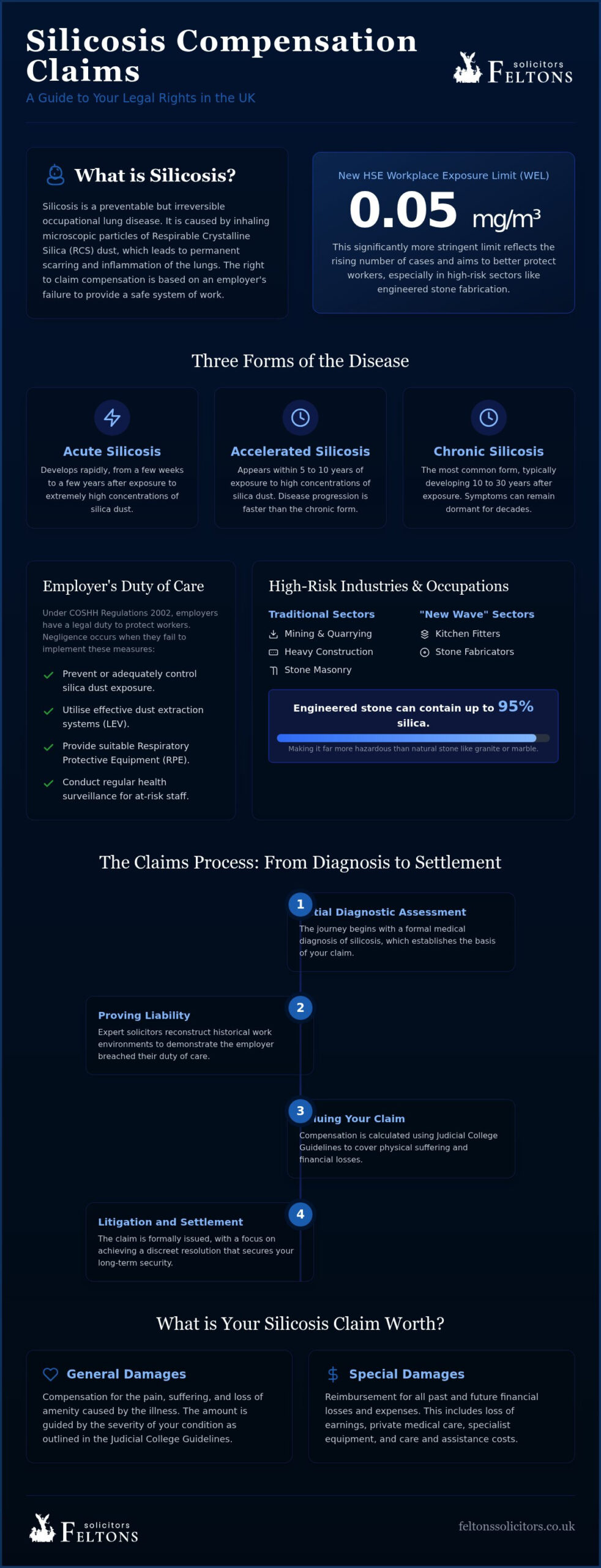
Silicosis is a debilitating, preventable occupational lung disease caused by the inhalation of Respirable Crystalline Silica (RCS). When these microscopic dust particles enter the lungs, they cause permanent scarring and inflammation. In 2026, the regulatory environment has become significantly more stringent. The Health and Safety Executive (HSE) has reduced the Workplace Exposure Limit (WEL) to 0.05 mg/m³, a move driven by the rising number of cases in the engineered stone sector. Legally, your right to seek Understanding Silicosis through litigation is based on a fundamental principle: your employer’s failure to provide a safe system of work.
The legal framework distinguishes between three types of the disease, each affecting the strategy for silicosis compensation claims uk. Acute silicosis develops rapidly after intense exposure, whilst accelerated silicosis usually appears within five to ten years. Chronic silicosis is the most frequent form, often remaining dormant for decades. Regardless of the timeline, if your illness resulted from an employer’s breach of duty, you have a legal right to pursue financial security and medical care.
The Duty of Care: COSHH Regulations and Employer Obligations
The Control of Substances Hazardous to Health (COSHH) Regulations 2002 mandate that employers must prevent or adequately control exposure to hazardous substances. This is not a suggestion; it’s a statutory obligation. Employers are required to utilise effective dust extraction systems, provide high-specification respiratory protective equipment (RPE), and conduct regular health surveillance for their staff. Negligence in this context is defined as an employer’s failure to implement these reasonable and legally required safety measures to protect workers from foreseeable harm. When these protocols are ignored, the human cost is high, and the legal responsibility is clear.
Common Industries and High-Risk Occupations
Whilst traditional sectors like mining, quarrying, and heavy construction remain high-risk, a significant trend in 2026 involves the “new wave” of silicosis amongst kitchen fitters and stone fabricators. Engineered stone, often used for modern worktops, can contain up to 95% silica, making it far more hazardous than natural granite or marble. This industry is currently under intense HSE scrutiny, with over 1,000 inspections scheduled this year to ensure compliance.
The “long-tail” nature of silicosis means that symptoms, such as persistent coughing and breathlessness, may not surface until long after you’ve moved on to different employment. Many clients find that their current, clean working environment masks a historical liability from a dusty workshop twenty years ago. Our role as a discreet partner is to help you trace these historical exposures and hold the responsible parties accountable, ensuring your family’s future is protected despite past negligence.
Establishing Liability: Did Your Employer Breach Their Duty?
Proving liability in industrial disease litigation hinges on demonstrating that your exposure to silica dust was both excessive and preventable. The burden of proof rests with the claimant to show that the employer’s duty of care was breached. This involves more than just proving you worked with stone; we must establish that the safety measures in place fell below the required statutory standards. Forensic engineering experts play a vital role here. They reconstruct historical working conditions, using contemporary data to model likely dust concentrations from twenty or thirty years ago. This technical evidence is often the cornerstone of silicosis compensation claims uk, providing a scientific basis for claims involving exposure from a previous era.
Employers often attempt to reduce their liability by claiming “contributory negligence.” They might argue that a worker failed to wear provided respiratory equipment or ignored safety signs. We counter these defences by investigating whether the equipment was actually suitable for the task, if the worker received adequate training, and if the employer actively enforced safety protocols on the shop floor. If you are concerned about how your past actions might affect your case, speaking with a specialist silicosis solicitor can provide the professional clarity you need to move forward.
Claiming Against Defunct or Dissolved Companies
Many industrial disease cases involve companies that have long since ceased trading. This does not mean your path to justice is blocked. We utilise the Employers’ Liability Tracing Office (ELTO) to identify the specific insurance provider active at the time of your exposure. Legally, the claim is pursued against the insurer’s funds rather than former directors personally. If a company has been dissolved, we manage the legal mechanism for restoring it to the Companies House register for the sole purpose of litigation. This methodical approach ensures that a defunct business does not prevent you from accessing the care you deserve.
The Three-Year Limitation Rule and Its Exceptions
The three-year limitation period is a frequent source of anxiety, but it is more flexible than it first appears. In English law, the clock typically begins on the “Date of Knowledge” rather than the date of exposure. This is the point at which you realised, or should have reasonably realised, that your breathlessness was significant and linked to your past work. Because symptoms often emerge decades after you have left a job, the limitation period usually starts from the date of your formal medical diagnosis. Even if this window seems to have passed, Section 33 of the Limitation Act 1980 grants the court discretion to allow a claim to proceed if it is equitable to do so.
Calculating Compensation: What is Your Silicosis Claim Worth?
Determining the financial value of a claim requires a meticulous assessment of both your current health and your future needs. In the context of silicosis compensation claims uk, settlements are categorised into two primary areas: General Damages and Special Damages. Every case is unique. A stone fabricator diagnosed with accelerated silicosis will have vastly different requirements than a retired miner with a slow-progressing chronic condition. Our role is to ensure every facet of your experience is quantified with precision, providing a steady foundation for your family’s future.
General Damages: Valuing Pain, Suffering, and Loss of Amenity
General damages compensate you for the physical and psychological impact of the disease. We rely on comprehensive medical reports from independent respiratory consultants to establish the severity of your condition. These specialists use the Judicial College Guidelines to benchmark figures. For 2026, these guidelines suggest awards between £51,420 and £65,710 for silicosis resulting in a significant decline in lung function. Understanding your legal rights involves recognising how reduced life expectancy influences these figures. Loss of amenity refers to the inability to enjoy former hobbies or daily activities, such as being unable to play with grandchildren or attend social events due to severe breathlessness.
Special Damages: Recovering Financial Losses and Care Costs
Special damages focus on the tangible financial burdens caused by your diagnosis. This includes immediate losses like unpaid leave and long-term deficits such as lost pension contributions. We also consider the “Smith v Manchester” award. This specific head of damage compensates you for a “handicapped” earning capacity. It’s designed for situations where your condition makes you less competitive in the labour market, even if you’re currently still working. Recoverable costs often include:
- Private medical treatments and pulmonary rehabilitation sessions.
- Home adaptations, such as installing stairlifts or walk-in showers.
- Specialised equipment, including portable oxygen concentrators and mobility aids.
- Gratuitous Care: This allows you to secure compensation for the time family members spend providing essential support, recognising that their time has a significant value.
Future-proofing is essential. A sophisticated legal strategy must account for potential deteriorations that might necessitate expensive interventions like lung transplants or 24-hour oxygen therapy. We ensure your settlement provides a lifetime of security, rather than just covering immediate expenses. This methodical approach reflects our commitment to high-standard, personalised care for every client we represent.
The Claims Process: From Diagnosis to Settlement
The journey toward justice begins with a calm, thorough assessment of your circumstances. During your initial consultation, we evaluate the viability of your claim and discuss bespoke funding options to ensure you face no unnecessary financial risk. Once we establish a clear path forward, we initiate the Pre-Action Protocol for Disease and Illness. This is a formal notification to the defendant or their insurer, setting out the allegations of negligence and establishing a strict timetable for their response. It’s a methodical phase designed to bring the responsible parties to the table early in the process.
Gathering evidence is a collaborative effort. We work with you to compile a detailed work history, obtain witness statements from former colleagues, and secure your full medical records. For those with urgent financial needs, we prioritise securing interim payments. These are advance sums paid before the final settlement to cover immediate costs like private pulmonary rehabilitation or essential home modifications. This ensures you don’t have to wait years for the care you need today.
Securing Robust Medical Evidence
A standard GP report rarely suffices in the complex arena of silicosis compensation claims uk. To build an unshakeable case, we require high-resolution CT (HRCT) scans interpreted by a specialist known as a B-Reader. This is a consultant radiologist with specific expertise in identifying the subtle patterns of occupational lung disease. We organise independent medical examinations with leading UK consultants who understand the nuances of silica exposure, ensuring your diagnosis is documented with the technical precision required for litigation.
Negotiation vs. Litigation: Will You Have to Go to Court?
Most clients feel apprehensive about the prospect of a courtroom battle. It’s reassuring to know that the vast majority of industrial disease claims are settled through negotiation. We utilise “Part 36 Offers” as a strategic tool to encourage the defendant to settle fairly and promptly. If liability is admitted but the value is disputed, we often arrange a Joint Settlement Meeting (JSM). This is a face-to-face negotiation between legal teams where most cases reach a conclusion without ever entering a courtroom. If you’re ready to discuss your options, you can contact our specialist silicosis team for a discreet, professional consultation.
Why Expert Legal Representation is Essential for Industrial Disease
Industrial disease litigation is not a commodity. Unlike high-volume “claims factories” that often prioritise speed over substance, a boutique firm offers a level of personal connection that’s vital when you’re facing a chronic illness. We understand that behind every case file is an individual dealing with physical suffering and the unsettling fear of an uncertain future. Our “people-first” philosophy ensures that technical legal excellence never overshadows the human impact of our work. By maintaining a steady, deliberate pace, we ensure no detail is overlooked in your silicosis compensation claims uk, providing the high-standard reliability you expect from a trusted advisor.
Pragmatic advice is the cornerstone of our service. We don’t just process paperwork; we provide the clarity needed for families to make informed decisions about their long-term security. This involves a sophisticated blend of professional authority and empathetic reassurance. We act as a calm, steady presence during what is often a stressful period, ensuring that your voice is heard and your employer’s negligence is fully recognised. Our commitment to traditional professional integrity, combined with modern delivery, means your case is handled with both heritage and efficiency.
A Tailored Approach to Complex Litigation
Navigating the specific challenges of stone masonry and kitchen fitting cases requires more than general legal knowledge. A bespoke strategy is essential to address the unique exposure profiles of engineered stone, where silica levels are exceptionally high. We act as your sophisticated guide through the UK legal system, translating complex jargon into clear, actionable steps. For those navigating the heart-wrenching process of claiming on behalf of a loved one, our specialist guide on a Silicosis Claim After Death provides the discreet support needed during bereavement.
Securing Your Family’s Future
The true value of expert representation lies in the peace of mind it affords. Knowing that your financial arrangements are professionally organised allows you to focus on your health and your family. We don’t just secure a settlement; we help you protect it. Our broader expertise in Estate Planning ensures that your compensation is managed in a way that protects your legacy for years to come. We value privacy and personal rapport, acting as a discreet partner throughout the entire process.
If you’re seeking a partner who prioritises your well-being alongside your legal success, we’re here to help. Contact our specialists today for a discreet, professional consultation to discuss how we can secure the care and recognition you deserve.
Securing Your Future and Restoring Peace of Mind
A silicosis diagnosis brings significant physical and emotional challenges, but you don’t have to face the legal complexities alone. By understanding the latest 2026 HSE regulations and identifying the responsible insurers, you can establish the firm foundation needed for a successful claim. Whether you’re dealing with historical exposure or the “new wave” of illness in the stone fabrication sector, silicosis compensation claims uk require a meticulous, expert-led approach to ensure every future care need is fully funded.
Our boutique service prioritises personal connection and pragmatic advice, guiding you through each stage of the litigation process with quiet confidence. We focus on achieving a discreet resolution that respects your privacy whilst securing the financial recognition you deserve. If you’re ready to take the next step toward family security, speak to our specialist silicosis solicitors today for a discreet consultation. You’ve dedicated your career to your craft; now, let us dedicate our expertise to protecting your health and your legacy. We’re here to support you every step of the way.
Frequently Asked Questions
Can I still claim if I was a smoker?
Yes, being a smoker does not prevent you from pursuing a claim. Whilst the defence may argue that smoking contributed to your respiratory symptoms, silicosis is specifically caused by silica dust exposure, not tobacco. Medical experts can differentiate between types of lung damage. If smoking played a role, your compensation might be slightly adjusted through “apportionment,” but your right to hold a negligent employer accountable remains entirely intact.
How much does it cost to make a silicosis claim?
We provide clear, pragmatic advice on various funding options to ensure you face no unnecessary financial risk. Most silicosis compensation claims uk are handled via a Conditional Fee Agreement, often referred to as “No Win No Fee.” This arrangement means you generally don’t pay legal fees if the claim is unsuccessful. To better understand how your expenses are covered, you can explore Third-party legal cost recovery fees with specialists like Scotland Claims Injury Lawyers, ensuring the process remains transparent and accessible from the outset.
The duration of a claim typically ranges from 12 to 36 months, depending on the complexity of the medical evidence and the defendant’s response. Cases involving defunct companies or disputed liability often take longer due to the need for historical insurance tracing. We prioritise securing interim payments where possible to provide immediate support. Our methodical approach ensures the process moves at a reassuring pace without sacrificing the thoroughness required for a maximum settlement.
Can I claim for silicosis on behalf of a family member who has passed away?
Yes, you can pursue a claim on behalf of a loved one’s estate. These are known as fatal claims and allow families to seek recognition for the suffering endured and the financial impact of the loss. This often includes recovering funeral expenses and securing a statutory bereavement award. Our team acts as a discreet partner during this sensitive time, handling the legal technicalities so you can focus on your family’s well-being.
What happens if my former employer has gone out of business?
You can still claim if your former employer has ceased trading. We utilise the Employers’ Liability Tracing Office (ELTO) to identify the insurance provider that was active during your period of exposure. Legally, the compensation is paid by the insurer, not the former company directors. If necessary, we can also restore a dissolved company to the register for the specific purpose of litigation, ensuring your path to justice remains open.
Will making a claim affect my current employment?
Making a claim against a current employer should not negatively affect your employment status. UK law protects workers from being dismissed or treated unfairly for exercising their legal rights. Employers are required by law to have insurance specifically for these situations, so the compensation is paid by the insurer rather than the company’s daily operating budget. We handle all communications with quiet confidence to maintain a professional atmosphere throughout the process.
What is the “3-year rule” for silicosis claims?
The “3-year rule” refers to the limitation period for starting legal proceedings. For silicosis compensation claims uk, this clock usually begins on the “Date of Knowledge,” which is when you first received a formal diagnosis or realised your illness was work-related. It is not necessarily three years from when you left the job. However, because industrial diseases develop slowly, we recommend seeking specialist legal advice as soon as you suspect a link.
Do I need to have a formal diagnosis before I speak to a solicitor?
You don’t need a formal diagnosis before your initial consultation. If you have symptoms like persistent breathlessness and a history of working with silica dust, we can assist in arranging independent medical assessments. We work with leading respiratory consultants to secure the high-resolution CT scans and B-Reader reports necessary to confirm your condition. Contacting us early allows us to begin investigating your work history whilst your medical evaluation is underway.