
Could a building with planning permission still interfere with a neighbour’s legal rights? Yes. Planning permission and a private right to light are separate matters. If you’re looking for right to light dispute solicitors UK, start by establishing whether a legal right exists and how the proposed or completed work may affect it.
It’s understandable to be concerned if a new development may darken your home or put a project at risk. But a general loss of daylight doesn’t automatically mean a right to light has been infringed. A legal right may generally be acquired through 20 years of uninterrupted enjoyment of light through a specific window. The property’s details and history matter.
This guide explains how a right to light differs from general access to daylight, what property records and survey evidence may help clarify your position, and what early steps to consider. It also covers possible remedies, the risks of taking action and how to choose legal support suited to your objectives, whether you’re concerned about an obstruction or managing a project.
Key Takeaways
- Check how a right may have arisen and whether the relevant legal rules apply to your property and jurisdiction.
- Plans, dated photographs, correspondence and a daylight assessment may help clarify the extent of any interference.
- A proven interference doesn’t automatically lead to an injunction. Negotiated changes, damages or court proceedings may be considered.
- Before taking action, organise the evidence you have and note the outcome you want to achieve.
- When comparing right to light dispute solicitors UK, ask about relevant property dispute experience, the evidence needed, potential risks and the proposed scope of advice.
What is a right to light dispute, and when can it affect your property?
A neighbouring extension or redevelopment can cause concern if it may make a home or workplace darker, or affect a project’s design. The key question isn’t simply whether less daylight will reach the property. It’s whether a legal right to light exists and whether the proposed work would interfere with it.
A right to light is a private property right that may protect light passing through a particular window or other aperture. It relates to light reaching a building through that opening, not to a general entitlement to an open outlook. For a useful starting overview, see What is a right to light. The existence and scope of any right depend on the property’s circumstances. A window, or a noticeable change in brightness, doesn’t by itself prove an enforceable claim.
What does a right to light protect?
The relevant factors include the property that may benefit, the aperture through which light is received, and the history or legal basis of the claimed right. A neighbour generally can’t claim a right to preserve a view, sunlight at every hour or unchanged brightness. The assessment is more specific than a subjective impression that a room feels darker. It considers the effect on light through the relevant aperture and whether the legal requirements are met.
Rules also depend on where the property is situated. The legal framework in England and Wales should not automatically be applied across the whole UK. Identify the relevant jurisdiction before relying on a particular route or rule, and seek advice based on it.
When does a neighbouring project become a dispute?
A dispute may arise during an extension, redevelopment or other building work that changes the relationship between neighbouring buildings. A developer may receive an objection from an adjoining owner, or a resident or business may find that proposed plans could reduce light to a room. A measured assessment may help define the concern, but it doesn’t settle the legal question on its own.
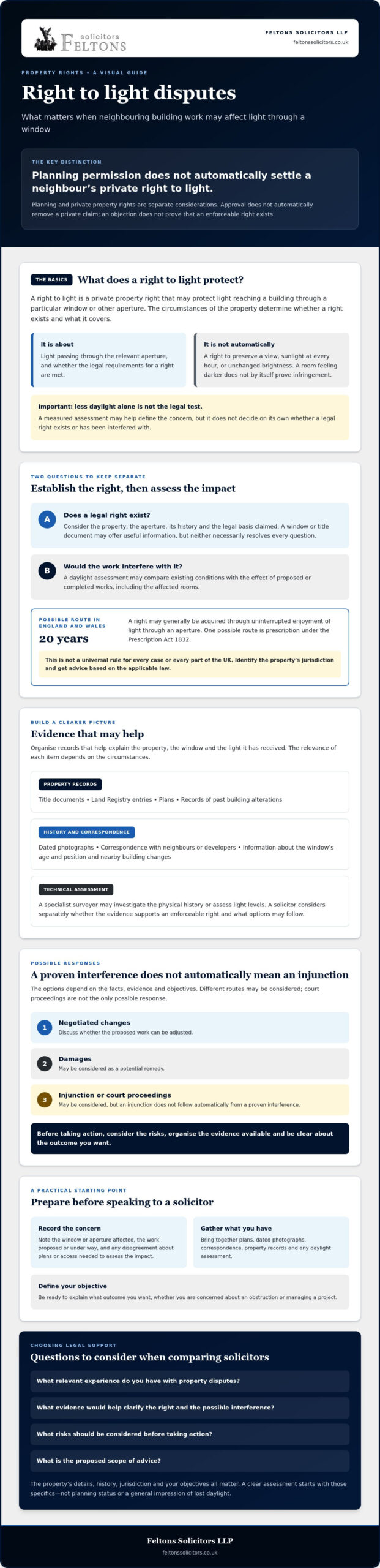
Planning and private rights are separate considerations. Planning permission doesn’t automatically remove a neighbour’s private claim, and a planning objection or approval doesn’t determine whether a right to light exists. Planning approval isn’t a complete answer for a developer, while an objection doesn’t establish that a neighbour has an enforceable right.
If you’re considering right to light dispute solicitors UK, first establish the property’s jurisdiction and the nature of the concern. Record which window or aperture may be affected, what work is proposed or under way, and any disagreement about the plans or access needed to assess the impact. These details provide a clearer basis for advice than planning status or a general impression of lost daylight.
How is a right to light established and the impact assessed?
Consider two questions separately: has the property acquired a right to light, and would the neighbouring work interfere with it? The answer depends on the property’s history, the relevant aperture, the location and the evidence. A title entry or technical report may help, but neither should be treated in isolation as a final answer.
The legal route also depends on jurisdiction. In England and Wales, one possible route is prescription under the Prescription Act 1832, which generally requires 20 years of uninterrupted enjoyment of light through an aperture. That isn’t a universal rule for every part of the UK or every case. The Law Commission’s report on Rights to Light provides further background, but advice should be based on the law applying to the property and the facts.
What evidence can help establish the right?
Start by gathering material that helps trace the property and the light it has received. This may include title documents, Land Registry entries, plans, dated photographs, records of past building alterations and correspondence with neighbours or developers. The age and position of a window, changes to nearby buildings and the period for which light has passed through the aperture may all be relevant. Documents can offer useful clues, but a register entry may not resolve every issue about the right’s existence or scope.
A specialist surveyor may help investigate the physical history or assess light levels. That technical work is separate from the legal question: a solicitor considers whether the evidence supports an enforceable right and what options may follow.
How is loss of light assessed?
A daylight assessment can compare existing conditions with the effect of proposed or completed works. It may examine the affected rooms, the windows or other apertures, and how the obstruction changes the light reaching them. BRE guidance can inform technical assessment, but it isn’t an automatic test of legal entitlement. A measured reduction alone doesn’t establish that a right exists or has been infringed.
Entitlement and interference therefore require a case-specific assessment of the property’s jurisdiction, the claimed legal route, the aperture and its history, the available records, the survey evidence, the affected rooms and the actual or predicted change in light.
If you’re considering right to light dispute solicitors UK, ask how legal and survey evidence will be considered together. You can also ask Feltons Solicitors about property dispute support and confirm whether the firm accepts this type of instruction and can advise in the relevant jurisdiction.
What can happen in a right to light dispute: negotiation, damages or an injunction?
A proven interference with a right to light doesn’t automatically mean building work will be stopped or altered by court order. The appropriate response depends on the evidence, the stage of the project, the practical effect on the affected property and the parties’ conduct. Remedies and court procedures can also vary by jurisdiction, so check the applicable law before relying on general guidance.
Planning permission and private rights answer different questions. Permission from a local authority doesn’t, by itself, resolve a neighbour’s private claim. Equally, an objection to a development doesn’t prove that a right has been infringed. A developer and an affected owner may need to address planning matters and private property issues separately.
Can a court stop building work?
An injunction may be sought to prevent or restrain interference, but it isn’t automatic. A court’s decision will depend on the facts, including the strength of the evidence, the timing of the application, the parties’ conduct and the practical consequences of the order requested. Stopping work part-way through a development may have different implications from seeking changes before construction begins. There’s no guaranteed outcome or simple formula that replaces case-specific advice.
In England and Wales, decisions including Coventry v Lawrence and the 2025 case Cooper & Ors v Ludgate House Ltd inform the approach to injunctions and damages. Their application depends on the circumstances and current law. A solicitor can help assess the evidence, urgency and potential consequences before a party commits to court proceedings.
When might negotiation or damages be considered?
Early discussion may identify a practical change before positions harden. Depending on the project and evidence, options could include altering a design, reducing or repositioning part of a proposed structure, agreeing terms or considering compensation. A negotiated resolution may help avoid the uncertainty and relationship strain of litigation, but it needs to reflect each party’s objectives and legal position.
Damages may be considered in some cases instead of, or as part of, other relief. Whether that is appropriate depends on the facts and applicable law, not simply on a measured reduction in light. The RICS Rights of Light Professional Standard can help readers understand professional surveying practice, although it doesn’t determine the legal remedy.
Before choosing a route, weigh the outcome you want, the urgency, the strength of the available evidence, proportionality and your relationship with the neighbour. If you’re consulting right to light dispute solicitors UK, ask them to explain the realistic options, risks and decision points rather than assuming that a court will order a particular result.
Preparing for a Right to Light Solicitor: First Steps
A clear, organised account of the concern can make an initial legal discussion more useful. Identify the property and the window or other aperture you believe may be affected. Note whether work is proposed, under way or complete, then gather the records you already have. If building work is imminent, seek advice promptly rather than waiting to assemble every document.
Keep dated photographs taken from your own property, relevant plans, correspondence and any available information about the proposed or completed work. Don’t enter neighbouring land without permission or confront those carrying out the work. An early legal review may help clarify what evidence is missing and which options to explore, although it can’t guarantee an informal resolution.
What should you gather before speaking to a solicitor?
Use this checklist to organise what you have. You don’t need to decide whether it proves a claim before seeking advice:
- Property details: ownership or title documents, plans and information identifying the relevant windows or apertures.
- Work and light: dated photographs, planning materials and details of the neighbouring work, where available.
- Communications: letters, emails or messages exchanged with neighbours, the developer or other relevant parties.
- Timeline and objectives: key dates, past changes to either property, upcoming project deadlines and what you hope to achieve.
Keep originals where possible and organise copies by date. For broader context on property matters, see this residential property law guide.
What should you ask a prospective solicitor?
Ask whether the firm accepts right to light instructions and what experience it has with relevant property disputes. As the applicable law depends on the property’s jurisdiction, confirm that the firm can advise on the law that applies to your situation.
Use the discussion to understand the proposed scope before deciding whether to proceed. Useful questions include:
- What further legal or survey evidence may be needed?
- What routes to resolution could be considered, and what risks or key decision points should I understand?
- How will fees, disbursements and the work covered be explained before I agree to proceed?
If you’re comparing right to light dispute solicitors UK, look for clear, practical advice that addresses your objectives as well as the evidence. Feltons Solicitors handles property law and litigation and dispute resolution. Contact Feltons to discuss your property dispute enquiry and confirm whether the firm accepts this type of instruction and can advise in the relevant jurisdiction.
Choosing right to light dispute solicitors UK and next steps
The right solicitor should help you understand both the legal position and the practical choices available, not simply confirm that a dispute may exist. Look for relevant property dispute experience, clear explanations and a realistic approach to evidence, risks and possible routes to resolution. As the law can depend on the property’s jurisdiction, check that the firm can advise on the rules that apply to your case.
How do you assess whether a solicitor is the right fit?
Ask how they would investigate whether a right exists, assess the alleged impact and consider the other party’s position. Their answer should explain how legal advice and any survey evidence fit together, without promising a particular outcome. Check who would manage the matter, how they’ll keep you informed and how you’ll be involved in key decisions.
Discuss your priorities openly. An urgent concern about imminent work may call for different early steps from a dispute where a design change or negotiated resolution remains possible. Before agreeing a scope, ask the solicitor to explain the proposed work, evidence needs, alternatives, risks, likely decision points, fees and any disbursements. Clear expectations make it easier to decide whether the approach suits your objectives.
What happens after your initial enquiry?
An initial enquiry may involve checking the relevant jurisdiction, whether the firm can accept the instruction, any conflicts of interest and the information available. The firm may also need to clarify what work you’re asking it to undertake. No next step or outcome should be assumed until those points and the facts have been reviewed.
After that review, possible next steps might include identifying missing documents, seeking further technical evidence, contacting the other party or considering formal proceedings. The appropriate route depends on the circumstances. Keep the distinction between legal rights in view: a right to light dispute isn’t the same as a leasehold enfranchisement matter. Feltons’ leasehold enfranchisement guide covers a separate area of property law.
Feltons Solicitors handles property law and litigation and dispute resolution, but its acceptance of right to light instructions and the jurisdictions it can advise on should be confirmed. If you’re comparing right to light dispute solicitors UK, ask direct questions about relevant experience and scope before deciding. You can contact Feltons to discuss your circumstances and establish whether the firm may be able to assist.
Take a measured next step with your property dispute
A right to light concern calls for more than assuming that a darker room means a legal claim, or that planning permission settles the issue. Establish whether a legal right exists, gather evidence about the affected aperture and the impact of the work, then consider proportionate options. An injunction isn’t automatic, and negotiation or damages may be relevant depending on the facts and applicable law.
Choosing right to light dispute solicitors UK means looking for clear advice on evidence, risks, alternatives and costs, alongside confirmation that the firm accepts this type of instruction and can advise in the relevant jurisdiction. Feltons Solicitors provides property law and conveyancing services, as well as litigation and dispute resolution for domestic and international clients. Confirm directly whether it can assist with your specific right to light matter.
To discuss your circumstances and establish whether Feltons may be able to help, contact Feltons Solicitors about your property dispute. A clear understanding of your options can help you decide your next step with greater confidence.
Frequently Asked Questions
Is a right to light legally protected in the UK?
A right to light may be protected as a private property right, but it doesn’t automatically apply to every window or property. Whether one exists depends on the property’s circumstances and how the right may have been acquired. The legal rules also differ across the UK, so don’t assume that the law in England and Wales applies elsewhere. A solicitor can review the relevant title documents, property history and jurisdiction.
Can my neighbour build an extension that blocks my light?
Your neighbour may be able to build, but planning permission doesn’t by itself settle whether the work interferes with a private right to light. The answer depends on whether a right exists, the effect of the extension and the available evidence. Review any plans you can access and seek advice promptly, especially if work is due to begin. A concern doesn’t automatically mean the neighbour must stop building.
How do I prove that I have a right to light?
Evidence may include title documents, property history, plans showing the affected window or other aperture, and records of how long light has passed through it. Photographs and correspondence may also help establish the background. A surveyor’s technical assessment can measure changes in light, but that alone doesn’t determine whether a legal right exists or has been infringed. The applicable legal route depends on the property’s circumstances and jurisdiction.
Does planning permission override a right to light?
No. Planning permission and private property rights address separate issues. A planning decision doesn’t automatically extinguish or resolve a private right to light claim, and raising a private claim doesn’t establish whether the project complies with planning requirements. Consider both matters separately before relying on either process. If a development may affect your property, seek advice on the planning position and any potential private rights relevant to your circumstances.
Can I get an injunction for a right to light dispute?
An injunction may be sought in some disputes, but reduced light doesn’t guarantee that a court will grant one. The court considers the evidence, circumstances and appropriate remedy. Depending on the case, early negotiation, design changes or damages may also be relevant. Before taking action, discuss the urgency, likely impact and practical consequences with a solicitor. Only a review of the specific facts can help assess the options, without predicting the court’s decision.
How long does a right to light dispute take to resolve?
There’s no reliable single timeframe for resolving a right to light dispute. Early discussions may progress differently from a case requiring survey evidence, court proceedings or urgent decisions about building work. Timing depends on the parties’ responses, the complexity of the evidence and the jurisdiction. Ask a solicitor to identify likely stages and any immediate deadlines after reviewing the facts. If work is imminent, explain that at the outset.
What should I take to a right to light solicitor?
Take any title documents, plans, dated photographs, relevant correspondence and information about proposed or completed works. A timeline of events can help, along with details of the rooms or apertures affected, your practical objectives and any deadlines. Don’t delay an initial enquiry just because some documents are missing. A solicitor can review what’s available and explain what further information or technical evidence may be needed to assess your position.