
Lasting Power of Attorney Solicitor London: Securing Your Future with Professional Expertise

Lasting Power of Attorney Solicitor London: Securing Your Future with Professional Expertise

Did you know that over 50,000 Lasting Power of Attorney applications were rejected by the Office of the Public Guardian in the 2023/24 period alone? It is a staggering figure that highlights how easily a well-intentioned DIY approach can fail when it matters most. You likely feel a sense of anxiety regarding your future autonomy. The fear of being locked out of your own bank accounts or leaving your family to navigate painful disputes is a heavy burden to carry. We understand that you want more than just a standard document; you want the certainty that your voice will be heard even if you can no longer speak for yourself.

By partnering with an expert lasting power of attorney solicitor, such as those at Feltons Solicitors LLP, you can safeguard your welfare and assets through a professionally drafted agreement that stands up to legal scrutiny. This article will explain how to navigate the 2023 legislative changes and protect your complex business interests whilst ensuring your wishes are respected. We will show you how professional expertise transforms a complex legal requirement into a bespoke insurance policy for your independence and long-term peace of mind.

Key Takeaways

  • Consult a lasting power of attorney solicitor London to ensure your legal deed is robust and “future-proofed” against potential challenges.
  • Navigate the Powers of Attorney Act 2023 and understand how new digital processes and identity checks work to protect your interests.
  • Recognise the critical role of a Certificate of Capacity in providing a higher level of legal security than a standard DIY application.
  • Apply a practical framework for appointing attorneys by evaluating their specific expertise in financial management versus personal welfare.
  • Avoid common drafting errors and conflicting instructions that frequently result in the Office of the Public Guardian rejecting applications.

The Importance of a Specialist Lasting Power of Attorney Solicitor

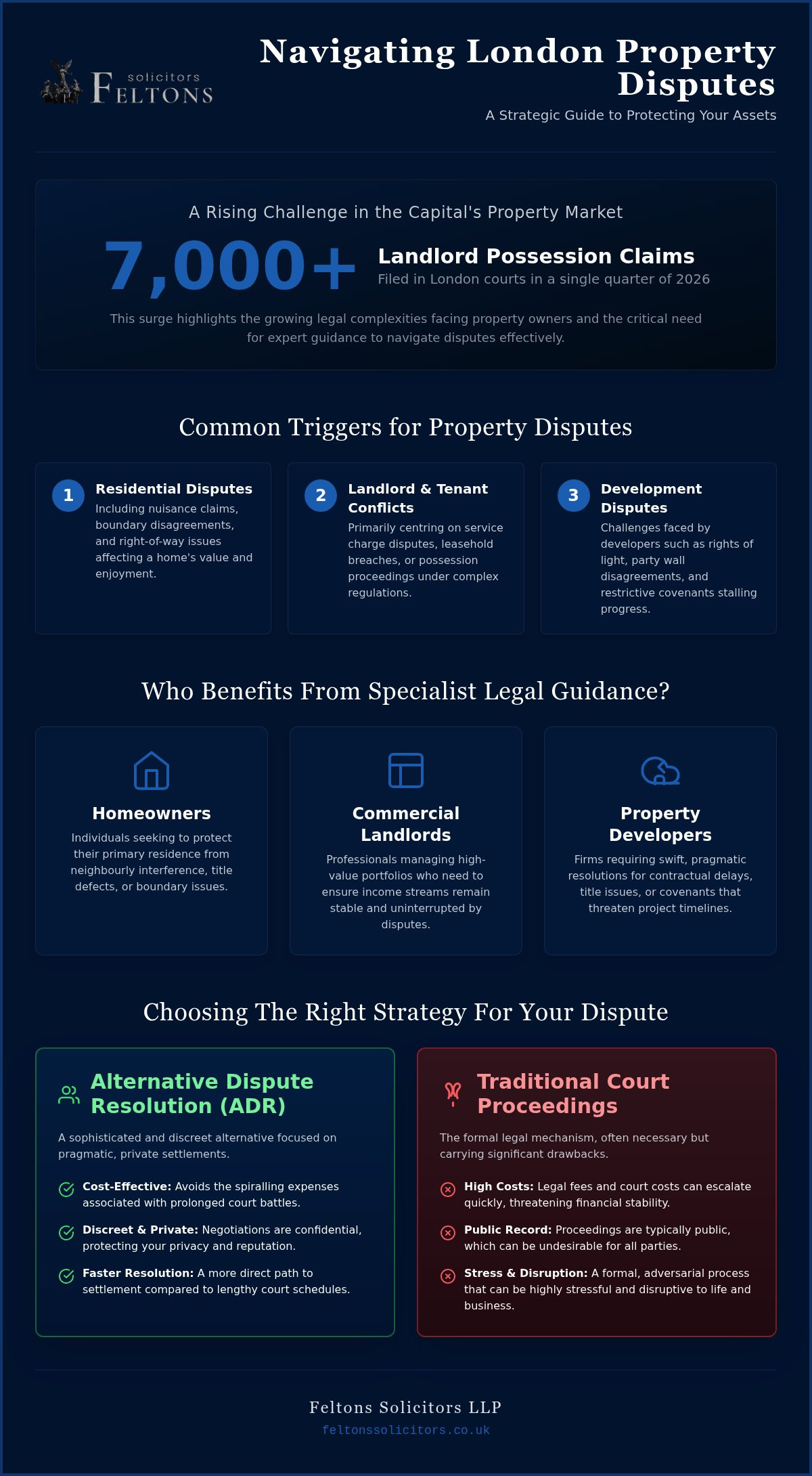
A Lasting Power of Attorney (LPA) is a vital legal deed that grants you the autonomy to choose who will manage your affairs if you ever lose the ability to do so yourself. Whilst the government provides online forms for a DIY approach, these generic templates often lack the nuance required for complex personal or financial circumstances. Engaging a specialist lasting power of attorney solicitor London ensures that your document is not merely a formality but a robust legal shield. Professional drafting is particularly crucial amongst individuals with blended families, international assets, or intricate business interests where standard clauses might lead to ambiguity or conflict.

The risk of a DIY application is significant. In the 2023/24 period, over 50,000 applications were rejected by the Office of the Public Guardian (OPG) due to administrative errors or conflicting instructions. These rejections often occur months after the paperwork was submitted, leaving families in a precarious position if the donor has lost capacity in the interim. A solicitor acts as a safeguard, ensuring that every preference and instruction is legally sound and “future-proof” against potential challenges from disgruntled parties or financial institutions.

The Mental Capacity Act 2005 and Your Rights

The legal framework for LPAs is grounded in the Mental Capacity Act 2005, which establishes a clear presumption of capacity. This means you are assumed to have the right to make your own decisions unless it is proven otherwise. Mental capacity is the ability to make and communicate specific decisions at the time they need to be made. By creating an LPA, you exercise your right to self-determination before any crisis occurs. The OPG remains a vigilant overseer, monitoring the behaviour and actions of your appointed attorneys to ensure they act in your best interests and to prevent financial abuse or neglect.

Property and Financial Affairs vs. Health and Welfare

There are two distinct types of LPA, each serving a unique purpose. The Property and Financial Affairs LPA allows your attorneys to manage bank accounts, pay bills, and sell property. In contrast, the Health and Welfare LPA only becomes active if you lose capacity, covering decisions about your daily routine, medical care, and life-sustaining treatment. Many clients choose to register both documents simultaneously to provide a seamless safety net. These documents are also a fundamental component of a comprehensive estate planning strategy, ensuring that your financial legacy and personal dignity remain protected under the guidance of a lasting power of attorney solicitor London.

Modernising the Process: The Powers of Attorney Act 2023

The legal landscape for safeguarding your future changed significantly on 18 November 2023 with the implementation of the Powers of Attorney Act. This legislation represents the most significant update to the system in years, transitioning the Office of the Public Guardian towards a digital-first methodology. While the traditional paper-based route remains available for those who require it, the new framework prioritises efficiency and security through modern technology. Engaging a lasting power of attorney solicitor London is essential to navigate these digital transitions, ensuring that technical convenience doesn’t compromise the legal integrity of your deed.

One of the primary drivers behind this modernisation is the need to reduce registration delays. In recent years, applicants have frequently faced waiting periods of 8 to 10 weeks for their documents to be processed. The 2023 Act aims to streamline this by automating administrative checks and allowing for faster communication between the OPG and legal professionals. However, a digital system introduces new complexities regarding electronic signatures and online submission protocols. We provide the steady guidance needed to manage these digital hurdles whilst maintaining the traditional professional rigour your affairs deserve.

Enhanced Security and Fraud Prevention

The 2023 Act introduces rigorous identity verification requirements for all parties involved in the creation of an LPA. These measures are designed to protect vulnerable donors from coercion and financial abuse, which are growing concerns in an increasingly digital world. As your solicitor, we act as a neutral third party during the digital sign-off process, providing a level of human scrutiny that an automated system cannot replicate. For those who prefer traditional methods or lack digital access, the UK Government guidance on LPAs confirms that paper-based options will be maintained, ensuring accessibility remains a priority for all citizens.

Business LPAs: Protecting Your Commercial Interests

Many business owners mistakenly believe their personal Property and Financial Affairs LPA covers their commercial interests. This is rarely the case. If you’re a director or sole trader, your personal attorneys may not have the legal standing or the professional expertise to manage your company’s daily operations. A specific Business LPA ensures that your company can continue to pay staff, manage VAT, and meet contractual obligations if you’re incapacitated. We carefully align these documents with your company’s articles of association to avoid legal gridlock. If you’re concerned about commercial continuity, seeking guidance from Feltons Solicitors LLP can provide the tailored strategy your business requires.

DIY vs. Solicitor-Drafted LPAs: Evaluating the Risks

Choosing to manage your own legal affairs might seem like a cost-effective solution, especially with basic digital tools available online. However, the true value of a lasting power of attorney solicitor London lies in the professional rigour they bring to a document that must function perfectly under extreme pressure. Unlike a computerised form, a solicitor provides a Certificate of Capacity. This professional verification confirms you understand the implications of the deed and aren’t acting under duress. It’s the most effective way to prevent future legal challenges from those who might question your mental state at the time of signing.

Professional advice also helps you navigate complex family dynamics. A computer cannot sense tension between siblings or identify the risk of a future dispute. We act as a neutral observer, ensuring your choices are truly yours and that your attorneys are suitable for their roles. This human element is what prevents the family friction that often leads to costly litigation. While the initial registration fee is fixed, the cost of a solicitor is an investment in preventing thousands of pounds in future court costs for your family.

Common Pitfalls in Self-Administered Applications

One of the most frequent errors in self-administered applications involves the choice between “jointly” and “jointly and severally” appointments. If you choose “jointly”, your attorneys must agree on every single decision; if one dies or loses capacity, the entire LPA fails. A “Jointly and Severally” clause is the most flexible way for attorneys to act, as it allows them to make decisions both together and independently. Many DIY applicants also fail to appoint replacement attorneys correctly. Without these backups, your affairs could grind to a halt, forcing your family to apply for a costly and intrusive Deputyship order through the Court of Protection.

The Value of Bespoke Preferences and Instructions

Generic forms often lack the space for the nuanced instructions that define a person’s true wishes. You might have specific views on ethical investment portfolios or very particular care home preferences that a tick-box form cannot capture. A solicitor ensures your attorneys have the explicit legal authority to manage complex arrangements, such as the power to find a will or oversee family trusts effectively. These tailored instructions turn a standard document into a bespoke roadmap for your future care, ensuring your lifestyle and values are maintained even if you cannot advocate for them yourself.

Lasting Power of Attorney Solicitor London: Securing Your Future with Professional Expertise

A Framework for Choosing and Appointing Your Attorneys

Selecting the individuals who will hold legal authority over your life is a decision that requires a balance of emotional trust and practical assessment. It’s not simply about who you love most, but who possesses the specific temperament and skills to execute your wishes under pressure. To ensure your future is in capable hands, we recommend following a structured framework for selection and appointment.

  • Step 1: Assess Specific Skills. Financial management requires a level of fiscal literacy that may differ from the empathy and medical understanding needed for health and welfare decisions.
  • Step 2: Consider Geography and Availability. An attorney who lives locally and has the time to visit banks or attend medical consultations is often more effective than one living abroad.
  • Step 3: Conduct Transparent Discussions. Ensure your chosen individuals fully understand the legal responsibilities and are genuinely willing to accept the burden when the time comes.
  • Step 4: Appoint a Professional Certificate Provider. This neutral party verifies your understanding and freedom from pressure, providing a vital layer of security.
  • Step 5: Formally Register with the OPG. Registration ensures the document is legally active and ready for immediate use, avoiding delays during a crisis.

By applying this methodical approach, you can feel confident that your autonomy is protected by a team capable of honouring your legacy. If you require assistance in vetting potential representatives, a lasting power of attorney solicitor London can provide the objective perspective necessary to avoid future family conflict.

The Vital Role of the Certificate Provider

The Certificate Provider is a critical safeguard that many DIY applicants overlook or treat as a mere formality. This person must certify that you understand the purpose of the LPA and that no one is forcing you into the arrangement. While certain acquaintances can fill this role, engaging a lasting power of attorney solicitor London is often the most robust choice. We have a professional duty to ensure you aren’t being coerced, acting as a primary defence against the predatory creation of legal deeds. This professional sign-off makes the document significantly harder to challenge in the future.

Managing Multiple Attorneys and Substitutes

Appointing multiple attorneys can prevent a single person from having total control, but it also carries the risk of deadlock. When appointing children or siblings, it’s essential to structure their decision-making to maintain family harmony whilst ensuring efficiency. We often advise on the inclusion of replacement attorneys to “future-proof” the document. This ensures that if a primary attorney dies or loses capacity themselves, your LPA remains valid and functional for decades to come. To begin securing your future with professional rigour, contact Feltons Solicitors LLP for a discreet consultation.

Feltons Solicitors LLP: Discreet, Professional Guidance for Your Future

Feltons Solicitors LLP operates as a boutique practice, providing a sophisticated blend of professional authority and empathetic care. As a leading lasting power of attorney solicitor London, we understand that these documents are deeply personal reflections of your values and wishes. We aren’t a high-volume processing firm. Instead, we offer a calm, steady presence to help you navigate sensitive family and financial decisions with quiet confidence. Our extensive experience in complex probate and private client matters allows us to foresee potential issues that standard services might overlook.

We believe in total transparency and cost certainty. To support this, we provide fixed-fee options for LPA drafting and registration, ensuring you understand the investment from the very first consultation. Our “people-first” philosophy ensures your individual needs remain at the centre of our advice. We take the time to listen to your specific concerns, whether they involve protecting a family business, managing international assets, or ensuring your medical preferences are honoured. We don’t just process paperwork; we build lasting partnerships based on trust and discretion.

Our Tailored Approach to Powers of Attorney

Our approach goes beyond simple form-filling to provide strategic advice on asset protection and long-term welfare. For clients with high-net-worth or commercial interests, our expertise as a lasting power of attorney solicitor London ensures that your business assets are never at risk due to legal ambiguity. You’ll have direct access to senior solicitors who value privacy and personal rapport. This high-standard service is designed for those who require a methodical and orderly legal mindset applied to their most private affairs.

Secure Your Legacy Today

Waiting for a health crisis is the most common mistake in estate planning. Once capacity is lost, it’s too late to create an LPA, leaving your family to face the stress and significant expense of the Court of Protection. Creating these documents now provides the peace of mind that comes from knowing your affairs are in capable, trusted hands. It’s about taking control of your future whilst you have the clarity to do so. We invite you to experience a more personal level of legal care. Contact Feltons Solicitors LLP today for a discreet consultation regarding your Lasting Power of Attorney. Our team is ready to act as your sophisticated guide in securing your autonomy and your legacy.

Securing your future is a responsibility that requires more than just filling in a form. It demands a methodical approach to ensure your autonomy remains intact during life’s most challenging moments. By choosing a lasting power of attorney solicitor London, you avoid the administrative failures that stall so many applications and gain a document tailored to your specific financial and personal circumstances. We’ve seen how the 2023 legislative shifts and the nuances of “jointly and severally” appointments require professional rigour to be truly effective.

Feltons Solicitors LLP offers the quiet confidence and expertise of an SRA-regulated boutique firm with over 15 years of experience. We specialise in high-net-worth and complex international estates, providing every client with direct access to senior partners. This personal connection ensures your privacy is respected whilst your legacy is fortified against future challenges. You deserve the peace of mind that comes from knowing your affairs are in the hands of a trusted advisor.

Secure your future with a professionally drafted Lasting Power of Attorney from Feltons Solicitors LLP. We’re here to provide the steady guidance you need to move forward with certainty.

Frequently Asked Questions

What happens if I lose capacity and do not have a Lasting Power of Attorney?

Your family will likely need to apply to the Court of Protection for a Deputyship order to manage your affairs. This process is significantly more expensive and time-consuming than creating an LPA, often costing upwards of £3,000 in legal fees plus ongoing annual supervision charges. During the months it takes to secure this order, your bank accounts could be frozen, leaving your loved ones unable to pay for your care or household bills.

Can I change my mind after a Lasting Power of Attorney has been registered?

You can revoke your LPA at any time as long as you still have the mental capacity to make that decision. To do this, you must draft a “Deed of Revocation” and send it to the Office of the Public Guardian (OPG) along with the original document. If you wish to change your attorneys rather than cancel the document entirely, you’ll need to end the current LPA and register a new one.

How much does a solicitor typically charge for an LPA in 2026?

Professional fees for drafting and advice vary depending on the complexity of your estate and whether you’re registering both types of LPA. In addition to the solicitor’s fee, there is a mandatory government registration fee of £92 per document payable to the OPG. Engaging a lasting power of attorney solicitor London ensures that these costs are an investment in preventing much higher litigation or Deputyship expenses in the future.

To further secure your estate, it is often recommended to have a professionally drafted Will in place; click here to learn more about Aiker Wills and Trusts and their document preparation services.

Can my spouse automatically make decisions for me without an LPA?

No, your spouse or next of kin does not have an automatic legal right to manage your finances or dictate your medical care. Financial institutions often freeze joint accounts if one holder loses capacity and there is no registered LPA in place. Without this legal deed, your spouse may be “locked out” of the decision-making process regarding your life-sustaining treatment or the sale of your shared home.

What is the difference between an Ordinary Power of Attorney and a Lasting Power of Attorney?

An Ordinary Power of Attorney is a temporary measure that is only valid while you still have mental capacity, often used if you are hospitalised or working abroad. A Lasting Power of Attorney is specifically designed to “last” beyond the point where you can no longer make decisions for yourself. It’s a permanent safeguard that provides continuity of care and financial management when you are at your most vulnerable.

Can I appoint a professional, such as a solicitor, to be my attorney?

You can appoint a professional attorney to manage your Property and Financial Affairs, which is a common choice for those with complex business interests or no suitable family members. A lasting power of attorney solicitor London can act as your attorney, providing a neutral and expert presence to ensure your assets are managed with professional integrity. Please note that professionals rarely act as attorneys for Health and Welfare decisions.

How long does the registration process with the OPG take currently?

The registration process typically takes between 8 and 10 weeks from the date the application is received by the OPG. While the Powers of Attorney Act 2023 has introduced digital reforms to improve efficiency, these timeframes haven’t yet seen a significant reduction. It’s vital to start the process early to ensure the documents are ready for use before they are actually needed.

Does an LPA cover my assets and property held outside of England and Wales?

An LPA drafted in England and Wales isn’t automatically recognised in foreign jurisdictions or even in Scotland and Northern Ireland. If you own property abroad, you may need to create a separate Power of Attorney in that specific country or obtain a certificate under the Hague Convention on the International Protection of Adults. We recommend seeking specialist advice if your estate includes international assets to ensure total protection.

Silicosis Litigation Process UK: A Comprehensive Guide to Compensation in 2026

Silicosis Litigation Process UK: A Comprehensive Guide to Compensation in 2026

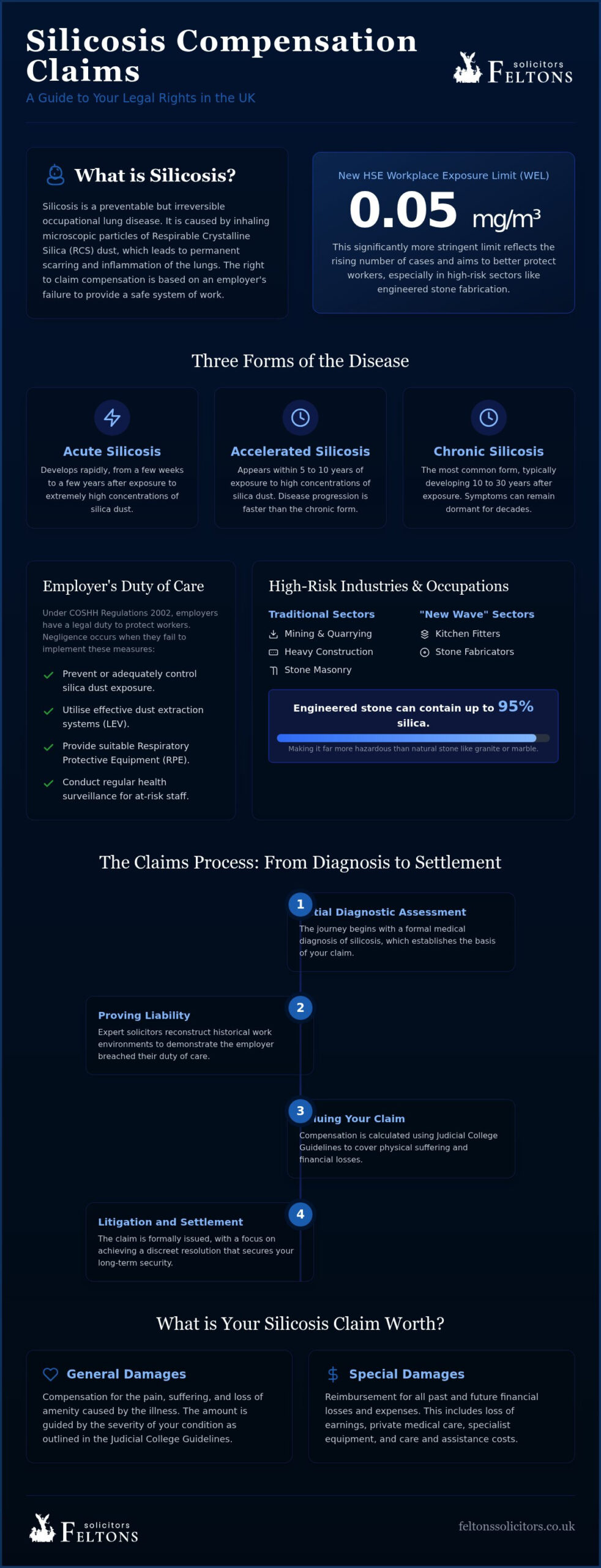
Did you know that engineered stone can contain up to 95% crystalline silica, making it one of the most significant workplace hazards in the modern construction industry? If you are facing a diagnosis, the fear of deteriorating health and the anxiety of providing for your family can feel like an overwhelming burden. You might be confused about the “date of knowledge” or worried that the three-year legal time limit has already passed. Understanding the silicosis litigation process uk is the first step toward regaining control and ensuring your future is financially protected.

We recognise that behind every legal case is a person seeking reassurance and professional clarity. You deserve to know how to hold a negligent employer accountable while navigating a system that often feels designed to exclude you. This guide provides a clear roadmap for securing compensation in 2026, offering the expert legal guidance you need to protect your family’s interests. We will explore the recent 8.2% uplift in Judicial College Guidelines, explain how Industrial Injuries Disablement Benefit rates have changed, and provide a step-by-step preview of the litigation journey so you can move forward with confidence.

Key Takeaways

  • Understand the specific risks of Respirable Crystalline Silica (RCS) and identify if your career in high-risk British industries has left you vulnerable to respiratory disease.
  • Learn how to navigate the silicosis litigation process uk by gathering the medical and employment records required to prove workplace exposure.
  • Gain insights into employer duties under COSHH Regulations and the “Hierarchy of Control” used to hold companies accountable for safety failures.
  • Discover how to bypass the “Smoker’s Defence” misdiagnosis trap so your symptoms are correctly linked to silica dust.
  • Find out how securing interim payments can provide immediate access to private medical rehabilitation whilst your claim progresses toward a final settlement.

Understanding Silica Dust Exposure and the Risks in British Workplaces

Silica is a natural substance found in stone, rock, and sand, but it’s the invisible dust created during industrial processes that causes lasting harm. Respirable Crystalline Silica (RCS) consists of particles so small they cannot be seen by the naked eye. These microscopic shards are easily inhaled, bypassing the body’s natural defences to settle deep within the alveolar sacs of the lungs. If you are researching What is Silicosis?, you’ll find that these particles trigger permanent scarring and inflammation that reduces lung capacity over time.

Several British industries carry a heightened risk for employees. Workers in stone masonry, glass manufacturing, and construction are frequently exposed to high levels of RCS. The danger is often hidden because of the long latency period; it can take ten to thirty years for symptoms to manifest. This delay is why many health and safety experts now refer to silica as the “New Asbestos.” By the time a worker notices breathlessness or a persistent cough, the damage is often irreversible. This complex timeline is a critical factor in the silicosis litigation process uk, as legal experts must trace exposure back through decades of employment history to hold former employers accountable.

The Distinction Between Natural and Engineered Stone

Engineered stone, commonly used for high-end kitchen worktops, presents a far greater risk than natural granite or marble. Whilst natural stone might contain 30% silica, engineered variants often contain upwards of 90% to 95% crystalline silica. The 2026 regulatory environment has tightened significantly around the cutting and fabrication of these materials, reflecting a growing awareness of their toxicity. Even if you aren’t the one cutting the stone, fine dust can linger in workshop air for hours, affecting everyone in the building. This pervasive nature of the hazard means that employer liability often extends beyond the primary fabricator.

The Scale of the Crisis in 2026

Recent data from the Health and Safety Executive (HSE) underscores a growing concern, with an average of 12 deaths per year attributed directly to silicosis over the last decade. In 2023, the HSE reported 35 new cases assessed for Industrial Injuries Disablement Benefit, yet the actual prevalence is suspected to be higher due to misdiagnosis. Settled dust remains a persistent hazard; it can be disturbed by simple activities like sweeping or foot traffic, creating a secondary exposure risk for tradespeople working in adjacent areas. This systemic failure to control dust is a primary driver in the silicosis litigation process uk today, as more individuals seek justice for preventable lung damage. Masons and fabricators in particular are increasingly pursuing stone masonry silicosis claims to hold negligent employers accountable for decades of inadequate dust control.

The Health Impact of Silicosis: Recognising Symptoms and the Misdiagnosis Trap

Silicosis is a progressive condition that manifests in three distinct forms depending on the intensity and duration of dust inhalation. Chronic silicosis is the most common, often appearing ten to thirty years after exposure. Accelerated silicosis develops much faster, usually within five to ten years of heavy exposure, whilst acute silicosis can occur within weeks or months of inhaling massive quantities of silica dust. Unlike a temporary respiratory infection, the physiological process involves fibrosis, where the lungs develop permanent, inelastic scar tissue in response to the sharp silica shards. For early and accurate detection, medical professionals recommend High-Resolution Computed Tomography (HRCT) scans, as standard X-rays frequently fail to capture the fine, granular scarring typical of early-stage disease.

One of the most significant hurdles in the silicosis litigation process uk is the “Smoker’s Defence.” Employers and their insurers often attempt to attribute breathlessness or lung damage to a claimant’s history of tobacco use. However, expert solicitors work with specialist chest physicians to distinguish between the damage caused by smoking and the specific nodular patterns of silica-induced fibrosis. By providing clear medical evidence of occupational scarring, we ensure that your right to compensation isn’t undermined by unrelated lifestyle factors.

Why Silicosis is Often Mistaken for COPD or Asthma

The “Misdiagnosis Trap” occurs when GPs overlook a patient’s occupational history, leading them to diagnose more common ailments like asthma or Chronic Obstructive Pulmonary Disease (COPD). Because the symptoms of a persistent cough and chest tightness are so similar, many workers suffer for years without the correct diagnosis. This delay is critical because it can complicate the legal “date of knowledge,” which is the point at which the three-year limitation period for a claim begins. If you suspect your symptoms are work-related, it’s vital to request a specialist occupational lung disease review. Speaking with specialist silicosis solicitors can help you understand how a formal diagnosis impacts your legal standing.

Beyond the Lungs: Autoimmune and Kidney Risks

Modern medical research has revealed that the impact of silica exposure extends far beyond respiratory health. There is a proven link between inhaled silica and nephrotoxicity, which can lead to chronic kidney disease. Additionally, sufferers face an increased risk of developing debilitating autoimmune conditions, amongst them scleroderma, rheumatoid arthritis, and lupus. When navigating the silicosis litigation process uk, it’s essential that these secondary conditions are factored into the claim. A comprehensive legal strategy ensures that the full scale of your health complications is recognised, providing a settlement that covers long-term care for all related illnesses. For more information on the clinical progression of the disease, you can review the official NHS guidance on Silicosis Symptoms and Diagnosis.

Employer Liability and the Duty of Care Under COSHH Regulations

British employers operate under a strict legal framework designed to protect workers from invisible killers like silica dust. The Control of Substances Hazardous to Health (COSHH) Regulations 2002 remain the primary legislation governing these risks in 2026. Under these rules, a company has a non-delegable duty to prevent or, where prevention isn’t possible, adequately control exposure to Respirable Crystalline Silica (RCS). This isn’t merely a set of suggestions; it’s a statutory requirement. According to the HSE guidance on silica risks, any failure to implement these protections can form the basis of a significant legal claim.

The law mandates a “Hierarchy of Control” that every employer must follow. They cannot simply hand out masks and consider the job done. The process should follow these steps:

  • Elimination: Removing the risk entirely by changing the work process.
  • Substitution: Using materials with lower silica content where possible.
  • Engineering Controls: Implementing local exhaust ventilation (LEV) or water-suppression systems to stop dust from entering the air.

Respiratory Protective Equipment (RPE) should only be used as a final line of defence. When RPE is necessary, it must be matched to the individual through mandatory face-fit testing. Furthermore, employers are required to provide regular health surveillance for at-risk staff. This involves lung function tests and health checks designed to identify early-stage damage whilst intervention is still possible. If your employer failed to provide these checks, it significantly strengthens your position within the silicosis litigation process uk.

Breach of Statutory Duty: Common Failures

In many cases, employers attempt to argue that they followed “industry standards.” However, the courts have been clear: if the industry standard was insufficient to protect the worker, the employer remains liable. We frequently see claims arising from dry cutting stone when wet cutting was a viable alternative, or LEV systems that were never properly maintained or tested. Training is another common area of failure. If you weren’t told about the specific dangers of silica or taught how to use safety equipment correctly, your employer has likely breached their duty of care.

Specialist Claims for Engineered Stone Workers

A “new wave” of silicosis is currently affecting younger tradespeople, particularly kitchen fitters and fabricators working with engineered quartz. These modern materials are far more hazardous than natural stone, yet safety standards in smaller workshops often lag behind the risks. Our complex personal injury claims solicitors specialise in these high-stakes cases. We don’t just look at employer negligence; we also investigate product liability claims against manufacturers who may have failed to provide sufficient warnings about their products. Navigating the silicosis litigation process uk for engineered stone requires specific technical evidence, including air quality reports and detailed employment histories, to ensure the full scale of the negligence is exposed.

Silicosis Litigation Process UK: A Comprehensive Guide to Compensation in 2026

The Silicosis Litigation Process: A Step-by-Step Guide to Claiming

Understanding the silicosis litigation process uk is essential for anyone facing a life-altering diagnosis. It’s a methodical journey that transforms medical evidence into legal accountability. We guide you through five core stages to ensure your claim is robust and your future is secure. This structured approach provides the clarity needed to handle what is often a stressful time for you and your family.

  • Step 1: Initial Consultation. We begin by establishing a detailed history of your workplace exposure. This involves identifying specific employers, the materials you handled, and the safety measures (or lack thereof) that were in place.
  • Step 2: Gathering Evidence. We obtain your full medical records and your HMRC employment history. These documents are vital for identifying the correct defendants, especially if you worked for multiple companies over several decades.
  • Step 3: Independent Medical Expert. We instruct a specialist chest physician to conduct a thorough assessment. Their report provides the definitive link between your silica exposure and your current health, which is the foundation of any successful claim.
  • Step 4: Letter of Claim. Once the evidence is compiled, we issue a formal Letter of Claim to the employer and their insurers. This document sets out the legal basis of the claim and the specific breaches of duty.
  • Step 5: Negotiation or Court. Most claims are settled through negotiation, but we are prepared to issue court proceedings if the insurers refuse to offer a fair settlement. Our goal is to secure a sum that covers your pain, suffering, and long-term care needs.

If you’re ready to start this journey, our silicosis litigation experts are here to provide a discreet, professional consultation to discuss your options.

Time Limits and the “Date of Knowledge”

The Limitation Act 1980 sets a standard three-year window for personal injury claims. However, because silicosis has such a long latency period, the clock doesn’t usually start ticking until your “date of knowledge.” This is the point at which you were diagnosed and could reasonably have known your condition was work-related. You can review our guide on silicosis claim time limits uk for a deeper look at these nuances and the rare exceptions that may apply to your case.

Claiming Against Former or Defunct Employers

It’s a common concern that a claim might be impossible if a former employer has ceased trading. Fortunately, we can often trace the insurers who provided cover at the time of your exposure using the Employers’ Liability Tracing Office (ELTO). This allows us to pursue compensation even from businesses that no longer exist. In the saddest of circumstances, we also support families in pursuing a silicosis claim after death, ensuring that dependents are financially protected even after a loved one has passed away.

Securing Your Future: How Feltons Solicitors LLP Manages Silicosis Claims

At Feltons Solicitors LLP, we understand that a silicosis diagnosis is a deeply personal and life-altering event. We reject the high-volume, “factory” approach common in larger firms, opting instead for a boutique service that prioritises your individual needs. Our role in the silicosis litigation process uk is to act as your sophisticated guide, providing a calm and steady presence whilst we navigate the technical complexities of your case. We focus on building a personal connection, ensuring you feel heard and supported throughout the legal journey. We don’t just process claims; we protect futures.

Recognising the immediate financial and physical strain of respiratory disease, we are committed to securing interim payments whenever possible. These early funds can be vital for accessing private medical treatment, pulmonary rehabilitation, or specialised equipment before the final settlement is reached. We manage the psychological impact of the disease with empathetic, people-first communication, acknowledging that your peace of mind is just as important as the financial outcome. Our service is inherently discreet, valuing your privacy and professional integrity at every stage of the litigation. It’s about more than just a settlement; it’s about restoring a sense of security.

A Sophisticated Approach to High-Value Litigation

Silicosis cases are scientifically complex, requiring a bespoke strategy that goes beyond standard personal injury protocols. We coordinate with a hand-picked network of top-tier medical experts and specialist barristers to ensure every aspect of your condition is documented. This level of preparation allows us to build an unshakeable case, whether the negligence occurred in a local workshop or involves international corporate entities. Our worldly experience ensures that even the most intricate legal hurdles are handled with quiet confidence and precision; for those seeking perspectives on personal injury representation in other jurisdictions, you can learn more about The Todd Law Group, PLLC. We provide the tailored attention that high-value claims demand.

What Your Compensation Covers

A successful claim provides financial security through two primary categories of damages. Under the 18th edition of the Judicial College Guidelines, published in April 2026, “General Damages” for pain, suffering, and loss of amenity have seen an 8.2% to 8.3% uplift to account for inflation. This ensures your award reflects the true impact of your condition in today’s economy. In addition to this, we pursue “Special Damages” to cover quantifiable losses, including:

  • Lost Earnings: Compensation for past and future income if you are no longer able to work.
  • Future Care Costs: Funding for professional nursing or help with daily tasks.
  • Home Adaptations: Costs for installing stairlifts, ramps, or specialised ventilation systems.
  • Medical Expenses: Coverage for private prescriptions, travel to appointments, and ongoing therapy.

If you are ready to discuss how we can help you secure your financial future, we invite you to begin your journey with a confidential consultation. We will listen to your specific circumstances and provide the expert clarity you need to move forward with the silicosis litigation process uk.

Securing Your Health and Financial Legacy

Feltons Solicitors provides a boutique, people-first service tailored to your individual needs. Our specialist expertise in complex industrial disease litigation, combined with a proven track record in securing high-value settlements, ensures your case is in capable hands. We pride ourselves on being a steady, discreet presence during what is often a stressful time. If you’re ready to explore your options, we invite you to contact Feltons Solicitors for a discreet, expert consultation on your silica dust claim. You deserve the security and care that comes with professional legal support. We’re here to help you move forward with confidence.

Frequently Asked Questions

Can I still make a silica dust compensation claim if I used to smoke?

Yes, you can still pursue a claim if you have a history of smoking. Whilst employers may attempt to blame tobacco use for respiratory issues, we instruct specialist medical experts who can distinguish between smoking-related damage and the specific scarring caused by silica dust. Your compensation may be adjusted, but it isn’t barred by your lifestyle history.

What is the “date of knowledge” in a silicosis claim?

The “date of knowledge” is the point at which you first realised, or could reasonably have been expected to know, that your illness was linked to your employment. This is often the date of a formal medical diagnosis. This specific date is vital because it marks the start of the three-year period allowed to begin the silicosis litigation process uk.

How much compensation can I expect for a silicosis diagnosis?

Compensation amounts vary based on the severity of your condition and its impact on your quality of life. Under the April 2026 Judicial College Guidelines, brackets for general damages have increased by over 8% to account for inflation. Your final settlement will also include special damages to cover lost income and the costs of any necessary home adaptations or private medical care.

What happens if my former employer has gone out of business?

You can still claim compensation even if your former employer is no longer trading. We use the Employers’ Liability Tracing Office (ELTO) to identify the insurance company that provided cover at the time of your exposure. Since the insurer is responsible for the payout, the company’s current status doesn’t prevent you from receiving the funds you deserve.

Is there a time limit for making a silicosis claim in the UK?

The standard time limit is three years from the date of your diagnosis or your date of knowledge. Because silicosis has a long latency period, the law doesn’t expect you to claim until you’re aware of the damage. It’s best to seek legal guidance as soon as you suspect a link between your symptoms and your past work to protect your rights.

Will I lose my job if I make a claim against my current employer?

You are legally protected from being sacked or treated unfairly for making a personal injury claim. UK law regards such actions as unfair dismissal. Most employers recognise that compensation is handled by their insurance provider, meaning the claim doesn’t directly threaten the company’s daily finances or your ongoing position.

How long does the silicosis litigation process typically take?

The silicosis litigation process uk usually takes between 12 and 24 months to resolve, depending on the complexity of the evidence. Cases involving multiple past employers or contested medical reports can take longer. We focus on securing interim payments early in the process to provide you with immediate financial relief for treatment and living costs.

Can I claim compensation on behalf of a family member who has passed away?

Yes, the law allows the estate and dependents of a deceased individual to pursue a claim for compensation. This can cover the suffering endured by your loved one and provide essential financial security for the family they left behind. We handle these claims with the highest level of professional discretion and empathy during such a difficult time.

Leasehold Extension for Overseas Landlords: A Guide to Protecting UK Assets in 2026

Leasehold Extension for Overseas Landlords: A Guide to Protecting UK Assets in 2026

What if the most significant threat to your UK investment isn’t the property market itself, but a ticking clock you can’t see from thousands of miles away? Managing a leasehold extension for overseas landlords often feels like a delicate balancing act between complex legal reforms and the strict requirements of the Register of Overseas Entities. It’s natural to feel a sense of urgency as your asset approaches the 80-year mark, especially whilst navigating different time zones and evolving UK legislation. We understand that your priority is a seamless process that protects your capital without requiring your constant, physical presence in the UK.

This guide will show you how to secure a valid lease extension that restores your property’s marketability whilst ensuring full compliance with Land Registry and ROE standards. You will discover how the 2024 reforms have simplified the landscape, including the abolition of marriage value and the introduction of the 990-year standard term. We will provide a clear, methodical preview of the steps required to manage these changes, allowing you to maintain your portfolio with the quiet confidence that your interests are fully protected and your legal obligations are met.

Key Takeaways

  • Understand why the 80-year “Marriage Value” threshold remains a critical financial deadline for protecting your property’s long-term market value.
  • Discover how a leasehold extension for overseas landlords now provides a standardised 990-year term and reduced ground rents under the 2024 reforms.
  • Identify the mandatory compliance steps required to synchronise your lease extension with the Register of Overseas Entities (ROE).
  • Learn how the abolition of the two-year ownership rule enables new international investors to initiate the extension process immediately upon purchase.
  • Explore the methodical process of instructing specialist UK solicitors to manage professional valuations and legal filings whilst you are based abroad.

Protecting Asset Value: Why Overseas Landlords Must Prioritise Lease Extensions

A leasehold extension is a vital legal mechanism that allows you to add a significant number of years to your existing UK property lease whilst simultaneously reducing your ground rent to a “peppercorn” or zero rate. For any investor managing a portfolio from afar, a leasehold extension for overseas landlords isn’t merely a paperwork exercise; it’s a strategic move to safeguard the capital value of your asset. The foundation for these rights was established through legislation like the Leasehold Reform Act 1967, which first empowered leaseholders to secure their long-term interests against the freeholder’s interest.

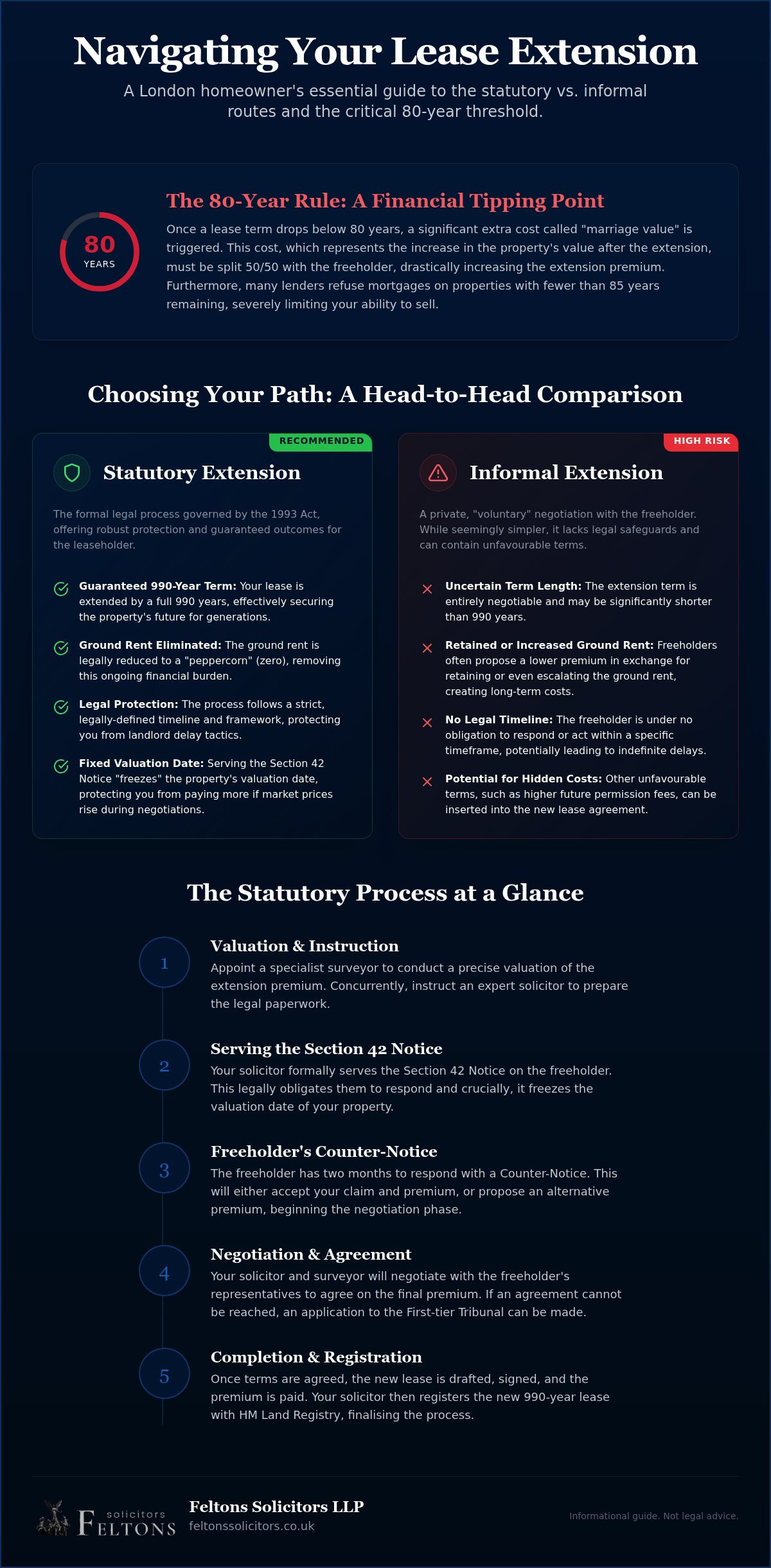
The 80-year mark is often described as a “cliff” because of its dramatic financial consequences. Once a lease drops below this threshold, the cost of extending it rises sharply due to the introduction of marriage value. For landlords living abroad who may not be tracking their lease documents on a weekly basis, missing this date can result in a bill that is tens of thousands of pounds higher than it would’ve been just a few months prior. Acting early is the most effective way to keep your premium predictable and your investment profitable.

Marketability is another pressing factor that demands attention. Most UK high-street lenders are hesitant to offer mortgages on properties with fewer than 85 years remaining on the lease. If you decide to sell or refinance your investment, a short lease significantly shrinks your pool of potential buyers to cash-only investors. This lack of competition inevitably drives down the sale price, making your asset far less liquid than it should be.

As we move through 2026, the UK property market is defined by increased transparency and stricter regulatory scrutiny. A long lease acts as a defensive shield against market volatility, ensuring your property remains a “clean” asset in the eyes of lenders and buyers alike. By securing a 990-year extension now, you effectively future-proof the property for generations, removing the need for any further legal intervention during your lifetime.

The Financial Risk of Diminishing Leases

The price you pay for an extension, known as the premium, is dictated largely by the unexpired term of your lease. The fewer years remaining, the higher the cost you’ll face. Marriage value is the increase in property value following an extension, 50% of which is owed to the landlord. By initiating the process before the lease hits that 80-year mark, you bypass this specific charge entirely, ensuring the extension remains a cost-effective management task rather than a financial burden.

Marketability and Global Portfolios

Maintaining a “clean” asset is vital for those managing a global portfolio where UK property serves as key collateral. International banks are becoming increasingly forensic when reviewing leasehold interests, and they’ve shown a clear preference for assets with long-term stability. A leasehold extension for overseas landlords ensures that the property remains a robust piece of collateral, capable of supporting further investment or providing a secure exit strategy when you choose to sell. It’s about maintaining the same high standard for your UK assets that you expect from your investments elsewhere in the world, which includes ensuring that commercial premises are managed by specialists like DLT Cleaning Services Ltd to meet modern hygiene and compliance benchmarks.

The Leasehold Reform, Housing and Urban Development Act 1993 remains the foundation for leasehold extension for overseas landlords, though its provisions have been significantly enhanced by the Leasehold and Freehold Reform Act 2024. While the 1993 Act established the right to a 90-year extension, the standard term has now been increased to a substantial 990 years. Perhaps the most significant hurdle removed for international investors is the two-year ownership rule. Since February 2025, you can initiate an extension immediately upon purchasing a property, ensuring your capital is protected from day one.

The formal process begins with a Section 42 Notice. This document serves as the “starting gun” for your legal claim, setting out your proposed premium and the terms of the new lease. It’s a precise legal instrument that requires expert handling to avoid being declared invalid by the freeholder. According to official government guidance on lease extensions, the statutory route also ensures your ground rent is reduced to a “peppercorn” rate. This essentially means your ground rent becomes zero for the duration of the new lease, removing a recurring expense that can otherwise complicate property management from abroad.

Qualifying as an Overseas Tenant

To qualify, your property must be held under a “long lease,” which is defined as a lease originally granted for more than 21 years. If you hold your UK assets through an offshore Special Purpose Vehicle (SPV), you are still eligible to exercise these rights, provided the entity is correctly registered with Companies House. For investors managing these types of complex international structures, Brown Hamilton Partners offers the accounting expertise necessary to ensure your global financial reporting remains seamless. Certain exceptions apply, such as properties owned by the National Trust or specific charitable housings. Ensuring your entity is compliant with the latest UK standards is a prerequisite for a smooth claim.

Statutory vs. Informal Extensions

You may find freeholders offering “informal” or private deals. These can seem attractive because they often appear faster or cheaper initially. However, they lack the legal safeguards of the statutory route. Private deals frequently include hidden clauses, such as future ground rent hikes or shorter extension terms that don’t solve the long-term value issue. The statutory route offers the highest level of security for landlords who aren’t physically present in the UK to monitor their freeholder’s behaviour.

In 2026, the timeline for a statutory extension typically spans six to twelve months. While this requires patience, the result is a legally robust asset that meets all modern lending criteria. If you’re unsure which route best suits your portfolio, seeking professional leasehold extension advice can provide the clarity needed to make an informed decision.

The Register of Overseas Entities (ROE): A Crucial Hurdle for Leasehold Extensions

The Economic Crime (Transparency and Enforcement) Act 2022 introduced a significant layer of administration that fundamentally changed how a leasehold extension for overseas landlords is executed. By 2026, the Register of Overseas Entities (ROE) has become a central pillar of UK property law. Any foreign company or entity owning land in the UK must register with Companies House to obtain a unique Overseas Entity ID. Without this ID, your property is effectively frozen. You cannot sell, lease, or, crucially, complete a statutory lease extension. The registration acts as a digital passport for your asset, and without it, the legal doors to the Land Registry remain firmly shut.

The Land Registry acts as the gatekeeper in this process. When your solicitor submits the new lease for registration, the Land Registry cross-references the application with the ROE. If your entity is not registered, or if your annual update is overdue, the application will be rejected. This “Land Registry block” is a common point of failure for many international investors who assume their property rights are independent of corporate filings. To understand the specifics of these filings, you can refer to Overseas Entity Beneficial Owner Registration for a detailed look at the 2026 requirements.

The Link Between ROE and the Land Registry

The registration of a lease extension is technically a “disposition” of land. Under the rules detailed in HM Land Registry Practice Guide 28, the Registrar is prohibited from registering most dealings by an overseas entity unless that entity is compliant with its ROE obligations. If you serve a Section 42 notice whilst your entity is non-compliant, you risk the entire transaction being deemed void. This doesn’t just delay the process; it can lead to significant financial loss if you miss a critical valuation window or a leasehold deadline.

Common Pitfalls in Overseas Registration

Discrepancies in entity names are a frequent cause of rejection. If the name on your original lease differs even slightly from the name registered on the ROE, the Land Registry will likely raise a requisition. Additionally, all information submitted to the ROE must be verified by a UK-regulated agent. This verification is not a one-time task. It must be refreshed annually to keep the entity “active.” For those managing a leasehold extension for overseas landlords, ensuring this compliance is up to date is the first and most vital step in any 2026 property strategy. It’s the foundation upon which your legal claim is built, ensuring your investment remains liquid and secure.

Leasehold Extension for Overseas Landlords: A Guide to Protecting UK Assets in 2026

Step-by-Step Guide: Executing a Lease Extension from Abroad

Executing a leasehold extension for overseas landlords requires a methodical approach that accounts for the physical distance between you and your asset. The process is inherently procedural, but when managed correctly, it can be completed with minimal disruption to your daily life. Your first priority is instructing a specialist UK solicitor who possesses deep experience in international property law and the specific nuances of the 2026 regulatory environment. This legal partner acts as your anchor in the UK, managing the flow of documents and ensuring all statutory deadlines are met with precision.

Once your legal representative is in place, the next step involves a professional valuation. A specialist surveyor will assess your property to determine the “premium,” which is the capital sum you will pay the freeholder to secure the extension. With this figure established, your solicitor will serve the Section 42 Tenant’s Notice. This formal document triggers the legal process and protects your right to the extension from the moment it’s served. The freeholder then has a two-month window to respond with a Counter-Notice, after which your surveyors will negotiate the final premium and lease terms.

The final stages involve the drafting and approval of the new lease, followed by the completion of a deed of substitution. This ensures any existing mortgage is correctly transferred to the new, longer lease. Finally, your solicitor will update the Land Registry records. This step is where your prior compliance with the Register of Overseas Entities becomes critical, as the Land Registry will not finalise the update without a valid Overseas Entity ID.

Remote Identity Verification and AML

Modern legal practice has evolved to support international clients through secure digital ID platforms. These tools allow you to satisfy stringent Anti-Money Laundering (AML) checks from your smartphone, removing the need for international travel. In some instances, you may still require a Notary Public in your home jurisdiction to witness specific signatures on physical documents. A forward-thinking solicitor will coordinate this process, providing clear instructions to ensure your local notary meets UK Land Registry standards.

Managing the Financial Transaction

Handling the transfer of the premium and associated legal costs is managed through secure solicitor client accounts, providing a transparent audit trail for your records. You must also account for any Stamp Duty Land Tax (SDLT) implications, though many extensions fall below the payment threshold. To ensure you aren’t paying more than necessary, it is vital to work with a leasehold enfranchisement expert who can accurately challenge any inflated figures proposed by the freeholder. If a freeholder becomes uncooperative or disputes the premium, engaging experienced dispute resolution solicitors can help you resolve the conflict efficiently without the cost and stress of protracted court proceedings. If you are ready to begin this process, we invite you to contact our team for a professional consultation to discuss your specific property requirements.

At Feltons Solicitors LLP, we’ve built our reputation on providing a sophisticated, boutique service that prioritises the individual needs of international clients. Managing a leasehold extension for overseas landlords requires more than just technical proficiency; it demands a partner who understands the logistical and emotional weight of international asset management. We act as your steady, professional presence in the UK, ensuring that every detail of your property interests is handled with the discreet care you expect. Our philosophy is people-first, which means we focus on managing your stress and providing clarity whilst we handle the complex legal paperwork behind the scenes.

Our expertise is specifically tailored to bridge the gap between traditional leasehold law and the modern requirements of the Economic Crime (Transparency and Enforcement) Act 2022. We understand that your property doesn’t exist in a vacuum. It’s part of a wider financial picture that includes corporate registrations and international compliance. By synchronising these elements, Feltons Solicitors LLP prevents the administrative delays that often plague standard property transactions. You can rely on us to be your eyes and ears on the ground, providing regular, concise updates that respect your time and your privacy.

Why a Specialist Property Law Firm Matters

Precise drafting is the cornerstone of a secure lease. A poorly constructed document can lead to future disputes or difficulties during a sale, especially if the freeholder attempts to insert restrictive clauses. As a dedicated Residential Property Law Firm, we have the experience necessary to identify these risks early. If a freeholder becomes uncooperative or contentious, our litigation and dispute resolution team at Feltons Solicitors LLP is ready to defend your interests, ensuring the statutory process remains on track. We provide the following benefits to our international clients:

  • Direct access to senior solicitors with experience in high-value UK property portfolios.
  • Comprehensive management of both the lease extension and the Register of Overseas Entities (ROE) filings.
  • Transparent communication and secure digital platforms for remote document handling.
  • A methodical approach to valuation negotiations to protect your capital.

Begin Your Lease Extension Today

The year 2026 represents a critical window for action. With the full implementation of the 2024 reforms now in effect, including the abolition of marriage value and the move to 990-year terms, there’s never been a more advantageous time to secure your UK assets. Waiting for further market shifts or legislative tweaks only risks the unexpired term of your lease dropping further. Feltons Solicitors LLP offers bespoke estimates that reflect the specific nuances of your property and corporate structure, providing you with a clear roadmap for the months ahead. To protect your investment and ensure full compliance, contact Feltons Solicitors LLP for expert guidance on your overseas leasehold extension.

Future-Proofing Your UK Property Portfolio for 2026 and Beyond

Securing your UK investment involves more than just monitoring market prices; it requires a proactive approach to the legal health of your assets. As we’ve explored, a leasehold extension for overseas landlords is the most effective way to eliminate ground rent and restore long-term value whilst staying ahead of the 80-year threshold. By aligning your property rights with the latest Register of Overseas Entities requirements, you transform a potentially depreciating asset into a secure, liquid component of your global portfolio.

Feltons Solicitors LLP provides the calm, authoritative guidance necessary to manage these processes from anywhere in the world. Our specialist focus on ROE verification and leasehold enfranchisement ensures that your extension is legally robust and fully compliant with current Land Registry standards. We act as your trusted partner on the ground, offering the discreet, boutique service that complex international matters demand. Secure your UK property value with Feltons Solicitors LLP today. Taking action now provides the certainty that your investment remains protected and your legal obligations are met with professional precision.

Frequently Asked Questions

Can I extend my UK lease if I live in another country?

Yes, you have the same statutory rights to a leasehold extension for overseas landlords as a resident of the UK. Your physical location doesn’t impact your eligibility, provided you hold a “long lease” originally granted for a term of more than 21 years. The process is designed to be handled by your UK legal representative, allowing you to exercise your rights from any jurisdiction.

Do I need to visit the UK to sign the lease extension documents?

No, you don’t need to travel to the UK at any stage of the process. Modern law firms use secure digital ID verification platforms to satisfy Anti-Money Laundering requirements remotely. For documents that require a physical signature, you can use a Notary Public in your home country to witness the signing, after which the papers are couriered to your solicitor in the UK.

How does the Register of Overseas Entities affect my lease extension?

The Register of Overseas Entities (ROE) acts as a mandatory compliance gatekeeper for your transaction. If your property is held in the name of an overseas company, the Land Registry will not register your new lease unless that entity has a valid Overseas Entity ID from Companies House. You must ensure your entity is not only registered but that your annual verification statements are fully up to date before serving your notice.

Is the two-year ownership rule still in effect for overseas landlords in 2026?

No, the requirement to have owned the property for two years was abolished in February 2025. This means you can initiate a leasehold extension for overseas landlords immediately after completing your property purchase. This reform is particularly beneficial for international investors who wish to modernise their lease terms and remove ground rent obligations from the very start of their ownership.

What happens if my UK lease has less than 80 years remaining?

If your lease drops below 80 years, you should prioritise an extension to protect the property’s marketability and mortgageability. Whilst the 2024 reforms abolished “marriage value” fees that previously made short-lease extensions much more expensive, a lease with fewer than 80 years still presents a significant hurdle for UK lenders. Extending your lease ensures the asset remains liquid and maintains its full capital value in a competitive market.

Can my overseas company extend the lease on a commercial property?

Yes, overseas companies can extend leases on commercial properties, although the statutory framework differs from that of residential flats. Commercial extensions are often handled via a negotiated “non-statutory” route. Regardless of the property type, your company must be correctly registered on the ROE to ensure the Land Registry can legally process and record the new lease variation.

How much does a solicitor charge for an overseas leasehold extension?

Legal fees for an international extension depend on the complexity of your corporate structure and whether the freeholder disputes the premium. Costs typically cover the drafting of the new lease, the service of formal notices, and the necessary identity and ROE compliance checks. We recommend requesting a bespoke estimate that accounts for your specific entity type and the number of properties involved in your claim.

What is a Section 42 notice and who serves it?

A Section 42 notice is the formal legal document that officially triggers your statutory claim for a lease extension. It is served by your UK solicitor to the freeholder and sets out your proposed premium and the terms of the new lease. Serving this notice is a critical step because it “fixes” the valuation date, ensuring that any subsequent changes in the property market don’t affect the price you pay for the extension.