
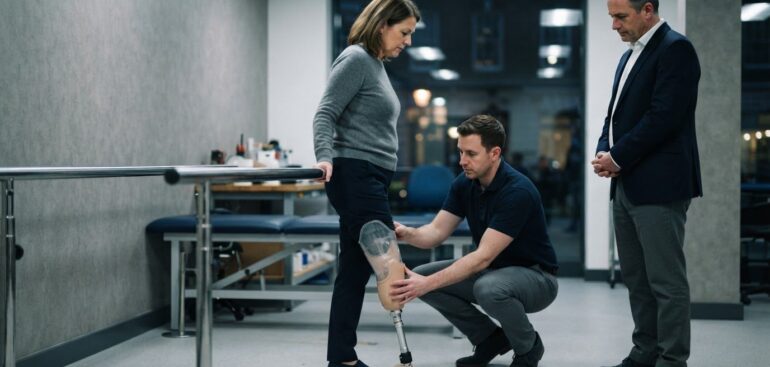
The headline figure is only part of an amputation claim. Compensation may cover pain, suffering and loss of amenity, as well as treatment, lost earnings, care, equipment, prostheses and home adaptations. Amputation injury compensation solicitors can also assess financial losses and future needs.
Time limits matter too. According to the UK Government, most personal injury and medical negligence claims must be made within 3 years of the accident or the date of knowledge. In England and Wales, compensation may be reduced if you share responsibility for the accident.
This guide explains what a claim may include, how shared responsibility and time limits can affect it, and why compensation varies by injury. It also sets out practical steps and the information that may help move a claim forward.
Key Takeaways
- Identify when the relevant time limit starts, as the accident date and date of knowledge can both matter.
- Build a clear picture of the support and expenses a claim may need to account for, including rehabilitation and prosthetic provision.
- Understand how shared responsibility can affect the compensation payable, rather than assuming it automatically prevents a claim.
- Use compensation ranges as a starting point, then consider how the injury’s location and its effect on future needs shape an individual assessment.
Is there a time limit for making an amputation claim?
In the UK, most personal injury and medical negligence claims must be made within 3 years of the accident or date of knowledge, according to the UK Government. The accident date is usually clear, such as the day a workplace machine caused an injury. The date of knowledge may matter where the connection between an earlier injury and later limb loss becomes apparent afterwards. Acting promptly helps preserve records and identify witnesses.
For an injured person who was under 18 when an accident happened in England and Wales, the usual three-year claim period does not begin until their 18th birthday. This means the adult time limit does not run during childhood. A parent or guardian can seek legal advice about a child’s circumstances before then, particularly where treatment, recovery or the cause of the amputation remains under investigation.
Amputation claims may follow workplace incidents, road traffic accidents, school accidents or playground accidents. Examples include machinery injuries at work, road collisions and serious injuries involving unsafe equipment. A medical negligence claim may arise if negligent treatment caused or worsened the injury that led to amputation. It must establish that the surgeon or practitioner was negligent. Each type of claim depends on evidence linking the responsible person’s or organisation’s actions to the limb loss.
Eligibility depends on more than the fact of amputation. A claim must show that another party was legally responsible and that their actions caused the injury or its consequences. Medical records, accident reports, witness accounts and treatment timelines can help establish what happened. For instance, records may link an accident injury to later surgery. If the injured person also contributed to the accident, a claim may still be possible, although compensation can be reduced to reflect their share of responsibility.
An amputation claim may sometimes proceed beyond the usual three-year limitation period if the original injury directly led to the later amputation. The link between the initial harm and the eventual limb loss is central. Evidence may need to show how an accident injury developed and why amputation followed. As dates and medical causation can be complex, early legal advice can help clarify the applicable time limit and what evidence supports the claim.
What does an amputation claim provide compensation for?
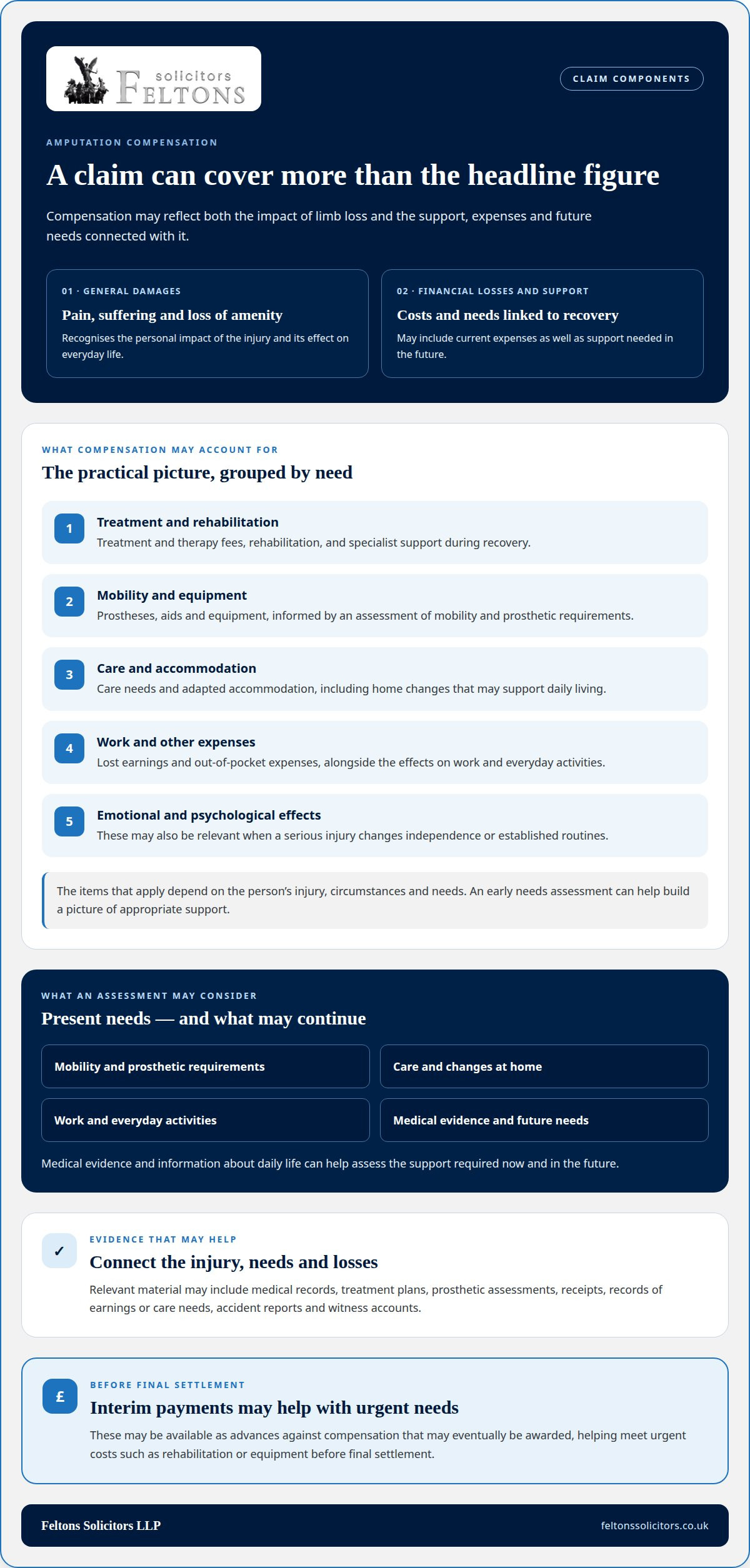
An amputation claim can cover both the immediate consequences of limb loss and needs that continue during recovery. Compensation may include treatment and therapy fees, rehabilitation, prostheses, aids and equipment, care, adapted accommodation, lost earnings and out-of-pocket expenses. For example, a claim may account for specialist rehabilitation and home changes needed to support daily living. General damages can also reflect pain, suffering and loss of amenity.
An early needs assessment can help identify appropriate support. It may consider mobility, prosthetic requirements, care needs and changes at home, as well as the effects on work and everyday activities. Lawyers use this information alongside medical evidence to assess present and future needs. Emotional and psychological effects may also be relevant, particularly when a serious injury changes a person’s independence or established routines.
When comparing amputation injury compensation solicitors, consider their experience with serious injury claims, rehabilitation planning and evidence of future needs. Ask how they will explain the claim’s progress and funding terms in clear language. These questions can help you understand the proposed approach before deciding how to proceed.
Fees depend on the case and are explained after a quote request. The work involved, complexity and funding arrangement affect costs. A no-win, no-fee agreement sets out how legal fees are handled if the claim succeeds or is unsuccessful. Read the terms carefully before deciding whether to proceed.
Evidence may include medical records, treatment plans, prosthetic assessments, receipts and records of earnings or care needs. Accident reports and witness accounts can help establish how the injury happened. Amputation injury compensation solicitors can review these materials to assess how they support the claim and its losses.
Interim payments may be available as advances against compensation that may eventually be awarded. They can help meet urgent needs, such as rehabilitation or equipment, before final settlement. Specialist legal support can assess how those needs relate to the claim.
For help with the legal aspects of a serious injury, explore personal injury claims support.
Contributory negligence
Contributory negligence means an injured person shares some responsibility for the accident. In England and Wales, that responsibility can reduce compensation rather than automatically prevent a claim. For example, if a claimant is found 25% responsible, they may receive 75% of the compensation otherwise payable. The reduction reflects the claimant’s share, so establishing how the accident happened remains important.
In a road traffic accident, evidence may show that another driver caused the collision while the injured person’s actions also contributed. The same principle can apply to workplace accidents involving machinery or safety procedures. Accident reports, witness accounts and relevant records help establish the sequence of events. The claimant’s conduct is considered alongside the actions of the person or organisation alleged to have caused the injury.
Medical negligence claims raise a different question: whether negligent treatment caused or worsened the injury that led to amputation. A claim must establish that the surgeon or practitioner was negligent. For example, evidence may need to show that a treatment decision or delay caused avoidable harm, rather than simply preceding the limb loss. Medical records and expert assessment can help explain the treatment, the injury’s progression and the connection to amputation.
Where negligence and the claimant’s actions both contributed, the evidence must distinguish their respective roles. A personal injury claim after an accident may involve a different chain of events from a clinical negligence claim following surgery or delayed treatment. The assessment considers what caused the harm and how each party’s conduct contributed. This can affect compensation, including payments for losses arising from the amputation.
Shared responsibility does not, by itself, determine whether a claim can proceed. The key steps are to establish the responsible party’s negligence, link it to the limb loss and assess any contribution by the claimant. Anyone who suffered an amputation after an accident or treatment should preserve relevant records and seek legal advice about how the evidence applies to their circumstances.
Amputation compensation ranges
Amputation compensation ranges offer a starting point for understanding general damages, including pain, suffering and loss of amenity. Figures vary according to the limb and level of amputation. They do not represent the full value of a claim, which may also include financial losses and the cost of future needs.
The location of the injury is only one part of the assessment. For example, ranges differ for an amputation above or below the knee. The claimant’s circumstances, recovery, ability to work and the effect on everyday activities also inform the overall claim. A settlement may therefore include general damages alongside special damages for proven financial losses and expenses.
Future needs can significantly affect the total claim. Evidence about prostheses, rehabilitation, care and necessary adaptations helps explain expected costs and practical impact. Interim payments may help meet urgent needs before final settlement. The final calculation should distinguish these expenses from the compensation range for pain and suffering, rather than treating one figure as the whole claim.
Use the ranges as a guide, then assess how the injury affects your individual circumstances and future needs. To discuss the factors relevant to your amputation compensation claim, contact the personal injury team.
Feltons Solicitors LLP: Personal Injury and Silicosis Claims
Feltons Solicitors LLP handles personal injury claims, including cases involving serious injuries such as amputation. If you are considering a claim after an accident or negligent treatment, legal advice can help clarify the evidence needed, the time limit and how compensation may reflect your losses and future needs.
A claim can involve complex medical records, questions about responsibility and an assessment of ongoing expenses. Feltons Solicitors LLP can guide you through the legal aspects of a personal injury claim and explain the next steps clearly. Early advice is particularly useful when treatment records, accident evidence or the connection between an injury and a later amputation need careful consideration.
To discuss your circumstances and possible next steps, contact Feltons Solicitors LLP.
Take the next step with a clear plan
After a serious injury, decisions about work, care and daily life can feel closely connected to the legal process. A useful next step is to list the questions that matter most to you, such as how a claim may address future needs or what evidence could explain the injury’s impact. This gives your discussion with a solicitor a practical focus.
Amputation injury compensation solicitors can assess the legal issues and explain how your circumstances may shape a claim. Feltons Solicitors LLP handles personal injury claims and can discuss your situation and the options available, recognising that every case is different.
If you’re ready to talk through your circumstances, contact Feltons Solicitors LLP. A considered conversation can help you decide what to do next, at a pace that feels manageable.
Frequently Asked Questions
How do I make a claim?
Start by obtaining legal advice about who may be responsible and whether the available evidence supports a claim. A solicitor can review relevant records, including accident reports, medical notes and correspondence about treatment. Keep documents showing expenses or changes to work and daily activities. For example, records of paid care can help explain the practical effects. The solicitor can then set out the proposed claim and its next steps.
Can I claim for “phantom limb” pain?
Yes. Pain experienced after an amputation can be included in the assessment of pain and suffering. Explain the symptoms to your treating medical professionals and describe how they affect everyday activities. Medical notes, treatment records and evidence of effects on sleep, mobility or routine can help show the impact. The claim must connect the symptoms to the injury and its consequences.
Can I claim for the psychological effects of losing a limb?
Yes. Psychological and emotional effects can be considered alongside the physical injury. Explain what has changed, such as confidence at work, social activities or independence, and discuss these effects with your healthcare team. Relevant clinical records and evidence of day-to-day impact can help document your experience. The assessment considers how amputation has affected your life, rather than treating the physical injury in isolation.
Can I claim if the accident was partly my fault?
Yes. Shared responsibility does not automatically prevent a personal injury claim, but it can reduce compensation to reflect your contribution. The circumstances and evidence are considered together, including what each person did and how that contributed to the accident. Witness accounts and accident records, for example, can help establish the sequence of events and inform the assessment of responsibility.
What does the loss of limb claims process involve?
The process typically involves investigating how the amputation occurred, gathering relevant records and assessing the injury’s effects. Medical evidence helps explain the condition and treatment, while financial documents show losses connected with the injury. The parties then consider responsibility and the claim’s value. Many amputation claims are settled out of court, although the route depends on the issues raised and whether liability and value can be agreed.
What compensation can you claim for an amputation injury in the UK?
A claim can include general damages for pain, suffering and loss of amenity, alongside special damages for financial losses and expenses. Depending on the evidence, these may cover treatment, rehabilitation, care, equipment, prostheses, home adaptations and lost income. The overall assessment considers the injury’s effects and the claimant’s needs, including future losses. Any award depends on establishing responsibility and supporting the claimed losses with relevant evidence.