
Amputation injury compensation claims for injured people

Amputation injury compensation claims for injured people

The headline figure is only part of an amputation claim. Compensation may cover pain, suffering and loss of amenity, as well as treatment, lost earnings, care, equipment, prostheses and home adaptations. Amputation injury compensation solicitors can also assess financial losses and future needs.

Time limits matter too. According to the UK Government, most personal injury and medical negligence claims must be made within 3 years of the accident or the date of knowledge. In England and Wales, compensation may be reduced if you share responsibility for the accident.

This guide explains what a claim may include, how shared responsibility and time limits can affect it, and why compensation varies by injury. It also sets out practical steps and the information that may help move a claim forward.

Key Takeaways

  • Identify when the relevant time limit starts, as the accident date and date of knowledge can both matter.
  • Build a clear picture of the support and expenses a claim may need to account for, including rehabilitation and prosthetic provision.
  • Understand how shared responsibility can affect the compensation payable, rather than assuming it automatically prevents a claim.
  • Use compensation ranges as a starting point, then consider how the injury’s location and its effect on future needs shape an individual assessment.

Is there a time limit for making an amputation claim?

In the UK, most personal injury and medical negligence claims must be made within 3 years of the accident or date of knowledge, according to the UK Government. The accident date is usually clear, such as the day a workplace machine caused an injury. The date of knowledge may matter where the connection between an earlier injury and later limb loss becomes apparent afterwards. Acting promptly helps preserve records and identify witnesses.

For an injured person who was under 18 when an accident happened in England and Wales, the usual three-year claim period does not begin until their 18th birthday. This means the adult time limit does not run during childhood. A parent or guardian can seek legal advice about a child’s circumstances before then, particularly where treatment, recovery or the cause of the amputation remains under investigation.

Amputation claims may follow workplace incidents, road traffic accidents, school accidents or playground accidents. Examples include machinery injuries at work, road collisions and serious injuries involving unsafe equipment. A medical negligence claim may arise if negligent treatment caused or worsened the injury that led to amputation. It must establish that the surgeon or practitioner was negligent. Each type of claim depends on evidence linking the responsible person’s or organisation’s actions to the limb loss.

Eligibility depends on more than the fact of amputation. A claim must show that another party was legally responsible and that their actions caused the injury or its consequences. Medical records, accident reports, witness accounts and treatment timelines can help establish what happened. For instance, records may link an accident injury to later surgery. If the injured person also contributed to the accident, a claim may still be possible, although compensation can be reduced to reflect their share of responsibility.

An amputation claim may sometimes proceed beyond the usual three-year limitation period if the original injury directly led to the later amputation. The link between the initial harm and the eventual limb loss is central. Evidence may need to show how an accident injury developed and why amputation followed. As dates and medical causation can be complex, early legal advice can help clarify the applicable time limit and what evidence supports the claim.

What does an amputation claim provide compensation for?

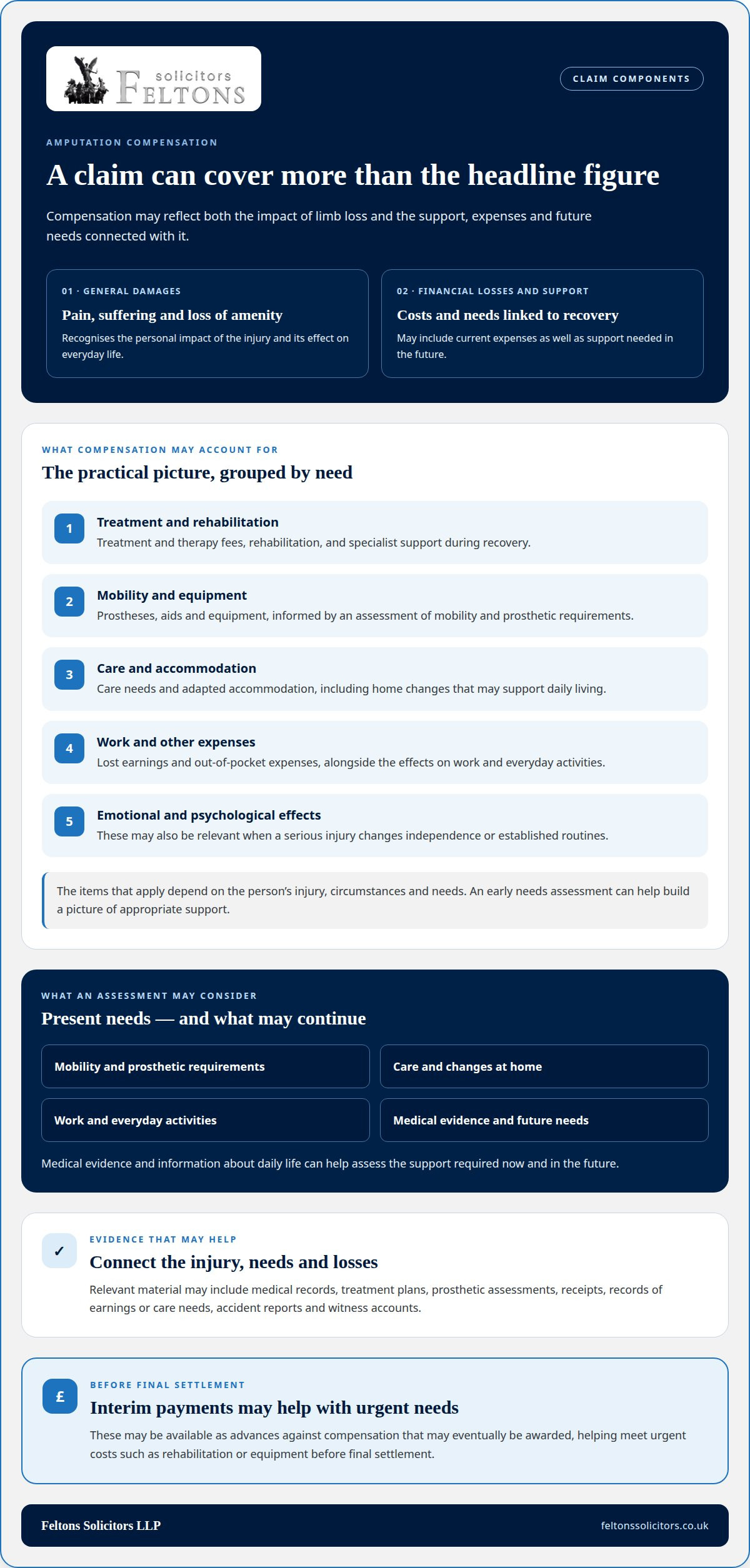
An amputation claim can cover both the immediate consequences of limb loss and needs that continue during recovery. Compensation may include treatment and therapy fees, rehabilitation, prostheses, aids and equipment, care, adapted accommodation, lost earnings and out-of-pocket expenses. For example, a claim may account for specialist rehabilitation and home changes needed to support daily living. General damages can also reflect pain, suffering and loss of amenity.

An early needs assessment can help identify appropriate support. It may consider mobility, prosthetic requirements, care needs and changes at home, as well as the effects on work and everyday activities. Lawyers use this information alongside medical evidence to assess present and future needs. Emotional and psychological effects may also be relevant, particularly when a serious injury changes a person’s independence or established routines.

When comparing amputation injury compensation solicitors, consider their experience with serious injury claims, rehabilitation planning and evidence of future needs. Ask how they will explain the claim’s progress and funding terms in clear language. These questions can help you understand the proposed approach before deciding how to proceed.

Fees depend on the case and are explained after a quote request. The work involved, complexity and funding arrangement affect costs. A no-win, no-fee agreement sets out how legal fees are handled if the claim succeeds or is unsuccessful. Read the terms carefully before deciding whether to proceed.

Evidence may include medical records, treatment plans, prosthetic assessments, receipts and records of earnings or care needs. Accident reports and witness accounts can help establish how the injury happened. Amputation injury compensation solicitors can review these materials to assess how they support the claim and its losses.

Interim payments may be available as advances against compensation that may eventually be awarded. They can help meet urgent needs, such as rehabilitation or equipment, before final settlement. Specialist legal support can assess how those needs relate to the claim.

For help with the legal aspects of a serious injury, explore personal injury claims support.
Amputation injury compensation claims for injured people

Contributory negligence

Contributory negligence means an injured person shares some responsibility for the accident. In England and Wales, that responsibility can reduce compensation rather than automatically prevent a claim. For example, if a claimant is found 25% responsible, they may receive 75% of the compensation otherwise payable. The reduction reflects the claimant’s share, so establishing how the accident happened remains important.

In a road traffic accident, evidence may show that another driver caused the collision while the injured person’s actions also contributed. The same principle can apply to workplace accidents involving machinery or safety procedures. Accident reports, witness accounts and relevant records help establish the sequence of events. The claimant’s conduct is considered alongside the actions of the person or organisation alleged to have caused the injury.

Medical negligence claims raise a different question: whether negligent treatment caused or worsened the injury that led to amputation. A claim must establish that the surgeon or practitioner was negligent. For example, evidence may need to show that a treatment decision or delay caused avoidable harm, rather than simply preceding the limb loss. Medical records and expert assessment can help explain the treatment, the injury’s progression and the connection to amputation.

Where negligence and the claimant’s actions both contributed, the evidence must distinguish their respective roles. A personal injury claim after an accident may involve a different chain of events from a clinical negligence claim following surgery or delayed treatment. The assessment considers what caused the harm and how each party’s conduct contributed. This can affect compensation, including payments for losses arising from the amputation.

Shared responsibility does not, by itself, determine whether a claim can proceed. The key steps are to establish the responsible party’s negligence, link it to the limb loss and assess any contribution by the claimant. Anyone who suffered an amputation after an accident or treatment should preserve relevant records and seek legal advice about how the evidence applies to their circumstances.

Amputation compensation ranges

Amputation compensation ranges offer a starting point for understanding general damages, including pain, suffering and loss of amenity. Figures vary according to the limb and level of amputation. They do not represent the full value of a claim, which may also include financial losses and the cost of future needs.

The location of the injury is only one part of the assessment. For example, ranges differ for an amputation above or below the knee. The claimant’s circumstances, recovery, ability to work and the effect on everyday activities also inform the overall claim. A settlement may therefore include general damages alongside special damages for proven financial losses and expenses.

Future needs can significantly affect the total claim. Evidence about prostheses, rehabilitation, care and necessary adaptations helps explain expected costs and practical impact. Interim payments may help meet urgent needs before final settlement. The final calculation should distinguish these expenses from the compensation range for pain and suffering, rather than treating one figure as the whole claim.

Use the ranges as a guide, then assess how the injury affects your individual circumstances and future needs. To discuss the factors relevant to your amputation compensation claim, contact the personal injury team.

Feltons Solicitors LLP: Personal Injury and Silicosis Claims

Feltons Solicitors LLP handles personal injury claims, including cases involving serious injuries such as amputation. If you are considering a claim after an accident or negligent treatment, legal advice can help clarify the evidence needed, the time limit and how compensation may reflect your losses and future needs.

A claim can involve complex medical records, questions about responsibility and an assessment of ongoing expenses. Feltons Solicitors LLP can guide you through the legal aspects of a personal injury claim and explain the next steps clearly. Early advice is particularly useful when treatment records, accident evidence or the connection between an injury and a later amputation need careful consideration.

To discuss your circumstances and possible next steps, contact Feltons Solicitors LLP.

Take the next step with a clear plan

After a serious injury, decisions about work, care and daily life can feel closely connected to the legal process. A useful next step is to list the questions that matter most to you, such as how a claim may address future needs or what evidence could explain the injury’s impact. This gives your discussion with a solicitor a practical focus.

Amputation injury compensation solicitors can assess the legal issues and explain how your circumstances may shape a claim. Feltons Solicitors LLP handles personal injury claims and can discuss your situation and the options available, recognising that every case is different.

If you’re ready to talk through your circumstances, contact Feltons Solicitors LLP. A considered conversation can help you decide what to do next, at a pace that feels manageable.

Frequently Asked Questions

How do I make a claim?

Start by obtaining legal advice about who may be responsible and whether the available evidence supports a claim. A solicitor can review relevant records, including accident reports, medical notes and correspondence about treatment. Keep documents showing expenses or changes to work and daily activities. For example, records of paid care can help explain the practical effects. The solicitor can then set out the proposed claim and its next steps.

Can I claim for “phantom limb” pain?

Yes. Pain experienced after an amputation can be included in the assessment of pain and suffering. Explain the symptoms to your treating medical professionals and describe how they affect everyday activities. Medical notes, treatment records and evidence of effects on sleep, mobility or routine can help show the impact. The claim must connect the symptoms to the injury and its consequences.

Can I claim for the psychological effects of losing a limb?

Yes. Psychological and emotional effects can be considered alongside the physical injury. Explain what has changed, such as confidence at work, social activities or independence, and discuss these effects with your healthcare team. Relevant clinical records and evidence of day-to-day impact can help document your experience. The assessment considers how amputation has affected your life, rather than treating the physical injury in isolation.

Can I claim if the accident was partly my fault?

Yes. Shared responsibility does not automatically prevent a personal injury claim, but it can reduce compensation to reflect your contribution. The circumstances and evidence are considered together, including what each person did and how that contributed to the accident. Witness accounts and accident records, for example, can help establish the sequence of events and inform the assessment of responsibility.

What does the loss of limb claims process involve?

The process typically involves investigating how the amputation occurred, gathering relevant records and assessing the injury’s effects. Medical evidence helps explain the condition and treatment, while financial documents show losses connected with the injury. The parties then consider responsibility and the claim’s value. Many amputation claims are settled out of court, although the route depends on the issues raised and whether liability and value can be agreed.

What compensation can you claim for an amputation injury in the UK?

A claim can include general damages for pain, suffering and loss of amenity, alongside special damages for financial losses and expenses. Depending on the evidence, these may cover treatment, rehabilitation, care, equipment, prostheses, home adaptations and lost income. The overall assessment considers the injury’s effects and the claimant’s needs, including future losses. Any award depends on establishing responsibility and supporting the claimed losses with relevant evidence.
Catastrophic brain injury compensation claims in England

Catastrophic brain injury compensation claims in England

Multi-million-pound brain injury claims reflect the cost of lifelong support, not just compensation for the injury itself. Catastrophic brain injury compensation lawyers assess how these needs may shape a claim over a lifetime.

If you’re facing the consequences of a severe brain injury, the financial and practical questions can feel overwhelming. The value depends on the injury’s effects, the support required and the losses that can be evidenced, rather than a single standard figure.

This article explains how claims can reach multi-million-pound settlements and what compensation may cover, from ongoing care and rehabilitation to adapted accommodation and lost earnings. It also explains how evidence and legal representation can help build a claim, including when someone cannot manage the case themselves.

Key Takeaways

  • According to UK Parliament, the limitation period does not run for a brain injury claimant who lacks mental capacity under the Mental Capacity Act 2005.
  • Multi-million-pound awards can reflect lifelong care, rehabilitation and accommodation needs, not just compensation for the injury itself.
  • A brain injury caused by delayed diagnosis or treatment can lead to substantial compensation where the evidence connects the delay to lasting harm and support needs.
  • Medical, care and financial evidence helps show the full impact of an injury; early legal advice can help preserve evidence and explore interim payments.

Claims made on behalf of someone lacking mental capacity

A severe brain injury can affect a person’s ability to understand or conduct an injury claim. A representative can take steps to protect their interests and pursue compensation.

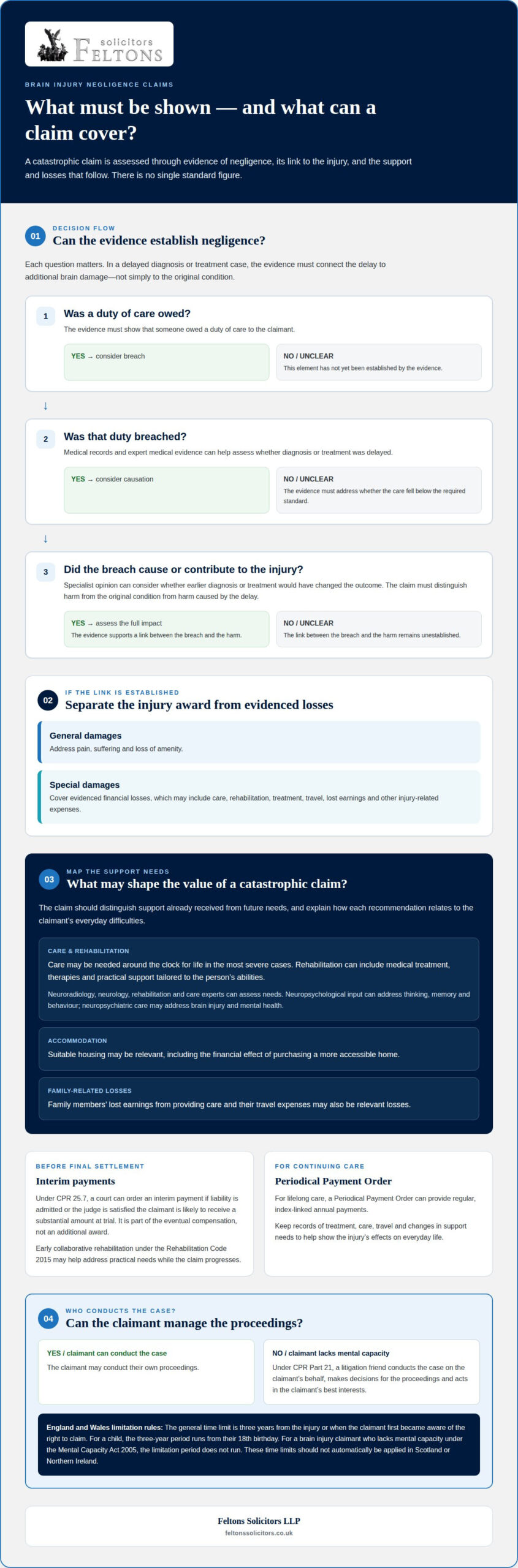
A claim may be brought for a child or someone who lacks mental capacity. Under CPR Part 21, a litigation friend conducts the case on the claimant’s behalf. They make decisions for the proceedings and act in the claimant’s best interests. In practice, this can include gathering medical evidence, considering settlement proposals and communicating with the legal team.

Rules can differ between Scotland, Northern Ireland and England and Wales. The time limits set out below concern England and Wales and should not automatically be applied elsewhere.

Damages and funding for brain injury claims

General damages address pain, suffering and loss of amenity. Special damages cover evidenced financial losses, such as care costs, rehabilitation, lost earnings and accommodation needs. In a catastrophic injury claim, the evidence should explain both the effects already experienced and the support likely to be needed in future.

A Conditional Fee Agreement, often called no win no fee, means the claimant pays nothing if the claim is unsuccessful. Before proceeding, understand the agreement’s terms and how it deals with costs if the claim succeeds.

Proving and progressing a negligence claim

To prove negligence and liability, the evidence must show that someone owed a duty of care, breached it, and caused or contributed to the injury. In a clinical negligence claim, records and expert medical evidence can help assess whether delayed diagnosis or treatment caused additional brain damage. The link between the breach and the harm must be established.

In England and Wales, the general time limit is three years from the injury or when the claimant first became aware of the right to claim, according to UK Parliament. UK Parliament also states that this limitation period does not run for a brain injury claimant who lacks mental capacity under the Mental Capacity Act 2005. For a child, the three-year period runs from their 18th birthday.

There is no single timetable for a catastrophic brain injury claim. The medical prognosis, disputed liability, amount of evidence required and time needed to assess future care can all affect progress. Future needs should be considered before settlement.

Compensation for care, rehabilitation and accommodation

A catastrophic traumatic brain injury can create ongoing medical, practical and financial needs. Compensation may reflect its effects on daily life, work and suitable housing.

Care and rehabilitation compensation

General damages address pain, suffering and loss of amenity. Special damages can cover evidenced lost earnings, treatment, care, travel and other expenses caused by the injury. A claim should distinguish support already received from future needs, using care records and specialist assessments to explain the difference.

Rehabilitation may involve medical treatment, therapies and practical support tailored to the person’s abilities. Neuroradiology, neurology, rehabilitation and care experts can help assess needs. Neuropsychological input can address thinking, memory and behaviour, while neuropsychiatric care may address the interaction between brain injury and mental health. The evidence should link each recommendation to the claimant’s daily difficulties.

For the most severe injuries, care may be needed around the clock for life. A claim can also account for suitable accommodation, including the financial effect of purchasing a more accessible home. Family members’ lost earnings from providing care and their travel expenses may also be relevant losses.

Interim payments and early support

Interim payments can provide funds before final settlement for immediate treatment or rehabilitation needs. Under CPR 25.7, a court can order an interim payment if liability is admitted or the judge is satisfied the claimant is likely to receive a substantial amount at trial. The payment is part of the eventual compensation, not an additional award.

Early collaborative rehabilitation may be pursued under the Rehabilitation Code 2015. This can help address practical needs while the claim progresses, rather than waiting for every future loss to be assessed. Keep records of treatment, care provided, travel and changes in support needs; these details help show how the injury affects everyday life.

For lifelong care, a Periodical Payment Order can provide regular, index-linked annual payments. This can fund continuing care over time, while evidence about accommodation, rehabilitation and specialist support helps shape the settlement.

Catastrophic brain injury compensation claims in England

Acquired brain injury caused by delayed diagnosis or treatment

A catastrophic brain injury claim centres on severe, lasting effects on a person’s ability to live independently. Permanent disability and full dependence on care can make future support needs central to assessing compensation.

Delayed diagnosis or treatment may cause additional brain damage, even when an infection or other condition began the injury. The case shows how medical negligence claims can reflect lifelong consequences.

To establish liability, evidence must link the treatment failure to the additional injury and its effects. Medical records can show when symptoms appeared, what investigations took place and when treatment began. Specialist opinion can help assess whether earlier diagnosis or treatment would have changed the outcome. The claim must distinguish harm caused by the original condition from harm caused by the delay.

A traumatic brain injury can follow an accident, such as a road collision or fall. The nature and effects vary: severe traumatic brain injury is described as involving loss of consciousness for more than 6 hours and a Glasgow Coma Scale score of 3 to 8. Moderate injury is described as involving unconsciousness between 30 minutes and 24 hours, with a score of 9 to 12.

Concussion is a form of traumatic brain injury. The provided clinical descriptions characterise mild traumatic brain injury as loss of consciousness for 30 minutes or less. Ongoing effects can include problems with concentration and memory, fatigue, or personality changes. These effects matter when evidence explains recovery, work capacity and support needs.

No single symptom or test determines whether an injury qualifies as catastrophic. The claim focuses on the combined evidence of lasting impairment, dependence, rehabilitation needs and effects on everyday life. Medical records, expert assessments and care evidence help establish the full picture.

After a severe brain injury, legal work must address responsibility and the claimant’s changing needs. Catastrophic brain injury compensation lawyers can coordinate evidence, assess liability and progress the claim alongside rehabilitation.

Choosing a specialist brain injury solicitor

Look for injury solicitors experienced in serious brain injury claims, disputed negligence and long-term effects on daily function. The case may require medical, rehabilitation and care evidence, alongside employment and financial records. Ask how the legal team will build the claim, involve the injured person or litigation friend, and assess settlement proposals against the claimant’s needs.

For families comparing catastrophic brain injury compensation lawyers, clear explanations matter. A person with impaired memory, for example, may need information adapted to their ability to understand and participate. The solicitor should explain who makes decisions during the case and how the claimant’s interests are represented.

Steps after injury caused by negligence

Prioritise treatment, then keep hospital records, scans and rehabilitation notes. Record how the injury affects communication, mobility, memory and daily tasks. Preserve accident reports, witness details, care records, employment information and receipts. Together, these documents can help establish what happened and how the claimant was harmed.

In a clinical negligence case, medical records and specialist opinion can help assess whether a treatment failure caused additional injury. Solicitors can organise evidence, identify disputed issues and consider whether an interim payment is appropriate during the claim.

Under CPR 25.7, a court can order an interim payment where liability is admitted or the judge considers a substantial award likely at trial. Evidence must support the application and explain the claimant’s current needs.

Early legal advice can help preserve evidence while care continues. If negligence may have caused a brain injury, discuss a personal injury claim and the steps needed to assess liability and losses.

Feltons Solicitors LLP: Divorce and Financial Arrangements

Feltons Solicitors LLP provides Personal Injury and Silicosis Claims services for people seeking compensation after an injury. If a traumatic brain injury may have resulted from negligence, the firm can help assess the claim, the evidence needed to establish responsibility and the losses to consider.

Legal guidance can help when the injured person or their family needs support progressing a claim, including presenting lasting effects on daily life and future support needs. The medical, care and financial evidence described above can be organised into a clear account of the injury’s impact.

Contact Feltons Solicitors LLP to discuss a personal injury claim and the circumstances of the brain injury.

Take the next step with clear advice

The next step is to discuss how the injury has changed everyday life and what evidence could explain its impact. Catastrophic brain injury compensation lawyers can help families understand the legal process while keeping the injured person’s needs at its centre.

Feltons Solicitors LLP also offers Divorce and Financial Arrangements, Wills, Probate, and Estate Planning, and Residential and Commercial Conveyancing. These services may be relevant where an injury prompts wider family, estate or housing decisions. For advice about a potential personal injury claim, contact Feltons Solicitors LLP to discuss the circumstances and possible next steps.

Taking that first step can bring structure to difficult decisions, helping you and your family move forward with greater clarity.

Frequently Asked Questions

How do some brain damage claims end up settling for multi-million-pound sums?

Multi-million-pound settlements can reflect the cost of extensive support over a claimant’s lifetime. For example, someone unable to live independently may need continuing care, specialist treatment, adapted accommodation and help with daily activities. The claim’s value also considers financial losses, such as reduced earning ability. Each element needs evidence linking it to the injury and explaining its likely duration and practical impact.

How am I going to pay for long-term care?

Long-term care may be funded through compensation, including a Periodical Payment Order providing regular, index-linked annual payments for lifelong care. An interim payment may help meet eligible needs before settlement, subject to the legal test for an order. A care assessment can outline the required support, such as help with personal care, mobility or supervision, and inform how future provision is funded.

When capacity is affected, who actually runs the claim?

A litigation friend conducts the legal proceedings for a claimant who lacks capacity to make decisions about the case, under CPR Part 21. This may be a relative or another suitable person, but the role is to act in the claimant’s interests, not to pursue the representative’s own preferences. The litigation friend works with the legal team and considers decisions such as evidence, settlement and the claimant’s needs.

Will I have to give evidence in court?

Not every brain injury claim reaches trial, so a claimant does not automatically have to give evidence in court. If the case proceeds to a hearing, the court may hear from the claimant, witnesses and experts. The evidence needed depends on disputed issues, such as how the injury happened, its effects or the future care required. A litigation friend may act where the claimant lacks capacity.

How much compensation can you receive for a catastrophic brain injury in the UK?

There is no single fixed award for a catastrophic brain injury. This covers general damages only. Special damages for care, rehabilitation, accommodation, lost earnings and other evidenced losses can substantially increase the overall claim.

How are brain injury compensation damages calculated, including future care and lost earnings?

Damages combine general damages for pain, suffering and loss of amenity with special damages for financial losses caused by the injury. Future care calculations consider the claimant’s assessed support needs and how long they are expected to continue. Lost earnings depend on the effect on work and likely income. Medical, employment and care evidence helps explain these calculations and distinguish past losses from future needs.