
Securing a Financial Settlement After Divorce UK: A Strategic How-To Guide

Securing a Financial Settlement After Divorce UK: A Strategic How-To Guide

A financial settlement isn’t merely a division of assets; it’s a strategic legal shield designed to buy you future certainty through the Clean Break principle. It’s natural to feel a sense of unease when considering the fate of the family home or the long-term integrity of your pension. Many individuals find themselves caught between the confusion of child support versus spousal maintenance and the persistent fear that their future income remains vulnerable to claims. Engaging expert spousal maintenance solicitors uk is often the first step in replacing that anxiety with a clear, methodical plan.

You deserve a resolution that respects your past contributions whilst safeguarding your future. This guide explains how to navigate the nuances of spousal support, protect non-matrimonial assets, and secure a legally binding Clean Break order for lasting independence. We’ll examine the practicalities of the current legal landscape, including the £62 court fee for consent orders effective from July 2026, and provide a roadmap for your transition to financial autonomy. By the end of this article, you’ll have the clarity needed to ensure your settlement is both fair and final.

Key Takeaways

  • Learn why a Final Order does not automatically end financial ties and how to mitigate the risk of unexpected claims against your assets years into the future.
  • Discover how the court evaluates fairness using the Section 25 checklist and why engaging spousal maintenance solicitors uk is essential for navigating complex income requirements.
  • Understand the strategic value of a Clean Break order in achieving total financial independence and protecting your non-matrimonial wealth from further dispute.
  • Gain clarity on the procedural path to a settlement, including the necessity of full financial disclosure through Form E and the advantages of solicitor-led negotiation.
  • Evaluate the critical trade-off between ongoing maintenance payments and lump sum settlements to determine the most secure and pragmatic route for your lifestyle.

The Vital Importance of a Formal Financial Settlement After Divorce

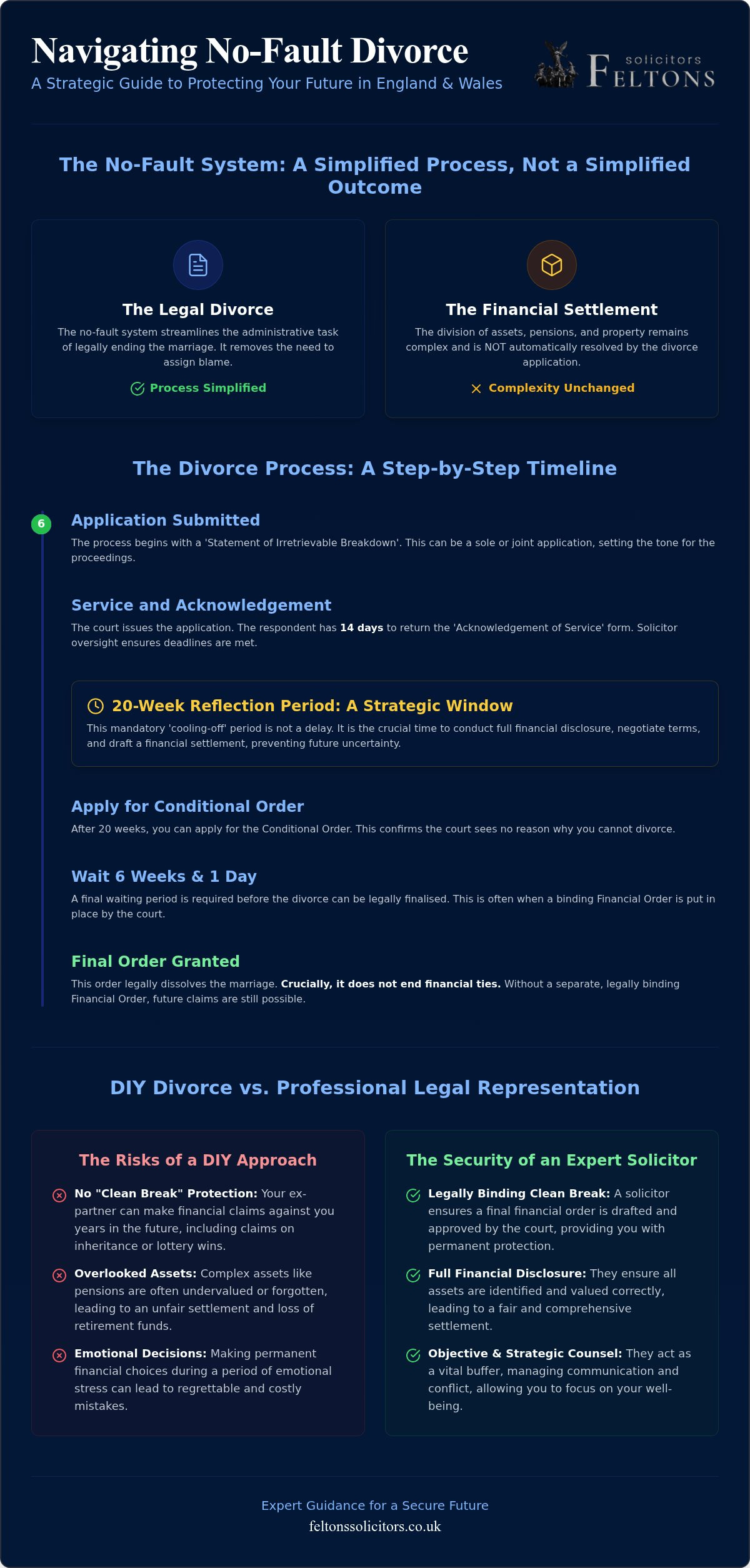
A common misconception in Divorce in England and Wales is that the Final Order, formerly known as the Decree Absolute, provides a complete conclusion to the relationship. Whilst this order legally dissolves the marriage, it does not automatically extinguish financial ties. Without a separate, court-approved financial order, your former spouse retains the right to make a claim against your assets, income, or pension at any point in the future. This legal reality often catches people off guard years after they believe their affairs were settled.

Legal professionals often describe the absence of a formal settlement as a “ticking time bomb.” There are documented cases where individuals have successfully claimed a share of their former partner’s wealth decades after the divorce was finalised. These claims frequently arise following a significant change in circumstances, such as a business success, a large inheritance, or even a lottery win. Seeking guidance from experienced spousal maintenance solicitors uk is the most effective way to ensure that your future remains yours alone. By securing a Consent Order, you create a legally binding barrier that prevents your former spouse from reopening financial discussions further down the line.

The ultimate goal for most is the Clean Break principle. This is a specific type of court order that dismisses all future financial claims between parties, including rights to income and capital. It provides the psychological and practical freedom required to move forward with total financial independence. For those with complex asset portfolios, a Clean Break is not just a preference; it is a vital component of long-term wealth protection.

Matrimonial vs. Non-Matrimonial Property

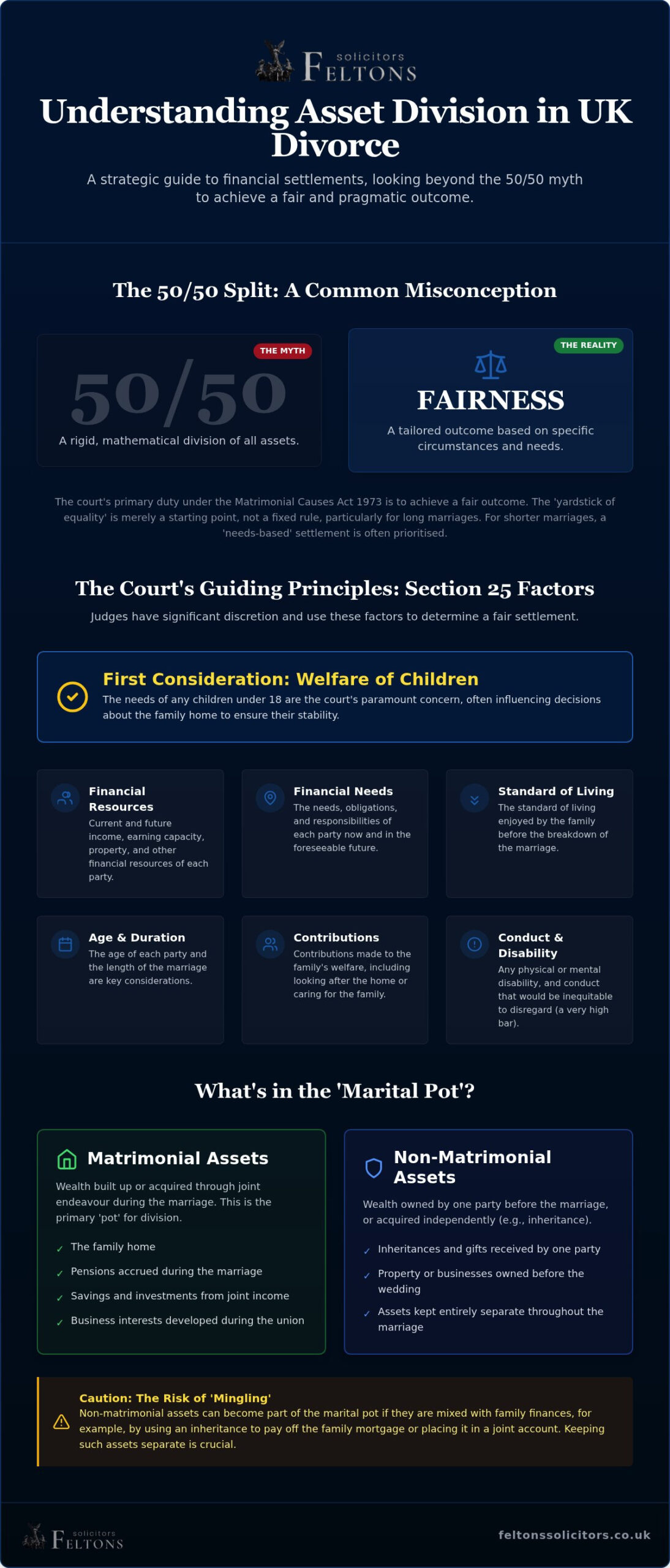
When determining a fair split, the court distinguishes between matrimonial assets, which were acquired during the marriage, and non-matrimonial assets, such as those owned before the wedding or inherited. According to the Matrimonial Causes Act 1973, matrimonial property generally includes all assets and financial resources acquired by the parties during the course of the marriage, regardless of whose name they are held in. The longer the marriage lasts, the more likely the court is to treat non-matrimonial assets as part of the shared pot to meet the needs of both parties. This “sharing principle” typically begins with a 50/50 split as the starting point for matrimonial wealth, though judges can deviate from this based on specific needs.

The Risk of the Remarriage Trap

Timing is everything when it comes to financial security. If you choose to remarry before you have filed an application for a financial order, you may lose your right to claim a settlement from your former spouse. This is known as the “remarriage trap.” It is a permanent loss of rights that can have devastating consequences for your financial standing. To avoid this, it is strategically advantageous to resolve your finances whilst the divorce is in progress. Working with spousal maintenance solicitors uk ensures that all necessary applications are filed with the court before any new marriage ceremony takes place, preserving your ability to seek a fair share of the matrimonial assets.

Calculating Spousal Maintenance: How UK Courts Determine Fairness

UK courts do not apply a rigid mathematical formula when determining spousal support. Instead, judges rely on a statutory checklist known as the Section 25 factors. These factors allow the court to examine the unique architecture of your marriage and your current financial reality. They consider your income, earning capacity, and the financial needs and obligations each party carries. Experienced spousal maintenance solicitors uk use these factors to build a compelling case for what constitutes a truly fair outcome in your specific circumstances.

The welfare of any children under the age of 18 remains the court’s paramount concern. This priority often dictates the allocation of the family home and the level of income required to maintain stability for the children. When negotiating a settlement, you may face a choice between ongoing monthly maintenance and a one-off capital payment. A lump sum is often preferable for those seeking a clean break. It removes the need for monthly interactions and eliminates the risk of future litigation if your former partner’s income changes. To begin this process accurately, it’s essential to follow a structured approach to Financial Disclosure in Divorce UK, ensuring all assets are fully accounted for.

Determining ‘Needs’ and Standard of Living

The court assesses ‘needs’ by looking at reasonable requirements for housing and daily living expenses. This assessment isn’t limited to basic survival; it uses the standard of living enjoyed during the marriage as a benchmark. If one partner has sacrificed their career to support the family, their earning capacity post-separation will likely be lower. The court’s role is to bridge this gap, ensuring that both parties can maintain a dignified lifestyle after the marriage ends. If you require a bespoke analysis of your financial position, consulting with a specialist solicitor can provide the clarity you need.

Duration of Spousal Maintenance Orders

The duration of an order is just as critical as the amount. Joint Lives Orders, which continue until the death or remarriage of either party, have become increasingly rare in modern UK law. The prevailing trend favours Fixed Term Orders. These provide a transition period, often lasting several years, to allow the recipient to become financially self-sufficient. In specific scenarios involving young children, spousal maintenance solicitors uk might recommend a ‘nominal maintenance’ order. This is a protective measure, typically set at £1 per year, which keeps the legal door open. It ensures that if the recipient’s circumstances change significantly, they retain the right to apply for a substantive increase in the future.

Securing a Financial Settlement After Divorce UK: A Strategic How-To Guide

Spousal Maintenance vs. Clean Break: Strategic Considerations

Deciding between ongoing monthly payments and a clean break is one of the most consequential choices in any divorce settlement. Many expert spousal maintenance solicitors uk often recommend a strategy known as “offsetting” to achieve a final resolution. This involves one party receiving a larger share of the matrimonial assets, such as the family home or liquid capital, in exchange for waiving their right to future spousal maintenance. This trade-off provides immediate stability and removes the administrative burden of managing monthly transfers over several years.

For high-net-worth individuals, the psychological and financial benefits of a clean break are significant. It ensures that any wealth you build after the divorce remains entirely your own, protected from future claims if your career or investments flourish. Navigating these high-stakes decisions requires a nuanced understanding of how the court views future earning potential. For those with significant portfolios, consulting with High Net Worth Divorce Solicitors: Navigating Complex Financial Settlements in 2026 can provide the bespoke strategy needed to protect your long-term interests.

Pensions: The Overlooked Asset in Settlements

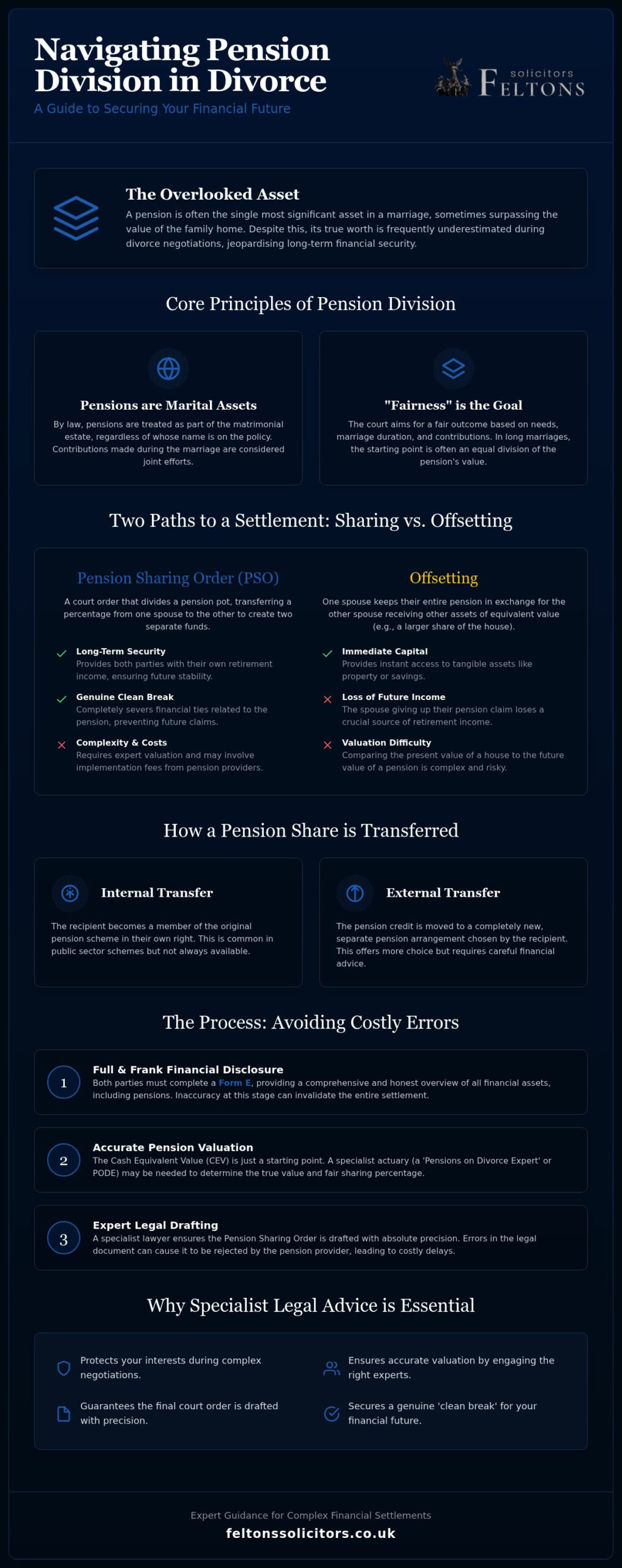
Pensions often represent the largest asset in a marriage after the family home, yet they are frequently misunderstood. You must choose between a Pension Sharing Order, which carves out a percentage of the fund for the other party, and pension offsetting, where the pension holder keeps their fund in exchange for giving up other assets. Professional advice from spousal maintenance solicitors uk is essential here, as we often instruct a Pension Actuary to value complex defined benefit schemes accurately. A Cash Equivalent Value (CEV) is often misleading because it represents a transfer value rather than the actual cost of securing an equivalent retirement income in the current market. Relying on the CEV alone can lead to a settlement that significantly undervalues the true worth of the pension benefits.

Protecting Business Interests

When a family business or a minority shareholding is involved, the court’s starting point is to avoid disrupting a successful commercial enterprise. However, a former spouse may still be entitled to a share of the business’s value. Strategic planning is required to prevent scenarios where a former partner gains a seat on the board or attempts to force a sale of the company to realise their share. We utilise specific structures to ensure the business remains operational whilst satisfying the court’s requirements for fairness. For a more detailed look at safeguarding your commercial and personal wealth, refer to our Protecting Assets During Divorce: A Strategic Checklist for Complex Settlements in 2026. These protections are vital for maintaining the continuity of your professional life after the marriage dissolves.

The journey toward financial finality follows a structured legal sequence. It begins with transparency. Without a clear understanding of the total matrimonial pot, negotiation becomes a matter of guesswork rather than strategy. Most cases are resolved through solicitor-led discussions or Alternative Dispute Resolution (ADR), such as mediation, which avoids the emotional and financial toll of a full court hearing. Engaging spousal maintenance solicitors uk early in this process ensures that your negotiations are grounded in realistic expectations and current case law. Once an agreement is reached, it must be translated into a formal Consent Order to become legally binding.

The Role of Form E and Full Disclosure

The foundation of any robust settlement is the duty of “Full and Frank” disclosure. Both parties must exchange a Form E, a comprehensive document that details every aspect of their financial life. You’ll need to gather 12 months of bank statements, property valuations, pension forecasts, and tax returns. Hiding assets or providing misleading information can lead to the court setting aside the final order years later, often with severe costs penalties. Expert solicitors provide a steady hand during this phase, using their experience to trace dissipated funds or identify undisclosed offshore interests that might otherwise remain hidden.

If you suspect that assets are being moved or undervalued, contact Feltons Solicitors for a discreet consultation to ensure your interests are fully protected.

Obtaining the Court’s Seal

Once the terms are agreed, the final hurdle is judicial scrutiny. Even if both parties are in total agreement, a judge must review the proposed order to ensure it is fair and meets the needs of both individuals. This is facilitated by submitting a Statement of Information, known as Form D81, which provides the court with a “snapshot” of your financial positions before and after the proposed split. As of July 2026, the court fee for a Consent Order application is £62, which is significantly more cost-effective than the £321 fee required for a contested financial order (Form A).

  • Judicial Review: The judge checks that the settlement doesn’t leave one party in significant hardship.
  • The Clean Break Clause: This specific phrasing is vital to ensure that no future claims can be made against your income or assets.
  • The Seal: Once approved, the court “seals” the order, making it a mandatory legal instruction.

Securing this seal is the only way to achieve true closure. Expert spousal maintenance solicitors uk focus on the precise drafting of these documents to ensure there are no ambiguities that could lead to future litigation. By following this methodical path, you transform a private agreement into a permanent legal shield, allowing you to move forward with total confidence in your financial independence.

Why Choose Feltons Solicitors for Your Financial Settlement?

Feltons Solicitors LLP was established in 2010 with a clear mission: to provide sophisticated, partner-led legal advice that prioritises personal connection over high-volume processing. Your financial future deserves more than a standard template. Our boutique model means you’ll have direct access to senior solicitors who possess the worldly experience necessary to handle international-scale matters whilst remaining deeply rooted in the local legal community. As leading spousal maintenance solicitors uk, we act as a

Secure Your Financial Independence

Achieving a formal financial settlement is about more than just dividing assets; it’s about establishing a definitive foundation for your new beginning. We’ve explored how a legally binding Consent Order serves as a vital shield against future claims and why the Clean Break principle is often the most pragmatic path for protecting long-term wealth. By addressing complex assets like pensions and family businesses with precision, you ensure that your past contributions are respected whilst your future autonomy remains absolute.

The transition to financial independence requires a methodical approach and a clear understanding of the court’s criteria. Engaging specialised spousal maintenance solicitors uk allows you to navigate these nuances with confidence, ensuring that every disclosure is robust and every negotiation is strategic. Since 2010, Feltons Solicitors LLP has provided expert, partner-level attention to clients with complex and high-net-worth requirements. As a boutique firm, we offer a discreet and pragmatic service model that prioritises personal rapport and high-end reliability. Secure your financial future with expert guidance from Feltons Solicitors LLP. You don’t have to navigate this transition alone; we’re here to help you move forward with clarity.

Frequently Asked Questions

Do I need a financial settlement if we have already agreed on everything?

Yes, you must formalise your agreement with a Consent Order to make it legally binding. A private arrangement provides no protection against future claims if one party changes their mind. By paying the £62 court fee, which is the current rate as of July 2026, and obtaining a sealed order, you ensure that your agreement is final and enforceable.

How long does spousal maintenance usually last in the UK?

The duration of payments varies based on individual needs and the length of the marriage. Whilst “joint lives” orders were once common, modern courts prefer fixed-term orders that encourage a transition to self-sufficiency. Consulting spousal maintenance solicitors uk can help you determine a fair timeframe that reflects your specific financial reality and future earning capacity.

Can I stop my ex-partner from claiming against my future inheritance?

You can protect your future inheritance by securing a Clean Break order as part of your financial settlement. This legal document dismisses all future claims against your capital and income, ensuring that any wealth you acquire after the divorce remains entirely yours. Without this order, your former spouse could potentially claim a share of an inheritance received many years later.

What is the difference between child maintenance and spousal maintenance?

Child maintenance is a statutory obligation specifically for the upbringing of children, whereas spousal maintenance addresses the financial needs of a former partner. Child support is often calculated using a set formula provided by the Child Maintenance Service, whilst spousal support is determined by the court’s assessment of fairness and reasonable requirements. Both serve distinct purposes in a post-divorce budget.

Can a financial settlement be changed after it has been approved by the court?

Capital settlements are usually final, but maintenance orders can often be varied if there is a significant change in circumstances. If the payer loses their job or the recipient’s income increases substantially, the court can adjust the monthly amount. However, once a Clean Break is ordered, you cannot reopen financial claims against capital assets or pensions.

What happens to the family home in a financial settlement?

The family home can be sold, transferred to one party, or held in joint names until a specific event occurs, such as children reaching adulthood. The court’s primary objective is to ensure that any children under 18 have a stable place to live. Decisions are based on the available capital and the ability of each party to rehouse themselves effectively.

Is a 50/50 split of assets always the starting point in UK divorce?

A 50/50 split is the starting point for matrimonial assets, but it is rarely the final outcome in complex cases. Judges use the Section 25 factors to adjust this percentage based on needs, contributions, and the length of the marriage. The goal is to achieve an outcome that is fair and ensures both parties can meet their future requirements with dignity.

What happens if my spouse refuses to disclose their financial assets?

If a spouse refuses to provide full and frank disclosure, the court can issue a formal order to compel the release of information. Judges may also draw “adverse inferences,” assuming the hidden assets are significant and awarding a larger share of the visible assets to the other party. Expert spousal maintenance solicitors uk can assist in tracing undisclosed wealth to ensure a fair result.

Protecting Assets During Divorce: A Strategic Checklist for Complex Settlements in 2026

Protecting Assets During Divorce: A Strategic Checklist for Complex Settlements in 2026

For many high-net-worth individuals, the most significant threat to a lifetime of achievement isn’t a market downturn, but the lack of a clear strategy during a complex financial settlement divorce. It’s entirely natural to feel a sense of unease as you face the prospect of dividing assets you’ve worked tirelessly to accumulate over decades. You might find yourself confused by the evolving legal definitions of matrimonial versus non-matrimonial property, particularly following the Supreme Court’s 2025 ruling in Standish v Standish regarding pre-marital wealth.

We understand that you’re seeking a fair outcome that respects your contributions whilst avoiding the stress of aggressive litigation. This guide provides the clarity you need to protect your interests, offering a meticulous roadmap to safeguard your financial future through expert legal strategy and precise asset organisation. We’ll examine the current 2026 legal landscape, including the government’s latest consultation on nuptial agreements, and provide a strategic checklist to ensure your settlement is both legally binding and discreetly managed.

Key Takeaways

  • Gain clarity on how the courts interpret “fairness” in 2026 and learn to distinguish between matrimonial and non-matrimonial assets to protect your pre-marital wealth.
  • Navigate the nuances of a complex financial settlement divorce by organising a comprehensive inventory of global interests, from digital currencies to offshore holdings.
  • Identify why professional valuations for businesses, property, and private collections are essential for establishing a fair and legally robust baseline.
  • Evaluate the most effective strategies for managing high-value pensions and the family home to ensure long-term financial stability after the proceedings.
  • Understand the strategic importance of total transparency in financial disclosures to prevent future litigation and protect your reputation throughout the process.

Understanding Complex Financial Settlements in 2026

A complex financial settlement divorce differs significantly from a standard separation. It involves intricate webs of wealth that often include family businesses, offshore trusts, and significant digital portfolios. Whilst many couples begin with divorce settlement basics, high-value cases require a deeper analysis of how assets are structured and held. In 2026, the legal landscape is particularly nuanced. The UK government’s “A Fairer End to Relationships” consultation, launched in June 2026, aims to codify the principles of “needs” and “sharing” into statutory law. This means the court’s interpretation of fairness is becoming more structured, making it vital to present a clear, evidence-based financial position from the outset.

Proactive asset protection is essential during the early stages of separation. Without a strategic approach, wealth built over decades can be vulnerable to aggressive litigation or poor management. Identifying which assets are truly matrimonial and which should be ring-fenced is the first step in ensuring a fair outcome that respects your individual contributions. It’s a process that requires both technical precision and a calm, methodical mindset.

The Risk of Unprotected Assets

Lack of preparation often leads to unintended asset dissipation. In the current economic climate of 2026, market volatility and inflation can rapidly alter the real-world value of shares, property, and pensions. Relying on a “DIY” approach or outdated valuations is a significant risk. If you don’t secure professional appraisals early, you might find yourself negotiating based on inaccurate figures. This often results in settlements that fail to provide long-term security. With court fees for divorce applications standing at £612 as of February 2026, the financial stakes of getting the process right the first time are exceptionally high.

Matrimonial vs Non-Matrimonial Property

Distinguishing between matrimonial and non-matrimonial property is a cornerstone of any complex financial settlement divorce. Generally, matrimonial assets are those acquired during the marriage, whilst non-matrimonial assets include inherited wealth or property owned before the wedding. However, the boundaries often blur. The Supreme Court’s July 2025 ruling in Standish v Standish clarified that transferring pre-marital assets to a spouse for tax planning doesn’t automatically make them matrimonial property. Tracing these assets back to their original source is crucial. If funds have been “commingled”, for example, by using an inheritance to pay off a joint mortgage, they may lose their protected status. Precise record-keeping is your best defence in ring-fencing your private wealth.

The Asset Protection Checklist: Immediate Steps to Take

Taking immediate action is the most effective way to maintain control over your financial narrative. Navigating a complex financial settlement divorce requires more than just legal advice; it demands a structured, methodical approach to asset management from the very first day of separation. By establishing a clear baseline of your financial position, you reduce the risk of confusion or conflict later in the process. Preparation is your most reliable tool for achieving a fair and discreet resolution.

  • Organise a global inventory: Document all assets, including digital currencies, offshore interests, and private equity holdings.
  • Secure expert valuations: Obtain professional reports for property, businesses, and art collections to establish current market values.
  • Review legal documents: Update your Will and any existing trusts to reflect your change in circumstances and protect your beneficiaries.
  • Document non-matrimonial wealth: Gather evidence for assets acquired before the marriage or through inheritance to support ring-fencing claims.
  • Establish a legal strategy: Engage a specialist solicitor early to coordinate your financial disclosure and protection plan.

Financial Documentation and Inventory

Creating a secure digital vault for your financial records is a practical first step. This should house at least three years of bank statements, tax returns, and property deeds. Whilst the specific legal requirements vary, consulting a Financial Implications of Divorce Checklist can help you identify the primary documents needed to build your case. It’s also vital to distinguish between joint and sole liabilities. Identifying shared debts early prevents one party from accumulating liabilities that could impact the final settlement. For those with international interests, updating trusts is particularly urgent given the 2026 federal estate tax exemption has risen to $15,000,000 per person. Maintaining a clear paper trail is the only way to demonstrate that funds haven’t been commingled with matrimonial property.

Professional Valuations in 2026

Market conditions in 2026 remain fluid, making up-to-the-minute expert reports essential for a fair division of assets. Relying on estimates or outdated figures can lead to significant financial loss. Forensic accountants play a critical role here, particularly when valuing private businesses or complex share schemes. They provide the technical depth required to ensure valuations are court-compliant, which helps avoid protracted disputes over asset worth. Securing your future often begins with professional advice on financial arrangements to ensure every asset is correctly documented. This precision is vital as the UK government moves closer to codifying financial remedy principles following the 2026 family law reform consultation. Professional valuations establish a baseline that protects both parties, ensuring the final agreement is grounded in current reality rather than speculation.

Managing Complex Assets: Pensions, Property, and Businesses

Managing high-value assets requires a shift from simple arithmetic to expert financial planning in divorce. This is where the intricacies of a complex financial settlement divorce become most apparent. Every decision regarding a pension pot or a family business carries long-term tax and lifestyle consequences that must be weighed with precision. Achieving a fair outcome involves balancing immediate liquidity needs with the preservation of long-term wealth.

Pensions and Long-Term Security

Pensions are often the most undervalued asset in a settlement. In 2026, understanding the current rules on Cash Equivalent Transfer Values (CETVs) is vital, as these figures can fluctuate based on interest rates and gilt yields. You’ll typically choose between a Pension Sharing Order, which carves out a portion of the fund for the spouse, and Pension Offsetting, where one party retains the pension in exchange for a larger share of other assets like the family home. Expert actuarial advice is non-negotiable for large pots to ensure the “true value” is captured, rather than just the surface-level cash figure. For a deeper look at how these disclosures work, see our Financial Disclosure in Divorce UK: A Complete Guide for 2026.

Safeguarding Business Interests

Protecting corporate continuity is often a primary concern for business owners. The court generally aims to avoid the forced sale of a family-run or private company, but it must ensure the non-owning spouse receives a fair share of the value. “Liquidity” is the deciding factor here. If the business doesn’t have the cash reserves to buy out a spouse’s interest, the court may look at structured payments or offsetting against other matrimonial property. Reviewing your shareholders’ agreements is a critical defensive step. These documents often contain “trigger events” or valuation formulas that can provide a framework for the court, helping to ring-fence the company’s operational integrity.

When wealth spans borders, jurisdictional complexities arise. With the 2026 federal estate tax exemption in the US now permanently set at $15,000,000 per person, international tax planning becomes a central pillar of the negotiation. It’s not just about who gets what; it’s about the tax efficiency of the transfer. Whether it’s a holiday home in Europe or an offshore trust, each asset must be examined through the lens of both UK and local law to prevent double taxation or unforeseen levies. This methodical approach ensures your global interests remain protected whilst meeting the legal requirements of a complex financial settlement divorce.

Protecting Assets During Divorce: A Strategic Checklist for Complex Settlements in 2026

The Financial Disclosure Process: Strategic Transparency

Financial disclosure is often the most demanding phase of a complex financial settlement divorce. It is not merely an administrative exercise; it is a strategic opportunity to establish the undeniable facts of your financial life. Approaching this process with total transparency protects you from future allegations of concealment. Conversely, a meticulous review of your spouse’s disclosure ensures that the final division is based on the full reality of the matrimonial pot. In high-value cases, the goal is clarity, not conflict.

  • Step 1: Complete Form E with absolute accuracy to prevent future challenges to the settlement.
  • Step 2: Scrutinise the opposing disclosure for inconsistencies in income or asset valuations.
  • Step 3: Use forensic accounting where complex corporate or trust structures require unpicking.
  • Step 4: Negotiate a settlement from a position of strength based on verified data.
  • Step 5: Secure a Consent Order to make the settlement legally binding and final.

The Importance of Form E

Form E serves as the definitive cornerstone of UK financial disclosure, providing the court with a granular view of each party’s global wealth. Failing to disclose assets is a grave risk. If hidden wealth is discovered at a later date, the court possesses the power to “set aside” the original order. This leads to costly re-litigation and potential financial penalties. Presenting complex information clearly is a skill in itself. We recommend using structured schedules for shareholdings or international property portfolios to help the court understand your position without confusion or delay.

Forensic Accounting and Hidden Assets

In high-stakes cases, common red flags include a sudden drop in business profitability or a lifestyle that far exceeds declared income. Forensic experts are skilled at tracing funds amongst complex offshore structures, identifying where assets may have been diverted or undervalued. This investigation must remain discreet to preserve the professional integrity of the proceedings. By verifying every figure, you ensure that the eventual settlement is fair and final. If you require assistance with your financial disclosure, contact our experts in divorce and financial arrangements for a discreet consultation. This methodical verification process ensures that no stone is left unturned, providing the security you need for your financial future.

A sophisticated guide does more than interpret the law; they anticipate the emotional and financial ripples of every decision made during a complex financial settlement divorce. In high-stakes negotiations, the technical accuracy of your legal team is paramount, yet the human element cannot be ignored. We act as a steady presence, ensuring that whilst the legal work is rigorous, your personal well-being and privacy remain protected. Moving from a state of uncertainty to a structured legal plan requires a partner who values discretion as much as they value a fair settlement.

The Feltons Approach to Complex Divorce

At Feltons Solicitors LLP, we prioritise personal connection over high-volume processing. Every client is unique, and we believe your legal strategy should be equally bespoke. Our team specialises in unpicking the intricate details of high-net-worth matters, from the valuation of private equity to the management of offshore trusts. We understand that for many, the goal is a resolution that maintains professional integrity and avoids the public nature of aggressive litigation. As a dedicated divorce and financial arrangements lawyer, we provide the quiet confidence needed to handle international assets and significant matrimonial wealth with absolute discretion. We bridge the gap between traditional professional standards and modern efficiency, ensuring your case is handled with the highest level of care.

Securing Your Financial Future

A well-negotiated settlement is the foundation of your peace of mind for 2026 and the years that follow. With the UK government currently consulting on major family law reforms, having a legal team that stays ahead of statutory changes is a significant advantage. Whether we are navigating the new rights for cohabiting couples or applying the principles of the 2025 Standish v Standish ruling to your pre-marital wealth, our focus remains on your long-term security. Our high net worth divorce solicitors are adept at finding creative, legally binding solutions that protect your interests without unnecessary conflict. We invite you to contact our team for a confidential consultation to discuss how we can support you through this transition. By establishing a clear, evidence-based strategy today, you can step into the future with financial clarity and the assurance that your legacy is secure.

Securing Your Financial Legacy Beyond 2026

Achieving a fair resolution requires more than just legal knowledge; it demands a meticulous, evidence-led approach to every asset you own. By following a structured checklist and maintaining total transparency during disclosure, you protect yourself from future disputes whilst ensuring your contributions are fully recognised. We’ve explored how distinguishing non-matrimonial property and securing expert valuations are the cornerstones of a successful outcome.

Navigating a complex financial settlement divorce is a significant undertaking, but you don’t have to face it alone. Feltons Solicitors LLP was established in 2010 by Paula Felton as a boutique firm specialising in complex private client matters. We bring a high level of expertise to international and high-net-worth litigation, providing the calm, steady presence needed to reach a legally binding finality. Our approach prioritises your privacy and long-term security above all else.

If you’re ready to move from uncertainty to a structured plan, we’re here to help. Book a discreet consultation with our expert divorce solicitors to discuss your unique circumstances. You’ve worked hard to build your wealth, and we’re committed to helping you protect it.

Frequently Asked Questions

What assets are protected in a divorce in the UK?

Non-matrimonial assets, such as wealth acquired before the marriage or through inheritance, are the primary candidates for protection. These assets are typically ring-fenced provided they haven’t been “commingled” with joint finances. The court looks at whether these funds were used to purchase the family home or support the joint lifestyle. Meticulous documentation is required to prove the source and separate nature of these assets from the shared matrimonial pot.

Can I protect my business from my spouse during divorce?

The court generally avoids the forced sale of a business to ensure corporate continuity and ongoing income. Protecting your interests often involves “offsetting” the value of the business against other matrimonial assets like the family home or pension funds. Shareholders’ agreements and clear valuations from forensic accountants are vital tools in this process. They help define the business as a separate entity rather than a shared matrimonial asset that must be divided.

How are pensions split in a complex financial settlement?

Pensions are typically managed through Pension Sharing Orders or Pension Offsetting within a complex financial settlement divorce. A Sharing Order transfers a percentage of one party’s pension credit to the other, whilst offsetting allows one spouse to keep their pension in exchange for other assets. In 2026, it’s essential to obtain an up-to-date Cash Equivalent Transfer Value (CETV) and seek actuarial advice to understand the fund’s true long-term value rather than just the cash figure.

What happens if my spouse hides assets during the disclosure process?

If a spouse hides assets, the court has the power to draw “adverse inferences” or even set aside the final order entirely. This means the case can be reopened, often resulting in significant financial penalties for the non-disclosing party. We utilise forensic accountants to trace funds through offshore structures and corporate accounts. Total transparency in your own Form E is your best defence against future allegations and costly legal challenges.

Is inherited wealth always split 50/50 in a UK divorce?

Inherited wealth is not automatically split 50/50; it is often treated as non-matrimonial property if kept separate. However, if the inheritance was used for the “joint benefit” of the family, such as paying off a shared mortgage, it may be considered commingled. The court’s decision depends on the length of the marriage and the financial needs of both parties. Tracing the inheritance back to its original source is a critical step in ring-fencing these funds.

How long does a complex financial settlement usually take in 2026?

A complex settlement typically takes between 9 and 18 months to resolve, depending on the intricacy of the assets involved. This timeline accounts for the 20-week reflection period required under no-fault divorce laws. Securing valuations for international property or private businesses can extend the process. Early organisation of your financial documentation is the most effective way to prevent unnecessary delays and ensure a smoother progression towards a final agreement.

Do I need a Consent Order if we have already agreed on the split?

A Consent Order is absolutely necessary to ensure your agreement is legally binding and final. Without this court-approved document, either party could potentially make a financial claim against the other many years after the divorce is finalised. Even if you have reached an amicable agreement, the Consent Order provides the “clean break” required to protect your future earnings and any assets you acquire independently after the marriage ends. Working with spousal maintenance solicitors UK can help ensure your Consent Order is structured to provide a genuine clean break and guard against future income claims.

How can I ring-fence assets I owned before the marriage?

Ring-fencing pre-marital assets requires clear evidence that the property or funds remained separate throughout the marriage. The 2025 Supreme Court ruling in Standish v Standish reinforced that transferring assets for tax planning doesn’t automatically make them matrimonial property. You must demonstrate a clear “paper trail” showing the assets weren’t used for joint family purposes. This methodical approach is vital for safeguarding wealth built before the relationship began.

High Net Worth Divorce Solicitors: Navigating Complex Financial Settlements in 2026

High Net Worth Divorce Solicitors: Navigating Complex Financial Settlements in 2026

The assumption that a marriage automatically entitles a spouse to half of your pre-marital wealth is no longer the legal certainty it once was. Following the landmark 2025 Supreme Court decision in Standish v Standish, the distinction between matrimonial and non-matrimonial property has become a critical battleground for wealth preservation. When your estate includes private businesses, international trusts, or overseas property, the standard administrative process of a no-fault divorce is rarely sufficient. Engaging specialised high net worth divorce solicitors is no longer just about legal representation; it’s about strategic financial protection in an era where the family courts are facing record delays and evolving precedents.

You likely feel a profound sense of responsibility to protect the assets you’ve built, whilst fearing that a public court battle could expose your private financial affairs. We understand that high-value separations require a level of discretion and technical precision that goes beyond the ordinary. This guide provides a comprehensive roadmap for securing a fair financial order that respects pre-marital contributions and manages complex international interests. You’ll learn how to navigate current Capital Gains Tax rates, the benefits of private dispute resolution, and the specific ways your business and trusts are treated under 2026 regulations.

Key Takeaways

  • Learn how recent legal precedents provide a clearer framework for ring-fencing pre-marital wealth and non-matrimonial assets during a high-value separation.
  • Understand the specific risks and protections associated with international trusts, overseas property, and the potential for the court to “pierce the corporate veil” in financial settlements.
  • Discover why high net worth divorce solicitors are vital for securing accurate valuations of private businesses whilst ensuring your financial affairs remain strictly confidential.
  • Gain insights into the mandatory disclosure process and how private dispute resolution can help you avoid the significant delays currently facing the UK family court system.
  • See how an integrated legal strategy-combining family, property, and probate expertise-provides a more robust defence for your long-term financial security.

Defining High Net Worth Divorce: Why Substantial Assets Require Specialist Expertise

High net worth divorce is defined less by a specific figure and more by the intricate architecture of the assets involved. While the Financial Conduct Authority (FCA) categorises a high net worth individual as someone with an annual income of £300,000 or net assets exceeding £3 million, the legal reality in 2026 is that any case involving liquid assets over £1 million requires a specialist approach. Standard divorce procedures are designed for the “average” estate. They often lack the technical tools required to unpick international trusts, private equity holdings, or multi-jurisdictional tax liabilities. When your financial security depends on the valuation of a private company or the protection of inherited wealth, the standard administrative track is rarely sufficient.

In these high-value cases, the court moves beyond the basic “needs” of the parties. When assets far exceed what is required for housing and maintenance, the focus shifts to the “sharing principle.” While the “yardstick of equality” remains the starting point for matrimonial property, departures from a 50/50 split are common. This is particularly true following the 2025 Standish v Standish ruling, which reinforced the protection of non-matrimonial assets. Identifying which assets are subject to the sharing principle and which should be ring-fenced is a task that requires the steady hand of experienced high net worth divorce solicitors.

The Threshold of Complexity: When is a Divorce “High Net Worth”?

Complexity is the true marker of a high-value settlement. It isn’t just about the size of the bank balance; it’s about the presence of family trusts, offshore entities, and private business interests. Using non-specialist solicitors for such matters carries significant risk. A lack of expertise in corporate structures or the 2026 Capital Gains Tax rates, which sit at 18% or 24% depending on income, can lead to settlements that look fair on paper but are financially flawed in practice. Specialist high net worth divorce solicitors ensure that every asset is correctly categorised and valued before any negotiation begins.

The Importance of Discretion and Privacy

For many clients, the fear of public exposure is as significant as the fear of financial loss. While the UK family court system has moved toward greater transparency, financial remedy proceedings remain fundamentally private. However, the risk of sensitive details entering the public domain still exists, especially in high-profile divorce settlements where the press may take an interest. Protecting your anonymity requires a proactive strategy. We often utilise Reporting Restriction Orders to prevent the publication of identifying financial data. Boutique firms prioritise this level of discretion, acting as a shield between your private life and the public eye.

Managing Complex Asset Structures: Trusts, Overseas Entities, and Corporate Interests

High-value settlements often involve assets that exist far beyond the reach of a standard bank statement. For many clients, the bulk of their wealth is tied up in private limited companies, commercial property portfolios, or sophisticated trust arrangements. These structures require a forensic level of scrutiny. A primary challenge for high net worth divorce solicitors is determining which of these assets are truly “matrimonial” and which can be protected as non-matrimonial wealth. Whilst the 2025 Standish v Standish ruling provides clearer boundaries for ring-fencing inherited assets, the way these funds have been managed during the marriage-for example, if they were used to purchase a family home-can complicate their legal status.

Corporate interests present a unique hurdle. Under English law, a company is a separate legal person. However, the family court possesses the power to “pierce the corporate veil” in specific circumstances. If a business structure is being used as a “sham” to hide personal wealth or if one spouse maintains absolute control over the company’s liquidity, a judge may treat the business assets as personal property. Accurate valuation is essential here. We work alongside forensic accountants to ensure that the “true” value of a private limited company is established, accounting for future earnings and tax liabilities rather than just the balance sheet. If you are concerned about how your business interests will be treated, seeking advice on divorce and financial arrangements early in the process is a prudent step.

The Impact of the Register of Overseas Entities (ROE)

The intersection of property law and divorce disclosure has become increasingly complex since the introduction of the Register of Overseas Entities. Any overseas entity owning UK land must now be registered with Companies House. During a divorce, failure to comply with ROE requirements can stall a financial settlement indefinitely. If a property is held by an unregistered offshore entity, it cannot be sold or transferred to a spouse as part of a court order. Our team provides specialised expertise in the registration of overseas entities, ensuring that international property holdings are fully compliant and ready for inclusion in a final financial order.

As managing international assets often requires frequent travel, ensuring your logistics are handled with the same level of professionalism as your legal affairs is vital; you can learn more about Brighton Airport Taxis for discreet and reliable airport transfers.

Trusts: Nuptial vs. Non-Nuptial Settlements

Trusts are often the most contentious element of a high-value divorce. The court distinguishes between “nuptial” trusts, which were created for the benefit of the couple or their children, and “non-nuptial” trusts, such as those established by previous generations.

  • Nuptial Trusts: The court has broad powers to vary these settlements to meet the needs of a spouse.
  • Non-Nuptial Trusts: These are harder to reach, but the court may still consider them a “resource” if a spouse has a history of receiving regular distributions.

Protecting a family trust from being liquidated requires a strategy that demonstrates the trust was never intended to be part of the shared matrimonial pot.

Strategic Asset Protection: Balancing Fair Distribution with Wealth Preservation

Many clients approach a separation with a singular, pressing concern: the fear of losing half of everything they have spent a lifetime building. Whilst an equal division of matrimonial assets is the standard starting point in English law, it’s not an unbreakable rule. Experienced high net worth divorce solicitors focus on shifting the narrative from a simple 50/50 split to a nuanced argument for wealth preservation. This involves a rigorous analysis of the sharing principle versus the genuine financial needs of the other party. In cases of exceptional wealth, we may also explore the “special contribution” argument. This applies when the extraordinary business acumen or stellar contribution of one spouse is so significant that it justifies a departure from an equal division.

Strategic protection often rests on the validity of Pre-Nuptial and Post-Nuptial agreements. As of June 2026, the UK government is engaged in a major consultation regarding the legal status of these documents, with potential legislation on the horizon. Even before these reforms, the courts place significant weight on agreements that were entered into freely and with full financial disclosure. If an agreement is deemed fair and meets the basic needs of both parties, it serves as a powerful shield for pre-acquired wealth and inherited assets. It provides a level of certainty that the standard court process cannot guarantee.

Ringfencing Non-Matrimonial Assets

Protecting assets acquired before the marriage or through inheritance requires meticulous evidence. The primary risk in high-value cases is “mingling.” This occurs when non-matrimonial funds are transferred into joint accounts or used to purchase a shared family home. Once assets are mixed with family finances, they often lose their protected status and become part of the matrimonial pot. We assist clients in tracking the origin of their wealth through historical financial records. By clearly identifying pre-marital property and family gifts during the disclosure process, we can build a robust case for these assets to be ringfenced and excluded from the final settlement. For a comprehensive overview of the steps involved, our strategic checklist for complex financial settlement divorce provides a meticulous roadmap for safeguarding your financial future.

Business Protection Strategies

A forced sale of a family business or a mandatory transfer of shares is rarely a desirable outcome. To avoid this, we often utilise a strategy called “offsetting.” Instead of liquidating corporate interests, the other spouse may receive a larger portion of other matrimonial assets, such as liquid cash, property, or pension pots. This preserves the operational integrity of the business whilst satisfying the court’s requirement for a fair distribution. Forensic accountants are essential in this process. They provide a valuation that accounts for the illiquidity of shares and the 2026 Capital Gains Tax rates, ensuring the settlement is based on realistic, post-tax figures rather than mere book value.

High Net Worth Divorce Solicitors: Navigating Complex Financial Settlements in 2026

The Path to Resolution: Disclosure, Valuation, and Negotiated Settlements

Achieving a fair financial order depends entirely on the transparency of the information provided at the start of the process. In English law, this is known as “full and frank” financial disclosure. For clients with complex portfolios, this stage is often the most demanding. It requires a meticulous gathering of evidence for assets that may be illiquid or held in opaque structures. If a spouse attempts to hide assets or provides misleading information, the court can issue “set-aside orders” years after the divorce is finalised, effectively reopening the entire settlement. Professional high net worth divorce solicitors act as a safeguard here, ensuring that your own disclosure is unimpeachable whilst rigorously testing the validity of the information provided by your spouse. For a detailed overview of your obligations, our complete guide to financial disclosure in divorce UK covers the latest 2026 requirements in full.

The valuation of non-liquid assets, such as private equity holdings or interests in family trusts, requires more than just a cursory glance at a balance sheet. We instruct expert witnesses, including forensic accountants, tax advisors, and actuaries, to provide a precise picture of your wealth. These experts account for the 2026/27 Capital Gains Tax rates of 18% and 24%, ensuring that the net value of an asset reflects the reality of its eventual sale or transfer. Without this level of technical detail, you risk a settlement based on “paper wealth” that doesn’t account for the significant tax liabilities attached to high-value assets. This forensic approach is essential for identifying the true liquidity available for a complex financial settlement divorce.

Navigating the Form E for High Net Worth Individuals

Filling out the Form E is a complex task when your income is derived from multiple sources or offshore interests. Specific care must be taken with Section 2.13, which covers “other assets,” including digital currencies, fine art, or interests in unquoted companies. The duty of disclosure is an absolute legal obligation that remains in force until a final order is sealed. Failing to account for potential CGT liabilities or the true value of an executive pension pot can lead to a settlement that is fundamentally skewed. If you require assistance with complex filings, our team at Feltons Solicitors LLP specialises in divorce and financial arrangements for sophisticated estates.

Mediation and Arbitration: A Discreet Alternative

With family court delays currently averaging 74 weeks from application to final order, many individuals are turning to private dispute resolution. Arbitration, in particular, offers a level of discretion and efficiency that the public court system cannot match. You have the flexibility to choose an arbitrator with specific expertise in complex financial structures, ensuring your case is handled by someone who understands the nuances of HNW wealth. This private “judge” provides a binding decision in a fraction of the time, allowing you to secure a clean break without the stress of a protracted public battle. Experienced high net worth divorce solicitors facilitate these out-of-court settlements, maintaining a robust legal position whilst prioritising your privacy and time.

Feltons Solicitors LLP: A Bespoke Approach to High-Value Divorce and Financial Arrangements

Large, high-volume law firms often struggle to provide the granular attention that a multi-million pound estate demands. Feltons Solicitors LLP operates as a boutique practice, where direct partner access isn’t a luxury but a standard part of our service. This ensures that your strategy is shaped by seniority and experience from the very first consultation. As high net worth divorce solicitors, we recognise that wealth is rarely static; it’s a living entity of businesses, properties, and trusts that requires a steady, sophisticated guide to manage effectively. Established in 2010 by Paula Felton, our firm provides a calm, steady presence, ensuring that even the most stressful financial negotiations are handled with quiet confidence.

Our strength lies in our multidisciplinary strength. Because we also specialise in commercial conveyancing, litigation, and the registration of overseas entities, we don’t need to outsource the technical elements of your settlement. We understand the mechanics of property transfers and corporate structures from the inside out. This integrated perspective allows us to anticipate hurdles in asset division that a general family law firm might overlook. We pride ourselves on delivering polished, professional advice that remains accessible, favouring plain English over dense, archaic legalese.

Integrated Legal Support for HNW Families

A financial order is only the first step in securing your post-divorce life. The actual transfer of high-value property or the restructuring of corporate holdings requires precise legal execution. Our residential and commercial conveyancing teams work alongside our family department to streamline these transitions. Simultaneously, a divorce automatically alters your inheritance position. It’s vital to review your Wills and Estate Planning to ensure your assets remain protected for future generations. By managing these adjacent legal needs under one roof, we provide a seamless service that protects your interests across all sectors of the law.

Securing Your Future with Pragmatic Advice

We prioritise long-term financial stability over the fleeting satisfaction of a courtroom win. Our focus is on achieving a fair settlement that preserves your core assets and provides a clean break. We understand the human impact of these proceedings. Whilst we are robust high net worth divorce solicitors when protecting your balance sheet, we remain approachable and supportive partners throughout the process. Our national reach and experience with international complexities mean you receive elite-level representation with the personal touch of a boutique firm. If you are ready to move forward, Contact Feltons Solicitors LLP for a discreet consultation on your financial arrangements.

Securing Your Financial Legacy with Confidence

Navigating the complexities of high-value divorce in 2026 requires a legal partner who understands the intricate intersection of family law, corporate governance, and international property regulations. As we’ve explored, achieving a fair settlement involves more than just an administrative division; it requires the strategic ringfencing of non-matrimonial wealth and the precise valuation of illiquid assets. By choosing high net worth divorce solicitors who prioritise discretion and technical precision, you can navigate these challenges without sacrificing your long-term financial security or personal privacy.

Established in 2010 by Paula Felton, Feltons Solicitors LLP provides the boutique, partner-led service necessary to handle high-stakes litigation and complex overseas entity registration. We offer a calm, steady presence during a period of significant change, ensuring that your private affairs remain protected whilst you secure a clean break. Our commitment to pragmatic, “plain English” advice ensures you remain in control of the process at every stage. We are here to help you protect what you’ve built and provide a stable foundation for your future.

Secure a Discreet Consultation with Our High Net Worth Divorce Specialists

Frequently Asked Questions

What qualifies as a high net worth divorce in the UK?

High net worth divorce is defined by the complexity and scale of the marital estate rather than a single statutory figure. Whilst the Financial Conduct Authority identifies individuals with £3 million in net assets or an annual income of £300,000 as high net worth, family courts generally apply this label to cases with over £1 million in liquid assets. These cases are distinguished by the presence of diversified portfolios, including private businesses, trusts, and international property, which require a specialised legal approach beyond standard procedure.

Can I protect my business from my spouse during a divorce?

You can often protect a business from a forced sale or share transfer through a strategy known as offsetting. This involves providing your spouse with a larger share of other matrimonial assets, such as the family home or liquid cash, to preserve the operational integrity of the company. The court’s primary goal is fairness, and if a business was established before the marriage or through inherited wealth, there are strong legal arguments for ringfencing its value, provided the other party’s needs are met.

How are offshore assets and trusts treated in a UK divorce settlement?

Offshore assets and trusts are treated as financial resources and must be fully disclosed during proceedings. The family court has the power to vary “nuptial” trusts created for the benefit of the family or to treat trust distributions as an available resource if a spouse has a history of receiving funds. Compliance with the Register of Overseas Entities is also vital, as unregistered properties cannot be legally transferred or sold as part of a final financial order.

What happens if my spouse hides assets during the financial disclosure process?

Hiding assets is a serious breach of the absolute duty of “full and frank” financial disclosure in divorce UK proceedings and can lead to severe legal penalties. If non-disclosure is discovered, the court may issue “set-aside orders” to reopen a settled case, award a higher percentage of the known assets to the other spouse, or issue cost orders against the non-disclosing party. Forensic accountants are often employed to trace missing funds and ensure the settlement is based on the true extent of the marital wealth.

How long does a high net worth divorce typically take to resolve?

A high-value divorce typically takes between 12 and 18 months to reach a final financial settlement, even though the administrative divorce process has a minimum timescale of 26 weeks. Significant delays in the public court system mean that financial remedy applications currently face an average wait of 74 weeks for a final order. Experienced high net worth divorce solicitors often recommend private arbitration or mediation to bypass these delays and achieve a faster, more discreet resolution.

Is a Pre-Nuptial Agreement legally binding in a high net worth divorce?

Pre-Nuptial Agreements are not yet strictly binding in English law, but they are highly influential and often decisive if they meet specific criteria. Following the 2010 Radmacher ruling, courts will generally uphold an agreement if it was entered into freely, with full financial disclosure and independent legal advice, provided the outcome is fair. With a government consultation on the legal status of these agreements underway in 2026, their role in wealth preservation is becoming increasingly central.

Will I have to sell the family home in a high-value divorce?

Selling the family home is not a requirement if there is sufficient liquidity in the rest of the estate to satisfy both parties’ housing needs. In high net worth cases, it’s common for one spouse to retain the property whilst the other receives a balancing payment from business interests, savings, or pension pots. The court prioritises the needs of any children involved, but it also respects the practicalities of maintaining high-value assets where an alternative settlement is possible.

Why should I choose a boutique law firm over a large national practice?

Choosing a boutique firm ensures you receive a partner-led service where your financial strategy is managed by a senior expert rather than a junior associate. This model offers a level of discretion, personal rapport, and tailored attention that high-volume national practices often struggle to provide. For complex estates, high net worth divorce solicitors at boutique firms offer the technical focus and integrated property expertise required to manage sophisticated international interests effectively.