

What if your most significant asset was losing value every single day simply because of a date on a calendar? For many of the 4.98 million leaseholders in England, the approaching 80-year threshold feels less like a deadline and more like a financial cliff edge. You likely feel that the current system is weighted against you, particularly when facing the prospect of marriage value costs or aggressive freeholder tactics. Mastering the statutory lease extension process is no longer just a legal necessity; it’s a vital tactical manoeuvre to safeguard your property’s equity against predatory ground rents.
We recognise that the wait for full implementation of the Leasehold and Freehold Reform Act 2024 has created a landscape of uncertainty for many homeowners. You’re likely looking for a steady, experienced hand to guide you through these transitions. This guide promises to help you navigate the legal complexities of the Section 42 process to secure a 90-year extension and eliminate ground rent with professional poise. We’ll provide a methodical overview of your rights, including the abolished two-year ownership rule, the current 2026 tribunal fee structures, and the strategic steps required to neutralise aggressive freeholder counter-proposals whilst protecting your property’s long-term market value.
Key Takeaways
- Secure a guaranteed 90-year extension to your current term whilst reducing ground rent to a peppercorn to protect your property’s market equity.
- Master the statutory lease extension process by serving a formal Section 42 notice, which triggers your legal right to a fair and regulated extension.
- Avoid the risks of informal negotiations that often include hidden ground rent hikes or unfavourable terms designed to benefit the freeholder.
- Prepare for a structured six-to-twelve-month timeline, beginning with a professional valuation to establish a robust and defensible premium.
- Recognise the importance of specialist legal expertise in navigating the 2026 regulatory landscape and safeguarding your interests against aggressive counter-proposals.
Understanding the Statutory Lease Extension Process
The statutory lease extension process is a formal legal right established by the Leasehold Reform, Housing and Urban Development Act 1993. It empowers qualifying tenants to compel their landlord to grant an extension, providing a level of security that informal agreements simply cannot match. While the Leasehold Reform Act 1967 laid the groundwork for house owners, the 1993 Act remains the primary shield for the 4.98 million leasehold dwellings in England today. In the current 2026 landscape, this route is considered the gold standard. It guarantees an additional 90 years on top of your existing term and ensures your ground rent is extinguished entirely.
The Legal Right to a Peppercorn Rent
A peppercorn rent is a legal fiction that signifies zero financial obligation. In practical terms, it means you’ll never pay ground rent again. This is a powerful advantage when you consider the “toxic” ground rent clauses often found in informal deals. Landlords frequently propose what look like cheaper premiums in exchange for doubling ground rent terms. These clauses can render a property unmortgageable as lenders tighten their criteria in 2026. By choosing the statutory route, you’re protecting your property’s market equity. It makes your home far more attractive to future buyers who want the peace of mind that comes with a clean title.
Who Qualifies for a Statutory Extension?
Qualification rules are now more favourable than ever for leaseholders. One of the most significant shifts occurred in February 2025, when the government abolished the two-year ownership rule. You no longer have to wait to start the process; you can act the moment your name is on the Land Registry. To qualify, you must meet a few specific legal criteria. These requirements are designed to ensure the process remains fair for both parties:
- Original Term: Your lease must have been granted for more than 21 years originally.
- Ownership: You must be the registered owner at the Land Registry, though the old two-year waiting period no longer applies.
- Property Type: The flat must be a residential dwelling, not a purely commercial space.
There are a few exceptions to keep in mind, such as properties held by charitable housing trusts or specific business tenancies. If you’re unsure of your status, a quick check of your original lease document will confirm if you meet the criteria for this protected legal path. Most residential flats in England fall into this category, allowing owners to move forward with confidence.
Phase 1: Serving the Section 42 Tenant’s Notice
Serving the Section 42 Tenant’s Notice is the formal trigger that sets the statutory lease extension process in motion. It’s far more than a simple letter of intent; it’s a legal document that, once served, creates a “statutory contract” between you and the freeholder. This means both parties are legally bound to proceed under the terms of the 1993 Act. Since the abolition of the two-year ownership rule in February 2025, new owners can now serve this notice immediately after completing their purchase. This allows for a swift transition to a more secure title without the previous mandatory waiting period that often left new buyers in a vulnerable position.
The Role of the Specialist Valuer
You cannot simply guess the premium you wish to pay. Proposing an unrealistic figure in your Section 42 notice can lead to the document being deemed invalid or result in a high-pressure counter-proposal from the landlord. A RICS-qualified valuer is essential to calculate a defensible premium based on the property’s current market value and the remaining lease term. Marriage value is the increase in property value following an extension, shared 50/50 with the landlord if the lease is under 80 years. While the 2024 Reform Act aims to eventually abolish this cost, it remains a factor for many in 2026 whilst secondary legislation is finalised. Official guidance on Extending your lease confirms that a professional valuation is the safest way to avoid overpaying.
Drafting the Notice with Legal Precision
Precision is the cornerstone of a successful claim. The notice must contain specific mandatory information, including your full lease details, the proposed premium, and a clear deadline for the freeholder to respond with a counter-notice. This response period is typically two months from the date the notice is served. Any minor administrative error can give an aggressive freeholder grounds to challenge the notice’s validity in court. If the notice is rejected or if you miss subsequent deadlines, it can lead to a “deemed withdrawal.” This is a costly mistake, as it prevents you from reapplying for another twelve months and usually leaves you liable for the landlord’s legal costs.
Our team at Feltons Solicitors ensures every detail aligns perfectly with the requirements of the 1993 Act. We coordinate closely with your valuer to ensure the figures proposed are robust and legally sound. This methodical approach protects you from unnecessary delays and ensures you remain in control of the timeline. If you’re ready to secure your property’s future, our leasehold enfranchisement and extensions specialists can help you draft a notice that stands up to scrutiny.
Formal vs Informal Routes: Why the Statutory Process Protects You
Choosing between the formal and informal route is often the most critical decision a leaseholder will make. The informal route is frequently presented by freeholders as a faster, friendlier alternative to the legal standard. It’s a gamble that rarely pays off for the tenant. Only by navigating the statutory lease extension process can you guarantee a fixed 90-year addition to your term and the total elimination of ground rent. According to the official government guidance on extending a lease, the formal process ensures your ground rent is reduced to a peppercorn, providing a level of wealth preservation that informal “deals” simply cannot replicate.
The Dangers of Informal “Deals”
Freeholders often prefer informal negotiations because they aren’t bound by the strictures of the 1993 Act. This allows them to propose terms that benefit their own investment portfolios rather than your property rights. A common tactic involves offering an extension back to 99 years instead of adding 90 years to the existing term. More concerning is the inclusion of escalating ground rent clauses. Many lenders in 2026 now refuse to provide mortgages on properties where ground rent exceeds 0.1% of the property’s market value. This is where leasehold enfranchisement experts provide essential protection, ensuring you don’t trade away long-term equity for a perceived short-term saving. An informal deal might save on valuation costs today, but it could cost you thousands in lost property value tomorrow.
The Protection of the First-tier Tribunal
The statutory lease extension process provides a vital safety net: the First-tier Tribunal (Property Chamber). If negotiations over the premium or lease terms reach an impasse, either party can apply to the Tribunal to act as an impartial referee. As of July 13, 2026, a new five-tier fee framework is in place, with typical fees including an application fee of £114 and a hearing fee of £227. The mere presence of this fallback position often forces landlords to be more reasonable. They know that if they push for an excessive premium, their behaviour can be scrutinised by a professional panel. This legal leverage is entirely absent in the informal route, where the landlord holds all the cards. Having a mandated fallback ensures you are never at the mercy of an aggressive freeholder’s counter-proposal, providing a steady path toward a fair outcome.
The Statutory Timeline: What to Expect
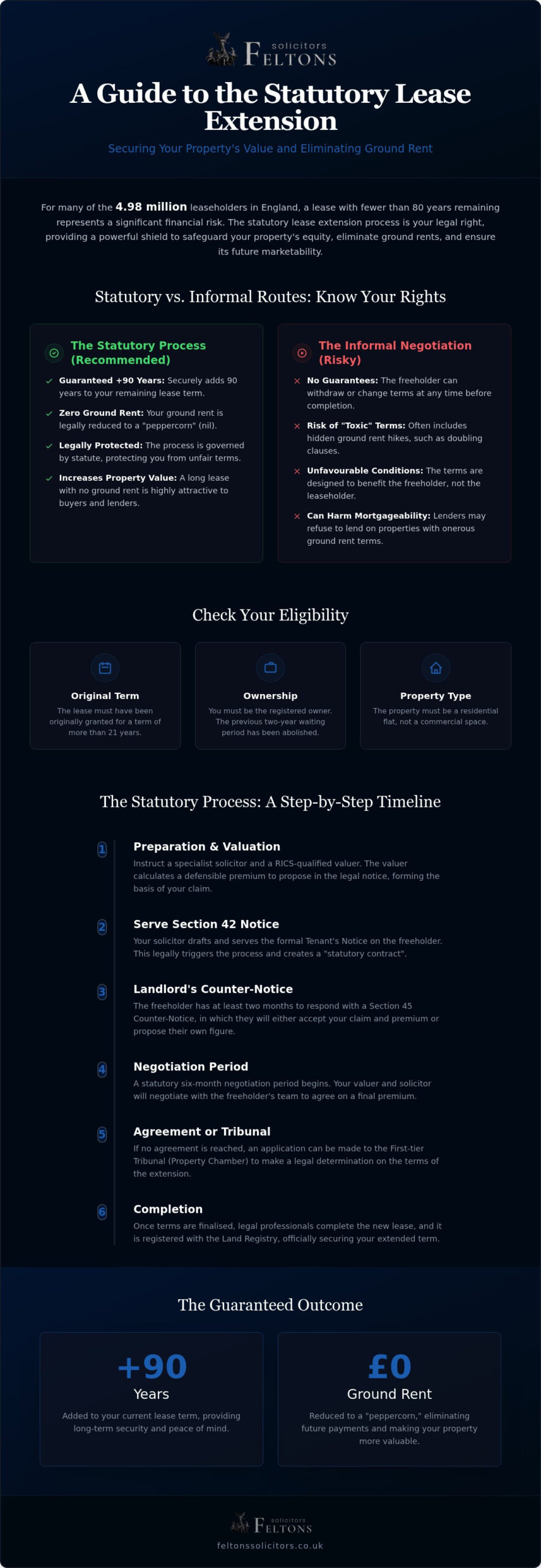
The statutory lease extension process typically spans six to twelve months from the initial instruction to the final registration. It’s a marathon, not a sprint, requiring a methodical approach to each legal milestone. The journey begins with a thorough title investigation and a professional valuation to establish your opening position. Once your Section 42 Notice is served, the freeholder has a mandatory two-month window to respond. This period is often used by the landlord to request further information or to arrange their own valuation of your property.
The Counter-Notice and Negotiation Phase
It’s rare for a freeholder to accept your proposed premium without question. The Section 45 Counter-Notice is their formal reply, and it usually proposes a significantly higher figure than your opening offer. Don’t be alarmed by this. It’s a standard part of the procedure. Once this notice is received, it triggers a six-month negotiation window for solicitors and valuers to find a middle ground. We manage this dialogue with calm, steady authority, using the evidence from your RICS valuation to reach a fair settlement. Most cases are resolved through expert compromise during this phase, avoiding the need for a full tribunal hearing.
Completion and Land Registry Registration
Once the premium and lease terms are agreed, the process moves into the conveyancing stage. This involves finalising the new lease document, which legally incorporates the 90-year extension and reduces your ground rent to a peppercorn. You’ll sign the documentation and pay the agreed premium along with the freeholder’s reasonable legal and valuation costs. The final step is ensuring the Land Registry record is updated to reflect your new, extended term. Registration fees in 2026 are based on property value; for example, a property valued between £200,001 and £500,000 currently incurs a fee of £330. You can explore our broader guide on residential property law to see how these registrations safeguard your overall property rights.
If you’re ready to begin your timeline with a trusted advisor, contact our leasehold enfranchisement and extensions specialists for a discreet consultation today.
Instructing a Specialist: How Feltons Solicitors Safeguard Your Interest
Many leaseholders assume any solicitor can handle their extension. This is a risky misconception. The statutory lease extension process involves strict litigation deadlines and technical valuation arguments that go far beyond standard conveyancing. A generalist may miss the nuance of a Section 42 notice or fail to respond to a counter-proposal with the necessary tactical weight. At Feltons, we provide specialised expertise in leasehold enfranchisement, acting as a calm and steady presence during what can be a stressful financial negotiation. We understand that your home is your most significant asset. Protecting its value requires more than just administrative filing; it requires a deep understanding of the 1993 Act and the evolving 2026 regulatory framework.
Early action is particularly vital if your lease is approaching the 80-year mark. While the 2024 Reform Act promises future changes to marriage value, the current legal reality in 2026 still makes extensions significantly more expensive once you cross that threshold. By instructing a specialist early, you lock in your rights and prevent the freeholder from leveraging your expiring term against you. We pride ourselves on a “people-first” philosophy. Whilst the technical legal work is paramount, we never forget the human impact. We handle the complex litigation and the back-and-forth with the freeholder’s legal team so you don’t have to.
A Boutique Approach to Property Law
Unlike high-volume “factory” firms, Feltons offers a tailored experience defined by personal connection and discreet, high-standard service. You won’t be passed between junior clerks. Instead, you’ll have a dedicated advisor who provides pragmatic advice and remains accessible throughout the journey. This boutique level of care is why we’re trusted by both domestic homeowners and international clients with complex UK property portfolios. We project an image of high-end reliability, ensuring that every client feels they’re in capable, worldly hands, regardless of the scale of their matter. Our goal is to provide the quiet confidence you need to resolve even the most aggressive counter-proposals.
Next Steps: Securing Your Property’s Future
The first step toward securing your 90-year extension and a peppercorn ground rent is a professional valuation. Starting this process today allows us to build a robust case before the formal notice is even served. We can provide a bespoke estimate for your specific needs, ensuring you understand the likely costs and timelines involved from the outset. Don’t leave your property’s equity to chance or the whims of an aggressive landlord. Taking control of the statutory lease extension process now is the most effective way to protect your investment for decades to come. Contact Feltons Solicitors for a confidential consultation to discuss how we can safeguard your interests and provide the professional poise your property matters deserve.
Securing Your Property’s Equity for the Decades Ahead
Choosing the right path for your lease extension isn’t just about administrative compliance; it’s a strategic move to preserve your home’s marketability. By committing to the statutory lease extension process, you ensure that your property remains an attractive asset for future lenders and buyers alike. You’ve seen how the Section 42 route eliminates the risk of predatory ground rent hikes whilst providing a legally mandated framework for a fair premium. This formal path remains the only way to guarantee a 90-year extension and the total removal of financial ground rent obligations.
Since 2010, Feltons Solicitors has combined traditional professional values with a modern, pragmatic approach to property law. We specialise in complex leasehold enfranchisement, providing expert guidance to both national and international clients who value discreet, high-standard service. Our “people-first” philosophy ensures you receive the boutique care and steady authority required to navigate these legal complexities with ease. You don’t have to face aggressive freeholder counter-proposals alone.
Don’t let an expiring lease or a complex regulatory landscape dictate your financial future. Secure your property’s future with Feltons Solicitors. You’re in capable hands, and taking this step today will provide the peace of mind you deserve for years to come.
Frequently Asked Questions
How long does the statutory lease extension process take?
A standard statutory lease extension process typically takes between six and twelve months to complete. This timeline accounts for the initial valuation, the two-month window for the landlord’s counter-notice, and the subsequent negotiation period. Whilst some cases resolve faster through efficient dialogue, others may require the full six-month negotiation window to agree on the final premium. We ensure every milestone is met with precision to prevent unnecessary delays in your property’s registration.
Do I still need to own my flat for two years before extending?
No, the previous requirement to own your property for two years was abolished in February 2025. You’re now eligible to serve a Section 42 notice as soon as you become the registered owner at the Land Registry. This change is particularly beneficial for new buyers who wish to address a short lease immediately. It allows you to secure your property’s equity and remove ground rent obligations without a lengthy and potentially costly waiting period.
What happens if my landlord refuses to extend the lease?
Under the 1993 Act, a landlord cannot simply refuse a valid statutory request for a lease extension. If your notice is drafted correctly and you meet the qualification criteria, the freeholder is legally obligated to grant the 90-year extension. In rare cases where a landlord fails to respond or disputes your right without legal grounds, the matter can be escalated to the County Court or the First-tier Tribunal to protect your interests.
How much does a statutory lease extension cost?
The total cost includes the premium paid to the landlord, professional fees, and Land Registry charges. In 2026, valuation surveyors typically charge between £600 and £900, whilst legal fees for each party often range from £800 to £1,300. You are also responsible for the freeholder’s reasonable legal and valuation costs. Land Registry fees for registration currently range from £230 to £330, depending on the property’s value, ensuring your new term is officially recorded.
Can I extend the lease on a house using the statutory route?
Yes, owners of leasehold houses have separate legal rights to extend their leases, though the terms differ from flats. Whilst flat owners receive a 90-year extension, house owners typically qualify for a 50-year extension under the Leasehold Reform Act 1967. The statutory lease extension process for houses follows a different valuation methodology. It’s essential to use a specialist who understands these distinctions to ensure you’re pursuing the most advantageous route for your specific property type.
What is the difference between a Section 42 and a Section 45 notice?
A Section 42 notice is the tenant’s official trigger for the extension, whilst a Section 45 notice is the landlord’s formal counter-proposal. The Section 42 notice outlines your proposed premium and lease terms. The landlord then has two months to respond with a Section 45 notice, which either accepts your terms or, more commonly, proposes a higher premium. This exchange of notices establishes the legal framework for the subsequent negotiation phase between both parties.
Why is 80 years such a critical threshold for lease extensions?
The 80-year mark is critical because it triggers “marriage value,” which significantly increases the premium you must pay. Once a lease falls below this threshold, you’re legally required to share 50% of the property’s potential value increase with the landlord. Although the Leasehold and Freehold Reform Act 2024 intends to abolish this cost, as of September 2026, these provisions are not yet in effect. Acting before your lease reaches this point is vital.
Will my ground rent really go down to zero?
Yes, your ground rent will be reduced to a “peppercorn,” which effectively means you have zero financial obligation. This reduction is a mandatory requirement of the statutory process under the 1993 Act. Unlike informal deals where a landlord might try to maintain or even increase ground rent, the formal route provides a permanent solution. This makes your property far more attractive to lenders and future buyers by removing an ongoing financial burden.