

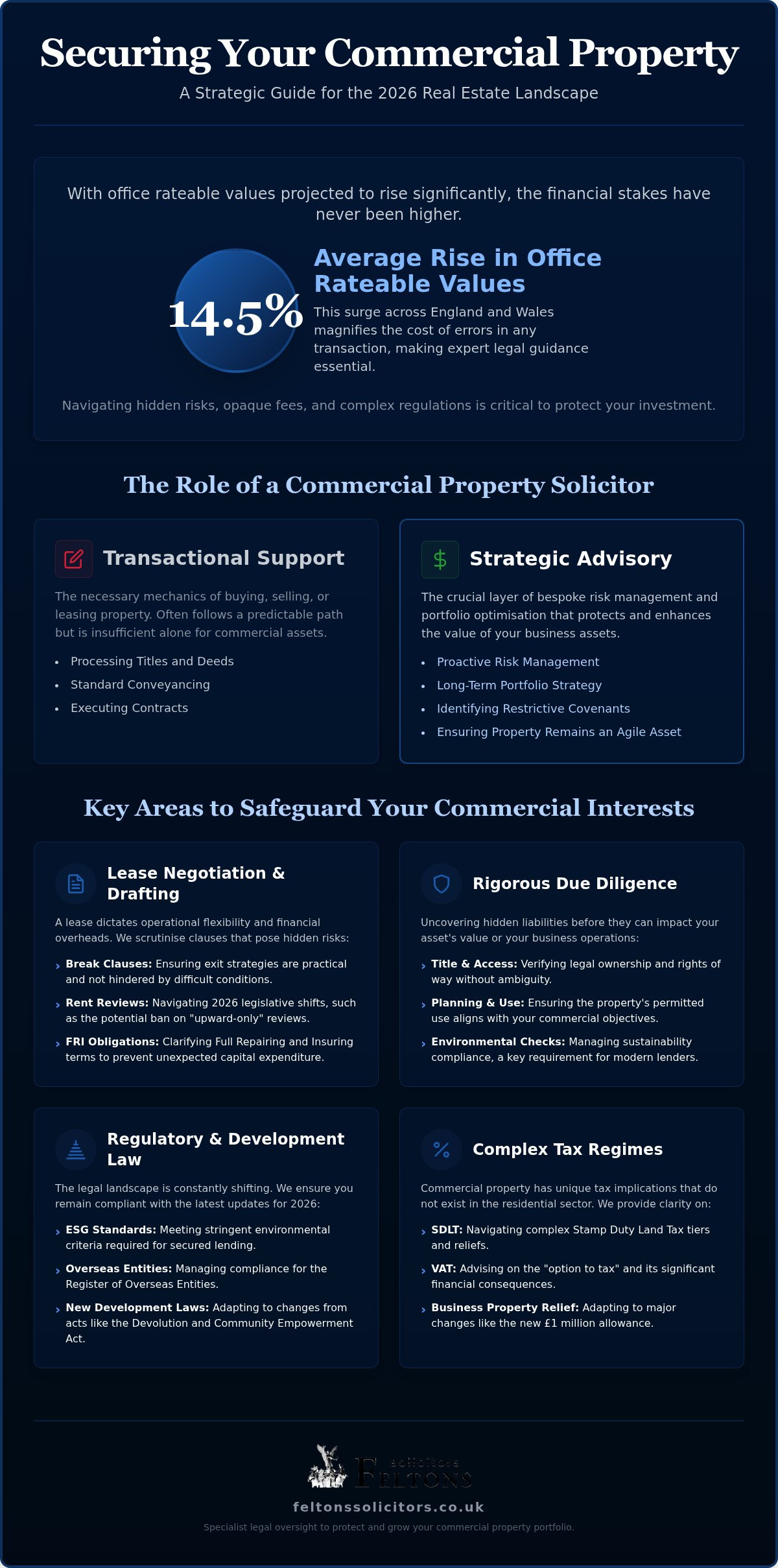
With office rateable values rising by an average of 14.5% across England and Wales in 2026, the margin for error in your next real estate transaction has never been thinner. You likely recognise that whilst property remains a cornerstone of business growth, the legal path to securing it is increasingly fraught with hidden risks. It’s understandable to feel uneasy about opaque fee structures or the slow transaction speeds that so often cause promising deals to collapse at the final hurdle.
Securing a commercial property solicitor who offers a blend of sophisticated authority and pragmatic, “people-first” advice is the most effective way to protect your interests. Our focus is on providing the strategic guidance necessary to navigate a complex 2026 landscape, ensuring you don’t miss restrictive covenants that could stifle your future operations. By the end of this article, you’ll understand how to secure favourable lease terms under the latest regulations, minimise your business liability, and adapt to significant shifts like the new £1 million allowance for Business Property Relief. We will examine the essential steps to managing your assets with confidence, ensuring every transaction serves your broader commercial objectives.
Key Takeaways
- Understand how a commercial property solicitor functions as a discreet advisor to manage complex risks that extend far beyond standard conveyancing.
- Identify the pivotal lease clauses that safeguard your operational freedom and protect your business from unforeseen financial commitments.
- Discover the rigorous due diligence steps necessary to reveal hidden liabilities before they can impact the value of your commercial assets.
- Navigate the latest 2026 regulatory updates, including essential compliance for the Register of Overseas Entities and new development laws.
- Learn why a boutique legal partnership offers the tailored expertise and personal connection needed to support a growing property portfolio.
What is a Commercial Property Solicitor and Why Does Your Business Need One?
A commercial property solicitor acts as far more than a legal processor for titles and deeds. While residential conveyancing often follows a predictable, formulaic path, commercial transactions are governed by complex English land law principles that require a bespoke approach to risk management. Your business assets represent significant capital and operational exposure. Treating their acquisition or lease as a mere administrative task is a dangerous oversight. In 2026, where office rateable values have surged by an average of 14.5% across England and Wales, the financial consequences of a poorly negotiated contract are immediate and severe.
Commercial law involves unique mechanisms such as the Landlord and Tenant Act 1954, which provides security of tenure for business occupiers. Without this protection, a business could be forced to relocate at the end of a lease term, losing years of accumulated goodwill and local brand recognition. Specialist legal oversight is non-negotiable because commercial property carries distinct tax regimes, including complex SDLT tiers and the “option to tax” for VAT, which don’t exist in the residential sector. You need a partner who understands that a deal delayed by slow due diligence is often a deal lost.
The Distinction Between Transactional and Advisory Support
Legal support is traditionally viewed as transactional, focusing on the mechanics of buying, selling, or leasing assets. However, the true value of a commercial property solicitor lies in advisory oversight. This includes ongoing portfolio management and identifying restrictive covenants that could stifle your business growth or prevent a future change of use. If you plan to exit the business in five years, your lease must allow for a clean break or assignment without prohibitive conditions. We ensure your property remains an agile asset rather than a restrictive liability that hinders your long-term strategy.
Safeguarding Commercial Interests in 2026
The regulatory environment has shifted significantly this year. With the English Devolution and Community Empowerment Act 2026 introducing potential bans on upward-only rent reviews, your legal advice must ensure new leases reflect these modern standards. Beyond the lease itself, we manage environmental and sustainability compliance, which is increasingly a prerequisite for secured lending. Lenders in 2026 are more stringent; they require proof that assets meet evolving ESG standards before releasing funds. A commercial property solicitor serves as a definitive shield against operational disruption, ensuring that legal technicalities never compromise your business’s momentum.
Navigating Commercial Leases: Drafting and Negotiation Strategies
A commercial lease is far more than a simple occupancy agreement; it’s a complex financial instrument that dictates your business’s overheads and operational flexibility for years. Relying on generic templates often leaves tenants exposed to “hidden” costs that only surface during a dispute or at the point of exit. Instructing a commercial property solicitor ensures that every clause is tailored to your specific industry requirements rather than a landlord-biased standard. Adhering to RICS professional standards provides a baseline for fair management, but bespoke legal drafting is what secures your business’s unique interests.
Critical Lease Terms to Review
The financial impact of a lease is often found in the fine print of its various mechanisms. Break clauses are essential for maintaining agility, yet they are frequently conditional on “vacant possession” or “absolute compliance,” terms that can be difficult to satisfy in practice. Rent review clauses also require careful scrutiny, especially following the 2026 legislative shifts regarding upward-only reviews. Understanding Full Repairing and Insuring (FRI) obligations is equally vital, as these can lead to unexpected capital expenditure for structural repairs. For those navigating the complexities of long-term property rights, speaking with leasehold enfranchisement experts can help clarify your options for securing more permanent control over your premises.
Lease Renewals and Assignments
The Landlord and Tenant Act 1954 provides a statutory right to renew your lease, which is a cornerstone of business continuity in the UK. However, landlords can oppose renewal on specific grounds, such as an intention to redevelop the site. If you plan to sell your business, the ability to assign the lease to a buyer is critical. A commercial property solicitor will negotiate “reasonable” consent requirements to ensure your exit strategy isn’t blocked by a landlord’s refusal. Finally, managing dilapidations at the end of a term is a significant financial risk. Early legal advice on terminal schedules can prevent costly litigation and ensure a smooth transition out of the property. If you’re entering new negotiations, a detailed contract review can identify these risks before you sign.
Strategic Acquisitions and Disposals: Managing Transactional Risk
Strategic acquisitions require a methodical approach that transcends simple price negotiation. In a market where office rateable values have shifted significantly, the true value of a deal is often found in the quality of the underlying title and the absence of hidden liabilities. A commercial property solicitor manages the entire transaction lifecycle, from the initial review of heads of terms to the final registration at the Land Registry. Whilst the RICS Code for Leasing Business Premises focuses on fairness in tenancies, acquisitions demand a more aggressive focus on risk mitigation and long-term operational efficiency.
The Due Diligence Framework
Due diligence is the foundation of any secure purchase. It involves a rigorous investigation into title history, planning permissions, and building regulation compliance. We scrutinise Commercial Property Standard Enquiries (CPSEs) to uncover issues such as unauthorised alterations, boundary disputes, or pending litigation. Environmental searches are particularly critical in 2026, as contaminated land liabilities can stay with the owner regardless of when the damage occurred. For mixed-use developments, where a commercial unit sits beneath residential flats, you must also consider navigating residential property law to manage the distinct rights of residential tenants, such as the right of first refusal.
Financing and Secured Lending
Securing capital is often the most time-sensitive element of a transaction. We work closely with commercial lenders to satisfy their specific requirements, handling the complex legal charges and debentures over your property assets. If your financing timeline is tight, having a commercial property solicitor who understands the lender’s perspective prevents delays that could jeopardise the deal. We ensure the legal structure of your purchase supports your borrowing needs, allowing for a seamless transition from offer to ownership. This includes verifying that the property’s insurance and repair obligations align with the bank’s security requirements, protecting both your capital and your relationship with the lender.
Specialist Complexities: Overseas Entities and Development Law
The intersection of international investment and UK property law has become significantly more regulated. For international investors, compliance with the Register of Overseas Entities (ROE) is no longer a peripheral concern but a central pillar of asset management. Failing to maintain accurate records on the ROE can result in severe penalties and, crucially, prevents any dealing with the property at the Land Registry. A commercial property solicitor with specialist expertise in this area ensures your international structure remains transparent and compliant with the latest 2026 standards.
Registering Overseas Entities for UK Property
Registration is a multi-stage process that requires meticulous attention to detail. It is not merely an administrative filing; it is a legal declaration of ownership structure. The process typically follows three critical stages:
- Identification: Pinpointing beneficial owners as defined by the Economic Crime (Transparency and Enforcement) Act, ensuring all “shadow” interests are correctly categorised.
- Verification: All information must be verified by a UK-regulated agent before submission to Companies House.
- Annual Compliance: Managing the mandatory annual updates to ensure the entity’s status remains “active” and deal-ready.
For a more detailed breakdown of these requirements, see our guide on overseas entity beneficial owner registration.
Property Development and Site Assembly
Development projects require a different legal architecture. Site assembly involves the delicate process of merging multiple parcels of land, often requiring the negotiation of complex infrastructure and utility easements. We draft option agreements and conditional contracts that provide the flexibility developers need during the planning phase. Protecting future value is equally important. Overage agreements ensure that if a site’s value increases significantly post-development, the original seller receives a fair share of the uplift, while the developer’s margins remain protected. This methodical approach protects your capital while allowing for ambitious growth.
When preparing a site for development, ensuring physical security is as important as the legal framework; specialists like Romford Fencing Ltd can provide the trade-grade materials needed to secure your assets during the transition.
Even with the best drafting, disputes can arise. Whether it’s a disagreement over service charges or a challenge to leasehold enfranchisement rights, we prioritise mediation and pragmatic negotiation to avoid the prohibitive costs of litigation. Our role is to act as a discreet partner, resolving issues quietly and efficiently so your focus remains on your business operations. If you are managing international assets or planning a new development, our commercial legal team is ready to provide the discreet, high-standard support your portfolio requires.
Choosing the Right Commercial Property Solicitor for Your Portfolio
Selecting a commercial property solicitor is a consequential decision that directly impacts your business’s bottom line and operational security. High-volume “conveyancing factories” often rely on automated processes that struggle to account for the nuances of a complex commercial deal. Within the 2026 regulatory framework, where oversight of overseas entities and environmental compliance is more rigorous than ever, a tick-box approach is insufficient. You need a partner who possesses deep commercial awareness and understands how a property asset fits into your broader industry objectives.
The right legal advisor acts as a sophisticated guide, identifying risks before they become liabilities. Direct partner access is essential. It ensures that your transaction is handled by an expert who can navigate the intricacies of the Landlord and Tenant Act 1954 or the complexities of a mixed-use development with poise. Communication should be steady and reassuring, providing you with the clarity needed to make informed decisions under pressure. If a firm cannot explain a restrictive covenant’s impact on your future exit strategy in plain English, they may lack the commercial depth your portfolio requires.
The Feltons Difference: Pragmatic and People-First
Feltons Solicitors LLP was established in 2010 by Paula Felton with a commitment to providing a boutique, high-standard service that prioritises personal connection. We don’t view transactions as mere files; we see them as the foundation of your business’s future. Our “people-first” philosophy means we focus on building long-term advisory relationships, offering a calm and steady presence amongst the stresses of a property acquisition or disposal. Whether you are a national developer or an international investor, our advice remains pragmatic and tailored to your specific needs. We maintain transparent fee structures to address the common industry pain point of opaque legal costs, ensuring you can manage your capital with confidence.
Next Steps for Your Property Transaction
Moving forward with a new lease or purchase requires methodical preparation to avoid the delays that cause deals to collapse. Before your initial consultation, ensure you have your Heads of Terms, proof of identity, and any relevant financing details organised. This allows your commercial property solicitor to begin the due diligence process immediately, protecting your position in a competitive market. When you are ready to instruct, look for a firm that combines traditional professional integrity with modern efficiency. Your property assets deserve a discreet partner who values privacy and personal rapport as much as technical excellence. Secure your business assets today and contact Feltons Solicitors LLP for a consultation to discuss your requirements.
Securing Your Commercial Future with Strategic Legal Oversight
The 2026 property market presents both significant challenges and unique opportunities for businesses. We have discussed how a dedicated commercial property solicitor moves beyond simple paperwork to provide the strategic foresight required for complex lease negotiations and regulatory compliance. By focusing on bespoke drafting and rigorous due diligence, you can ensure your property assets remain agile and protected against shifts in business rates and inheritance tax allowances. Success in this environment relies on identifying risks early and maintaining a clear path for future growth.
Feltons Solicitors LLP provides a calm, steady presence throughout the lifecycle of your property assets. Our boutique service model guarantees direct partner involvement and specialist expertise in areas such as Overseas Entity registration, whilst our national reach ensures we can support your interests across the UK. We combine traditional professional integrity with a “people-first” philosophy to deliver results that respect both your time and your commercial objectives. Instruct Feltons Solicitors for your commercial property transaction to secure the high-standard, discreet guidance your business deserves.
Frequently Asked Questions
Do I really need a solicitor for a commercial lease renewal?
Yes, instructing a solicitor is essential to protect your statutory rights under the Landlord and Tenant Act 1954. Missing strict deadlines can result in the loss of your right to remain in the premises. Professional oversight ensures your new lease reflects 2026 market standards and doesn’t include restrictive clauses that could hinder your future business agility or exit strategy.
How much are commercial property solicitor fees in 2026?
Fees are determined by the transaction’s complexity and the value of the asset involved. Rates typically track service producer price inflation, which saw a modest increase in early 2026. Most firms provide a combination of fixed fees for standard conveyancing and hourly rates for bespoke advisory work. We recommend requesting a transparent, individualised quote to ensure your legal budget aligns with your specific objectives.
What is the Register of Overseas Entities and does it apply to me?
The Register of Overseas Entities (ROE) requires foreign organisations holding UK land to declare their beneficial owners to Companies House. It applies to you if you are a non-UK legal entity that owns, or intends to acquire, property in the United Kingdom. This regulation is a critical compliance point in 2026, ensuring transparency and allowing for legal dealings at the Land Registry.
How long does a commercial property purchase typically take?
A standard commercial purchase usually takes between eight and twelve weeks from the approval of heads of terms to final completion. Timelines depend heavily on the depth of due diligence required and the speed of financing approvals. Complex site assemblies or transactions involving overseas entities may take longer due to the additional verification and compliance stages required by current regulations.
Can a commercial solicitor help with property disputes or litigation?
Yes, a commercial property solicitor provides vital support for litigation and dispute resolution. Whether you are facing a disagreement over service charges, dilapidations, or leasehold enfranchisement, we prioritise pragmatic negotiation to avoid the costs of court. If mediation fails, we provide the professional authority needed to handle formal proceedings and protect your business interests effectively.
What is the difference between a commercial lease and a licence to occupy?
A commercial lease grants exclusive possession of a property for a fixed term, creating a formal legal interest in the land. In contrast, a licence to occupy is merely a personal permission to use the space and offers no security of tenure. Choosing the wrong structure can leave your business vulnerable to sudden eviction or unexpected financial liabilities.
Do you handle commercial conveyancing for international clients?
We provide comprehensive support for both national and international clients from our London office. Our boutique approach allows a commercial property solicitor to act as a discreet partner for complex matters, including the registration of overseas entities. We manage the entire lifecycle of your UK assets, ensuring compliance with local regulations whilst maintaining a personal connection regardless of your location.
What happens if I don’t register my overseas entity correctly?
Failing to register correctly results in severe restrictions that effectively freeze your property assets. You’ll be unable to sell, lease, or charge the land at the Land Registry until compliance is met. Additionally, non-compliance can lead to significant daily fines and potential criminal prosecution for the entity’s officers, making accurate registration a non-negotiable priority for any international investor.