

A contested statutory will application in the UK is not the same as a challenge to an existing will’s validity. In England and Wales, the Court of Protection can approve a will for someone who lacks testamentary capacity, but the decision is whether the proposed will is in that person’s best interests. The Mental Capacity Act 2005 requires this consideration, according to UK Parliament.
It is understandable to see a proposed statutory will and a disputed earlier will as part of the same conflict. They raise different legal questions: objections may prompt the Court to examine the proposed arrangements more closely, but a statutory will application does not decide whether an earlier will was valid.
This article explains what a statutory will is, how testamentary capacity is assessed and what the Court considers when an application is contested. It also explains how objections, an existing will and a separate dispute about validity fit together, helping you identify which issue needs attention.
Key Takeaways
- The Court focuses on the person’s best interests, including their wishes, values and circumstances, when considering a proposed statutory will.
- A well-supported application brings together capacity evidence, a proposed draft will and relevant people’s views.
- A diagnosis alone does not establish whether someone can make a will; capacity relates to the decision and the person’s understanding.
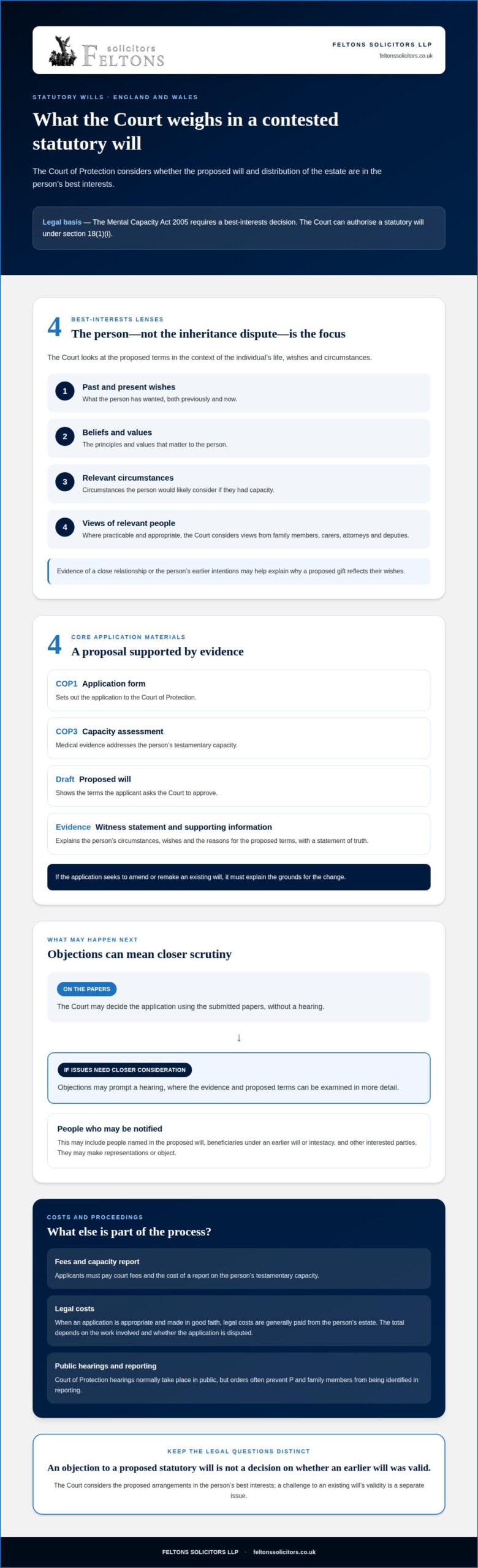
- An objection to a proposed statutory will is distinct from challenging whether an existing will is valid, and the difference can shape the next legal steps.
What will the Court consider when it receives an application for a statutory will?
According to UK Parliament, the Mental Capacity Act 2005 requires the Court of Protection to consider the best interests of the person who lacks capacity when deciding a statutory will application. In England and Wales, the Court can authorise a statutory will under section 18(1)(i) of that Act. In contested statutory will applications in the UK, the Court decides whether the proposed will and its distribution of the estate are appropriate for that person.
The Court considers the person’s past and present wishes, beliefs and values, alongside circumstances they would likely weigh if they had capacity. Where practicable and appropriate, it also considers the views of relevant family members, carers, attorneys and deputies. For example, evidence of a close relationship or the person’s previous intentions may help show why a proposed gift reflects their wishes.
An application needs supporting evidence and a draft proposed will. The materials include a COP1 application form, a COP3 capacity assessment and evidence in a witness statement with a statement of truth. Medical evidence addresses capacity; other evidence explains the person’s circumstances, wishes and reasons for the proposed terms. An application to amend or remake an existing will must explain the grounds for the change.
The Court may decide the application on the papers, without a hearing. If objections raise issues that need closer consideration, it may list a hearing to examine the evidence and proposed terms in more detail. Contested statutory will applications in the UK can therefore proceed beyond the initial paperwork.
Applicants must pay court fees and the cost of a report on the person’s testamentary capacity. When an application is appropriate and made in good faith, legal costs are generally paid from the person’s estate. The total depends on the work involved and whether the application is disputed.
People named in the proposed will, beneficiaries under an earlier will or intestacy, and other interested parties may be notified. They can make representations or object, which may prompt a hearing. Opposing an application can lead to further proceedings, legal work and costs payable from the estate.
Court of Protection hearings normally take place in public, but orders often prevent P and family members from being identified in reporting. Section 12(1)(b) of the Administration of Justice Act 1960 applies to the private statutory will proceedings described.
Applying to make or change a will for someone who lacks capacity
In England and Wales, an application to make or change a will for someone who lacks capacity is made to the Court of Protection. Permission is required unless an exemption applies.
Who can apply
Section 50 of the Mental Capacity Act identifies who may apply, including the person concerned, an attorney, deputy, Official Solicitor or public guardian. Certain beneficiaries and people the person might be expected to provide for may also apply. Others need the Court’s permission. This matters because the applicant must have a recognised connection or authority to act on the person’s behalf. For example, a deputy can seek approval for a proposed will when the person cannot make one themselves.
Permission to apply
Permission is the Court’s authorisation for an eligible applicant to bring a statutory will application. Unless an exemption applies, the applicant must obtain permission before the Court considers making or changing the will. The application sets out the proposed terms and why they suit the person’s circumstances. A request to amend an existing will must explain the grounds for the change. This helps distinguish a reasoned proposal from a disagreement about inheritance alone.
Practical and emotional challenges
An application can involve detailed paperwork, medical evidence and discussion with relatives whose inheritance may change. Those involved may disagree about the person’s past and present wishes, relationships or financial needs. For instance, a proposed gift to one relative may be opposed by someone who benefits under an earlier will. Because the process can be personal as well as legal, clear evidence and a focused explanation help keep attention on the person’s interests.
The application typically includes a COP1 form, a COP3 capacity assessment, a draft will and supporting evidence. Relevant people may be notified, and objections can lead to a hearing; applications generally take several months. Organising the evidence and proposed terms is central to applying. Advice on wills, probate and estate planning can help clarify the legal steps and prepare the application.
How do you know if someone has capacity to make a will?
Testamentary capacity relates specifically to making a will; it is not a general measure of mental capacity. The person must understand what making a will means, the extent of their estate and the claims of people who might expect to benefit. A specialist assessment considers these points and records the findings in medical evidence. Difficulty managing finances alone does not establish that someone cannot make a will.
A dementia diagnosis does not automatically mean someone lacks testamentary capacity. The question is whether the person can understand and weigh the decisions involved in making their will at the time those decisions are made. For example, someone may need help with everyday financial matters yet still understand their previous will, assets and intended beneficiaries.
If capacity to make a will is lacking, the Court of Protection considers whether a statutory will, and its proposed terms, are in the person’s best interests. Section 1 of the Mental Capacity Act 2005 requires acts for a person lacking capacity to be in their best interests. Under the Mental Capacity Act 2005, the decision-maker must consider all relevant circumstances when deciding what is in P’s best interests, rather than relying merely on age, appearance or assumptions.
Section 4(6) requires consideration of the person’s past and present wishes and feelings, beliefs and values, plus matters they would likely consider if they had capacity. Section 4(7) addresses the views of relevant parties, where practicable and appropriate, including people the person named, carers, an attorney or deputy. These views inform the decision; they do not replace the person’s own wishes.
A statutory will application differs from making or changing a will while someone has capacity. A person with testamentary capacity makes their own will decisions; a statutory will is considered when they lack that capacity. The application evidence should explain the capacity assessment and how the proposed arrangements serve the person’s interests.
Statutory wills and disputed will validity
A statutory will application and a challenge to an existing will address different legal questions. Under the Mental Capacity Act 2005, the Court of Protection decides whether a proposed will is in the person’s best interests. It does not decide whether an earlier will was valid. In Re M [2011], the Court held it lacked jurisdiction to determine that issue.
This distinction matters when relatives dispute a previous will while the person is still alive. The Court may approve a statutory will that revokes an earlier will, but its decision concerns the new will and the person’s circumstances. A solicitor assessing the matter must distinguish evidence supporting the proposed terms from arguments about whether the previous will was validly made.
The Court’s approach can also depend on the person’s present wishes and recent decisions. In Re Peter Jones [2014], the Court considered whether making a statutory will after P had recently made a will could undermine autonomy and impose a paternalistic view of best interests. That illustrates why a previous will and the timing of changed circumstances can be relevant, rather than simply evidence of a family dispute.
Contesting a statutory will application means raising concerns before the Court approves the proposed will. A challenge to an existing will’s validity is a separate dispute, usually addressed after death through probate proceedings. The Court of Protection has no jurisdiction over a statutory will application after the person dies, so a pending application will be dismissed. The timing of the dispute determines which court can decide the issue.
Keep the two questions distinct: is the proposed statutory will in the person’s best interests, or was an existing will valid? Evidence relevant to one does not automatically answer the other. For help assessing a will or probate dispute, speak to a solicitor about your options.
Feltons Solicitors LLP: Wills, Probate, and Estate Planning
Feltons Solicitors LLP can help you assess whether your concern relates to a proposed statutory will, an existing will or a later probate dispute. Its Wills, Probate, Trusts and Estate Planning service can help you understand the legal options, organise information about the person’s wishes and estate, and consider how an existing will affects the situation.
Early legal advice can clarify which issue needs attention. A statutory will application concerns a person who lacks testamentary capacity; a challenge to an existing will’s validity raises a separate question. Keeping these issues distinct can help families focus on the relevant evidence and next steps.
If you need advice about a will or probate matter, contact Feltons Solicitors LLP.
Choose the right legal question to address next
Before taking further action, define the outcome you are seeking and whose interests the decision affects. In contested statutory will applications in the UK, separating the proposed arrangements from concerns about an earlier will can help relatives explain their position clearly and focus on the issue the Court can decide.
A practical next step is to organise the documents and concerns around that objective. This may include the existing will, information about the person’s circumstances and a clear account of what relatives disagree about. A solicitor can help assess whether the matter concerns a statutory will application, will validity or another estate issue, and identify a proportionate way forward.
Feltons Solicitors LLP offers Wills, Probate, and Estate Planning, as well as Litigation and Dispute Resolution. If you would like advice on the legal options for your circumstances, contact Feltons Solicitors LLP for advice. A clear understanding of the issue can help you approach the next conversation with greater confidence.
Frequently Asked Questions
What is a Statutory Will?
A statutory will is a will authorised by the Court of Protection for someone who lacks testamentary capacity. It sets out how that person’s estate should pass, including where an earlier will no longer fits their circumstances. For example, a major change in family relationships may prompt an application proposing different beneficiaries. The Court must approve the will before it takes effect.
How can I contest a Will?
First, identify whether you object to a proposed statutory will or dispute the validity of an existing will. During a statutory will application, an interested person can make representations, explain their concerns and support them with relevant information. A validity dispute is separate and generally arises after death. For example, evidence about how an existing will was made relates to that validity issue, not automatically to the statutory application.
How does the court make a decision?
The Court of Protection decides whether the proposed will and its terms are in the person’s best interests. It weighs the person’s wishes and values against practical circumstances, including the likely effect of the proposal compared with an existing will or intestacy. For example, a proposed change may need to be considered alongside the person’s previous intentions and the interests of those who could otherwise inherit.
How long does the process take?
A statutory will application generally takes several months, and a more complex or contested matter may take longer. Cases can take six to 12 months, particularly where objections require further evidence or a hearing. The person’s health can affect urgency: an application may be expedited if they may not live long. A pending application is dismissed if the person dies before it is heard.
Is legal advice necessary?
A solicitor’s advice is not identified as a formal requirement for making an application, but legal guidance can help with the draft will, evidence and procedure. The application involves court forms and information affecting the person and potential beneficiaries. Solicitor advice has a cost; some organisations, including Citizens Advice Bureau, offer free advice. Consider what support is needed to understand the proposed terms and respond to objections.
What happens after the application is made?
After the application is filed, relevant people are notified and can respond to the proposed arrangements. The Court may decide the case on the papers or list a hearing to examine objections or evidence. If approved, the statutory will is executed on the person’s behalf and sent to the Court for sealing. The sealed will has the same legal effect as a will made by the person themselves.