
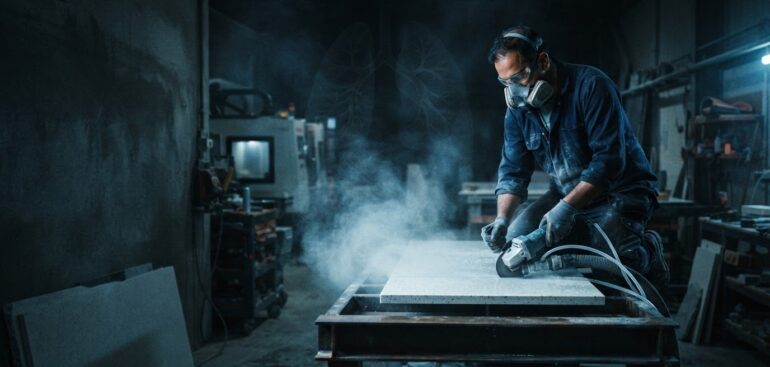
Artificial stone worktop fabrication can expose workers to respirable silica dust when the material is cut, ground or finished. Engineered stone can contain 90-95% crystalline silica, and the UK workplace exposure limit is 0.1 mg/m³, according to the Health and Safety Executive. Questions about artificial stone countertop silicosis compensation depend on the connection between a worker’s illness and their work exposure.
It’s understandable to want clear answers when breathing problems may be linked to work with stone countertops. Silica dust can be difficult to see, but inhaling it can cause serious lung disease.
This guide explains how silica exposure can occur, what silicosis and other respiratory conditions may involve, and what workers in the UK should know about compensation claims. It also explains how specialist legal advice can help assess the evidence and circumstances of a potential claim.
Key Takeaways
- Understand how fabrication tasks can create inhalable dust and why employers’ risk assessment and control duties matter under the Control of Substances Hazardous to Health Regulations 2002, as amended.
- Learn how silicosis and other respiratory diseases can affect workers, and why symptoms may need medical assessment.
- See what reported cases among UK stone workers reveal about the risks and the importance of linking work history with health evidence.
- Find out how workplace and medical records can help inform a potential compensation claim, and when specialist silicosis claims advice may be useful.
Silica dust exposure during artificial stone worktop fabrication
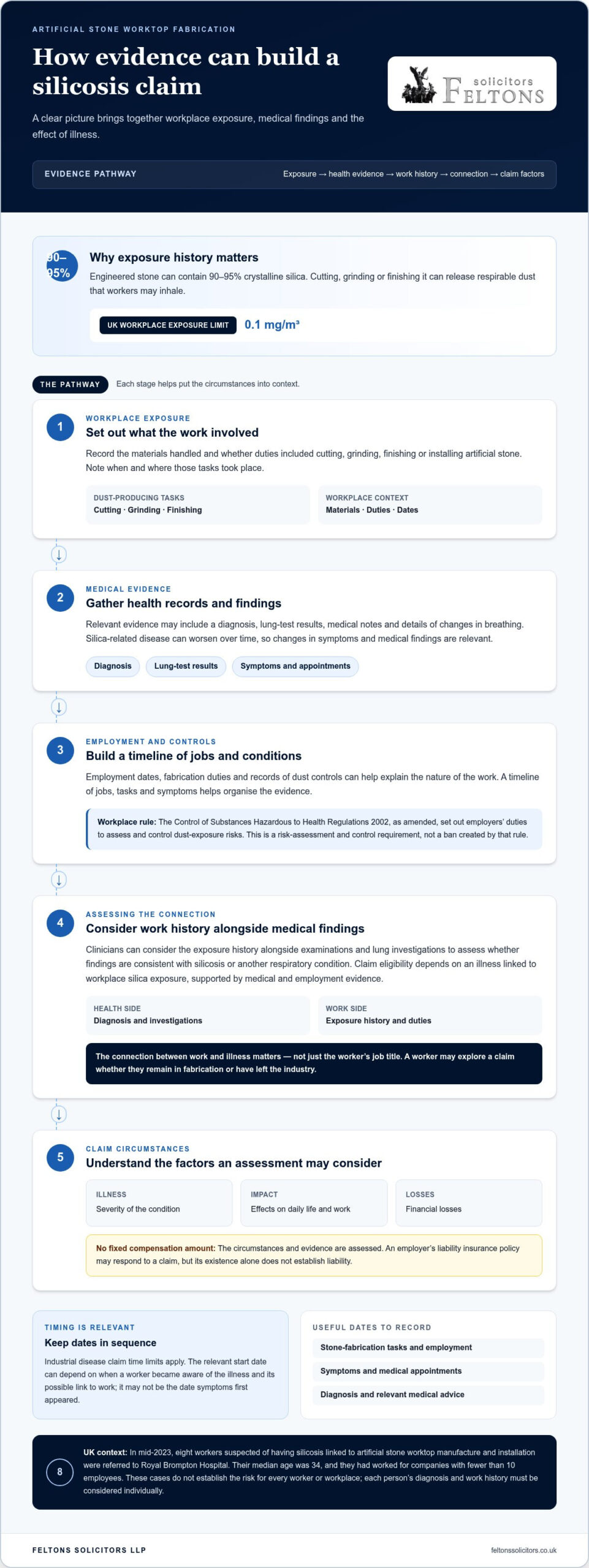
Fabrication tasks can release respirable crystalline silica, which workers may inhale. Engineered stone can contain 90-95% crystalline silica, and the UK workplace exposure limit is 0.1 mg/m³.
Eligibility for Compensation
Eligibility depends on having an illness linked to workplace silica exposure, supported by medical and employment evidence. Workers who develop silicosis after working with artificial stone may be able to explore a claim, whether they remain in fabrication or have left the industry. An artificial stone countertop silicosis compensation claim considers the connection between work and illness, not just the worker’s job title.
Countertop fabricators may bring claims involving employers’ liability insurance. A relevant policy may respond to a claim, but its existence alone does not establish liability. There is no fixed compensation amount. An assessment may consider the illness’s severity, its effects on daily life and work, and financial losses.
Evidence for a Silicosis Claim
Evidence usually combines medical records with details of work and exposure. Relevant material may include a diagnosis and lung-test results, employment dates, fabrication duties, and records of dust controls. Together, these details can help show what work involved silica and how the illness may relate to it. For an artificial stone countertop silicosis compensation case, a timeline of jobs, tasks and symptoms can help organise the evidence.
Restrictions on Engineered Stone Worktops
The UK workplace rule relevant to fabrication is risk assessment and control, rather than a ban created by that rule. According to the UK legislation register, employers’ duties to assess and control risks from dust exposure are set out in the Control of Substances Hazardous to Health Regulations 2002, as amended. This distinction matters: dust-producing work still requires attention to exposure controls.
Workers can raise unsafe conditions with an employer or report workplace concerns to the Health and Safety Executive. A GP can assess respiratory symptoms. Whether legal advice is free depends on the advice route and funding arrangement, so it is not automatic.
Silicosis and other respiratory diseases
Silica-related illness can develop after inhaling fine dust, and artificial stone silicosis can appear within 2-5 years. Recognising how disease is assessed and how claim timing works can help workers understand their next steps.
Diagnosing Silicosis
Diagnosing silicosis involves assessing lung health alongside a person’s exposure history. Symptoms and test findings need to be considered in the context of work involving silica, including artificial stone fabrication.
A worker should describe tasks such as cutting, grinding or finishing stone, and explain when symptoms began. Clinicians can consider this history alongside examinations and lung investigations to assess whether the findings are consistent with silicosis or another respiratory condition. Silica-related disease can worsen over time, so changes in breathing and medical findings are relevant.
The UK All Party Parliamentary Group for Respiratory Health published Improving Silicosis Outcomes in the UK in January 2023. Its report recommended that the Health and Safety Executive assess the data and technology needed to reduce the workplace exposure limit for silica to 0.05 mg/m³. That recommendation highlights continuing concern about preventing harm, not a diagnostic test or a change to the current limit.
Time Limits for Disease Claims
UK industrial disease claims are subject to a time limit. The relevant start date can depend on when a worker became aware of the illness and its possible link to work. This is important because silicosis may emerge after exposure has ended, making the timing of diagnosis and awareness relevant to a claim.
Keep a record of diagnosis dates, relevant medical appointments and work history, including when stone fabrication tasks took place. These details can help establish the sequence between exposure, symptoms and medical advice. Since the applicable deadline depends on the circumstances, seek legal advice promptly rather than relying on the date symptoms first appeared. A worker considering silicosis claims advice can discuss how the medical and employment history may affect a potential claim.
Silicosis cases among UK stone workers
Cases identified in the UK show why artificial stone exposure is a live occupational health concern. In mid-2023, eight UK workers suspected of having silicosis linked to artificial stone worktop manufacture and installation were referred to Royal Brompton Hospital in London.
The eight workers had a median age of 34, and had worked for companies with fewer than 10 employees. These details illustrate that suspected work-related disease has affected younger workers and people employed by small businesses. They do not establish the risk for every worker or workplace. Each person’s diagnosis and work history must be considered individually.
If you are concerned about similar exposure, start by listing the jobs you performed and the materials you handled. For example, note whether your work involved cutting, grinding or installing artificial stone, and when those tasks took place. Include any changes in breathing or other symptoms. A clear timeline can help clinicians consider your exposure history alongside medical findings.
A family may pursue a compensation claim after a worker’s death if the evidence supports a connection between the disease and workplace exposure. The case may also require evidence of the family’s losses and the worker’s diagnosis. Employment documents, medical notes and details of fabrication work can help explain the circumstances. The eight referrals to Royal Brompton Hospital underline the importance of preserving relevant records and establishing the worker’s employment and medical history.
These reported UK referrals are a specific example, not a complete count of affected workers. Referrals to one hospital cannot show how many people across the UK have the disease. For anyone who fabricated or installed artificial stone, relevant questions include which tasks created dust, what exposure occurred, and how medical evidence relates to the work. Keeping these details together can make a later assessment clearer.
How are workers diagnosed with silicosis in the UK?
Diagnosing silicosis involves considering a worker’s respiratory symptoms, medical assessment and history of silica exposure. For a countertop fabricator, explaining tasks such as cutting, grinding or finishing artificial stone gives clinicians important occupational context.
Before an appointment, workers can note when they handled stone, which tasks created dust, and when breathing problems began. Describe whether symptoms changed over time and whether similar work continued after they first appeared. A clear account helps clinicians consider possible links between work exposure and lung disease, rather than viewing symptoms in isolation.
Useful details to organise include:
- Job titles, employers and the periods spent fabricating or installing worktops.
- Specific tasks, such as dry grinding a stone edge or cutting a slab.
- Any available records describing materials, dust controls or workplace conditions.
- Symptoms, their progression and relevant medical appointments or findings.
These details can help build a clear exposure history. For example, an installer who also cut stone should explain both duties, rather than describing only installation work. Records and recollections can be compared with medical findings to clarify the timing and nature of workplace exposure. A diagnosis identifies the health condition; the work history helps explain its possible occupational context.
Keep copies of employment records, medical correspondence and any notes describing fabrication duties. If symptoms affect your work or everyday activities, describe those effects clearly during medical appointments. Accurate details can also help distinguish exposure during artificial stone work from other relevant work or environmental history.
Silicosis diagnosis and compensation involve different questions: medical evidence concerns the illness, while a claim also examines work exposure and its connection to that illness. For guidance on the legal assessment, discuss a potential silicosis claim.
Respiratory physicians diagnosed 210 patients with silicosis in Victoria between May 2019 and December 2022; 22 per cent of the patients in the reported findings were diagnosed with more advanced complicated silicosis. By March 6, 2025, 41 lung transplants had been recorded among engineered stone countertop workers with silicosis in California.
Feltons Solicitors LLP: Divorce and Financial Arrangements
Feltons Solicitors LLP helps workers and families consider potential claims through its Personal Injury and Silicosis Claims service. If a diagnosis may be connected to artificial stone fabrication, legal advice can help organise the medical history, work records and exposure details relevant to assessing the claim.
This support may be useful if you are unsure how workplace exposure could be connected to respiratory illness or what evidence to gather. A solicitor can review the circumstances and explain issues that may affect a claim, including the illness’s impact and relevant losses. Each matter depends on its own evidence and circumstances.
For guidance about a possible silicosis claim, contact Feltons Solicitors LLP or visit feltonssolicitors.co.uk.
Take a considered next step
Deciding whether to pursue artificial stone countertop silicosis compensation can raise wider questions about work, household finances and future planning. Consider what you want advice to address, such as the illness’s impact on everyday life or how a potential claim could affect your family. Knowing your priorities can make an initial legal discussion more focused.
It may help to note the key questions you want answered and gather the information that matters most to you. You do not need to resolve every detail before seeking guidance. A legal discussion can clarify the issues and possible next steps in your circumstances.
For a measured conversation about your situation, contact Feltons Solicitors LLP. Taking that first step can help you approach the decisions ahead with greater clarity.
Frequently Asked Questions
What Is Engineered Stone Silicosis And How Does Exposure Occur?
It is silicosis associated with breathing in respirable crystalline silica released during engineered stone work. Cutting, dry grinding and finishing can create fine airborne particles that enter the lungs. Exposure comes from the dust produced during these tasks, rather than simply being near an intact countertop. Artificial stone silicosis can develop within 2-5 years, so a worker’s exposure history is relevant even if the work has stopped.
What is silicosis caused by artificial stone countertops?
Silicosis is lung disease linked to inhaling silica dust generated while fabricating artificial stone countertops. Fine particles can become embedded in lung tissue and may cause lasting harm. The material becomes a health risk during dust-producing work, such as shaping or finishing a slab. A countertop worker who develops respiratory problems should explain the materials and tasks involved when discussing their health with a clinician.
What symptoms and health risks are linked to engineered stone dust exposure?
Engineered stone dust exposure can be associated with respiratory symptoms and serious lung damage. Artificial stone silicosis may progress to severe lung impairment or failure within 2 to 10 years. Symptoms alone cannot establish that silica caused an illness, but breathing changes after stone work deserve medical attention. Tell the clinician about the work performed, including fabrication tasks, and when symptoms began or changed.