

A break clause can end a commercial lease early, but only if the tenant follows the notice requirements and meets any conditions attached to the clause. Disputes often concern how notice was served, whether the tenant gave vacant possession, or whether rent and other sums were paid. Commercial lease break clause dispute solicitors assess the lease wording and the steps taken to determine whether the break was effective.
It is understandable to focus on the break date, which may seem like the key to ending the lease. But the notice process and lease conditions matter just as much. Missing a requirement may leave the tenant liable under the lease.
This guide explains what a break clause means, when a landlord may challenge a notice, and how rent, service charges and repair obligations can affect the outcome. It also covers how reviewing the clause and preparing well ahead of the break date can help identify problems before they become a dispute.
Key Takeaways
- Read the break clause closely: the permitted notice method, recipient, wording and deadline can determine whether the notice is effective.
- Identify every condition that must be met on the break date, including vacant possession and any repair or reinstatement obligations.
- Review rent and other sums due, as unpaid charges or interest may put the break at risk.
- Start reviewing the lease well in advance, inspect the premises and keep clear records of repairs and communications.
What is a break clause?
A commercial lease break clause gives the landlord, tenant or both a contractual route to end the lease before its term expires. The clause may set a fixed break date or allow a rolling break after a specified notice period. It determines who can exercise the right, when notice can be served and which conditions apply. A break is not automatic: the tenant must follow the lease wording.
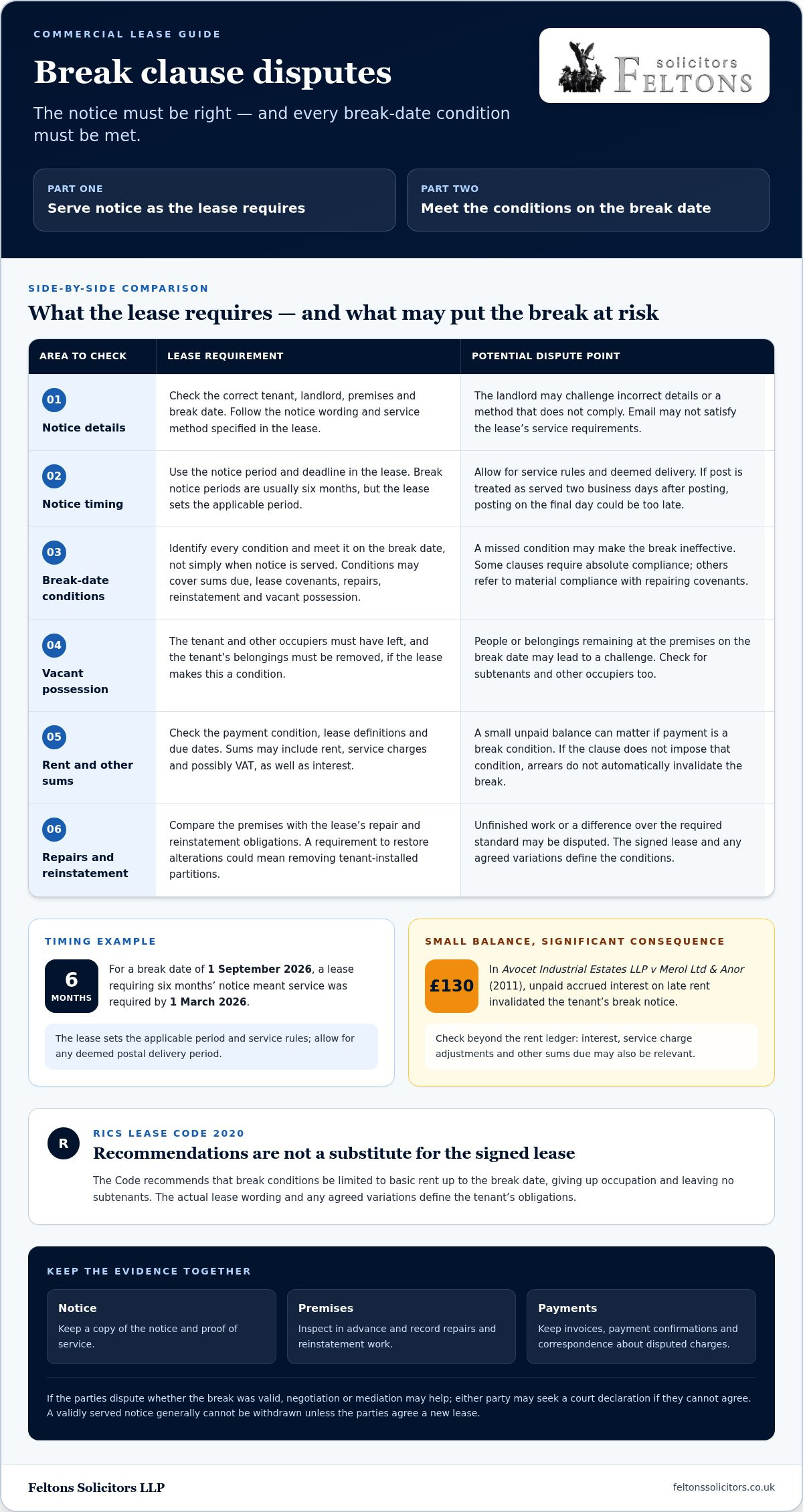
Before exercising the right, identify the break date, notice period, recipient, service method and every condition. Calculate the deadline from the lease and allow for any deemed postal delivery period. Giving notice may not, by itself, be enough to end the lease. If a condition is missed, the break can be invalid, leaving the tenant bound by the lease obligations.
Conditions can cover rent and other sums, compliance with lease covenants, repairs, reinstatement of alterations and vacant possession. Some clauses demand absolute compliance; others require material compliance with repairing covenants, which may give the tenant more scope. Read each condition separately. For example, a requirement to restore alterations may mean removing tenant-installed partitions before handing back the premises.
Vacant possession means the tenant and other occupiers have left, and the tenant’s belongings have been removed. The RICS Lease Code 2020 recommends no subtenants or other occupiers as a break condition. It also recommends limiting conditions to basic rent up to the break date, giving up occupation and leaving no subtenants. These are recommendations, not a substitute for the signed lease wording.
Conditions attached to a break must be satisfied on the break date, not when notice is served. Inspect the premises in advance, compare their condition with repair and reinstatement duties, and keep records of completed work. Stricter conditions may be agreed during negotiations and set out in the Heads of Terms, as acknowledged by the RICS Code. The lease and any agreed variations define the tenant’s preconditions.
Can a landlord challenge a break notice?
Yes. A landlord may dispute a notice served incorrectly or late, or argue that a break condition was not met. Commercial lease break clause dispute solicitors can assess the notice against the lease’s contractual requirements and identify the issue in dispute.
Notice wording and timing
Check that the notice identifies the correct tenant, landlord, premises and break date. It should follow the particular wording and service method required by the lease; email may not satisfy that method. Break notice periods are usually six months, but the lease sets the applicable period. For a break date of 1 September 2026 requiring six months’ notice, service was required by 1 March 2026.
Allow for service rules as well as the deadline. A lease may deem postal service effective two business days after posting, so posting on the final day could be too late. A landlord may also challenge whether the tenant met the attached conditions. If a notice fails to meet the lease’s strict requirements, the break will usually be ineffective and the lease will continue until the next break date or the end of the term.
Dispute resolution steps and deadlines
Negotiation or mediation can help the parties resolve a dispute without asking a court to decide it. If they cannot agree, either party may seek a court declaration on whether the break was validly exercised.
In England and Wales, compare the notice, proof of service and relevant lease conditions with the contractual deadline. Then set out the disputed points and supporting records for negotiation or mediation. If agreement fails, court proceedings can determine whether the notice was valid. The lease’s notice deadline remains key to serving the break notice.
A validly served notice generally cannot be withdrawn; changing course requires the parties to agree a new lease. Commercial lease break clause dispute solicitors can help assess contested notices and dispute options. For relevant assistance, commercial property dispute resolution may be appropriate.
Rent and other outstanding charges
A break clause may make payment of rent and other sums a strict condition of ending the lease. Depending on the wording, sums due can include service charges and possibly VAT, as well as rent. Check the payment condition against the lease’s definitions, payment dates and any separate covenants. Reconcile the account before the break date, including charges invoiced separately from rent.
Small balances can matter. In Avocet Industrial Estates LLP v Merol Ltd & Anor, decided in 2011, the tenant’s failure to pay £130 of accrued interest on late rent invalidated its break notice. The example shows why reviewing only the rent ledger may miss a sum caught by the clause. Check for interest, service charge adjustments and other sums that have become due under the lease.
If the lease makes payment a condition, an unpaid sum may mean the condition was breached and the break was ineffective. The lease may then continue, leaving the tenant responsible for its obligations until the next break date or the end of the term. If the clause does not impose that condition, arrears do not automatically invalidate the break, although the landlord may still pursue payment under the agreement.
What happens if a tenant breaches a break condition, such as payment or vacant possession? The break may fail, leaving the lease and its obligations in force; any rent or other sums due remain payable under the lease. A vacant-possession condition can also be breached if people or belongings remain at the premises on the break date.
Before the break date, compare the account with the lease and ask the landlord to clarify disputed charges in writing. Keep payment confirmations, invoices and correspondence together. If a final service charge adjustment is unresolved, establish whether the clause requires payment of sums already due or imposes a wider condition. The precise wording, payment timing and nature of the charge determine the risk.
Commercial lease break clause review
A structured review compares the break clause with the lease, notice and tenant’s actions. It can identify which conditions must be met and where evidence may be incomplete.
Evidence and document review
Gather the signed lease, any deed of variation, the break notice and proof of service. Add rent and service charge statements, payment records, repair documents, alteration approvals and correspondence about the premises. A survey or schedule of condition can help assess repair obligations and reinstatement. Reviewing these materials together shows whether the notice followed the contractual terms and whether each condition was met by the break date.
Reducing dispute risk
Tenants can identify the break date, notice period and conditions 12 months beforehand, then take advice on the clause’s drafting eight months beforehand. A property inspection nine months beforehand can reveal repair work that needs planning. Landlords can reduce uncertainty by recording concerns about the premises and communicating them clearly, rather than leaving condition issues unresolved until the break date.
For both parties, keep a dated record of notices, payments, repairs and discussions. Compare the lease with the RICS Code for Leasing Business Premises 2020, which recommends limiting break conditions to basic rent up to the break date, giving up occupation and leaving no subtenants. The signed lease remains central: a recommendation does not replace its terms.
Review the evidence against each condition separately. For example, photographs and repair invoices may help explain the premises’ condition, while a service record can establish when notice was sent. If a landlord alleges a breach, identify the exact covenant and supporting evidence. If the tenant disputes a charge, retain the account and payment records.
For tailored help assessing the lease and dispute documents, seek advice on a commercial lease dispute.
Feltons Solicitors LLP: Divorce and Financial Arrangements
Feltons Solicitors LLP provides commercial conveyancing and litigation and dispute resolution, relevant when a break notice or lease conditions are contested. If you are a tenant or landlord facing disagreement about notice validity, outstanding obligations or the condition of commercial premises, these legal services can help address the property and dispute issues involved.
Before seeking advice, gather the lease, any variation, the notice and evidence of service, along with relevant payment and repair records and correspondence with the landlord. These documents provide a clearer basis for discussing the disputed points and next steps. Feltons Solicitors LLP also provides Divorce and Financial Arrangements, Wills, Probate, and Estate Planning, and Personal Injury and Silicosis Claims.
Contact Feltons Solicitors LLP to discuss a commercial lease break dispute.
Take the next step with a clear plan
Your next decision is how to protect your position while the disagreement is addressed. Before taking further action, consider the outcome that matters most: ending the lease, resolving a disputed payment or clarifying responsibility for the premises. A clear account of your priorities can keep discussions focused and help identify the relevant evidence and next steps.
Speaking with commercial lease break clause dispute solicitors can help you understand the issues raised by your lease and the options available. Feltons Solicitors LLP provides residential and commercial conveyancing, as well as litigation and dispute resolution. Its wider services also include Divorce and Financial Arrangements and Wills, Probate, and Estate Planning.
For a measured discussion about your circumstances and possible next steps, contact Feltons Solicitors LLP. A considered approach can help you move forward with greater clarity.
Frequently Asked Questions
Can the break conditions be waived?
The parties can agree to change lease terms, but a tenant should not assume the landlord has waived a condition without clear agreement. A variation can record what has changed and how the break will operate; the landlord is not obliged to agree. If discussions are ongoing, keep written records and do not treat informal comments or silence as permission to disregard a condition.
How much notice do I need to give to exercise a break?
Commercial lease break notice periods are often six months, but the lease sets the required period. Check whether it runs from the date notice is served or another specified date, and follow any service provisions. For example, if the lease requires postal service, allow for any deemed delivery time. A late notice may not take effect on the intended break date.
What happens if my break notice is invalid?
An invalid notice usually leaves the lease in force, so the tenant remains responsible for its obligations until another break date or the end of the term. Do not assume a replacement notice can fix the problem: the lease may not allow another opportunity before the next break date. Review the notice and service records promptly, then consider the remaining contractual dates and obligations before deciding what to do.
What is a lease re-gear and when is it an alternative to a break?
A lease re-gear is a negotiated change to an existing commercial lease rather than ending it under a break clause. It may suit a tenant who wants to remain in the premises on different terms, or a landlord who wants to retain the tenant on revised terms. Both sides must agree to the changes. A deed of variation can alter lease terms, but the landlord does not have to agree.
What is a break clause in a UK commercial lease and how does it work?
A break clause is a contractual option allowing the landlord, tenant or both to end a commercial lease early. It may provide one fixed break date or a rolling right, subject to its notice period and conditions. For instance, a clause may let a tenant end the lease at the end of the third year. The clause’s exact wording determines how the option operates.
What conditions must a tenant satisfy to exercise a commercial lease break clause?
The tenant must meet the conditions set out in the lease. These may concern rent and other sums, compliance with covenants, repairs, reinstatement or the state of occupation. Check whether the clause requires absolute or material compliance, and note when each condition must be met. Keep evidence, such as repair invoices and payment records, to show how the tenant complied.