
In an era of automated portals and high-volume legal processing, the true value of a claim isn’t found in a software algorithm. It’s found in the hands of a specialist who understands the human cost of an accident. Choosing the right personal injury solicitors is no longer just about finding a firm to fill out forms; it’s about securing a partner who treats your recovery with the same professional integrity you’d expect from a trusted advisor.
It’s natural to feel a sense of trepidation when facing the UK court system. You might be concerned about hidden legal fees or feel frustrated by impersonal “claims factories” that lack a human touch. We understand that you want more than just a settlement; you want the peace of mind that comes from knowing your future is protected. This guide will help you navigate these complexities with pragmatic, expert advice tailored to your long-term recovery. We’ll provide a clear, jargon-free overview of the current legal landscape, including the 2026 whiplash tariff levels and the nuances of the intermediate track, so you can move forward with absolute confidence.
Key Takeaways
- Understand why specialist personal injury solicitors are vital for navigating the nuances of duty of care and securing settlements for life-altering injuries.
- Explore the complexities of occupational health claims, specifically focusing on the technical expertise required for silicosis and workplace accident litigation.
- Learn how to identify a trusted advisor by prioritising pragmatic judgement and professional integrity over the impersonal approach of high-volume firms.
- Navigate the procedural framework of a claim, including the importance of the three-year limitation period and the structure of “No Win No Fee” agreements.
- Discover the distinction between general and special damages to ensure your final settlement supports your long-term recovery and financial stability.
Understanding the Role of Specialist Personal Injury Solicitors
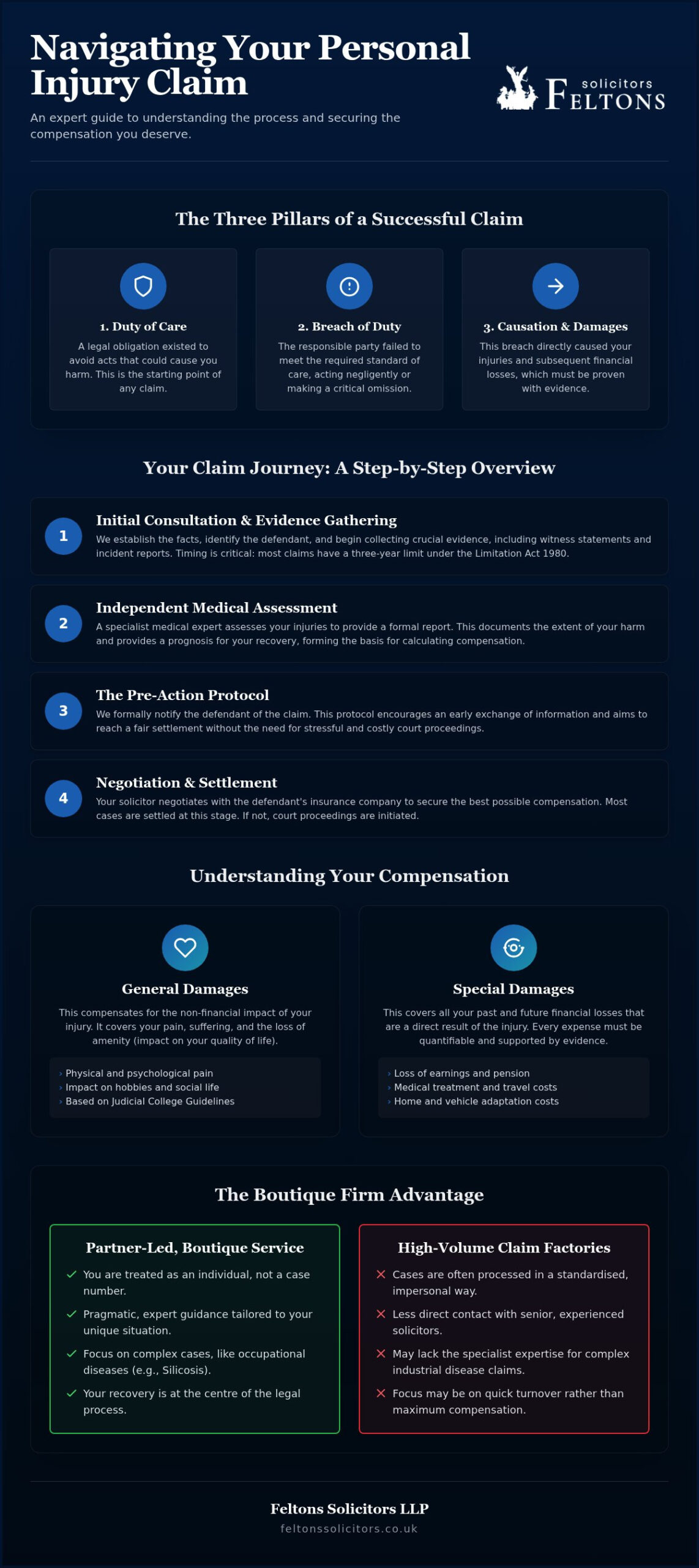
Personal injury law serves as a vital safeguard within the UK legal system, ensuring that individuals who suffer harm due to another’s negligence can seek redress. At its heart lies the concept of a “duty of care”. This is a legal obligation requiring individuals and organisations to act in a way that avoids causing foreseeable harm to others. When this duty is breached, personal injury solicitors step in to bridge the gap between a traumatic event and a sustainable recovery.
For those facing life-altering injuries, the support of a specialist isn’t a luxury; it’s a necessity. Insurance companies often employ sophisticated tactics to minimise payouts or expedite settlements before the full extent of an injury is known. A dedicated solicitor acts as a discreet shield, protecting your rights and ensuring that any settlement accounts for future rehabilitation needs. Understanding What is a Personal Injury Solicitor? helps clarify that their role extends far beyond paperwork; they’re expert advocates who navigate the tension between legal requirements and human recovery.
The Legal Basis for a Compensation Claim
To succeed in a claim, you must prove that a duty of care existed, that it was breached, and that this breach directly caused your injuries. This process is governed by the Pre-Action Protocol, a set of procedural rules designed to encourage the exchange of information and early settlement without the need for court proceedings. Expert personal injury solicitors will assess the merits of your case by examining medical evidence and witness statements, providing a pragmatic view on the strength of your claim from the outset.
Boutique Service vs High-Volume Claims Factories
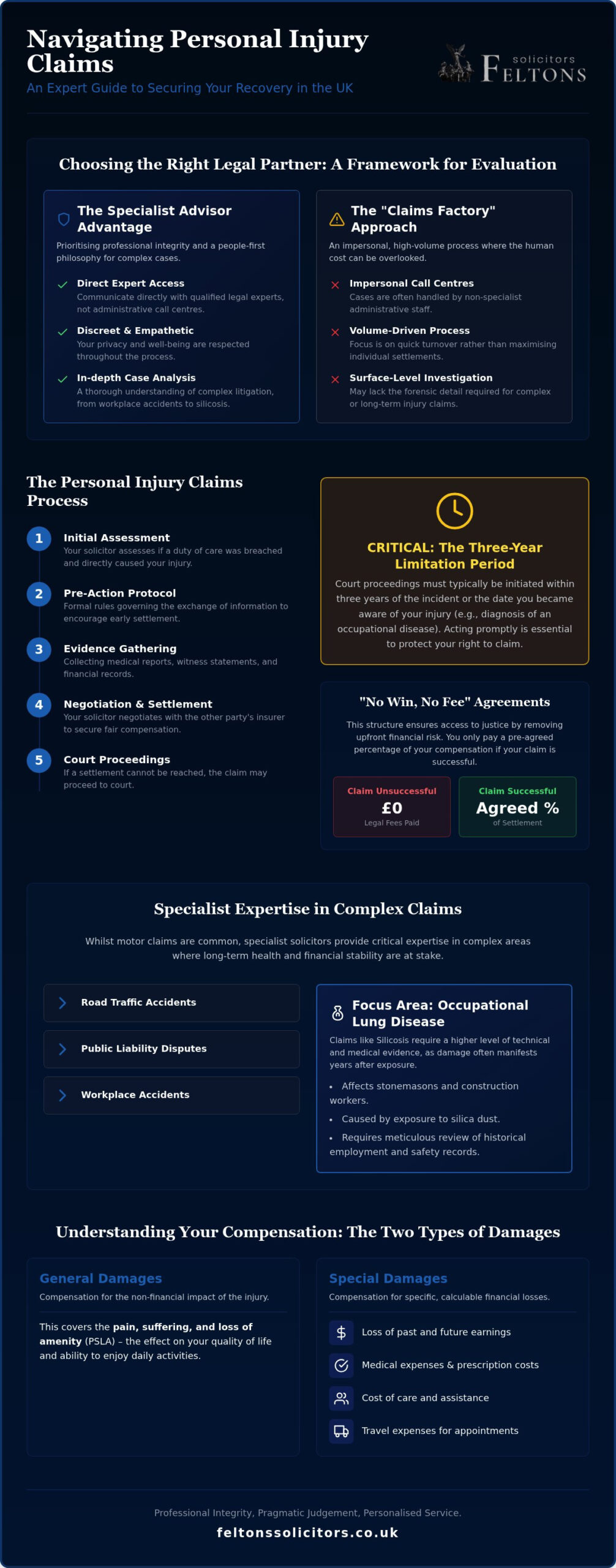
The rise of high-volume “claims factories” has led to an impersonal approach where cases are treated as numbers on a spreadsheet. In contrast, a boutique firm like Feltons Solicitors LLP prioritises a personal connection. Since our establishment in 2010, we’ve focused on a people-first philosophy that values traditional professional integrity alongside modern efficiency. This tailored approach offers several distinct advantages:
- Direct access to qualified legal experts rather than administrative call centres.
- Discreet and empathetic communication that respects your privacy.
- A thorough understanding of complex litigation, including specialist areas like silicosis claims.
Choosing a boutique partner ensures that the human impact of your injury remains the central focus of the litigation process. We believe that professional authority and empathetic reassurance shouldn’t be mutually exclusive.
Navigating Complex Claims: From Workplace Accidents to Silicosis
Personal injury claims cover a broad spectrum, ranging from road traffic incidents to public liability disputes. Whilst motor-related claims remain the most frequent, with 300,867 cases registered in the 2025/26 period, the legal landscape is shifting towards more intricate matters. Workplace accidents, particularly those involving long-term health implications, require a level of forensic detail that high-volume firms often overlook. Expert personal injury solicitors must look beyond the immediate event to consider the cumulative impact of an injury on a client’s life and livelihood.
Occupational lung disease litigation has become a critical area of focus in recent years. The law provides clear protections for workers exposed to hazardous substances, yet many remain vulnerable to outdated safety practices. Proving a breach of duty in these scenarios involves a meticulous review of historical employment records and safety protocols. It’s about establishing exactly where the failure occurred and how it could’ve been prevented through proper ventilation or protective equipment. This depth of investigation is what separates specialist support from generic legal services.
Specialist Expertise in Silicosis Claims
Identifying the symptoms of silica dust exposure, such as persistent coughing and progressive breathlessness, is often the first step in a long journey toward justice. Silicosis is a devastating condition that primarily affects stone masons and construction workers, particularly those working with engineered stone. These claims require a higher level of technical and medical evidence because the damage often manifests years after the initial exposure. Our team understands the nuances of these disputes and the emotional toll they take on families. For those who’ve lost a loved one to this condition, our silicosis claim after death guide offers a supportive framework for navigating the legal aftermath of a bereavement.
Serious and Catastrophic Injury Litigation
When an accident results in brain or spinal injuries, the litigation process becomes exponentially more complex. These high-value claims aren’t just about immediate pain; they’re about lifetime care, specialised equipment, and significant lost earnings. We frequently engage medical witnesses and forensic accountants to quantify the true, long-term cost of your recovery. Securing interim payments is a priority in these cases. These early funds allow you to access private rehabilitation and home modifications whilst the final settlement is still being negotiated. If you’re managing the aftermath of a serious incident, speaking with experienced personal injury solicitors can provide the pragmatic advice needed to secure your future.
Choosing the Right Legal Partner: A Framework for Evaluation
Selecting the right personal injury solicitors is a decision that impacts both the legal outcome of your case and your emotional well-being throughout the process. It’s essential to distinguish between a boutique law firm and a claims management company. Whilst a management company often acts as a high-volume intermediary, a specialist firm provides direct access to qualified legal experts who handle your case from instruction to settlement. Look for practitioners who demonstrate a blend of experience, empathy, and pragmatic judgement. Accreditation from the Association of Personal Injury Lawyers (APIL) serves as a vital benchmark, indicating a commitment to the highest standards of victim representation and ongoing professional development.
Questions to Ask During Your Initial Consultation
Preparation is key to ensuring a solicitor aligns with your specific needs. During your first meeting, focus on the practicalities of your representation rather than just the potential settlement figure. Ask specifically: “Who will actually be handling my day-to-day case work?” In high-volume firms, your file might be passed amongst junior clerks; in a boutique environment, you should expect a senior advisor to lead the process. Inquire about their direct experience with your specific injury or occupational illness, especially for complex matters like silicosis. Finally, confirm how they organise their communication. You deserve a partner who provides regular, jargon-free updates rather than one who leaves you waiting for news.
Understanding the Financial Side of Your Claim
Financial anxiety shouldn’t prevent you from seeking justice. Most personal injury solicitors operate on a “No Win No Fee” basis, formally known as a Conditional Fee Agreement (CFA). This structure effectively eliminates upfront financial risk. If the claim is unsuccessful, you don’t pay your solicitor’s fees. To provide total security, your solicitor will often arrange After the Event (ATE) insurance. This policy protects you against the risk of having to pay the defendant’s legal costs or disbursements, such as court fees and medical report costs, if the case doesn’t succeed.
Transparency regarding success fees is paramount for building trust. As of 2026, the success fee a solicitor can deduct from your compensation is capped at 25% of the damages awarded for pain, suffering, and past financial losses. It’s important to understand that this cap doesn’t apply to compensation for future losses, such as long-term care or future loss of earnings. A trusted advisor will provide a clear, written breakdown of these costs at the outset. This methodical approach ensures there are no hidden surprises, allowing you to focus on your recovery whilst your legal team manages the technical complexities of the litigation.
The Personal Injury Claims Process: A Step-by-Step Framework
The journey toward compensation is governed by strict procedural milestones designed to ensure fairness for all parties. Time is a critical factor. For most UK claims, the law imposes a three-year limitation period from the date of the accident or the date you first became aware of your injury. Missing this window usually prevents any legal action, so seeking advice early is paramount. Once you instruct personal injury solicitors, the process begins with a thorough initial assessment to establish the merits of your case and formalise the “No Win No Fee” agreement.
Following the initial instruction, your legal team moves into the evidence-gathering phase. This involves securing medical records, taking witness statements, and, where necessary, obtaining police reports. Once a robust case is built, a formal Letter of Claim is sent to the defendant. They typically have a fixed period of up to three months to investigate and respond regarding liability. This stage determines whether the case moves toward a negotiated settlement or requires more formal litigation to resolve disputes over who was at fault.
The Critical Importance of Evidence
Success in personal injury litigation relies on the quality of the documentation provided. It’s essential to record every detail of how the injury has affected your daily life. This includes keeping a diary of symptoms and a folder of receipts for “Special Damages”. These are the quantifiable financial losses you’ve incurred, such as:
- Travel expenses to and from medical appointments.
- The cost of private physiotherapy or specialist rehabilitation.
- Loss of earnings, including future pension contributions.
- Care and assistance provided by family members.
Independent medical experts play a pivotal role here. They provide the objective valuations that solicitors use to calculate “General Damages”, which compensate for your pain, suffering, and loss of amenity.
Will My Case Go to Court?
The prospect of a court hearing often causes significant anxiety for claimants. However, the vast majority of personal injury cases are settled through negotiation or Alternative Dispute Resolution (ADR) before they ever reach a courtroom. Modern litigation is designed to encourage early settlement, as this reduces costs and provides a faster resolution for the injured party. If a settlement cannot be reached, your solicitor will handle all the technical preparations for a hearing, ensuring you feel supported and fully briefed at every stage. If you’re ready to begin this process with a trusted advisor, contact our personal injury solicitors to discuss your next steps.
Securing Your Future: Pragmatic Settlements and Long-term Recovery
The resolution of a claim is not merely the end of a legal process; it’s the commencement of your long-term recovery. The central tenet of personal injury law is the principle of restitutio in integrum, which involves placing you back in the position you would’ve enjoyed had the accident never occurred. Whilst no amount of money can undo a physical injury, a carefully structured settlement provides the financial foundation for a dignified life. Experienced personal injury solicitors focus on pragmatic outcomes rather than merely chasing unrealistic figures that may lead to protracted and risky court battles.
Pragmatic advice is often the most valuable asset a solicitor can provide at this stage. Some firms might focus on inflated settlement estimates to secure instructions, but a trusted advisor prioritises a realistic assessment. This ensures your immediate needs and future security are met without unnecessary risk. This balanced approach allows you to move forward with a settlement that is both fair and sustainable, providing the peace of mind you need to focus on rehabilitation.
Calculating the Real Value of Your Claim
Valuing a case involves a detailed analysis of two distinct categories of damages. General Damages compensate for non-financial impacts, specifically pain, suffering, and loss of amenity (PSLA). This assessment is based on medical evidence and judicial guidelines to reflect the severity of the injury. Special Damages, however, address the quantifiable financial losses. Personal injury solicitors must meticulously account for several factors:
- Past and future loss of earnings, including lost pension contributions and promotion prospects.
- The cost of “gratuitous care” provided by family members during your recovery.
- Loss of ability to perform household tasks, such as gardening or DIY, which may now require paid assistance.
- Travel expenses and the cost of specialised medical equipment or home modifications.
In serious cases, the calculation of future losses is influenced by the Ogden Discount Rate, which was adjusted to +0.5% in January 2025. This change impacts how lump-sum payments are structured to ensure they last a lifetime, making expert legal guidance more critical than ever.
A Holistic Approach to Legal Care
A successful settlement often brings new responsibilities, particularly regarding the management of significant funds. It’s often vital for claimants to consider expert estate planning to protect their compensation for the long term. This might involve the creation of a Personal Injury Trust, which can help ring-fence settlement funds so they don’t affect your eligibility for means-tested benefits.
At Feltons, we view our role as more than just litigation. We provide a steady, reassuring presence, ensuring that your legal strategy aligns with your broader life goals. By integrating technical legal skill with a people-first philosophy, we help you secure a future that is defined by your resilience rather than your injury. Our commitment to discreet, high-standard service ensures that you’re supported every step of the way.
Restoring Your Quality of Life through Expert Advocacy
Navigating the aftermath of a serious injury requires more than just technical legal knowledge; it demands a partnership built on trust and professional integrity. We’ve explored how specialist personal injury solicitors provide the essential expertise necessary for complex litigation, particularly in niche areas like silicosis and occupational disease. By choosing a boutique firm, you ensure that your recovery is managed with a “people-first” philosophy, where pragmatic advice takes precedence over the impersonal approach of high-volume claims firms. Understanding the nuances of the claims process allows you to approach your future with a sense of security and control.
Our team offers a steady, reassuring presence to guide you through every stage of your claim. As specialist silicosis litigation experts, we provide a partner-led boutique service that prioritises your privacy and long-term well-being. We’re committed to delivering pragmatic, jargon-free legal advice tailored to your specific circumstances and recovery goals. Please contact Feltons Solicitors for a discreet consultation on your personal injury claim. Your journey toward a sustainable recovery begins with a single, confident step toward securing the support you deserve.
Frequently Asked Questions
What is the time limit for making a personal injury claim in the UK?
The standard limitation period for starting a claim is three years from the date of the accident. If your injury or illness developed over time, such as silicosis, this three-year window begins from the “date of knowledge” when you first realised your condition was linked to your work. It’s vital to seek legal advice early to ensure all evidence is preserved and your right to seek redress is protected.
How much will it cost me to hire a personal injury solicitor?
Most personal injury solicitors operate on a “No Win No Fee” basis, meaning there are no upfront costs to pay. If your claim is successful, your solicitor will deduct a success fee from your compensation. By law, this is capped at 25% of the damages awarded for your pain, suffering, and past financial losses. If the claim doesn’t succeed, you generally won’t owe any legal fees to your solicitor.
Can I claim compensation if the accident was partly my fault?
Yes, you can still pursue a claim even if you were partially responsible for the incident. This is known as “contributory negligence”. In these cases, the court or insurance company will assign a percentage of fault to each party. Your final compensation award will then be reduced by that same percentage. For example, if you were 25% at fault, you’d receive 75% of the total damages calculated for your claim.
How long does a typical personal injury claim take to settle?
The duration of a claim depends heavily on its complexity and whether the defendant admits liability. Straightforward road traffic claims might settle within nine to twelve months. However, complex litigation involving serious injuries or occupational lung diseases can take significantly longer, often between eighteen months and three years. This extra time ensures that the full long-term impact of your injury is medically understood before a final settlement is reached.
What is the difference between a solicitor and a claims management company?
A solicitor is a qualified legal professional regulated by the Solicitors Regulation Authority (SRA) who handles your case directly. In contrast, a claims management company (CMC) often acts as a middleman, gathering your details and selling them as a “lead” to a law firm. Choosing personal injury solicitors ensures you receive specialist, partner-led advice from the outset rather than being processed through a high-volume call centre or an impersonal administrative system.
Will I have to attend a medical examination as part of my claim?
Yes, attending an independent medical examination is a standard requirement for valuing your claim. Your solicitor will arrange an appointment with a specialist who will review your medical records and assess the physical or psychological impact of your injury. The resulting report serves as the primary evidence for calculating “General Damages”, which compensate you for your pain, suffering, and the loss of amenity you’ve experienced since the accident.
Can I switch solicitors if I am unhappy with my current legal representation?
You have the absolute right to change your legal representation at any point if you feel your current solicitor isn’t providing the level of service you expect. This is a straightforward process where your new firm will request your file from your previous representative. If you’re frustrated by a lack of communication or feel your case is being handled by an impersonal “claims factory”, switching to a boutique firm can provide the personal attention you need.
What happens to my compensation if I am receiving state benefits?
Receiving a lump-sum compensation payment can affect your eligibility for means-tested state benefits. To prevent this, your solicitor can help you set up a Personal Injury Trust. By placing your settlement funds into a trust, the money is “ring-fenced” and disregarded by the Department for Work and Pensions (DWP) when assessing your capital. This ensures you can use your compensation for rehabilitation and future needs whilst still receiving the state support you’re entitled to.