
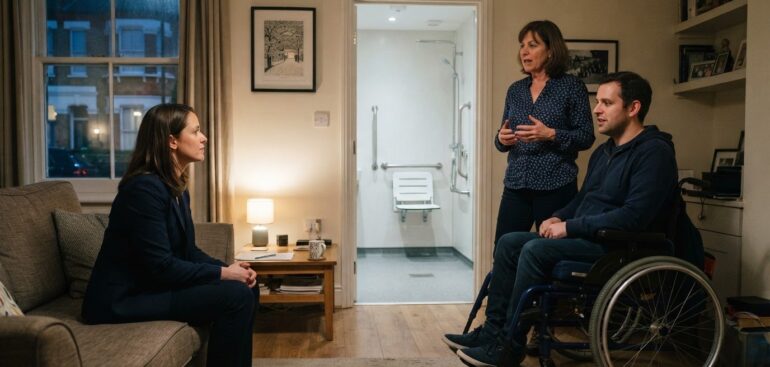
Multi-million-pound brain injury claims reflect the cost of lifelong support, not just compensation for the injury itself. Catastrophic brain injury compensation lawyers assess how these needs may shape a claim over a lifetime.
If you’re facing the consequences of a severe brain injury, the financial and practical questions can feel overwhelming. The value depends on the injury’s effects, the support required and the losses that can be evidenced, rather than a single standard figure.
This article explains how claims can reach multi-million-pound settlements and what compensation may cover, from ongoing care and rehabilitation to adapted accommodation and lost earnings. It also explains how evidence and legal representation can help build a claim, including when someone cannot manage the case themselves.
Key Takeaways
- According to UK Parliament, the limitation period does not run for a brain injury claimant who lacks mental capacity under the Mental Capacity Act 2005.
- Multi-million-pound awards can reflect lifelong care, rehabilitation and accommodation needs, not just compensation for the injury itself.
- A brain injury caused by delayed diagnosis or treatment can lead to substantial compensation where the evidence connects the delay to lasting harm and support needs.
- Medical, care and financial evidence helps show the full impact of an injury; early legal advice can help preserve evidence and explore interim payments.
Claims made on behalf of someone lacking mental capacity
A severe brain injury can affect a person’s ability to understand or conduct an injury claim. A representative can take steps to protect their interests and pursue compensation.
A claim may be brought for a child or someone who lacks mental capacity. Under CPR Part 21, a litigation friend conducts the case on the claimant’s behalf. They make decisions for the proceedings and act in the claimant’s best interests. In practice, this can include gathering medical evidence, considering settlement proposals and communicating with the legal team.
Rules can differ between Scotland, Northern Ireland and England and Wales. The time limits set out below concern England and Wales and should not automatically be applied elsewhere.
Damages and funding for brain injury claims
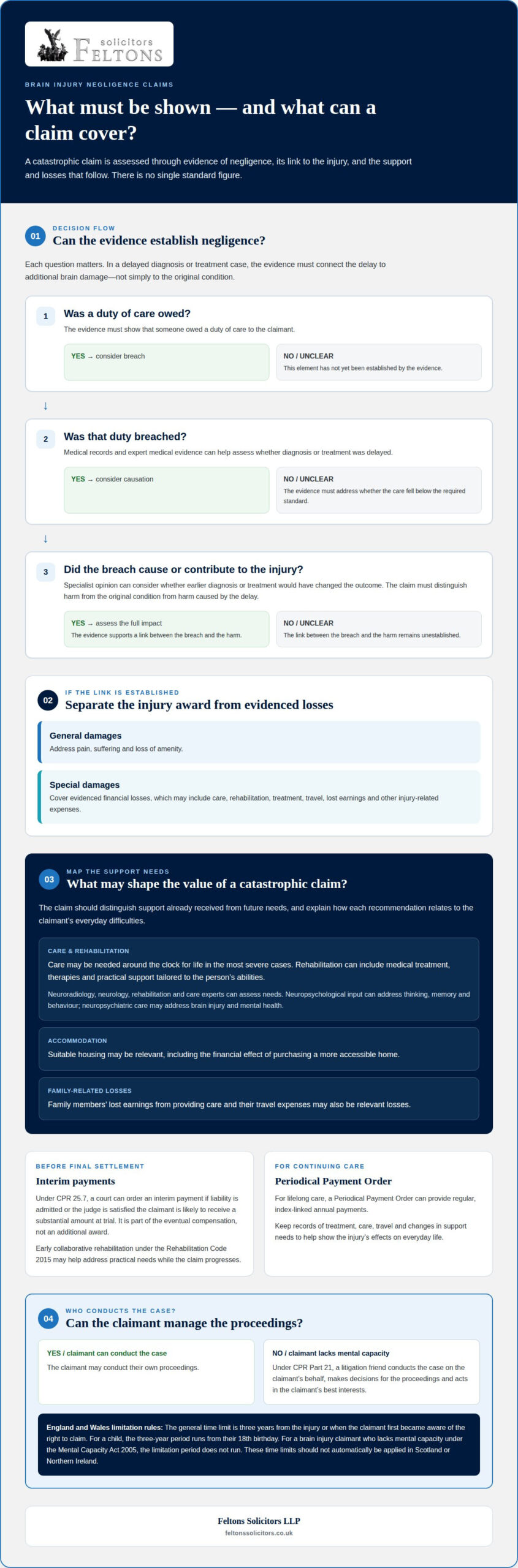
General damages address pain, suffering and loss of amenity. Special damages cover evidenced financial losses, such as care costs, rehabilitation, lost earnings and accommodation needs. In a catastrophic injury claim, the evidence should explain both the effects already experienced and the support likely to be needed in future.
A Conditional Fee Agreement, often called no win no fee, means the claimant pays nothing if the claim is unsuccessful. Before proceeding, understand the agreement’s terms and how it deals with costs if the claim succeeds.
Proving and progressing a negligence claim
To prove negligence and liability, the evidence must show that someone owed a duty of care, breached it, and caused or contributed to the injury. In a clinical negligence claim, records and expert medical evidence can help assess whether delayed diagnosis or treatment caused additional brain damage. The link between the breach and the harm must be established.
In England and Wales, the general time limit is three years from the injury or when the claimant first became aware of the right to claim, according to UK Parliament. UK Parliament also states that this limitation period does not run for a brain injury claimant who lacks mental capacity under the Mental Capacity Act 2005. For a child, the three-year period runs from their 18th birthday.
There is no single timetable for a catastrophic brain injury claim. The medical prognosis, disputed liability, amount of evidence required and time needed to assess future care can all affect progress. Future needs should be considered before settlement.
Compensation for care, rehabilitation and accommodation
A catastrophic traumatic brain injury can create ongoing medical, practical and financial needs. Compensation may reflect its effects on daily life, work and suitable housing.
Care and rehabilitation compensation
General damages address pain, suffering and loss of amenity. Special damages can cover evidenced lost earnings, treatment, care, travel and other expenses caused by the injury. A claim should distinguish support already received from future needs, using care records and specialist assessments to explain the difference.
Rehabilitation may involve medical treatment, therapies and practical support tailored to the person’s abilities. Neuroradiology, neurology, rehabilitation and care experts can help assess needs. Neuropsychological input can address thinking, memory and behaviour, while neuropsychiatric care may address the interaction between brain injury and mental health. The evidence should link each recommendation to the claimant’s daily difficulties.
For the most severe injuries, care may be needed around the clock for life. A claim can also account for suitable accommodation, including the financial effect of purchasing a more accessible home. Family members’ lost earnings from providing care and their travel expenses may also be relevant losses.
Interim payments and early support
Interim payments can provide funds before final settlement for immediate treatment or rehabilitation needs. Under CPR 25.7, a court can order an interim payment if liability is admitted or the judge is satisfied the claimant is likely to receive a substantial amount at trial. The payment is part of the eventual compensation, not an additional award.
Early collaborative rehabilitation may be pursued under the Rehabilitation Code 2015. This can help address practical needs while the claim progresses, rather than waiting for every future loss to be assessed. Keep records of treatment, care provided, travel and changes in support needs; these details help show how the injury affects everyday life.
For lifelong care, a Periodical Payment Order can provide regular, index-linked annual payments. This can fund continuing care over time, while evidence about accommodation, rehabilitation and specialist support helps shape the settlement.
Acquired brain injury caused by delayed diagnosis or treatment
A catastrophic brain injury claim centres on severe, lasting effects on a person’s ability to live independently. Permanent disability and full dependence on care can make future support needs central to assessing compensation.
Delayed diagnosis or treatment may cause additional brain damage, even when an infection or other condition began the injury. The case shows how medical negligence claims can reflect lifelong consequences.
To establish liability, evidence must link the treatment failure to the additional injury and its effects. Medical records can show when symptoms appeared, what investigations took place and when treatment began. Specialist opinion can help assess whether earlier diagnosis or treatment would have changed the outcome. The claim must distinguish harm caused by the original condition from harm caused by the delay.
A traumatic brain injury can follow an accident, such as a road collision or fall. The nature and effects vary: severe traumatic brain injury is described as involving loss of consciousness for more than 6 hours and a Glasgow Coma Scale score of 3 to 8. Moderate injury is described as involving unconsciousness between 30 minutes and 24 hours, with a score of 9 to 12.
Concussion is a form of traumatic brain injury. The provided clinical descriptions characterise mild traumatic brain injury as loss of consciousness for 30 minutes or less. Ongoing effects can include problems with concentration and memory, fatigue, or personality changes. These effects matter when evidence explains recovery, work capacity and support needs.
No single symptom or test determines whether an injury qualifies as catastrophic. The claim focuses on the combined evidence of lasting impairment, dependence, rehabilitation needs and effects on everyday life. Medical records, expert assessments and care evidence help establish the full picture.
Brain injury solicitor services and legal advice
After a severe brain injury, legal work must address responsibility and the claimant’s changing needs. Catastrophic brain injury compensation lawyers can coordinate evidence, assess liability and progress the claim alongside rehabilitation.
Choosing a specialist brain injury solicitor
Look for injury solicitors experienced in serious brain injury claims, disputed negligence and long-term effects on daily function. The case may require medical, rehabilitation and care evidence, alongside employment and financial records. Ask how the legal team will build the claim, involve the injured person or litigation friend, and assess settlement proposals against the claimant’s needs.
For families comparing catastrophic brain injury compensation lawyers, clear explanations matter. A person with impaired memory, for example, may need information adapted to their ability to understand and participate. The solicitor should explain who makes decisions during the case and how the claimant’s interests are represented.
Steps after injury caused by negligence
Prioritise treatment, then keep hospital records, scans and rehabilitation notes. Record how the injury affects communication, mobility, memory and daily tasks. Preserve accident reports, witness details, care records, employment information and receipts. Together, these documents can help establish what happened and how the claimant was harmed.
In a clinical negligence case, medical records and specialist opinion can help assess whether a treatment failure caused additional injury. Solicitors can organise evidence, identify disputed issues and consider whether an interim payment is appropriate during the claim.
Under CPR 25.7, a court can order an interim payment where liability is admitted or the judge considers a substantial award likely at trial. Evidence must support the application and explain the claimant’s current needs.
Early legal advice can help preserve evidence while care continues. If negligence may have caused a brain injury, discuss a personal injury claim and the steps needed to assess liability and losses.
Feltons Solicitors LLP: Divorce and Financial Arrangements
Feltons Solicitors LLP provides Personal Injury and Silicosis Claims services for people seeking compensation after an injury. If a traumatic brain injury may have resulted from negligence, the firm can help assess the claim, the evidence needed to establish responsibility and the losses to consider.
Legal guidance can help when the injured person or their family needs support progressing a claim, including presenting lasting effects on daily life and future support needs. The medical, care and financial evidence described above can be organised into a clear account of the injury’s impact.
Contact Feltons Solicitors LLP to discuss a personal injury claim and the circumstances of the brain injury.
Take the next step with clear advice
The next step is to discuss how the injury has changed everyday life and what evidence could explain its impact. Catastrophic brain injury compensation lawyers can help families understand the legal process while keeping the injured person’s needs at its centre.
Feltons Solicitors LLP also offers Divorce and Financial Arrangements, Wills, Probate, and Estate Planning, and Residential and Commercial Conveyancing. These services may be relevant where an injury prompts wider family, estate or housing decisions. For advice about a potential personal injury claim, contact Feltons Solicitors LLP to discuss the circumstances and possible next steps.
Taking that first step can bring structure to difficult decisions, helping you and your family move forward with greater clarity.
Frequently Asked Questions
How do some brain damage claims end up settling for multi-million-pound sums?
Multi-million-pound settlements can reflect the cost of extensive support over a claimant’s lifetime. For example, someone unable to live independently may need continuing care, specialist treatment, adapted accommodation and help with daily activities. The claim’s value also considers financial losses, such as reduced earning ability. Each element needs evidence linking it to the injury and explaining its likely duration and practical impact.
How am I going to pay for long-term care?
Long-term care may be funded through compensation, including a Periodical Payment Order providing regular, index-linked annual payments for lifelong care. An interim payment may help meet eligible needs before settlement, subject to the legal test for an order. A care assessment can outline the required support, such as help with personal care, mobility or supervision, and inform how future provision is funded.
When capacity is affected, who actually runs the claim?
A litigation friend conducts the legal proceedings for a claimant who lacks capacity to make decisions about the case, under CPR Part 21. This may be a relative or another suitable person, but the role is to act in the claimant’s interests, not to pursue the representative’s own preferences. The litigation friend works with the legal team and considers decisions such as evidence, settlement and the claimant’s needs.
Will I have to give evidence in court?
Not every brain injury claim reaches trial, so a claimant does not automatically have to give evidence in court. If the case proceeds to a hearing, the court may hear from the claimant, witnesses and experts. The evidence needed depends on disputed issues, such as how the injury happened, its effects or the future care required. A litigation friend may act where the claimant lacks capacity.
How much compensation can you receive for a catastrophic brain injury in the UK?
There is no single fixed award for a catastrophic brain injury. This covers general damages only. Special damages for care, rehabilitation, accommodation, lost earnings and other evidenced losses can substantially increase the overall claim.
How are brain injury compensation damages calculated, including future care and lost earnings?
Damages combine general damages for pain, suffering and loss of amenity with special damages for financial losses caused by the injury. Future care calculations consider the claimant’s assessed support needs and how long they are expected to continue. Lost earnings depend on the effect on work and likely income. Medical, employment and care evidence helps explain these calculations and distinguish past losses from future needs.