

What if the person checking your equity release paperwork isn’t the person advising whether the plan is financially right for you? If you’re comparing equity release legal advice solicitors, it’s understandable to want clear answers about long-term costs, your partner’s position and what may remain in your estate.
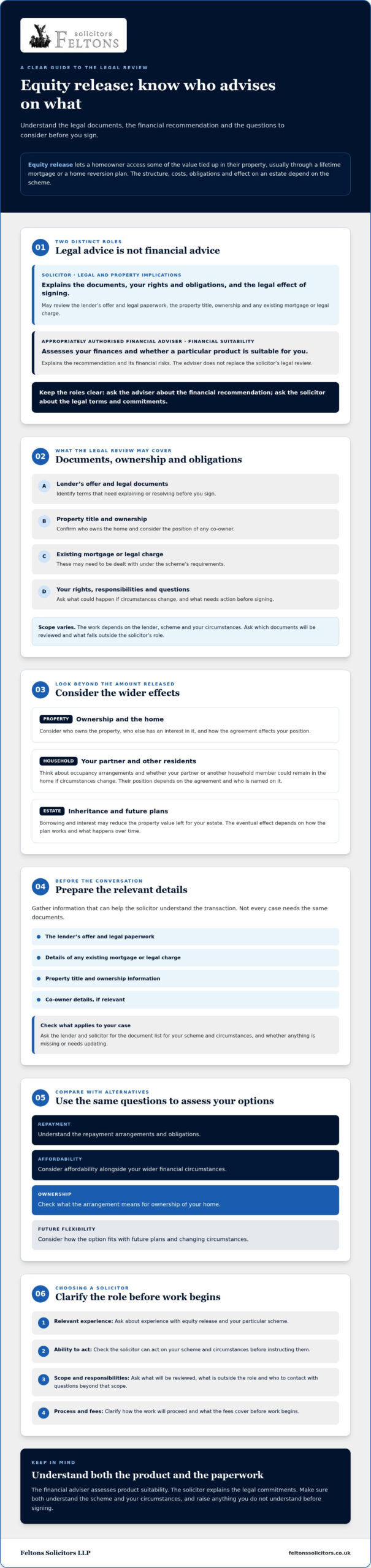
Legal advice and regulated financial advice have different purposes. A solicitor can explain the legal documents and property implications, while an appropriately authorised financial adviser assesses the financial product and its suitability for you. Understanding the distinction can help you make a considered decision and know who to ask when questions arise.
This guide explains what a solicitor may review, what to ask and which details to prepare before a conversation. It also considers how equity release could affect family members and estate plans. Feltons Solicitors LLP provides property and estate-planning legal services. An enquiry can help establish whether the firm is able to assist with your circumstances.
Key Takeaways
- Equity release legal advice solicitors review a plan’s legal and property implications, but don’t recommend which financial product is right for you.
- Ask how the agreement could affect ownership, your partner and your estate. The details depend on your circumstances and the scheme terms.
- Compare equity release with alternatives by considering repayment, affordability, ownership and future flexibility.
- Prepare information about your property and proposed scheme, then clarify the solicitor’s role, process, responsibilities and fees before work begins.
- Check that the solicitor has relevant experience and can act on your particular scheme and circumstances before instructing them.
Equity release legal advice: what a solicitor does before you commit
Equity release lets a homeowner access some of the value tied up in their property, usually through a product such as a lifetime mortgage or a home reversion plan. The structure, costs, obligations and effect on your estate depend on the scheme. The Equity release overview offers background on different forms and risks, but your own documents need to be considered in context.
In brief: a solicitor explains the legal effect of the documents and your obligations. A regulated financial adviser assesses and recommends a suitable financial product. Keeping these roles distinct helps you understand both what you’re agreeing to and why the proposed plan may or may not fit your financial circumstances.
What does an equity release solicitor check?
A solicitor’s review may cover the lender’s offer and legal documents, the property title and who owns the home. They can identify terms or details that need explaining or resolving before you sign. For example, an existing mortgage or legal charge may need to be dealt with under the scheme’s requirements. If someone else owns the property with you, their interest and position may also need consideration.
The work depends on the lender, the scheme and your circumstances. Ask which documents the solicitor will review, what is outside their scope and what happens if something needs clarification. Their role is to help you understand the legal commitments, not to tell you which product to choose.
How legal advice differs from financial advice
Legal advice and financial advice answer different questions. An appropriately authorised financial adviser considers your finances and whether a particular product is suitable, then explains the recommendation and its financial risks. The solicitor focuses on the legal documents, your rights and obligations, and whether you understand the legal effect of signing.
An independent legal review matters because lender documents may create binding commitments. Before signing, raise anything you don’t understand, including what could happen if your circumstances change, how the arrangement affects a co-owner and what it may mean for your estate. Don’t assume one professional’s advice covers the other’s role.
- Ask the adviser to explain the financial recommendation and its risks.
- Ask the solicitor to explain the legal terms, obligations and any points requiring action.
- Check that both professionals understand the scheme and your circumstances. Ask who to contact with questions outside their remit.
Choosing between equity release legal advice solicitors is about more than finding someone to process paperwork. Look for a clear explanation of scope and responsibilities, and confirm the solicitor can act on your specific scheme before instructing them.
What legal risks and documents should equity release solicitors review?
Financial advice doesn’t replace an independent legal review. The adviser considers the financial product and its suitability; the solicitor examines the legal documents and explains the obligations they create. The role of an equity release solicitor includes helping you understand the legal commitment before you sign. The work and possible consequences depend on the contract, scheme terms and your household circumstances.
Read the documents with your own plans in mind, not just the amount you could release. Borrowing and interest may reduce the property value left for your estate, but the eventual effect depends on how the plan works and what happens over time. If you share your home, consider whether your partner or another household member could remain there if circumstances change. Their position depends on the agreement and who is named on it, so ask the solicitor to explain the relevant terms.
Which documents and details may the solicitor need?
To help the solicitor understand the transaction, gather the lender’s offer and legal paperwork, details of any existing mortgage or legal charge, and information about property ownership. Title details and co-owner information may also be relevant. Not every case needs the same documents. Ask the lender and solicitor for the list that applies to your scheme and circumstances, and check whether anything is missing or needs updating.
Consider your partner, estate and future plans
Think through your occupancy arrangements, inheritance wishes and the needs of anyone who lives with you. Ask what the contract says if you move home or your living arrangements change, and whether your partner’s position is affected. Equity release legal advice solicitors can explain the legal effect of the documents, but they don’t determine whether the financial arrangement is suitable for you.
Before signing, understand exactly what events trigger repayment. The timing and consequences depend on the agreement. Ask the solicitor to explain relevant triggers in plain English, including what happens if the home is sold or the borrower’s circumstances change, where those situations are covered by the contract.
Tax, means-tested benefits and care-fee treatment depend on individual circumstances and current rules. Don’t rely on general information to predict the result; seek appropriate specialist advice before making a decision. If your decision raises wider property or estate-planning questions, you can enquire about property and estate-planning legal services and confirm whether the firm can assist with your circumstances.
Compare equity release with alternatives before choosing a solicitor
Equity release is one way to access money tied up in your home, but it isn’t the only option to explore. Downsizing, another type of loan, using savings or investments, or receiving family support may raise different questions about ownership, repayment, affordability and future plans. None is suitable for everyone. What’s available and appropriate depends on your circumstances and current product terms.
Discuss financial suitability and affordability with an appropriately authorised financial adviser. A solicitor can explain the legal implications of a proposed arrangement, including how it affects the property and the people connected to it. Comparing options first can help you identify the right questions for both professionals.
Compare the questions each option raises
| Option | Questions to consider |
|---|---|
| Equity release | How does interest build, when is repayment due, and what do the terms say about moving home or changes in circumstances? |
| Downsizing | Would selling and buying a different property suit your housing needs, and what would happen to ownership and the proceeds? |
| Other borrowing | Can repayments remain affordable, what security is required, and how flexible are the repayment and early repayment terms? |
| Savings, investments or family support | What assets could be used without undermining other plans? If a relative helps, is the arrangement a gift or a loan, and should it be recorded clearly? |
This is a starting point, not a recommendation. Discuss family support openly with everyone involved and consider recording any agreed terms. The right approach depends on individual finances, property needs and family relationships.
Questions to resolve before deciding
Ask the adviser to explain how interest, repayments and any early repayment charges work under the specific offer. Ask the solicitor to clarify the legal terms and any obligations that could affect your plans. Check what the contract says if you move, your circumstances change or a borrower enters long-term care. Don’t assume the same outcome applies across all schemes.
Write down unanswered questions and take them to the relevant professional. Keep financial suitability questions for your adviser and legal-document questions for your solicitor. Ask each to clarify where their role ends. Comparing options before selecting equity release legal advice solicitors can help you focus on the expertise you need, rather than treating the choice of solicitor as a decision about which financial route to take.
How to prepare for an equity release solicitor consultation
A little preparation can make your first conversation more focused. You don’t need every document ready, but a clear picture of the proposed plan, your property and your priorities can help the solicitor identify what needs checking. Be open about relevant household and estate-planning circumstances, including details that may feel personal. They can affect which questions need to be considered.
Gather information and agree the next steps
- 1. Collect the paperwork. Bring any proposed plan documents or lender correspondence, property ownership and title information, and details of an existing mortgage or other charge, if applicable. Ask the lender and solicitor which documents they need for your case.
- 2. Note your circumstances and questions. Record who lives in the property, whether there are co-owners or dependants, and any concerns about a partner’s housing position or your inheritance intentions. Consider possible future changes, such as moving home.
- 3. Bring relevant estate-planning papers. If you have a will or other documents that may relate to your plans, ask whether they would help the solicitor understand your concerns. Don’t assume they’ll all be required.
- 4. Clarify the retainer before instructing. Ask what legal work is included, what falls outside the scope, who will handle the matter, how you’ll receive updates and what the next steps are.
- 5. Confirm fees and process. Request clear information about fees and how any additional work would be discussed. Check your understanding before agreeing to proceed.
Questions to ask your solicitor
Use the conversation to establish practical expectations, not just whether the firm can review documents. Ask: “Which parts of the proposed arrangement will you examine?”, “What issues might require further information?” and “Who should I contact if I have a question about financial suitability?” A solicitor should explain the boundaries of their role, the process they propose and how they’ll raise matters that need your decision.
Timing and required steps vary according to the lender, transaction and your circumstances. Ask what sequence to expect and whether anything is needed from you before the review can progress. Don’t instruct a firm before you understand its scope and fees. If you’re considering equity release legal advice solicitors and have wider property or estate-planning questions, you can enquire with Feltons Solicitors LLP to establish whether the firm can assist with your circumstances.
Choosing equity release legal advice solicitors and taking the next step
A suitable solicitor should make the legal process clear, explain what they will review and give you space to raise concerns. Before instructing anyone, confirm they can act on the lender’s scheme and your particular circumstances. Experience with property and private client matters can be relevant, but ask specifically about the documents and requirements involved in your proposed transaction.
How to assess a solicitor’s suitability
Use your first conversation to check the fit rather than assuming a general property background covers every equity release arrangement. Ask whether the solicitor has experience with the relevant lender, scheme documents and transaction requirements, and what they would do if the paperwork raises an issue. Their role should be independent of the financial product recommendation. Ask how they’ll explain the legal obligations and check your understanding.
- Relevant experience: Can they act on this scheme and explain the legal review it requires?
- Clear scope: Which documents and issues are included, and what falls outside the work?
- Communication: Who will handle your matter, how will updates be provided, and how can you raise questions?
- Transparent fees: What will you be charged, and how will any additional work be discussed?
- Your circumstances: Will the review take account of ownership, co-owners, household arrangements and your stated concerns?
Equity release legal advice solicitors should explain the legal position in language you understand, without presenting their review as a recommendation about financial suitability. If anything remains unclear, ask for an explanation before you sign or agree to proceed.
What to expect when you contact Feltons Solicitors LLP
Feltons Solicitors LLP provides private client and property legal services, including wills, probate, estate planning and residential conveyancing. The firm’s information does not confirm a specialist equity release service. An enquiry is a practical way to establish whether the firm currently accepts this type of matter, can act on your scheme and circumstances, and what the scope of any advice could be.
If your questions connect with wider inheritance planning, you may find the estate planning guide helpful. For questions about property ownership and transactions, see the residential property law guide. These resources provide background, but they don’t replace advice on your specific documents and circumstances.
To establish whether the firm can assist and discuss an appropriate next step, contact Feltons Solicitors LLP to discuss your circumstances. You can ask about availability, the applicable jurisdiction, the proposed scope of work and fees before deciding whether to instruct.
Take a considered next step
Choosing equity release legal advice solicitors means checking that the legal review is distinct from financial product advice, that the solicitor can act on your particular scheme, and that the documents and obligations are explained in language you understand. Weigh alternatives and consider how the decision may affect your household and estate plans before committing.
Feltons Solicitors LLP provides property law and conveyancing services alongside private client services, including wills and estate planning. The firm’s information doesn’t confirm whether it currently accepts equity release matters, so check availability, scope and whether it can assist with your circumstances before instructing.
Contact Feltons Solicitors to ask whether the firm can assist with your circumstances.
Frequently Asked Questions
What does an equity release solicitor do?
An equity release solicitor reviews the transaction’s legal paperwork and explains the obligations, risks and steps relevant to your case. They may check title ownership, co-owners, any existing mortgage and whether lender requirements appear to have been met. Their role isn’t to recommend a financial product. Ask which documents they’ll review, what falls outside their agreed scope and whether they can act on your particular scheme.
Do I need a solicitor for equity release?
Equity release transactions commonly involve legal work, but the process and requirements depend on the lender, product and your circumstances. A solicitor can explain the documents and commitments so you can understand them before signing. Ask the lender and solicitor to confirm the steps required for your case. Legal advice doesn’t replace regulated financial advice about whether a product is suitable for you.
Can an equity release solicitor give financial advice?
A solicitor’s legal advice is separate from a regulated recommendation about whether an equity release product suits you. Within the agreed scope, the solicitor can explain legal documents, obligations and relevant transaction steps. For product recommendations and financial suitability, speak to an appropriately authorised financial adviser. If you’re unsure who should answer a particular question, ask both professionals to explain their responsibilities before you proceed.
What should I ask an equity release solicitor before instructing them?
Ask whether they can act on your specific scheme, what the legal work includes and who will handle your matter. Clarify the expected steps, how updates will be given, the fees and how additional work would be discussed. You can also ask how the review will address property ownership, your partner’s position and estate-planning concerns. Request clear answers before deciding whether to instruct the firm.
Will equity release affect my inheritance or my family?
It may reduce the property value remaining for your estate after borrowing and interest are repaid, though the eventual effect depends on the agreement and future circumstances. Consider how the arrangement could relate to your partner’s housing position, other household members and inheritance wishes. Ask your financial adviser about the financial implications and your solicitor about the legal terms. You may also wish to review your will or wider estate plans.
Can I compare equity release with other options before signing?
Yes. You can discuss alternatives such as downsizing, other borrowing or using other assets with an appropriately authorised financial adviser. Compare each route by considering ownership, repayment, affordability and flexibility, rather than relying on one feature alone. Availability and suitability depend on your circumstances and current terms. If you’re considering equity release, a solicitor can explain the legal documents and identify points that need clarification before you sign.
What documents should I take to an equity release solicitor?
Useful starting points may include the proposed plan documents, property ownership or title information, and details of any existing mortgage. A will or other estate-planning papers may help if they relate to your concerns. Prepare questions about your household and future plans, too. Requirements vary, so ask the solicitor for their document list before your meeting. Only send sensitive paperwork through a channel you’ve verified with the firm.