

What can you do when you’re being left out of your grandchildren’s lives? Understanding grandparents’ rights to see their grandchildren in the UK starts with a clear point: grandparents do not have an automatic right to contact. The practical options depend on the child’s welfare, the circumstances and whether the family can agree a way forward.
It’s understandable to want a clear answer and a way to stay connected. The right next step depends on the circumstances, including the child’s welfare and whether the family can agree on an arrangement.
This article explains the practical options grandparents can consider when contact is difficult, what to expect from the legal process and ways to maintain a bond with grandchildren, including when you can’t see them in person. It also explains when legal advice may help you make a considered decision.
Key Takeaways
- When contact becomes difficult, focus on the child’s welfare and consider practical ways to reopen calm communication with their parents.
- Support from people who understand family estrangement can help you manage the emotional strain and think through your next steps.
- Distance need not end a close relationship: regular calls, shared interests and familiar routines can help grandchildren feel connected.
- Respecting parents’ boundaries while offering steady, positive support can help build trust and make time together more meaningful.
Grandparents seeking contact with grandchildren
Contact can become difficult after a disagreement, separation or change in family circumstances. Start by considering what arrangement would work for the child and whether the parent is willing to discuss it.
Grandparent contact arrangements
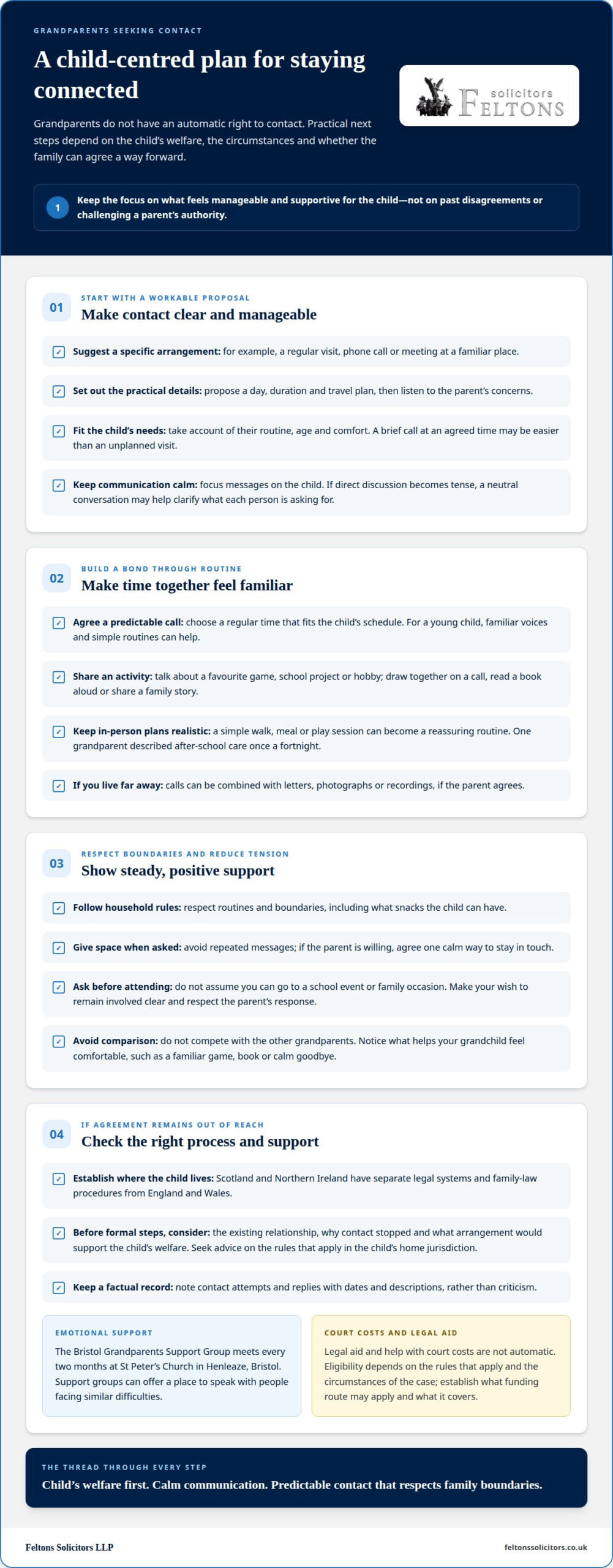
Grandparents don’t have an automatic right to spend time with a grandchild simply because of the family relationship. Start by proposing a clear, manageable arrangement to the parent, such as a regular visit, phone call or meeting at a familiar place. Keep the child’s routine, age and comfort in mind.
Make your proposal specific: suggest a day, duration and travel plan, then listen to the parent’s concerns. Respect household rules, including what snacks the child can have. If direct discussion becomes tense, a neutral conversation may help clarify what each person is asking for. Keep messages calm and focused on the child, not past disagreements.
If agreement remains out of reach, the legal options depend on where the child lives and the circumstances. Before taking formal steps, consider the existing relationship, why contact stopped and what arrangement would support the child’s welfare. Frame a request for contact around the child’s needs, not as a challenge to a parent’s authority.
Regional differences in grandparents’ rights
Scotland and Northern Ireland have separate legal systems and family-law procedures from England and Wales. The process described for one jurisdiction may not apply in another, so the child’s home jurisdiction matters when considering formal steps.
First establish whether the child lives in Scotland, Northern Ireland, England or Wales. Then seek advice on the rules that apply there before making an application or relying on a process described for another part of the UK. The relevant procedure affects how a grandparent can raise a request, so avoid treating “UK law” as one uniform route.
Where contact is still possible, small, predictable arrangements can help preserve a connection. A brief call at an agreed time, for example, may be easier to manage than an unplanned visit. If a parent is concerned about boundaries, address that directly and suggest a limited arrangement that could be reviewed as the child’s needs change.
Support for estranged grandparents
Estrangement can leave grandparents unsure how to respond without deepening family tensions. Talk with someone you trust and write down what you hope could change, such as a short call or occasional update. A specific request can be easier to discuss calmly.
The Bristol Grandparents Support Group holds meetings every two months at St Peter’s Church in Henleaze, Bristol. A support group can offer a place to speak with people facing similar family difficulties. Listening to others may help you consider how to approach your adult child, while keeping your grandchild’s needs central.
Can grandparents get legal aid or other help with court costs? Legal aid and help with court costs aren’t automatic. Eligibility depends on the rules that apply and the circumstances of the case. Before taking formal steps, establish what funding route may apply in the relevant UK jurisdiction and what costs it covers.
Practical support can also mean changing how you communicate. The Bristol group advises grandparents to support their adult children without interfering, and to leave unspoken thoughts unspoken. For example, avoid sending repeated messages after a request for space; instead, agree one calm way to stay in touch, if the parent is willing.
Keep a brief record of contact attempts and replies, using dates and factual descriptions rather than criticism. If a school event or family occasion arises, don’t assume you can attend without agreement. Ask the parent first and respect their response, while making your wish to remain involved clear.
Estrangement may also prompt practical questions about family arrangements beyond contact. If you want to review how your estate would be dealt with, wills and estate planning advice can help you consider those decisions separately from discussions about grandchildren.
Keeping in touch with grandchildren
Distance needn’t prevent a close relationship. Agree a regular time for a phone or video call and keep it predictable, such as a short chat on a particular day. For a young child, familiar voices and simple routines can make a screen conversation feel more natural. Ask the parent which times fit the child’s schedule.
Make each conversation about the child, not just catching up with adults. Ask about a favourite game, school project or hobby, then invite them to show you how it works. If your grandchild enjoys drawing, you could both make a picture during a call. Listening and asking follow-up questions shows that their interests matter to you.
A shared activity can give calls a purpose. Read a children’s book aloud, taking turns with the pages, or tell a short family story connected to an old photograph or heirloom. Familiar toys at your home can also help a young child feel settled during visits. Let the parent guide choices about treats and routines.
For in-person time, a regular arrangement can be more meaningful than occasional elaborate outings. One grandparent described looking after her granddaughters after school once a fortnight. If that suits the family, a simple walk, meal or play session can become a reassuring routine. Keep plans realistic and agree changes with the parent.
Try not to compare your visits with time spent by the other grandparents. Each family’s circumstances differ, and competition can put pressure on a child. Instead, notice what helps your grandchild feel comfortable: a favourite game, a familiar book or a calm goodbye. If you live far away, combine calls with letters, photographs or recordings, if the parent agrees.
The role of grandparents
Grandparents can offer children steady support whilst leaving parents in charge. In the UK, a third of the population are grandparents, and three quarters will become grandparents during their lifetime. Offer help when asked, such as collecting a child from school or sharing a meal, then let the parent decide what suits their family.
A survey of 1,566 young people aged 11-16 found that 76% said their grandparents advised them when they had a problem. In the same survey, 85% respected what their grandparents had to say. These findings underline the value of listening: give a grandchild time to explain a worry before offering advice, and ask whether they want ideas or simply someone to hear them.
Everyday activities can support learning without turning time together into a lesson. Cook a simple meal, plant seeds or help mend a household item together. A board game can model taking turns, good manners and sportsmanship. Talking about the day can also build vocabulary and encourage children to ask questions about other people.
Stories and family traditions give children a connection to their wider family. Explain who owned a keepsake, why a recipe matters or how a celebration began. An old photograph or heirloom can prompt questions and help a child understand their family history. Keep the story age-appropriate and let the child’s curiosity guide how much you share.
Support also means recognising your limits. If babysitting feels overwhelming, say no kindly and suggest another way to spend time together, such as a short visit or a phone call. Grandparents can also consider how family possessions and personal wishes should be handled in future. Explore wills and estate planning to put those decisions in order.
Feltons Solicitors LLP
Feltons Solicitors LLP can help when difficulties involving grandchildren arise alongside a parent’s separation or financial arrangements. Its family-law work covers divorce and financial arrangements, supporting people who need advice on those connected matters. Grandparent contact questions can be emotionally difficult, so it helps to be clear about the issue you need advice on and how it relates to the wider family circumstances. If your concern is solely about arranging contact, the options discussed above provide a starting point for considering what to do next. Where separation or financial arrangements are also involved, Feltons Solicitors LLP can help you understand the related legal issues and consider your next steps. Contact Feltons Solicitors LLP to discuss your circumstances.
Choose a considered next step
Understanding grandparents’ rights to see grandchildren in the UK can help you decide what to do next, but first clarify your aim. Consider what practical outcome would matter most to you and whether wider family changes are involved. Keeping your purpose clear can make a discussion with a legal adviser more focused.
Feltons Solicitors LLP advises on divorce and financial arrangements, wills, probate and estate planning, and residential and commercial conveyancing. These services address related family, personal and property matters, rather than promising a particular outcome on grandparent contact. If your situation involves wider legal concerns, explain how they connect so you can discuss relevant next steps.
Contact Feltons Solicitors LLP to discuss your circumstances. A calm, informed decision can help you move forward with care for your family and the relationship you hope to maintain.
Frequently Asked Questions
Am I being left out?
Being excluded from contact doesn’t, by itself, explain why it stopped or what might change. Think about the last agreed arrangement, any recent disagreement and what the parent has said about contact. If visits ended after a family argument, for example, a calm message focused on the child may open a more constructive conversation than accusations or repeated requests.
I want to see my grandchildren – what rights do I have and what can I do?
Being a grandparent doesn’t automatically give you an entitlement to contact. Start by suggesting a practical arrangement to the parent, such as a short visit or agreed call, and consider what suits the child’s routine. If agreement proves difficult, find out which legal options apply where the child lives before taking formal steps. Keep communication respectful and focused on the child.
Do grandparents have a legal right to see grandchildren in England and Wales?
In England and Wales, being a grandparent does not create an automatic right to contact. The phrase grandparents’ rights to see grandchildren in the UK can therefore be misleading: the child’s welfare and the circumstances matter. A grandparent may be able to ask the court to consider contact, but that is not the same as having an assured right to visits or calls.
How do grandparents apply for permission to seek a child arrangements order?
In England and Wales, a grandparent who needs permission must generally ask the court for permission before applying for a child arrangements order. The application should explain the grandparent’s connection with the child, the contact sought and the reasons for the request. As the process depends on the circumstances, get advice on the correct application and supporting information before filing.
What factors do courts consider in grandparents’ contact applications?
The child’s welfare is central to decisions about contact. Relevant circumstances may include the child’s relationship with the grandparent, why contact stopped, the child’s needs and views, and the effect a proposed arrangement could have on family life. A practical proposal, such as gradual or supervised contact where appropriate, may help show how the child’s needs could be met.
How can grandparents resolve contact disputes through family mediation?
Family mediation gives grandparents and parents a structured setting to discuss possible arrangements with a neutral mediator. It can help each side explain concerns and consider options such as calls, visits or contact at family events. Before a meeting, identify your priorities and possible compromises. Mediation depends on participation, and any agreement should clearly record the arrangements discussed and accepted.