
Title Transfer Solicitors UK: Professional Guidance for Property Ownership Changes

Title Transfer Solicitors UK: Professional Guidance for Property Ownership Changes

Could a simple name change on your property deeds inadvertently trigger a five-figure tax bill from HMRC? Many homeowners view the process of adding a partner or gifting a share of a home as a minor administrative update, yet it’s a significant legal realignment with lasting financial consequences. It is understandable that the fear of unexpected Stamp Duty bills and the confusion of Land Registry forms can be daunting. Your property is likely your most valuable asset, and changing its ownership structure requires a delicate balance of technical precision and personal care.

By consulting with experienced title transfer solicitors uk, you can navigate these complexities with total confidence. Our role is to provide a steady hand, ensuring your interests are protected whilst meeting every regulatory obligation. This article explores the nuances of equity transfers, provides clarity on the latest 2026 tax implications, and outlines how to coordinate effectively with mortgage lenders for a seamless, compliant transition.

Key Takeaways

  • Learn the legal distinction between a Transfer of Equity and a Transfer of Ownership to ensure your application matches your specific circumstances.
  • Understand how title transfer solicitors uk manage the due diligence phase to identify existing charges or restrictions that could delay your ownership change.
  • Uncover common misconceptions regarding Stamp Duty Land Tax (SDLT) and why transfers between family members are not always tax-free.
  • Identify the critical role of mortgage lenders in approving title changes and how to liaise with them to avoid a blocked transfer.
  • Gain a step-by-step roadmap of the transfer process, from initial legal instruction through to the final Land Registry registration.

Understanding Title Transfer: Equity vs. Ownership Changes

At its core, a title transfer is the formal legal mechanism used to update the ownership records held by HM Land Registry. Whilst many homeowners use the term broadly, the specific legal path depends entirely on the circumstances of the change. Engaging title transfer solicitors uk ensures that these updates are not merely administrative entries but legally robust protections for your assets. The process formally records who holds the legal title to a property, which is a distinct concept from who might have a claim to its underlying financial value.

A deep understanding of English land law is essential for any successful transfer. In British property law, a distinction exists between “legal title” and “beneficial interest.” Legal title refers to the names appearing on the official register, whilst beneficial interest relates to the right to occupy the property or receive proceeds from its eventual sale. Most transfers are executed using a TR1 form. This document acts as the primary instrument to convey the estate from the current owners to the new ones, whether that involves adding a family member or removing an outgoing party.

Transfer of Equity Explained

A transfer of equity occurs when a property remains in the partial ownership of at least one of the original parties. You might encounter this when an owner gets married and wishes to add their spouse to the deeds, or following a relationship breakdown where one partner is bought out. For the process to be classified as a transfer of equity, at least one original owner must remain on the title. In these instances, the consideration is a vital factor. This is not always a cash payment; it often includes the value of the mortgage debt being assumed by the remaining owner. If a mortgage exists, the lender’s consent is mandatory, as they must be satisfied that the incoming or remaining owners can meet the repayments independently.

Transfer by Assent and Gifting

Ownership changes also occur through gifting or following the death of an owner. When a property owner passes away, the executors of the estate use a process called Assent to transfer the title to the beneficiaries named in the Will or determined by the rules of intestacy. This is a delicate time that requires a calm, methodical approach. Gifting property to children whilst retaining a right to reside is another common scenario, though it carries significant risks regarding tax and long-term security. Without professional guidance, such gifts can be challenged by authorities or lead to unintended liabilities. Expert advice helps you navigate these choices whilst ensuring your financial interests remain protected.

Key Scenarios Requiring Title Transfer Solicitors

Property ownership is rarely static; it evolves alongside your personal and professional life. A title transfer serves as the bridge between a significant life event and your long-term financial security. Expert title transfer solicitors uk act as steady guides through these transitions, ensuring that every legal detail is meticulously handled. Whether you are restructuring your estate for inheritance purposes or managing a commercial asset amongst business partners, the precision of the transfer is paramount. These changes are not mere formalities. They are strategic legal realignments that dictate your future rights and liabilities.

In sophisticated tax planning, transferring property title can be a strategic move to manage future liabilities. However, these changes must be executed with a clear understanding of the official transferring ownership (conveyancing) requirements to avoid unnecessary scrutiny from HMRC. For business owners, transferring title between partners often requires a more commercial perspective. It involves balancing corporate interests with individual property rights to maintain operational stability whilst protecting each party’s investment. If you are navigating these complexities, our team at Feltons Solicitors can provide the pragmatic, tailored advice you need to proceed with confidence.

Divorce and Relationship Breakdown

When a relationship ends, the property is often the most significant asset to be divided. A title transfer is the mechanism that executes a court-ordered financial settlement or a voluntary separation agreement. It’s not enough to simply sign over the deeds. You must synchronise the transfer with the formal removal of a party from the mortgage. Failure to do so can leave the departing partner financially liable for a debt on a home they no longer own. For those facing these challenges, consulting a divorce and financial arrangements lawyer provides the holistic support needed to protect your future during a stressful time.

Marriage, Cohabitation, and New Partnerships

Conversely, adding a partner to your property title is a significant gesture of commitment that requires careful legal structuring. You must choose between becoming “Joint Tenants” or “Tenants in Common.” Joint tenants own the property equally, and ownership passes automatically to the survivor. Tenants in common can own specific, unequal shares, which can be left to others in a Will. We often recommend using a Declaration of Trust in these scenarios. This document clearly defines each person’s financial contribution and share of the equity, preventing disputes if the partnership eventually ends. Professional guidance ensures that your existing assets remain protected whilst you build a future with a partner, and if you plan to enhance your home together, WillsByrne Construction & Landscaping LTD offers expert services to help you renovate and landscape your shared property.

The Title Transfer Process: A Step-by-Step Guide

Successfully updating a property title requires a methodical approach that balances legal precision with administrative efficiency. The journey begins with a formal instruction and concludes only when the Land Registry updates the digital register, a step that represents the finality of ownership in UK law. Throughout this progression, experienced title transfer solicitors uk act as the central point of coordination between the transferor, the transferee, and any third-party lenders. This ensures that every party’s interests are aligned and that the transition doesn’t inadvertently breach any existing mortgage covenants or legal restrictions.

Before any documents are signed, your solicitor conducts a rigorous due diligence phase. This involves examining the current Official Copies to identify any charges, cautions, or restrictions that might block the transfer. For instance, a restriction might require the consent of a management company or a former spouse before the register can be updated. Identifying these hurdles early prevents the stress of last-minute delays. It’s this proactive management that distinguishes a professional legal service from a purely administrative one.

Preparation and Form TR1

The TR1 form is the cornerstone of the transaction. It must be drafted with absolute accuracy to reflect the intentions of all parties involved. A common point of confusion is the “consideration” section, which must detail exactly what is being exchanged for the property share. This isn’t limited to cash payments; it includes the value of any mortgage debt being assumed. Getting this right is essential for HMRC compliance and ensures that any potential Stamp Duty liability is correctly calculated. Once drafted, the deed must be executed in the presence of independent witnesses to be legally binding.

Identity Verification and Compliance

Identity verification is often the most significant bottleneck for those attempting a DIY transfer. HM Land Registry imposes stringent requirements for unrepresented parties, typically requiring the completion of ID1 or ID3 forms. These forms often necessitate a physical appointment with a legal professional or magistrate, a hurdle that leads to frequent application rejections for the unwary. By contrast, solicitors verify identity internally using sophisticated digital tools to satisfy Anti-Money Laundering (AML) regulations. This seamless integration protects the integrity of the register and ensures your application moves forward without unnecessary queries.

Registration and Post-Completion

The final stage involves submitting the AP1 application to the Land Registry. This is more than a simple filing; it’s a request to update the legal record of the land. Occasionally, the Land Registry issues “requisitions”—specific questions or requests for clarification that can stall the process if not handled promptly. Your solicitor manages these queries directly, ensuring the application stays on track. Once the register is updated, you’ll receive the new Official Copies. These documents serve as your definitive proof of ownership, confirming that the transfer is complete and your financial interests are secure.

Title Transfer Solicitors UK: Professional Guidance for Property Ownership Changes

Strategic Considerations: SDLT, Mortgages, and Risks

A common fallacy amongst homeowners is that transferring a property title is a tax-neutral event if no cash changes hands. In reality, the legal and financial ramifications are often more complex than a standard sale. Professional title transfer solicitors uk provide the necessary oversight to ensure that a strategic move today doesn’t become a liability tomorrow. Beyond immediate taxes, one must consider the risks of “undervalue” transfers. If a property is gifted or sold significantly below market value, the transaction can be challenged or even set aside by a court if the original owner enters bankruptcy within a specific timeframe. This is why holistic estate planning is vital; it ensures the transfer structure aligns with your long-term legacy goals whilst remaining legally robust.

Stamp Duty Land Tax (SDLT) Pitfalls

HMRC calculates SDLT based on what is known as “chargeable consideration.” This isn’t merely the physical cash that changes hands. It includes the value of any mortgage debt that the person receiving the share takes on. For example, if you transfer half a property with a £400,000 mortgage to a partner, they are effectively “paying” £200,000 by assuming that debt. If this amount exceeds the current SDLT thresholds, a tax bill will be triggered. Whilst exemptions exist for transfers following a divorce or those made under the terms of a Will, navigating these rules requires precision. An inaccurate return can lead to significant penalties and interest charges being levied by HMRC years after the event.

Mortgage Lender Requirements

You cannot simply remove a name from a property title if a mortgage is in place. The lender is essentially a silent partner with a vested interest in who is responsible for the debt. To remove a party, the lender must formally release them from their financial obligations, which usually requires a full assessment of the remaining owner’s income and creditworthiness. Major UK banks have specific “Transfer of Equity” protocols that must be followed. In some cases, the remaining owner may need to remortgage with a different lender to facilitate a buyout of the departing party’s share. Managing these requirements alongside the legal transfer is essential for a seamless transition.

Protecting your property interests requires more than just filling in forms; it demands strategic legal foresight. If you are planning a change in ownership and want to ensure full compliance with HMRC and your lender, contact our expert team at Feltons Solicitors for a professional consultation.

Why Choose Feltons Solicitors for Your Title Transfer?

Selecting the right title transfer solicitors uk is a decision that impacts the long-term security of your most significant asset. At Feltons Solicitors, we believe that property law should be defined by pragmatic, tailored advice rather than rigid administrative scripts. Our firm positions itself as a calm, steady presence for homeowners navigating ownership changes, providing the sophisticated guidance expected of a premier residential property law firm. We understand that a transfer is often the result of a major life transition, and we treat every instruction with the discreet, high-standard care it deserves.

Our expertise is not limited to simple domestic updates. We possess the worldly experience necessary to handle complex commercial title transfers and multi-party realignments that require a methodical, orderly mindset. By choosing Feltons, you gain a partner who values your privacy and personal rapport. We ensure that every detail, from Land Registry compliance to mortgage lender coordination, is handled with absolute precision, protecting your financial interests at every stage of the process.

Boutique Service, National Expertise

We pride ourselves on a boutique service model that combines traditional professional values with modern, efficient delivery. This approach is particularly beneficial for our diverse client base, including international investors who require specialist support for overseas entity registration when managing UK property portfolios. You won’t find yourself trapped in an impersonal call centre or passed between junior clerks. Instead, we provide a single point of contact who understands the specific nuances of your case. Our commitment to transparent, steady communication ensures you remain informed and supported from the initial instruction through to the final registration.

A Holistic Approach to Property Law

Property ownership is often intertwined with other legal complexities, such as leasehold rights or estate planning. Feltons is uniquely placed to advise on transfers involving leasehold enfranchisement, ensuring your transfer doesn’t inadvertently compromise your ability to extend a lease or purchase a freehold later. We take the time to ensure your property transfer aligns with your broader family and financial goals, providing a level of foresight that volume-based firms simply cannot match. Feltons is a firm that prioritises personal connection over high-volume processing. This people-first philosophy ensures that whilst the technical legal work is paramount, the human impact of our work is never forgotten. Whether you are gifting a home to the next generation or restructuring a commercial partnership, we provide the steady hand you need to move forward with confidence.

Securing Your Property Interests for the Future

Changing the names on your property deeds involves balancing legal compliance with long-term financial strategy. We have explored the critical distinctions between transfers of equity and ownership by assent, the necessity of rigorous identity verification, and the often-overlooked Stamp Duty implications. Navigating these requirements doesn’t have to be overwhelming, but it does require a methodical approach to ensure your assets remain protected and your standing with HMRC and mortgage lenders remains secure.

Choosing the right title transfer solicitors uk ensures that these complexities are managed with professional poise and personal care. Established in 2010, Feltons Solicitors is a boutique firm with over 15 years of expertise in both residential and commercial conveyancing. It’s this partner-led focus that allows us to provide pragmatic advice tailored to your unique circumstances, ensuring every detail of your transfer is handled with absolute precision.

Contact Feltons Solicitors today for expert guidance on your property title transfer. We are here to guide you through every step of the process with clarity and confidence.

Frequently Asked Questions

Do I need a solicitor to transfer property to a family member?

You should engage a solicitor to ensure the transfer is legally binding and the deeds are correctly updated at HM Land Registry. Whilst a DIY approach is technically possible for properties without a mortgage, it carries significant risks regarding title defects and tax miscalculations. If a mortgage lender is involved, they will mandatory require professional representation to protect their financial interest in the asset.

How much does a transfer of equity cost in the UK?

The total cost depends on the complexity of your case and whether a mortgage lender’s consent is required. You’ll need to account for professional legal fees alongside third-party disbursements, such as Land Registry filing fees and potential search costs. Every transaction is unique, so it’s essential to obtain a detailed breakdown that includes any potential Stamp Duty Land Tax liabilities before you begin.

Will I have to pay Stamp Duty when transferring title?

Stamp Duty Land Tax (SDLT) is payable if the “chargeable consideration” exceeds the current HMRC thresholds. Consideration isn’t just cash; it includes the value of any mortgage debt that the person receiving the share takes on. Whilst transfers resulting from a divorce or a Will are often exempt, many family transfers do trigger a tax bill that must be settled within 14 days of completion.

Can I remove my ex-partner from the house deeds without their consent?

You cannot remove a co-owner from the property title without their express written consent or a formal court order. If an agreement cannot be reached following a relationship breakdown, you may need to apply for a court order as part of a financial settlement. Once the court grants this order, your title transfer solicitors uk can execute the transfer even if the other party refuses to cooperate.

How long does a title transfer take at Land Registry in 2026?

Straightforward electronic applications are typically processed within a few weeks, though complex cases involving leasehold restrictions or new charges can take longer. The Land Registry continues to prioritise digital submissions from title transfer solicitors uk to ensure efficiency. Your solicitor will manage the entire process, responding to any registry queries promptly to avoid the delays often associated with postal or DIY applications.

What happens to the mortgage during a transfer of title?

The mortgage must be addressed before the title can be updated, as the lender must formally release any outgoing party from their debt obligations. This usually involves a “Transfer of Equity” application where the lender assesses the remaining owner’s ability to maintain the loan alone. If the lender doesn’t consent, you may need to remortgage with a different provider to facilitate the change in ownership.

Is a TR1 form the only document needed for a transfer?

The TR1 form is the primary deed, but it’s only one part of a comprehensive application. You will also need to provide identity verification (ID1 or ID3 forms), an AP1 application for the Land Registry, and an SDLT1 return for HMRC. Leasehold properties often require additional documentation, such as a certificate of compliance or a formal deed of covenant with the freeholder.

What is the difference between a Transfer of Equity and an Assent?

A Transfer of Equity is used when at least one of the original owners remains on the title, such as adding a spouse or buying out a partner. An Assent is the specific legal process used by executors to transfer a property to beneficiaries after an owner has passed away. Both processes update the Land Registry, but they require different forms and legal authority to be successful.

UK Property Law for Foreign Nationals: A Comprehensive 2026 Guide

UK Property Law for Foreign Nationals: A Comprehensive 2026 Guide

The UK property market remains one of the most stable and attractive destinations for international capital, but the legal landscape in 2026 is far from simple. Whilst there are no restrictions on your right to buy, the reality of uk property law for foreign nationals now involves a complex web of residency tests and stringent transparency requirements. You likely recognise the prestige of a UK postcode, yet the fear of a surprise Stamp Duty bill or the anxiety of a rigorous compliance check can be daunting. It is a common concern, especially when the line between ‘resident’ and ‘tax resident’ feels increasingly blurred.

This guide offers the expert legal clarity you need to manage these complexities without the fear of unexpected tax liabilities. We’ll provide a definitive roadmap of the 2026 purchase process, from the mandatory registration of overseas entities with Companies House to the latest 60-day reporting deadlines for Capital Gains Tax. By understanding how to legally minimise your tax exposure and finding a solicitor who values discreet, high-standard service, you can secure your British assets with absolute peace of mind.

Key Takeaways

  • Confirm your legal right to own British real estate and understand the strategic differences between purchasing for personal use and commercial development.
  • Navigate the financial complexities of uk property law for foreign nationals, including the specific criteria for reclaiming the 2% non-resident Stamp Duty surcharge.
  • Streamline your purchase through remote conveyancing protocols that facilitate secure identity verification and document completion from anywhere in the world.
  • Determine the most tax-efficient ownership structure by weighing the benefits of personal title against the administrative requirements of registering an overseas entity.
  • Protect your long-term investment by mastering the unique British concepts of leasehold and freehold to mitigate the risks of rising ground rents.

The UK remains one of the world’s most accessible property markets. Unlike many other nations that impose strict quotas or outright bans on international buyers, the British legal system welcomes investment regardless of the purchaser’s nationality. Understanding uk property law for foreign nationals is the first step toward a successful acquisition. You don’t need a UK passport or even a visa to own a piece of British soil; the market is open for personal residences, buy-to-let portfolios, and large-scale commercial developments alike.

This openness is underpinned by the stability of English land law, which provides a level of certainty and protection that few other jurisdictions can match. Even with the introduction of stricter transparency measures like the Register of Overseas Entities (ROE), the UK is still viewed as a ‘safe haven’ for international wealth. These regulations are designed to bolster market integrity rather than deter genuine investors. However, it’s vital to separate the right to own property from the right to live in it. Owning a house in London or a cottage in the Cotswolds doesn’t grant you residency rights or a path to a UK visa. You’ll still need to comply with standard immigration rules for stays exceeding six months.

Residency vs. Tax Residency: The 183-Day Rule

In 2026, the distinction between your immigration status and your tax residency is sharper than ever. For property transactions, the UK government uses a specific ‘non-resident’ test. You’re generally classed as a non-resident for Stamp Duty purposes if you’ve spent fewer than 183 days in the UK during the 12 months before your purchase. This isn’t just a technicality; it’s the trigger for a 2% surcharge on your Stamp Duty Land Tax (SDLT) bill. This rule applies even if you’re a British citizen living abroad or have a valid work visa.

The Role of the Solicitor in International Transactions

Managing a cross-border purchase requires more than just standard legal work. It demands a solicitor who understands the nuances of international wealth structures and the rigour of modern Anti-Money Laundering (AML) checks. Feltons Solicitors acts as a calm, steady guide during this process, ensuring all documentation is handled with discreet precision. We manage the ‘Exchange of Contracts’ and identity verification remotely, allowing you to secure your investment without needing to be physically present in the UK. Our role is to provide a boutique level of care, ensuring your transaction moves from offer to completion with absolute legal clarity whilst protecting your privacy at every stage.

The Financial Impact: SDLT Surcharges and Tax Residency Rules

Financial planning for a UK acquisition requires a granular understanding of the current tax regime. Whilst the market is open, the costs of entry are tiered based on your residency status and your existing global property portfolio. A fundamental pillar of uk property law for foreign nationals is the Stamp Duty Land Tax (SDLT), which is a graduated tax payable on the purchase price of a property. For residential purchases in England and Northern Ireland, the standard rates for 2026 follow a clear structure:

  • Up to £125,000: 0%
  • £125,001 to £250,000: 2%
  • £250,001 to £925,000: 5%
  • £925,001 to £1,500,000: 10%
  • Over £1,500,000: 12%

Foreign buyers must account for significant surcharges that sit atop these figures. A 2% surcharge applies to any non-UK resident purchasing a residential property costing £40,000 or more. If you already own a residential property anywhere else in the world, an additional 5% surcharge is likely to apply. This means an international investor could face a top-slice SDLT rate of 19% on the portion of the price above £1.5 million. Detailed guidance on Stamp Duty Land Tax for non-UK residents confirms that the 2% surcharge can sometimes be reclaimed if you spend more than 183 days in the UK during the year following your purchase.

Calculating Your Total Tax Liability

The total cost of your investment isn’t just the purchase price. A UK resident buying a £500,000 home might pay £12,500 in SDLT; however, a non-resident investor buying that same property as a second home could pay up to £47,500. It’s a stark difference that demands early budgeting. If a property is purchased jointly by a resident and a non-resident, the 2% surcharge is typically applied to the entire transaction value. You might find relief if the property is classed as commercial or mixed-use, as these transactions usually avoid the non-resident surcharge entirely. Engaging a firm with expertise in residential conveyancing ensures these calculations are precise from the outset.

Ongoing Tax Obligations for Foreign Landlords

Owning the asset is only the first stage of your tax journey. If you let the property, you’re subject to the Non-Resident Landlord Scheme (NRLS), where tenants or agents must withhold 20% of the rent for HMRC unless you’ve been authorised to receive gross payments. When you eventually decide to sell, you’ll need to navigate Capital Gains Tax (CGT), currently set at 18% for basic rate taxpayers and 24% for higher earners. You must report the sale and settle any CGT due within 60 days of completion, regardless of whether a tax liability actually exists. This rigorous reporting cycle reflects the UK’s commitment to transparency in uk property law for foreign nationals.

The journey from making an initial offer to receiving the keys is a structured legal process that demands meticulous attention to detail. In the context of uk property law for foreign nationals, this journey typically spans eight to twelve weeks, though complex international chains can extend this timeline. Once your offer is accepted, your solicitor begins the ‘Enquiries’ phase, scrutinising the title deeds and local authority searches to ensure no hidden liabilities exist. Whilst this happens, you should commission a comprehensive structural survey. Many British properties, particularly in historic urban centres, are sold as leaseholds. A survey is vital to identify potential maintenance issues or structural defects that could lead to significant future costs.

Remote conveyancing has become the standard for international clients. Modern legal practices use secure digital platforms for identity verification and document signing, meaning you rarely need to visit the UK in person to finalise your purchase. The most critical milestone is the ‘Exchange of Contracts’. At this point, the agreement becomes legally binding. In UK law, this is the point of no return; if you withdraw after this stage, you will likely lose your deposit and may face litigation for breach of contract. Completion follows shortly after, which is when the balance of funds is transferred and ownership officially passes to you.

Anti-Money Laundering (AML) and Source of Funds

Compliance is the most significant hurdle for many overseas buyers. UK law requires solicitors to perform exhaustive ‘Know Your Customer’ (KYC) checks to prevent financial crime. You’ll need to provide clear documentation regarding your ‘Source of Wealth’, which explains how you accumulated your total assets, and your ‘Source of Funds’ for this specific purchase. Common pitfalls include using offshore accounts without a clear audit trail or receiving gifted deposits from relatives without proper legal declarations. Providing this information early prevents delays and ensures you meet the Stamp Duty Land Tax rules for non-UK residents without administrative friction.

Securing Financing: UK Mortgages for Overseas Buyers

Securing a UK mortgage as a foreign national is entirely possible, though the criteria are stricter than for residents. Most lenders require a higher deposit, typically between 20% and 40% of the property value. Interest rates for ‘Expat’ or non-resident loans are generally higher, reflecting the lender’s perceived risk. You’ll also need to establish a UK-based bank account for monthly repayments. Navigating uk property law for foreign nationals effectively means having these financial arrangements in place before you begin your property search to demonstrate your status as a serious buyer.

UK Property Law for Foreign Nationals: A Comprehensive 2026 Guide

Ownership Structures: Personal Names vs. Registering Overseas Entities

Deciding how to hold your British assets is a choice that balances administrative simplicity against long-term tax efficiency. Buying in a personal name is the most straightforward path. It avoids the complexities of company filings and the necessity for annual accounts. However, many sophisticated investors prefer using a UK Limited Company, particularly when building a portfolio. This structure can offer significant advantages regarding mortgage interest relief and Corporation Tax rates, though it does come with higher ongoing administrative costs. This choice is a central pillar of uk property law for foreign nationals and should be made after considering your exit strategy and global tax position.

If you choose to buy through a foreign company, you must comply with the Register of Overseas Entities (ROE). This requirement, introduced under the Economic Crime (Transparency and Enforcement) Act 2022, is mandatory for any foreign entity that wants to buy, sell, or lease land in the UK. The process involves a £250 digital registration fee and an annual update statement that costs £134. Feltons Solicitors provides a bespoke service for overseas entity beneficial owner registration, ensuring your investment remains fully compliant and marketable whilst protecting your privacy where legally permitted.

The Register of Overseas Entities (ROE) Explained

Transparency is the driving force behind the ROE. Foreign companies holding UK land must declare their beneficial owners and managing officers to Companies House. A UK-regulated agent must verify this information before the entity can be registered. The consequences of non-compliance are severe. Without a valid Overseas Entity ID, you’ll be unable to register your title at the Land Registry, effectively preventing you from selling, leasing, or charging the property. Failure to update the register annually is also a criminal offence, which can lead to daily fines or even imprisonment for company officers.

Joint Ownership Options: Tenants in Common vs. Joint Tenants

For those buying with a partner or business associate, the legal structure of that partnership is vital. Joint Tenants own the property together as a single legal entity; if one owner passes away, their share automatically transfers to the survivor. Conversely, Tenants in Common own specific, defined shares, which can be passed on via a Will to anyone of their choosing. This is often the preferred route for international wealth protection, as it allows for more flexible estate planning. We strongly recommend a ‘Declaration of Trust’ to clearly define these shares and protect each party’s interests. Professional support for the Registration of Overseas Entities ensures your ownership structure is robust from the outset.

Managing Your Investment: Leasehold Rights and Estate Planning

Securing your property is only the beginning of your journey with uk property law for foreign nationals. In England and Wales, a significant portion of urban property, particularly apartments, is sold as leasehold. This means you own the right to occupy the building for a set period, whilst the ‘freeholder’ retains ownership of the land itself. It’s a unique legal concept that requires active management. You must stay vigilant regarding ground rents and service charges; if these costs rise disproportionately, they can diminish the marketability and value of your asset. Professional leasehold management ensures your rights are protected and your investment remains a stable pillar of your international portfolio.

Effective property management also involves maintaining safety standards; for investors purchasing in the Dundee area, Foster Electrical provides a local, reliable service for electrical safety checks and comprehensive rewiring.

You must also look ahead to the eventual transfer of your wealth. UK-sited assets, including all residential property, are generally subject to UK Inheritance Tax (IHT). Currently, this is charged at a rate of 40% on any value exceeding the £325,000 nil-rate band. Whilst an additional residence nil-rate band of up to £175,000 may be available if you leave a home to direct descendants, the criteria are strict. It’s also vital to note that from April 2025, the UK moved to a residency-based system for IHT. Individuals who’ve been UK residents for 10 of the previous 20 tax years may find their worldwide assets fall within the UK tax net. Relying on a foreign Will to dispose of a British home often leads to significant delays and legal friction. A dedicated UK Will ensures your property is handled according to English law with minimal administrative burden.

Lease Extensions and Enfranchisement for Overseas Owners

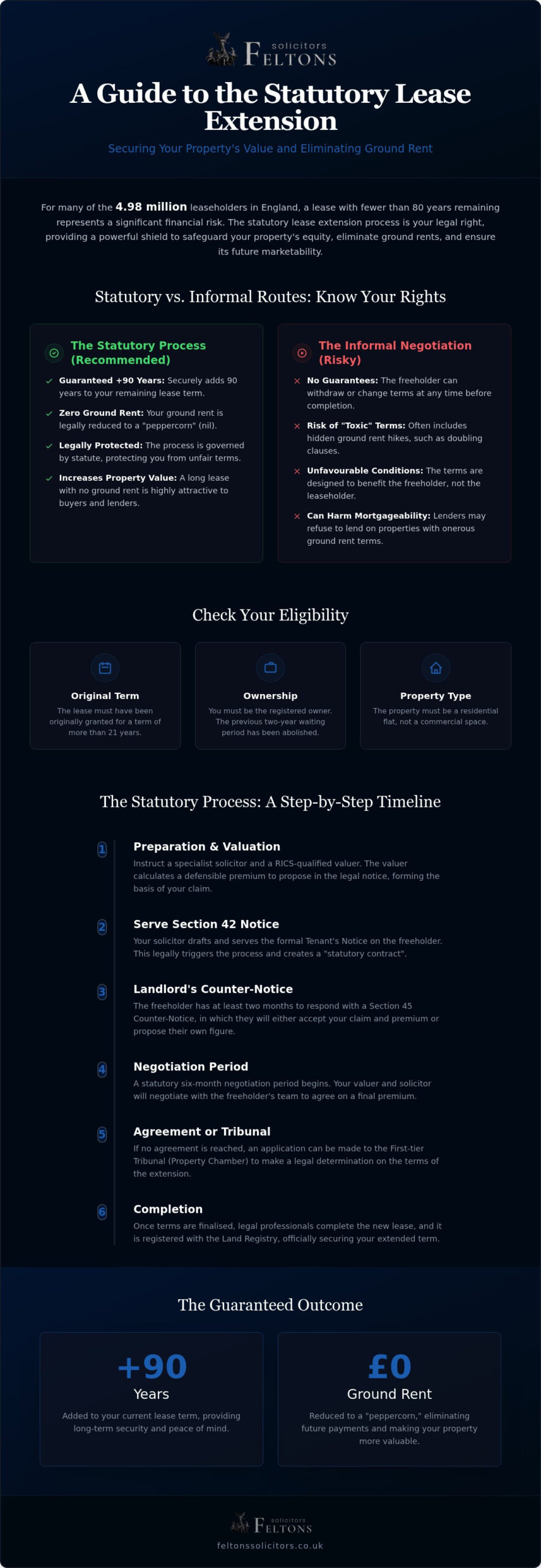
For those owning flats, the statutory right to extend your lease becomes available after two years of continuous ownership. This is a vital mechanism for preserving the value of your asset. Leases with fewer than 80 years remaining can become significantly more expensive to extend and difficult to remortgage. Our leasehold enfranchisement experts provide pragmatic advice on navigating these claims. We manage the entire process, including complex negotiations and dispute resolution with freeholders, ensuring your interests are represented whilst you are abroad.

Succession and Estate Planning for International Clients

UK property doesn’t exist in a vacuum; it sits within the context of your global estate. This creates a potential risk of double taxation depending on the treaties between the UK and your home jurisdiction. Integrating your British assets into a comprehensive estate planning strategy allows for the legal minimisation of tax exposure. Managing these matters requires a specialist firm that understands the nuances of international wealth structures. We act as a discreet partner, ensuring your legacy is protected and that your beneficiaries aren’t left navigating a complex legal maze without expert guidance.

Securing Your British Assets with Confidence

The UK property market remains a premier destination for global investors, yet the path to a successful acquisition in 2026 is paved with specific regulatory obligations. We’ve explored how understanding the nuances of uk property law for foreign nationals is essential, from managing the 2% non-resident Stamp Duty surcharge to ensuring your company is correctly listed on the Register of Overseas Entities. Success isn’t just about the initial purchase; it requires a proactive approach to leasehold management and robust estate planning to protect your legacy against future tax liabilities.

At Feltons Solicitors, we act as your discreet partner throughout this journey. We provide pragmatic, expert advice for international clients, specialising in the Registration of Overseas Entities and comprehensive property services. Whether you’re navigating the complexities of cross-border wealth structures or securing your assets for the next generation, our team offers the steady guidance you deserve. Contact Feltons Solicitors for expert guidance on your UK property purchase and ensure your investment is built on a foundation of absolute legal clarity. Your British property journey should be a source of security, not stress.

Frequently Asked Questions

Do I need to be in the UK to complete a property purchase?

You don’t need to be physically present in the UK to finalise your transaction. Remote conveyancing allows solicitors to manage identity verification and the exchange of contracts through secure digital platforms. Whilst you’ll need to provide certified documents, the entire process from offer to completion can be handled from your home country with ease.

Can I buy property in the UK if I have a criminal record in my home country?

Generally, yes, as there are no legal restrictions preventing those with a criminal record from owning British real estate. However, you’ll face much more rigorous Anti-Money Laundering checks during the purchase process. Mortgage lenders may also view your application with increased scrutiny, so it’s vital to be transparent with your legal team from the outset. For international buyers who need to resolve or clarify legal issues in the US, the Law Office of Kevin Bessant & Associates provides expert criminal defence representation to help clear your path for global investment.

How much is the non-resident Stamp Duty surcharge in 2026?

The non-resident surcharge remains at 2% for the 2026 tax year. This is a flat rate added to the standard Stamp Duty Land Tax (SDLT) brackets for residential properties costing £40,000 or more. It’s a critical component of uk property law for foreign nationals that applies if you haven’t been present in the UK for at least 183 days in the 12 months prior to your purchase.

Is it better to buy UK property in a company name or personal name?

The right choice depends on your long-term investment strategy and your total portfolio size. Purchasing in a personal name is simpler and avoids the costs associated with the Register of Overseas Entities. Conversely, using a UK Limited Company can be more tax-efficient for buy-to-let investors, though it involves higher administrative fees and mandatory annual filings. Navigating uk property law for foreign nationals requires weighing these administrative burdens against potential tax savings.

What documents do I need to prove my source of funds as a foreign national?

You’ll need to provide a clear audit trail showing exactly how your capital was acquired. This typically includes six months of bank statements, payslips, or tax returns from your home country. If your funds come from the sale of an asset or an inheritance, you’ll need the corresponding legal documentation to satisfy the UK’s strict ‘Know Your Customer’ requirements.

Can I get a UK mortgage if I don’t have a UK credit history?

You can secure a mortgage without a UK credit history by using specialist international or ‘Expat’ lenders. These providers assess your global wealth and income rather than just your UK credit file. You should expect to provide a larger deposit, often between 25% and 40% of the property value, and pay slightly higher interest rates than a UK resident.

Does buying a house in London or the UK give me a ‘Golden Visa’?

No, property ownership does not grant any residency or immigration rights in the UK. The British government doesn’t offer a ‘Golden Visa’ or investment-based residency through real estate purchases. You must still meet standard visa requirements if you intend to live in the property for more than six months a year, regardless of the property’s value.

What happens to my UK property if I die without a UK Will?

Your British assets will be distributed according to the UK’s intestacy rules, which may not align with your personal wishes or your home country’s laws. This process is often slow and expensive for international families, potentially leading to significant Inheritance Tax complications. Drafting a specific UK Will is the only way to ensure your property passes to your chosen beneficiaries without unnecessary legal friction.

Conveyancing Solicitors Knightsbridge: Expert Legal Support for Complex Property Transactions

Conveyancing Solicitors Knightsbridge: Expert Legal Support for Complex Property Transactions

Could a single oversight in a leasehold title or a minor compliance error with the Register of Overseas Entities jeopardise your entire investment? In the high-stakes environment of Prime Central London, the difference between a successful acquisition and a costly delay often rests on the calibre of your legal representation. Finding the right conveyancing solicitors knightsbridge is about more than just processing paperwork; it’s about securing a partner who understands that high-value transactions require a bespoke, meticulous approach.

You likely recognise that securing a property in Knightsbridge involves layers of complexity that standard firms simply aren’t equipped to manage. It’s natural to feel concerned about the lack of personal communication or the potential for hidden legal traps within intricate leasehold structures. This article provides the clarity you need to move forward with confidence, promising a roadmap to a smooth and legally secure completion. We’ll examine the critical nuances of the Leasehold and Freehold Reform Act 2024, the stringent requirements for overseas entities, and how tailored legal support ensures your interests remain protected throughout the process.

Key Takeaways

  • Understand why standard volume conveyancing often fails to address the nuances of high-value property portfolios and complex legal titles.
  • Discover how specialist conveyancing solicitors knightsbridge manage the intricate requirements of leasehold extensions and the mandatory Register of Overseas Entities.
  • Learn why a partner-led, boutique approach ensures more transparent communication and robust legal protection than high-volume “factory” models.
  • Follow a strategic roadmap for 2026 that prioritises early financial disclosure and bespoke enquiries to ensure a seamless and secure property completion.

Understanding the Value of Specialist Conveyancing Solicitors for Complex Transactions

Specialist conveyancing is the expert management of intricate property titles and substantial capital transfers, requiring a level of scrutiny that standard transactions rarely demand. Standard “volume” conveyancing, often found in high-street chains or automated online platforms, relies on rigid systems designed for simplicity and speed. These models frequently fail when faced with the nuances of a Knightsbridge penthouse or a historic townhouse. When you engage conveyancing solicitors knightsbridge, you’re investing in a bespoke service that prioritises your specific financial and legal security over sheer file turnover. By choosing experienced conveyancing solicitors knightsbridge, you ensure that every detail of your transaction is handled with the precision it deserves.

Meticulous due diligence is the absolute bedrock of any successful high-value purchase. It’s about uncovering the invisible risks that could devalue an asset or hinder a future sale. A solicitor acts as your strategic advisor, guiding you through the entire life cycle of the transaction, from the initial offer to the final handshake. This involves a deep dive into:

  • Historical title deeds and complex ownership structures.
  • Specific local authority records and planning permissions.
  • Compliance with the latest environmental and building safety regulations.

This rigorous approach ensures your investment is sound and your legal position is unassailable.

The Distinction Between Administrative Conveyancing and Legal Counsel

Many firms treat the conveyancing process as a series of administrative boxes to tick. For complex titles, this process-driven approach is insufficient. You need a solicitor who understands the underlying property law, particularly when dealing with restrictive covenants or ancient easements that might restrict your plans for the property. Proactive problem-solving at this stage prevents post-completion disputes that are often expensive and stressful. A bespoke legal strategy ensures every potential obstacle is addressed before contracts are exchanged, providing a level of certainty that administrative firms cannot match.

Why High-Value Transactions Demand Discreet Expertise

Privacy is a non-negotiable requirement for high-net-worth clients. Discreet expertise ensures your personal information and financial details remain strictly confidential throughout the process. Managing a transaction in Knightsbridge also involves coordinating with various stakeholders, such as private banks, specialist surveyors, and estate agents. Your solicitor must act as the central point of contact, ensuring everyone is aligned whilst maintaining the highest standards of professional integrity. In 2026, the sophisticated advisor serves as a bridge between traditional legal heritage and the modern demands of global property compliance. This role requires a calm, steady hand and a commitment to personal rapport that high-volume firms simply cannot offer.

Knightsbridge property often involves intricate leasehold titles that demand more than just standard administrative oversight. For many owners, the legal landscape shifted significantly with the Leasehold and Freehold Reform Act 2024. This legislation has transformed how Leasehold extensions are handled, increasing standard terms to 990 years and reducing ground rent to zero upon payment of a premium. Expert conveyancing solicitors knightsbridge ensure these statutory rights are exercised correctly, protecting the long-term marketability of your asset. Without this specialist guidance, you risk missing critical windows or failing to capitalise on new legislative benefits.

Alongside domestic leasehold matters, international ownership structures introduce another layer of scrutiny. The overseas entity beneficial owner registration is now a mandatory requirement for any foreign entity holding UK property. This register, established to increase transparency, requires annual updates and strict verification. Failure to comply doesn’t just result in financial penalties; it can effectively freeze your ability to sell, lease, or even charge the property. Specialist solicitors act as the vital link between international jurisdictions and the Land Registry, ensuring your compliance is beyond reproach.

Navigating Leasehold Enfranchisement and Extensions

Securing your property rights often requires the intervention of leasehold enfranchisement experts. Since February 2025, the two-year ownership rule has been abolished, allowing new owners to begin extension proceedings immediately. You must decide whether to pursue the formal statutory process or engage in voluntary negotiations with the freeholder. Whilst voluntary routes can sometimes be faster, they lack the legal protections inherent in the statutory framework. A tailored approach ensures you pay a fair premium whilst securing the maximum possible term for your investment.

Compliance for International Property Investors

For clients based amongst various global financial centres, managing a UK portfolio requires a deep understanding of the Economic Crime (Transparency and Enforcement) Act 2022. Expert conveyancing solicitors knightsbridge provide the necessary verification services that Companies House demands. This process involves identifying every beneficial owner and ensuring all trust information is accurately disclosed where required. This methodical approach ensures that your international status remains an advantage rather than a bureaucratic hurdle. If you’re managing complex holdings, seeking advice on overseas entity registration is a prudent step toward maintaining a legally secure portfolio.

Selecting the right legal partner is perhaps the most critical decision you’ll make in the property acquisition process. Whilst volume conveyancing firms operate on a “factory” model, relying on high turnover and automated workflows, a boutique firm prioritises the depth of legal investigation required for multi-million pound assets. This distinction is vital when searching for conveyancing solicitors knightsbridge. Price-driven models often compromise on the time a qualified solicitor can dedicate to your file, potentially leaving complex title issues or restrictive covenants unexamined. In contrast, a partner-led approach ensures that your transaction receives the intellectual rigour it demands, rather than being processed by a junior paralegal in a remote call centre.

Communication frequency is the hallmark of a high-standard service. Direct access to your solicitor provides a sense of security that is often missing from larger firms. When you choose a residential property law firm with a diverse range of expertise, you benefit from a professional who can spot issues before they become delays. This proactive stance is essential for navigating the sophisticated property market in Knightsbridge, where transactions often involve international elements or unique historical titles.

The Risks of Undervalued Legal Advice

Opting for “cheap” conveyancing can lead to significant financial repercussions. If a solicitor fails to identify a defect in a title or an issue with planning permission, the cost to rectify these post-completion can be astronomical. When reviewing official government guidance on extending a lease, it’s clear that the administrative steps are only one part of a much larger strategic picture. A specialist firm understands that professional integrity and traditional values are the foundations of a secure transaction, even in a digital age where speed is often prioritised over accuracy. This is particularly true for properties that may have mixed residential and commercial aspects, requiring a solicitor with a broad legal perspective.

Evaluating Technical Competence and Practical Judgement

When interviewing conveyancing solicitors knightsbridge, ask about their specific experience with high-value estates and complex enfranchisement cases. Technical competence must be matched by practical judgement; you need a solicitor who offers pragmatic advice to overcome “deal-breaker” hurdles rather than simply identifying problems. Feltons Solicitors LLP balances modern delivery with traditional professional standards by ensuring every client has direct access to a senior legal expert who understands the human impact of their work. This “people-first” philosophy ensures that whilst the technical work is paramount, your personal peace of mind is never forgotten.

Conveyancing Solicitors Knightsbridge: Expert Legal Support for Complex Property Transactions

The Essential Roadmap to a Seamless Property Completion in 2026

Post-completion, the focus shifts to tax compliance and asset registration. As of July 2026, standard residential Stamp Duty Land Tax (SDLT) rates remain tiered, with the portion of the purchase price above £1.5 million attracting a 12% rate. Your solicitor ensures the SDLT return is filed accurately and that the Land Registry title is updated to reflect your ownership. This meticulous attention to detail ensures your investment is fully protected from day one.

Pre-Exchange Diligence and Contract Negotiation

The role of the solicitor during contract negotiation is to act as a robust shield for your interests. They review the draft contract and title pack with a focus on identifying any discrepancies in planning permissions or building regulation compliance. Managing complex funding is a core part of this diligence, particularly when dealing with offshore funds or gifted deposits from international relatives. Every document is scrutinised to ensure that your funding structure aligns perfectly with UK regulatory requirements, preventing any last-minute delays during the transfer of funds.

Post-Completion and Long-Term Asset Protection

A significant property purchase should always be the catalyst for a broader review of your legal standing. It is essential to update your estate planning to reflect your new asset and ensure your legacy remains secure. Similarly, if your personal circumstances change, a property transaction might prompt a necessary review of your divorce and financial arrangements to protect your capital. Secure document storage and the receipt of final registration confirmations from the Land Registry are the final steps in a process designed for long-term peace of mind. If you require a partner to guide you through these intricate stages, Feltons Solicitors LLP provides the steady, expert hand needed for such significant life events.

Feltons Solicitors LLP represents a departure from the impersonal nature of high-volume legal practices. Established in 2010 by Paula Felton, the firm has built its reputation on providing pragmatic, high-standard advice that prioritises the individual needs of each client. As specialised conveyancing solicitors knightsbridge, we understand that high-value property transactions are often just one part of a larger legal picture. Our team is uniquely positioned to handle not only the intricacies of property law but also complex litigation and dispute resolution. This dual expertise ensures that if a transaction encounters a legal hurdle, it’s managed with the same calm authority that defined the initial instruction.

Our approach is defined by the “sophisticated guide” persona. We recognise that legal transitions, particularly those involving significant capital, can be inherently stressful. Our role is to act as a steady presence, offering polished advice in plain English that avoids archaic legalese. We believe that clarity is the foundation of trust. We work tirelessly to ensure you feel informed at every stage of your journey, providing a level of care that prioritises personal connection over high-volume processing.

A People-First Philosophy in Property Law

At Feltons, we reject the factory model. Every client is treated as a priority, benefiting from a partner-led approach that ensures direct access to senior expertise. This is particularly valuable for international clients who may be managing assets amongst different jurisdictions and require a solicitor who understands the global context of their holdings. Our heritage is rooted in sound judgement and individualised attention. This ensures that the human impact of our work is never overshadowed by technical requirements. Whether you’re a first-time buyer in the luxury market or a seasoned investor, you’ll find our boutique approach offers a sense of security that larger firms often lack.

Connecting Property Expertise with Holistic Legal Care

A property purchase often serves as a catalyst for other legal considerations. By offering expertise in estate planning alongside divorce and financial arrangements, Feltons provides a comprehensive service for private clients. Having a single, trusted legal partner for all these matters ensures a cohesive strategy for your family’s future and your long-term assets. We invite you to experience a discreet, high-standard legal consultation where your privacy and personal rapport are our primary focus. Let us guide you through your next transaction with the quiet confidence and professional integrity your investment deserves.

Securing Your Knightsbridge Investment for the Future

High-value property transactions in Knightsbridge demand more than just administrative efficiency; they require a strategic legal partner who understands the intricacies of Prime Central London real estate. We have explored how the legal landscape necessitates a deep focus on leasehold enfranchisement and the strict verification requirements of the Register of Overseas Entities. Choosing the right conveyancing solicitors knightsbridge ensures that your capital is protected through a partner-led, boutique approach that prioritises your specific needs over high-volume turnover.

By following a methodical roadmap and ensuring early financial transparency, you can navigate the complexities of these transactions with quiet confidence. Feltons Solicitors LLP provides the steady guidance and professional integrity required to manage your property portfolio with precision. If you’re preparing for a significant acquisition or disposal, contact Feltons Solicitors for a discreet consultation on your property matter. With our specialist expertise in leasehold matters and international compliance, your completion remains in capable hands. We look forward to helping you secure your legacy with the care and attention it deserves.

Frequently Asked Questions

How long does the conveyancing process typically take for high-value properties?

High-value transactions typically take between 12 and 16 weeks to reach completion, although this timeline varies based on the complexity of the chain and the legal title. For properties in Prime Central London, additional time is often required for bespoke enquiries and the verification of international funding sources. Instructing experienced conveyancing solicitors knightsbridge early in the process helps identify potential bottlenecks, such as leasehold issues, before they cause significant delays.

What are the main differences between a conveyancer and a property solicitor?

A property solicitor is a fully qualified lawyer with broad training across multiple legal disciplines, whereas a licensed conveyancer is a specialist focused specifically on property transfers. This distinction is vital for complex transactions that may involve litigation, trust law, or estate planning. Solicitors offer a more comprehensive legal perspective, which is often essential when navigating the sophisticated requirements of high-end property acquisitions and diverse ownership structures.

Why is the Register of Overseas Entities important for my property purchase?

The Register of Overseas Entities is a mandatory requirement for any foreign entity owning or purchasing UK property to declare its beneficial owners to Companies House. Failing to comply with these regulations under the Economic Crime (Transparency and Enforcement) Act 2022 can effectively freeze your asset, making it impossible to sell, lease, or charge the property. Specialist solicitors ensure that all verification and registration requirements are met, preventing severe financial penalties and ensuring a legally secure transaction.

What is leasehold enfranchisement and do I need a specialist for it?

Leasehold enfranchisement is the legal right for leaseholders to extend their lease or collectively purchase the freehold of their building. Given the technical nature of valuation premiums and strict statutory deadlines, instructing a specialist is essential to protect your investment. A specialist solicitor ensures you benefit from the latest legislative changes, such as those in the Leasehold and Freehold Reform Act 2024, whilst managing negotiations with the freeholder to secure the best possible terms.

When should I instruct a conveyancing solicitor when buying a house?

You should instruct a solicitor as soon as you begin your property search or, at the latest, immediately after your offer is accepted. Early instruction allows your legal team to conduct preliminary identity and financial checks, which are increasingly rigorous for high-value transactions. By having conveyancing solicitors knightsbridge ready to receive the contract pack the moment a sale is agreed, you significantly reduce the risk of the transaction falling through due to initial administrative delays.

How does Feltons Solicitors handle complex property disputes?

Feltons Solicitors handles complex property disputes by combining deep property law expertise with robust litigation and dispute resolution services. Whether the issue involves a breach of contract, a boundary disagreement, or a contested leasehold extension, we provide calm and steady guidance to reach a pragmatic resolution. Our goal is always to protect your asset and financial interests whilst minimising the stress and cost often associated with formal legal proceedings.

What are the additional legal considerations for commercial property conveyancing?

Commercial conveyancing involves specific considerations such as VAT implications, planning use classes, and the intricacies of commercial lease terms. Unlike residential transactions, these often require a detailed analysis of environmental liabilities and complex service charge structures. A comprehensive legal review ensures that the property is fit for its intended business purpose and that all potential commercial risks are identified and mitigated before you commit to the purchase.

Do I need to update my will after buying a new property?

You should review and update your will following a significant property purchase to ensure your new asset is correctly accounted for in your estate planning. A property is often an individual’s most valuable asset, and failing to update your will can lead to complications for your beneficiaries or unintended inheritance tax consequences. Our team provides holistic legal care, ensuring that your property acquisition is seamlessly integrated into your broader long-term legacy plans.