

An executor cannot replace the instructions in a will with personal preferences. If an executor doesn’t follow the will, beneficiaries can raise their concerns, request information about the estate and, if the problem persists, seek a court order requiring the executor to act or asking the court to remove them. Court intervention is generally a last resort.
It is understandable to expect an executor to manage the estate fairly and keep beneficiaries informed, particularly when money or family relationships are involved. This article explains what beneficiaries can do if an executor withholds money, fails to carry out their duties or mishandles estate assets. It also explains when delays may be legitimate, which records can clarify the situation and how court orders may address persistent problems in England and Wales.
Key Takeaways
- An executor who is also a beneficiary must still act impartially; a personal interest can create a conflict that deserves careful scrutiny.
- Keep a clear record of concerns, correspondence and any apparent effect on the estate if you may need to show how the executor has acted.
- In England and Wales, the Non-Contentious Probate Rules 1987 may be used to deal with problem-executor matters at the Probate Registry, according to the UK legislation register.
- If informal efforts do not resolve the issue, beneficiaries may be able to seek an order requiring the executor to provide accounts or carry out their duties.
Can an executor withhold money from beneficiaries?
An executor may delay payment while administering the estate, but must distribute it according to the will. If you’re concerned about what happens if an executor doesn’t follow the will, ask for an explanation before treating a delay as misconduct.
Conflicts involving executor-beneficiaries
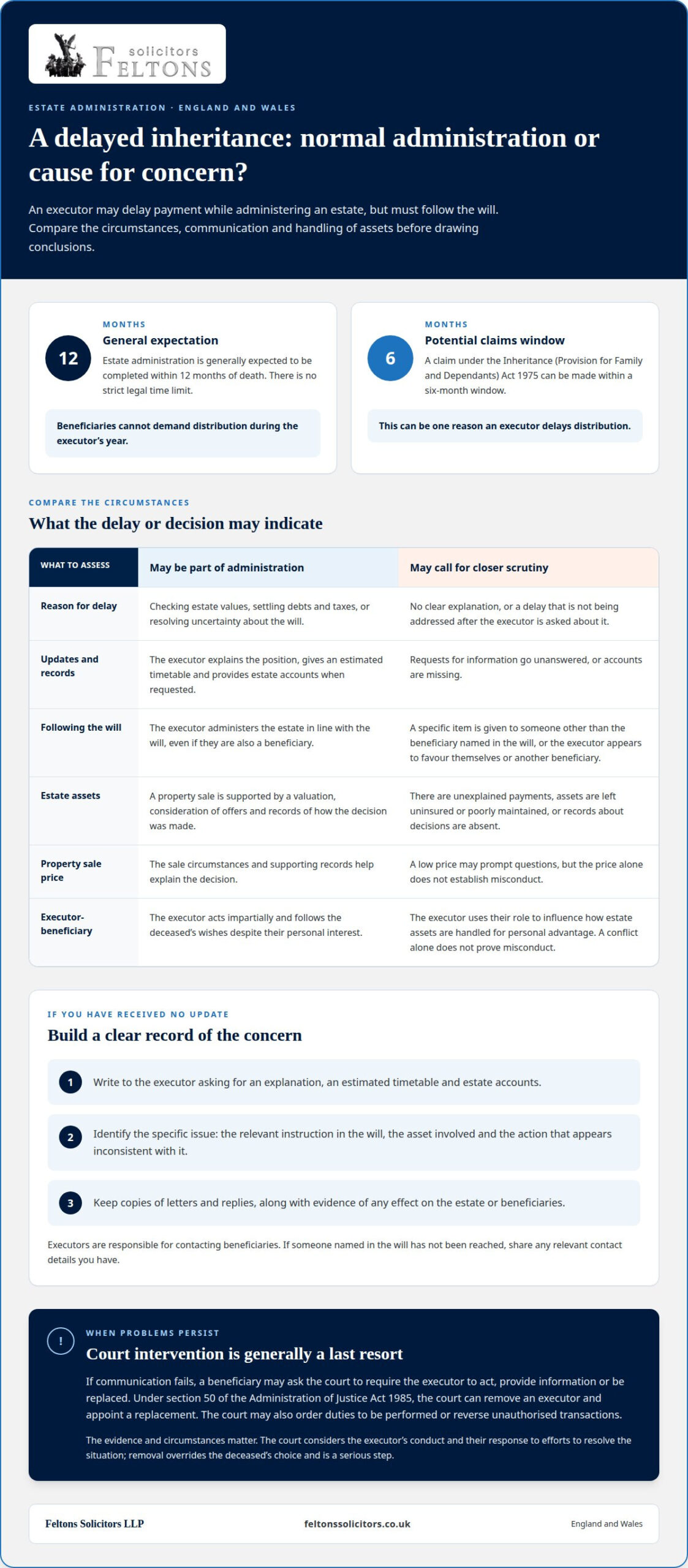
A conflict can arise when an executor is also entitled to inherit, because their personal interests may differ from those of the beneficiaries as a whole. They must still act impartially and follow the deceased’s wishes, rather than favouring themselves or another beneficiary. For example, an executor-beneficiary should not use their role to influence how estate assets are handled for personal advantage. A conflict alone does not prove misconduct, but the executor’s decisions and explanations matter.
Delays to beneficiary distributions
An executor may sometimes delay distribution while checking estate values, settling debts and taxes, or resolving uncertainty about the will. In England and Wales, administration is generally expected to be completed within 12 months of the death, though there is no strict legal time limit. Beneficiaries cannot demand distribution during the executor’s year. An executor may also delay while potential claims under the Inheritance (Provision for Family and Dependants) Act 1975 can be made within a six-month window, according to the UK legislation register.
If you have received no update, write to the executor asking for an explanation, an estimated timetable and estate accounts. Executors should keep accurate records and provide accounts when beneficiaries request them. They are also responsible for contacting beneficiaries, so share any relevant contact details you have if someone named in the will has not been reached. Keep copies of letters and replies. A dated record can clarify whether the delay is being addressed.
There is no single deadline for every challenge or estate claim. In England and Wales, a breach-of-duty claim may be brought up to 12 years from when the right to receive the estate accrued; a claim under the 1975 Act has a six-month window. What happens if an executor doesn’t follow the will may depend on the conduct and the evidence available.
An executor cannot change the will because they consider it unfair, and cannot prevent beneficiaries from contesting it. A challenge to the will is separate from a complaint about the executor’s conduct: the first disputes the will’s validity or effect, while the second concerns estate administration. Set out the specific issue in writing so the executor can respond and the appropriate action can be considered.
What Happens if the Executor Does Not Follow the Will?
Where an executor’s conduct threatens estate administration, beneficiaries can seek court intervention. Removal is a serious step, so the evidence and circumstances matter.
Court applications to remove an executor
A beneficiary can ask the court to remove an executor who is failing to perform their role. The application should set out specific actions, supporting evidence and the effect on the estate or beneficiaries. For example, include unanswered written requests or records of assets handled contrary to the will. Under section 50 of the Administration of Justice Act 1985, a court can remove an executor and appoint a replacement.
Court orders and executor replacement
The court can order an executor to perform duties, such as applying for probate or distributing assets, and may reverse unauthorised transactions. Removal is generally a last resort, particularly because it overrides the deceased’s choice. The court considers the executor’s conduct and their response to efforts to resolve the situation. If one executor is clearly responsible, the court may appoint a replacement. Persistent disagreement between executors can also make independent administration necessary.
Challenging an executor’s conduct
To challenge decisions, beneficiaries can first raise concerns in writing and explain which part of the will or administration is at issue. Keep copies of correspondence and evidence showing any effect on the estate. If communication fails, a beneficiary may petition the probate court and ask for an order compelling the executor to act, provide information or be replaced. In England and Wales, the Non-Contentious Probate Rules 1987 may be used to deal with problem-executor matters at the Probate Registry, according to the UK legislation register.
The court process depends partly on whether a Grant of Probate has already been issued. Applications may follow different procedures and timescales depending on that situation. The cost of applying or pursuing recovery depends on the case, the work involved and the procedure; costs are given after a quote request.
This section covers England and Wales. Probate procedures differ in Scotland and Northern Ireland, so beneficiaries there need to follow the process that applies to the estate’s jurisdiction. Likewise, where estates involve cross-border assets or family members overseas, consulting specialist succession practices such as rgs-law.com can help clarify relevant local inheritance rules.
Examples and signs of executor misconduct
Misconduct may involve ignoring the will, mishandling assets or failing to carry out estate duties. A clear example is giving a specific item to someone other than the beneficiary named in the will. An executor must preserve estate property and manage it prudently. If you spot a concern, identify the asset, the relevant instruction in the will and the action that appears inconsistent with it.
Property sales can also raise questions. A low sale price alone does not establish misconduct, but the circumstances matter, including whether the executor obtained a valuation, considered offers and kept records. A solicitor assessing the issue may examine sale documents and correspondence to understand how the decision was made.
Other warning signs include unexplained payments from estate funds, missing accounts, assets left uninsured or poorly maintained, and one beneficiary receiving preferential treatment. An executor-beneficiary’s personal interest can make decisions particularly important to scrutinise. Compare the will’s instructions with estate accounts and transaction records. A mistake may still lead to a claim, although a court can relieve an executor from liability for an honest and reasonable mistake under section 61 of the Trustee Act 1925.
Separate evidence from suspicion before deciding whether to make an application. Record dates, amounts, property details and the executor’s explanation, then keep copies of relevant documents. For example, a delayed response does not itself prove that inheritance is being withheld improperly. An unanswered request combined with unexplained withdrawals may warrant closer examination. Executors should keep accurate estate records and provide accounts when beneficiaries request them. A written record helps show what happened and whether the executor addressed the concern.
Orders requiring an executor to provide accounts or perform duties
An executor should value the deceased’s estate, record each beneficiary’s share and account for financial dealings. If an executor gives no clear reason for withholding accounts, request them in writing before considering a court application. This creates a record of the dispute and gives the executor an opportunity to respond.
In England and Wales, beneficiaries can seek a court order requiring an executor to provide an inventory and account of the estate’s financial dealings under section 25 of the Administration of Estates Act 1925. The inventory identifies estate assets, while the account explains receipts, payments and distributions. These records can help beneficiaries understand how money was handled and identify transactions needing explanation. For example, an account may clarify whether estate funds paid a debt or were transferred without a proper estate reason.
A court application may also ask an executor to carry out a specific responsibility, such as applying for probate or distributing assets under the will. Identify the outstanding duty, the relevant provision in the will and any attempts to resolve the matter. Dated letters, unanswered requests and estate documents can show what remains undone. The court can consider the executor’s response and the practical effect of further delay when deciding what order may help the administration.
Keep the request focused: specify which accounts or action you seek, why they are needed and a reasonable date for a response. If the executor disputes the request, their explanation and supporting records can help narrow the issue. A court order can require information or action, but it does not automatically remove the executor; that is a separate remedy. For support with an executor dispute, seek advice on estate administration.
Feltons Solicitors LLP: Wills, Probate, and Estate Planning
Feltons Solicitors LLP assists with wills, probate and estate planning, including matters where a beneficiary is concerned about an executor’s conduct. Legal support can help clarify the executor’s responsibilities, assess estate information and consider suitable next steps, such as seeking accounts or asking the court to require action. It may be appropriate to seek advice when communication has stalled, estate records raise questions or an executor appears not to be following the will. The right approach depends on the circumstances and evidence. Clear guidance can help you understand your options before deciding how to proceed.
For advice about an executor or estate administration, contact Feltons Solicitors LLP.
Choose a clear next step
Understanding what happens if an executor doesn’t follow the will can help you define the issue, but your next step should focus on the outcome you need. Decide whether you want clarity about a particular decision, completion of an outstanding responsibility or protection of an estate asset. A clear objective makes it easier to explain what needs attention and what resolution would address it.
Family relationships can make estate disagreements difficult to raise, especially when the executor is close to other beneficiaries. Keep communication measured and focused on the estate, rather than personal blame. If discussion has become unproductive, legal advice can help you assess the available options and choose a proportionate way forward.
Discuss your estate concerns with Feltons Solicitors LLP. A considered next step can help you move forward with greater confidence.
Frequently Asked Questions
Can I Claim Against an Executor if They Do Not Follow the Will?
Yes, you may be able to claim if an executor’s breach causes loss to the estate or beneficiaries. A claim may still be considered if the executor’s conduct was a mistake, but evidence matters: identify the decision, its effect and the loss you say followed. For example, records of an unauthorised payment may help explain the concern. The court may consider whether the executor acted honestly and reasonably.
Can I Remove an Executor From a Will?
A court can remove an executor and appoint a replacement where the evidence supports intervention. Relevant circumstances may include misconduct, incapacity or persistent disagreement that obstructs estate administration. Removal is not a way to change the deceased’s choice simply because beneficiaries disagree with it. Explain the executor’s conduct, its effect on the estate and why replacing them would help the administration continue.
Can an executor be held personally liable?
Yes. An executor may be personally liable for losses caused to the estate or beneficiaries by failing to meet their responsibilities. Liability is not automatic merely because a beneficiary is unhappy with a decision; the circumstances and resulting loss matter. Even a mistake may lead to a claim. Under section 61 of the Trustee Act 1925, the court may relieve an executor from liability for an honest and reasonable mistake.
How can I deal with an unresponsive executor of a will?
Send a clear written message identifying the estate, your relationship to it and the specific information or action you need. For example, ask whether a particular asset has been valued or a payment has been made. Keep a copy and note when you sent it. If the executor remains unresponsive, this record can help show the court what you requested and how communication broke down.
How do you force an executor to act?
You can ask the court to order an executor to carry out a specific duty, such as applying for probate or distributing estate assets. State precisely what remains undone and support your request with the will, relevant estate records and correspondence. A focused application helps distinguish a genuine failure to act from a disagreement about how the estate should be administered. The court can then consider an order suited to the issue.
What Isn’t an Executor Allowed to Do?
An executor must not rewrite the will, substitute personal preferences for its instructions or unfairly favour one beneficiary. For example, they cannot redirect a gift to themselves simply because they consider the named distribution unfair. They must also preserve estate assets and manage them prudently. An executor’s authority is to administer the estate after death, not to carry out the will while its maker is alive.