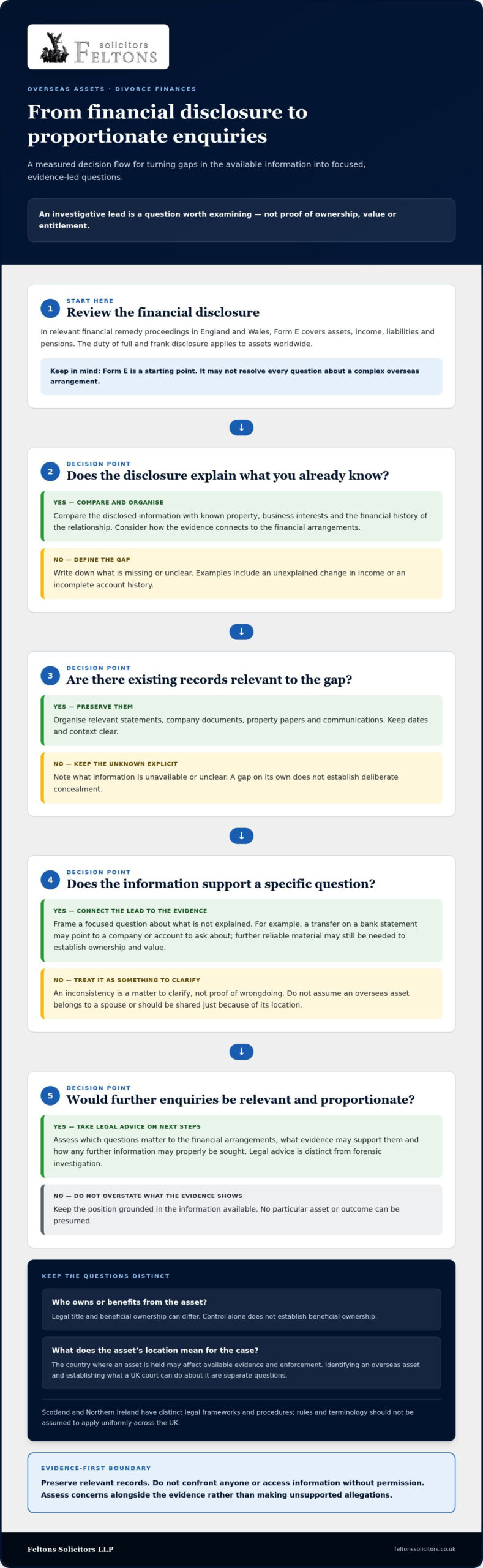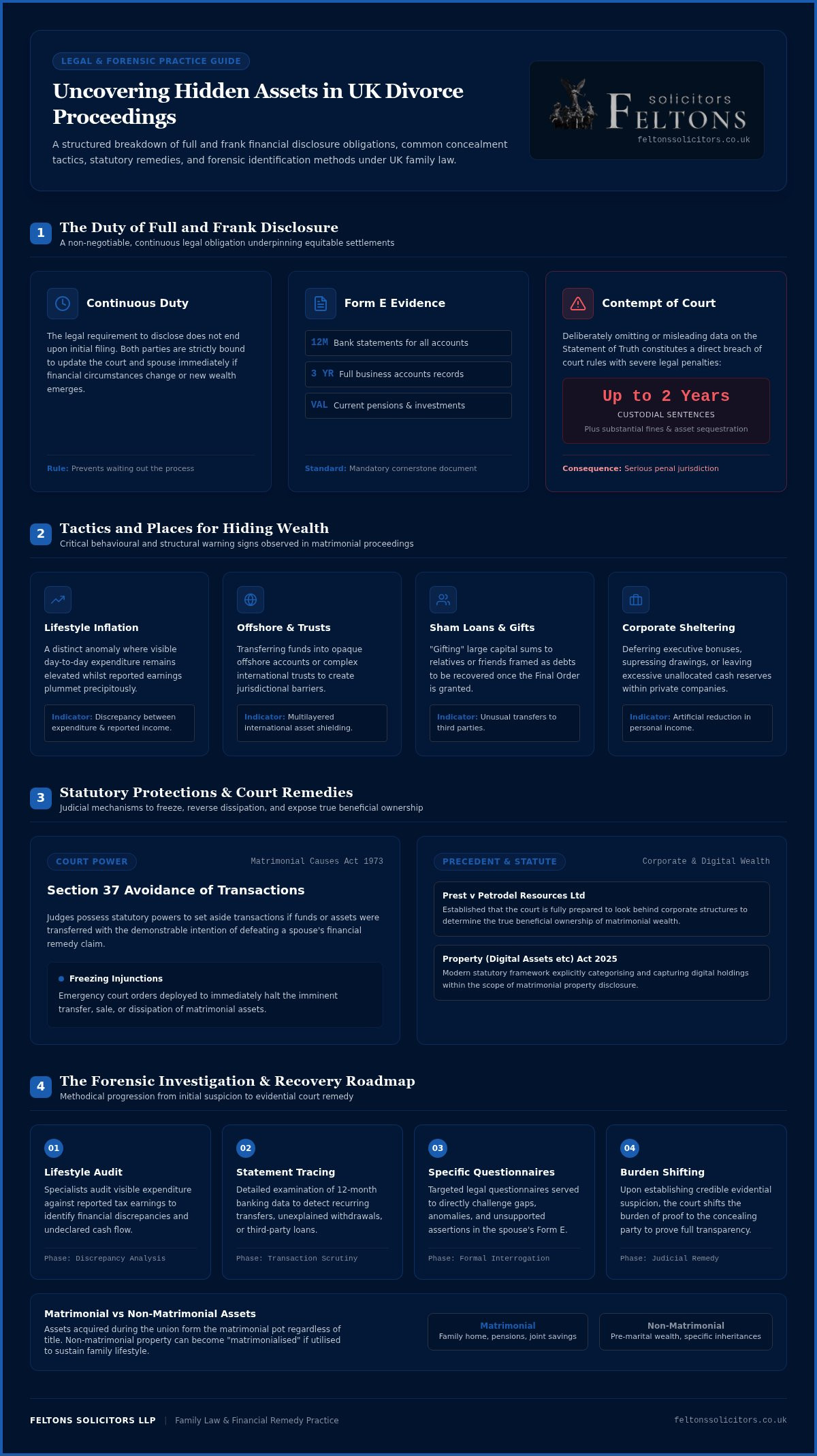

Could a court order stop your spouse from moving or selling assets before your financial arrangements are settled, and when is urgent action justified? It’s understandable to want to protect what may form part of a future settlement, particularly if you’re worried that money or property could disappear. A search for “freezing injunctions divorce property assets” often starts with that concern. However, a freezing injunction is an exceptional safeguard for a specific risk of assets being dissipated, not a shortcut to securing a divorce settlement.
This guide explains what a freezing injunction may protect, what it can’t do, and the evidence and legal considerations a court may weigh. It also explains why urgency, proportionality and the possible consequences of an unsuccessful application matter when deciding what to do next. The rules and procedures differ across the UK, so the relevant legal route depends on where your case is being heard. Advice on divorce and financial arrangements can help you assess the facts and consider practical options without escalating matters unnecessarily.
Key Takeaways
- A freezing injunction may restrict dealings with specified assets to preserve them, but it doesn’t decide ownership or determine the final financial settlement.
- Concern alone may not be enough. The court considers the particular facts and evidence, including warning signs of possible asset dissipation.
- Freezing injunctions, disclosure, negotiation and agreed undertakings serve different purposes. The right approach depends on what you need to achieve.
- Prepare for legal advice by organising relevant records and setting out a clear timeline. Applications without notice carry demanding duties of candour.
- Where assets may be at risk, consider prompt, tailored advice and weigh whether an urgent protective step or broader financial arrangements advice is the priority.
What is a freezing injunction in divorce, and which assets might it affect?
A freezing injunction is a court order that restricts specified dealings with assets, subject to the wording and limits of the order. In a divorce, its purpose is preservation: it may help prevent assets being moved or dealt with in a way that could undermine the financial process. It doesn’t decide who owns an asset or award either spouse a final financial settlement. For a general overview of the purpose of a freezing order, see this background explanation.
The order does not automatically freeze everything a spouse owns or controls. Its reach depends on the terms made by the court, the assets identified and the legal route available in the relevant jurisdiction. The phrase “freezing injunctions divorce property assets” can describe different concerns, each of which needs careful assessment. There is no standard order that applies in every case.
What does a freezing injunction actually prevent?
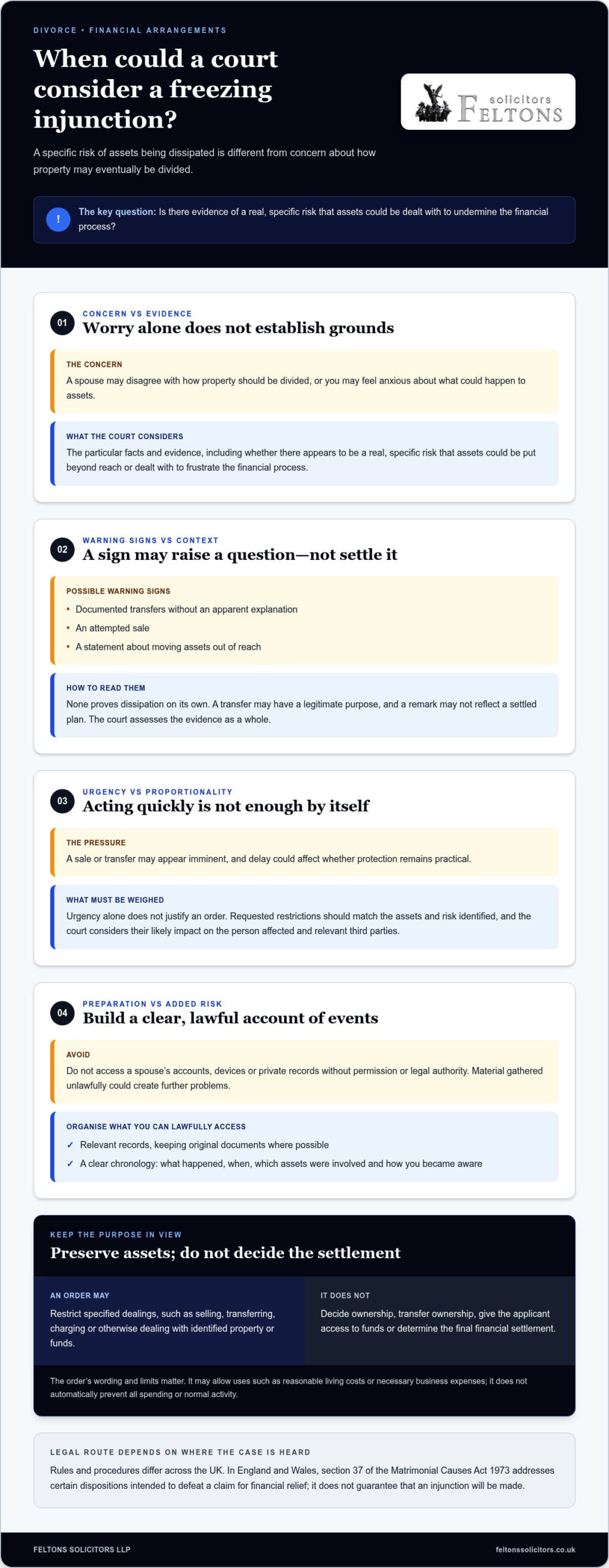
Restrictions are tailored to the order. They may prohibit selling, transferring, charging or otherwise dealing with specified property or funds. The order may also set out permitted uses, such as reasonable living costs or necessary business expenses, so preservation does not automatically prevent all spending or normal activity. Check the exact wording: an asset or transaction not covered by the order may fall outside its restrictions.
A disagreement about who should ultimately receive a home or investment is not, by itself, the same as a risk that assets will be dissipated. The question is whether there is a sufficiently evidenced risk that assets may be put beyond reach or dealt with to frustrate the financial process. Disputes over fairness or ownership are generally addressed through the wider financial arrangements, not by treating a freezing order as a shortcut to deciding the outcome.
Which property and financial assets could be relevant?
Depending on the circumstances, relevant assets might include a family home, an investment property, money in bank accounts or an interest in a business. The court’s ability to make an effective order can depend on who legally owns or controls an asset, where it is located, and whether another person or organisation has rights in it. An asset held jointly or involving a third party may raise different issues from one controlled solely by a spouse.
A freezing injunction doesn’t transfer ownership, give the applicant access to funds or determine how property will be divided. It is a protective measure, not a final resolution. Advice on divorce and financial arrangements can help assess the evidence, the assets at issue and whether an injunction is a proportionate option in the circumstances.
When might a divorce court consider freezing property or other assets?
A freezing injunction isn’t a routine feature of divorce, and anxiety about what a spouse might do does not, by itself, establish grounds for one. The court considers the particular facts and evidence, including whether there appears to be a real, specific risk that assets could be dealt with to undermine a financial claim. The relevant legal framework and procedure depend on where proceedings are taking place. In England and Wales, Section 37 of the Matrimonial Causes Act 1973 addresses certain dispositions intended to defeat a claim for financial relief. It does not guarantee that an injunction will be made.
A specific risk of assets being dissipated is different from the ordinary concern that a spouse may disagree with how property should eventually be divided. The latter is part of resolving financial arrangements. An injunction is an exceptional protective measure, not a way to gain leverage or secure a preferred share of the assets.
What evidence could support concern about asset dissipation?
Relevant warning signs might include documented transfers without an apparent explanation, an attempted sale, or a statement about moving assets out of reach. None proves dissipation on its own. Context matters: a transfer could have a legitimate purpose, and a remark may not reflect a settled plan. The court assesses the evidence as a whole rather than treating any one sign as automatic entitlement to an order.
To prepare for a legal assessment, organise records you can lawfully access and set out a clear chronology: what happened, when, which assets were involved and how you became aware of it. Keep original documents where possible. Don’t access your spouse’s accounts, devices or private records without permission or legal authority. Material gathered unlawfully could create further problems.
How do urgency and proportionality shape the decision?
Timing may matter if, for example, a sale or transfer appears imminent. A delay could affect whether protection remains practical, but urgency alone doesn’t establish that an order is justified. The restrictions requested should relate to the assets and risk identified, rather than going further than the circumstances warrant.
The court considers the evidence and the likely impact of restrictions on the person affected, as well as relevant interests of third parties. The limits of an order may matter if it could disrupt ordinary financial commitments or business activity. A focused review of the evidence and wider financial arrangements can help identify proportionate options. If you’re concerned about a specific transaction, read about divorce and financial arrangements advice.
Freezing injunctions versus other ways to protect divorce assets
A freezing injunction is one possible protective step, but it serves a different purpose from identifying assets or reaching agreement on how they should be divided. The right route depends on the facts, the level of urgency, the available evidence and the practical effect of the proposed step. An overview of freezing injunctions explains the remedy’s general scope, but individual circumstances need careful assessment.
| Approach | Main purpose | Practical distinction |
|---|---|---|
| Freezing injunction | Restrict specified dealings with assets where urgent protection may be justified. | A court order with terms and effects shaped by the circumstances. |
| Financial disclosure | Build a clearer picture of assets, liabilities and relevant transactions. | Provides information; it doesn’t itself prevent someone dealing with an asset. |
| Negotiation | Explore agreed arrangements for assets and financial needs. | Depends on meaningful engagement and agreement between the parties. |
| Undertaking | Record a formal promise to act, or not act, in a specified way. | It is a promise, not the same thing as a court-imposed freeze. |
When might disclosure or an undertaking be considered instead?
Financial disclosure can help establish which property, accounts, business interests, liabilities and transactions need to be considered. It may clarify an incomplete picture and support informed discussions, but it isn’t an asset-freezing measure. For more on that process, read about financial disclosure in divorce.
Where appropriate, an undertaking may provide a formal commitment about particular conduct. Its suitability depends on the circumstances and the wording proposed. Neither disclosure nor an undertaking should be treated as a substitute for urgent legal assessment if there is evidence that an asset may soon be transferred or sold. Equally, a suspected risk does not automatically mean an injunction is the right response.
How does an injunction fit into financial arrangements?
Interim protection and the final financial settlement do different jobs. An injunction may address a specific risk while proceedings continue; the broader process considers the parties’ overall financial position and how arrangements should be resolved. It doesn’t determine the final division or guarantee a particular settlement. The phrase freezing injunctions divorce property assets therefore describes only one part of a wider financial picture.
Consider the wider divorce and financial arrangements process alongside any immediate asset concern. A considered approach weighs the evidence and practical impact of each option rather than treating a court application as the default response.
How to prepare for advice about a freezing injunction
A clear, organised account of your concern helps a solicitor assess whether urgent protection may be appropriate. Identify the action you fear, gather records you can lawfully access, set out key events in date order, and then obtain legal advice. Freezing injunctions divorce property assets is a complex issue, so distinguish what you know from what you suspect rather than presenting concerns as established facts.
What information should you organise before taking advice?
Bring together information that may help identify the asset, the risk and its timing. This could include:
- Details of the property, accounts, business interests or other assets involved, including known ownership or control.
- Relevant transaction records, correspondence, sale particulars or other documents you can lawfully access.
- A chronology of key dates, such as when you learned of a proposed transfer or sale and any stated deadline.
- A short explanation of the specific action you fear and why you believe it may happen soon.
Label first-hand evidence separately from assumptions or information relayed by someone else. This helps keep the legal assessment accurate and balanced.
What risks and responsibilities should an applicant understand?
An application made without notice to the other party may be considered where giving notice could undermine its purpose. It carries demanding duties of candour: the applicant must give the court a fair and complete account, including relevant points that may weigh against the order. In an urgent application, balanced disclosure matters because the court may initially hear only one party’s account. The applicable procedure and current requirements should be assessed for the court and jurisdiction involved.
Inaccurate or incomplete evidence can seriously affect the application and may have consequences for the applicant. Depending on the circumstances, the court may require a cross-undertaking in damages, a promise to compensate for losses if the order is later found to have been wrongly made. An unsuccessful application may also carry costs consequences. Neither result is automatic, but both should be considered before proceeding.
The wording of an order determines what is restricted and which exceptions apply. Read and follow it carefully: assumptions about what is permitted can create further difficulty. A tailored assessment of the evidence, urgency and possible impact can help you understand the available options. For background, see advice on divorce asset protection.
Choosing the next step when divorce property assets may be at risk
The right response depends on what appears to be happening, how soon it may happen and what the available evidence shows. If a sale or transfer seems imminent, prompt legal assessment can help establish whether urgent protection should be considered and what other options may be proportionate. If there’s no specific sign of assets being moved or dissipated, broader advice on disclosure and the overall financial arrangements may be the more useful priority.
Freezing injunctions divorce property assets concerns are fact-sensitive. An injunction may restrict dealings with specified assets, but it doesn’t decide ownership or guarantee a particular final settlement. The applicable procedure also depends on where the case is being heard, as the law and court processes differ across the UK. Advice should be specific to the relevant jurisdiction.
What should you do if a sale or transfer seems imminent?
Set out the facts as clearly as you can and seek a prompt legal assessment. Record relevant communications and events with their dates, keep copies of documents you can lawfully access, and note any known deadline or proposed transaction. A concise chronology can help distinguish a concrete, time-sensitive concern from uncertainty or assumption.
Avoid confronting your spouse in a way that could intensify the dispute or taking matters into your own hands, such as attempting to access private accounts or interfere with a transaction. Those steps may create further problems without providing reliable protection. Legal advice can help assess the evidence and available options calmly.
How can legal advice put the asset concern in context?
A solicitor can consider the specific concern alongside available disclosure, ownership information and the wider financial arrangements. This helps place any urgent risk within the full picture, rather than treating an injunction as the answer to every disagreement about property. For related guidance, read Protecting Your Assets During a Divorce Settlement.
Feltons Solicitors LLP advises on divorce and financial arrangements, including assessing the facts, evidence and proportionate options where assets may be at risk. A focused discussion can help clarify whether the priority is urgent protective advice, a fuller understanding of the finances, or both.
Discuss your divorce and financial arrangements
Take a considered next step to protect your financial position
A freezing injunction may help address a specific, evidenced risk, but it isn’t a routine part of divorce or a guarantee of a particular settlement. The right response depends on the facts, timing and impact of any proposed restrictions. Organising relevant records and getting advice can help clarify whether urgent protection or broader financial arrangements should take priority.
Concerns about freezing injunctions divorce property assets are best considered in the context of the full financial picture. Feltons Solicitors LLP advises on divorce and financial arrangements and handles complex litigation and dispute resolution, with attention to the evidence and proportionate options available.
If you’re concerned about assets or need to understand your next steps, discuss your divorce and financial arrangements. A clear, informed approach can help you move forward with greater confidence.
Frequently Asked Questions
Can I get a freezing injunction against my spouse during divorce?
Possibly, but a court order isn’t automatic just because you’re divorcing or worried about your spouse’s plans. The court considers the evidence, the specific risk to assets and whether the proposed restrictions are appropriate. The legal route depends on where proceedings are taking place, as the rules differ across the UK. Tailored legal advice can help assess the facts and whether an injunction or another step merits consideration.
What evidence is needed for a freezing injunction in divorce?
There’s no single checklist that guarantees an order. Relevant material may include records of transfers, evidence of an attempted sale, or communications suggesting assets may be moved, considered in their full context. Organise documents you can lawfully access and make a dated chronology, separating what you witnessed from assumptions or information received from others. For searches such as “freezing injunctions divorce property assets”, the key point is that evidence must support the specific concern.
Can a freezing injunction stop my spouse selling the family home?
It may restrict a sale if the order specifically covers the home and the court considers that protection appropriate. The order’s wording determines which dealings are restricted, and ownership, other parties’ rights and the relevant legal process may affect the position. It doesn’t automatically apply to every property or give you control of the home. If a sale appears imminent, organise the relevant records promptly and seek legal advice about the evidence and options.
Does a freezing injunction mean I will receive the frozen assets?
No. A freezing injunction is intended to preserve specified assets, not transfer them to the applicant or decide who owns them. It doesn’t determine the final financial settlement or guarantee that you’ll receive any particular asset or share. Those questions are addressed through the wider divorce financial arrangements process. The order’s precise terms matter, and a court may set out permitted dealings or exceptions, so don’t assume that frozen funds are available for your use.
How quickly can a court make a freezing injunction?
There’s no fixed timeframe that applies in every case. Timing can depend on the urgency, the evidence, the court’s procedures and whether the application is made with or without notice to the other party. An application without notice may carry demanding duties to give the court a fair and complete account. If a transaction seems imminent, organise the key dates and records and seek prompt legal advice. The applicable procedure varies across the UK.
What happens if someone breaches a freezing injunction?
A breach can have serious consequences, but the response depends on the order’s wording and the circumstances. A court may be asked to address non-compliance, and breach of an injunction can raise contempt of court issues. Keep a dated record of what you believe happened and preserve relevant information you can lawfully access. Don’t try to enforce the order yourself or assume conduct is a breach without checking the terms and obtaining legal advice.
Is a freezing injunction the same as a financial settlement order?
No. A freezing injunction is a protective measure that may restrict dealings with specified assets while the case continues. A financial settlement order deals with how financial arrangements are resolved, rather than simply preserving assets. One doesn’t automatically produce the other: a freezing order doesn’t decide the final division, and a settlement addresses the wider financial picture. The appropriate legal process depends on the facts and jurisdiction, so consider urgent asset concerns alongside broader divorce advice.