

Buying a block’s freehold together can give leaseholders greater influence over the building, but it also means sharing decisions and ongoing responsibilities. If you’re researching “buying freehold share of block flats”, the key question is not only whether the freehold can be purchased, but whether enough leaseholders are willing to take it on together.
It is easy to focus on the potential benefits, such as having more say in how the building is managed. A collective purchase also involves coordinating participating flat owners, agreeing a valuation and following the legal process. The group needs to decide how the freehold will be owned and administered afterwards. A share of freehold does not automatically replace your flat’s lease.
This guide explains how collective enfranchisement works, how it differs from the Right to Manage, and what to investigate before committing. You’ll learn about eligibility, the purchase and legal checks, shared costs and the responsibilities that continue after completion, so you can assess whether buying together is the right route for your block.
Key Takeaways
- Buying freehold share of block flats gives participating leaseholders collective ownership of the building’s freehold, but each flat will usually remain leasehold.
- Check the building and participating owners against current collective enfranchisement eligibility rules before taking formal steps.
- Compare collective enfranchisement with the Right to Manage: one involves buying the freehold, whilst the other transfers management functions.
- Review the title, leases, building obligations and proposed ownership structure to understand what the group would take on.
- Understand how the valuation, legal process and ongoing decisions could affect each participant before making commitments.
Buying a freehold share in a block of flats: what does it mean?
Buying a building’s freehold collectively means participating leaseholders acquire the freehold title to the building together, rather than each buying their individual flat outright. The flat owners may hold an interest in the freehold directly or through an ownership structure, such as a company. The structure affects how decisions are made, so review the title and relevant company or ownership documents before agreeing to participate.
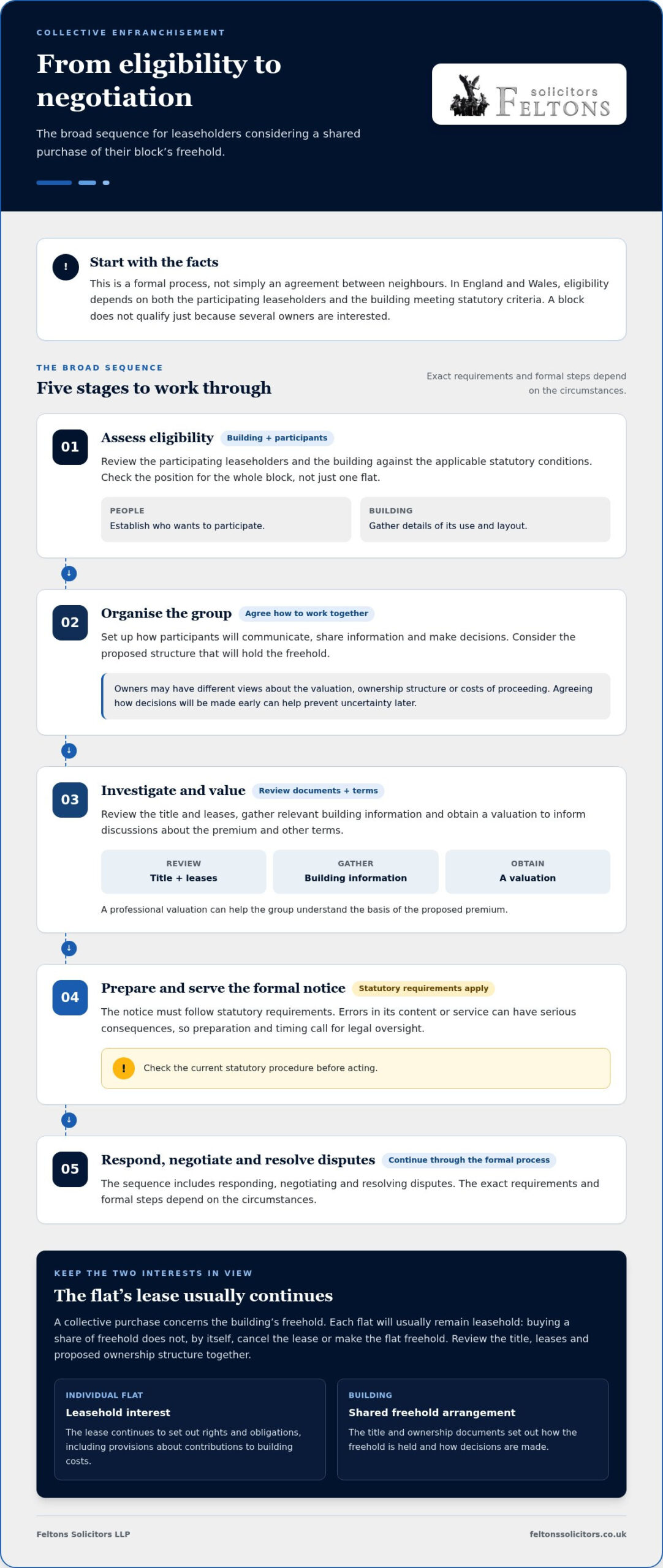
A flat will usually remain leasehold after the purchase. Its lease continues to set out rights and obligations, including provisions about contributions to building costs. Becoming a freehold shareholder does not, by itself, cancel the lease or make the flat freehold. A search for “buying freehold share of block flats” is therefore about two connected interests: the lease to an individual flat and a shared interest in the building’s freehold.
What does a share of freehold actually give a flat owner?
A share is not ownership of the entire building. It represents a stake in the arrangement that owns the freehold, with the rights set out in that arrangement. For example, if a company owns the freehold, a flat owner might hold a share in that company. The company, rather than each shareholder individually, would hold the registered freehold title.
The amount of influence an owner has depends on the title and the structure’s rules. The company’s articles of association, membership arrangements and decision-making procedures can determine how votes are counted and who can act for the freeholder. If the freehold is held another way, the legal documents will set out how the owners exercise their rights. Read these documents together. A share alone does not explain who can approve work, make decisions or deal with the building’s obligations.
How does collective enfranchisement differ from buying one flat?
Collective enfranchisement is the legal route through which participating leaseholders act together to acquire the building’s freehold. The process concerns the shared freehold purchase, rather than the transfer of one person’s flat. What is collective enfranchisement? provides a useful introductory description of this collective route.
By contrast, an ordinary flat conveyance transfers one flat from a seller to a buyer, along with the lease and its terms. It does not, by itself, transfer the building’s freehold or give the buyer a stake in it. A collective purchase requires participating owners to consider how they will acquire and hold the freehold together, as well as how their individual leases will operate afterwards.
This distinction is central to residential property law: the title to the flat and the title to the building are separate interests, even when they are connected through the same owner. The article Navigating Residential Property Law: A Comprehensive Guide for UK Homeowners explores the wider property context. Before proceeding, examine the proposed ownership structure and the documents that govern it, rather than relying on the informal phrase “share of freehold”.
How does collective enfranchisement work, and who may take part?
Collective enfranchisement is a formal process, not simply an agreement between neighbours to buy the freehold. In England and Wales, eligibility depends on the participating leaseholders and the building meeting statutory criteria. Assess those requirements before committing to a purchase or serving a notice. A block does not qualify simply because several owners are interested.
What should leaseholders establish before starting?
Start by establishing the facts about the building and the people involved. Identify who wants to participate, agree how the group will share information and make decisions, and gather the leases, title information and details of the building’s use and layout. These materials help assess which statutory criteria apply and identify issues that may affect the proposed purchase.
Agreeing how to make decisions early can prevent uncertainty later. Owners may have different views about the valuation, ownership structure or costs of proceeding. A professional valuation can help the group understand the basis of the proposed premium, whilst legal advice can assess eligibility, the transaction structure and the effect of the documents. Although “buying freehold share of block flats” sounds informal, statutory eligibility and notice requirements need careful assessment.
What are the main stages of the purchase?
The broad sequence is as follows. The exact requirements and formal steps depend on the circumstances, so check the current statutory procedure before acting.
- Assess eligibility. Review the participating leaseholders and the building against the applicable statutory conditions. Check the position for the whole block, not just one flat.
- Organise the group. Establish how participants will communicate, make decisions and arrange the proposed purchase. Consider the ownership structure that will hold the freehold.
- Investigate and value. Review the title and leases, gather relevant building information and obtain a valuation to inform discussions about the premium and other terms.
- Prepare and serve the formal notice. The notice must follow statutory requirements. Errors in its content or service can have serious consequences, so its preparation and timing call for legal oversight.
- Respond, negotiate and resolve disputes. The freeholder’s response may lead to discussions about the price or terms. Formal deadlines apply, and disputed matters may require a determination through the relevant legal process.
- Complete the purchase. Once the terms are settled, the parties proceed to transfer the freehold and register the resulting ownership arrangements.
Completion settles the purchase, but it does not determine how the building will be managed day to day. The group must also understand how the freehold will be held and how future decisions and obligations will be handled. Feltons’ leasehold enfranchisement and conveyancing services can help participants understand the transaction and its continuing implications.
Is buying the freehold better than right to manage?
Neither route is automatically better. Collective enfranchisement means participating leaseholders buy the building’s freehold. The Right to Manage (RTM) gives qualifying leaseholders a route to take over specified management functions without buying the title. The routes address different priorities, and their eligibility rules and legal consequences depend on the building and jurisdiction. In England and Wales, assess the current requirements for each before deciding.
When might buying the freehold suit the group?
Consider enfranchisement if owners want the freehold itself, perhaps to have a collective role in decisions about the building’s future and how the freehold is held. The group should also be prepared for the practical work of shared governance: agreeing how decisions are made, keeping ownership arrangements workable and addressing responsibilities that continue after completion.
Lease extensions may also form part of the group’s aims, but acquiring the freehold does not automatically change every flat’s lease. The legal position and any steps needed for an extension require separate consideration. Do not assume the purchase will increase a flat’s value, make it easier to sell or reduce future costs. Those outcomes depend on the circumstances and the documents in place.
When might right to manage be worth comparing?
RTM may be relevant where the priority is taking responsibility for building management, rather than acquiring the freehold title. The freeholder remains the owner, and the flat leases continue to matter. The group should understand which management functions would transfer and what taking them on would involve, alongside the statutory eligibility and procedure.
Compare both options against the same practical questions: what does the group want to control, who will make decisions, what ongoing work can participants take on, and are lease extensions or freehold ownership central objectives? A considered comparison of buying freehold share of block flats with RTM should account for the group’s long-term governance, not just the initial transaction. Legal advice on the relevant route can help clarify how it applies to the building.
What should you check before buying a freehold share?
Look beyond the proposed purchase terms. A freehold share connects the transaction to the building’s legal title, existing leases and the arrangements owners will rely on afterwards. Before committing, make sure the group understands both what it is acquiring and how it will handle the responsibilities that come with it.
Which documents and building matters deserve attention?
Use this checklist to organise the initial review:
- Freehold title: Review the title register and plan to understand what land and parts of the building are included, who owns them and whether rights or restrictions affect the property.
- Flat leases: Compare the leases for provisions on repairs, insurance, service charges, access and other shared obligations. Note differences that could affect how costs or responsibilities are allocated.
- Ownership documents: If a company is to own the freehold, examine its constitutional documents, share or membership arrangements and decision-making rules. These documents explain who can act for the company and how owners exercise their rights.
- Building records: Review available management records, planned or outstanding repairs, maintenance arrangements and any current disputes. These can reveal issues the group needs to address when setting future priorities.
- Insurance: Establish how the building is insured now and how cover will be arranged and administered after completion, including who is responsible for keeping relevant records.
- Valuation and process: Understand the valuation assumptions, the information used and how the proposed premium and terms have been assessed. Clarify the legal steps, responsibilities and commitments involved before the group proceeds.
The freehold title shows what is being acquired, while company documents explain how the owners can exercise their rights and make decisions. Reviewing one without the other may leave the group with an incomplete picture of its legal position. A solicitor can consider the title, leases and proposed structure together, and explain how they relate to the transaction.
How can the group prepare for shared responsibilities?
Shared ownership works best when practical arrangements are settled before a repair or disagreement brings them into focus. Decide how owners will raise issues, share information and record decisions. Agree who will maintain records, handle routine administration and communicate with leaseholders who are not participating in the purchase.
The group should also establish how contributions towards building obligations will be agreed and collected, and what process will apply if owners disagree about a repair, insurance matter or proposed work. Do not rely on informal assumptions: the leases, ownership structure and agreed procedures need to fit together. These are useful issues to explore through leasehold enfranchisement guidance as you prepare for the purchase.
Before making commitments, have the proposed structure, documents and valuation reviewed as a connected whole. Explore Feltons’ collective freehold purchase services for support with leasehold enfranchisement and conveyancing.
How can a solicitor help with buying a freehold share?
A solicitor can help the group understand the legal transaction as a whole, from the proposed ownership structure to the obligations that continue after completion. This is particularly valuable where several leaseholders need to coordinate decisions, review shared documents and agree how the freehold will be held. Advice should be specific to the building, the participating owners and the law applying to the claim.
What legal support may cover during the transaction
At the outset, a solicitor can examine the freehold title, leases and relevant ownership documents, then explain how they affect the proposed purchase. They can help assess the group’s legal position and the structure for acquiring the freehold, identify issues that need attention, and clarify the rights and responsibilities involved. This gives leaseholders a clearer basis for making decisions before taking formal steps.
As the matter progresses, legal support may include preparing and serving statutory notices, managing responses, advising on negotiations and reviewing the terms of the transfer. The solicitor can also coordinate the legal work required for contracts and completion, keeping the group informed about decisions and documents needed along the way. Statutory procedures and deadlines need careful attention, and the precise steps depend on the facts and current law.
Legal advice should also look beyond completion. The group needs to understand how the freehold will be administered, how the ownership documents affect decision-making and how existing lease obligations fit with the new arrangements. This helps leaseholders consider the transaction and its ongoing implications together, rather than treating completion as the end of the matter.
Feltons’ conveyancing and leasehold enfranchisement work addresses the legal and transactional aspects of a collective freehold purchase. The firm takes a bespoke, pragmatic approach, with advice shaped around the group’s documents, proposed structure and circumstances.
Deciding on your next step
Before proceeding, bring the key questions together: does the proposed structure make sense, have you compared collective enfranchisement with other routes, and do participating owners understand the building’s obligations and future governance? For leaseholders considering buying freehold share of block flats, resolving these points early can clarify the decision-making process and help the group understand what it is undertaking.
A discussion tailored to the building can clarify the legal process, the documents to review and the next decisions for participating owners. Feltons can help you consider the transaction and its continuing implications. Discuss your freehold purchase with Feltons.
Make your next move with confidence
Before your neighbours commit, turn the shared interest into a clear plan. Agree what the group hopes to achieve, what decisions still need to be made and how each owner can take part. For anyone considering buying freehold share of block flats, an early legal discussion can help bring the building’s documents, proposed ownership structure and group priorities into focus.
Feltons offers tailored support in conveyancing and leasehold enfranchisement, with a bespoke, pragmatic approach to the transaction and its longer-term implications. Home visits are available at clients’ convenience, which can help the group discuss complex property matters in a setting that works for them.
Your circumstances are specific to your building and the owners involved. A considered conversation can help you identify the right questions and decide what to do next. Discuss your freehold purchase with Feltons, and take the next step with greater clarity.
Frequently Asked Questions
Is buying a share of freehold the same as owning my flat freehold?
No. A share in the building’s freehold does not turn the flat itself into a freehold property. The flat is generally transferred under its lease, while the freehold interest is held separately, either directly or through an ownership structure. Before purchase or sale, have the title register, lease and any company records considered together. This helps establish exactly what rights attach to the flat and what interest accompanies it.
Can one flat owner buy the freehold of a whole block alone?
Collective enfranchisement is generally a route for qualifying leaseholders to act together, rather than one owner simply acquiring the whole block’s freehold through that process. For anyone considering buying freehold share of block flats, distinguish a group claim from a separate private arrangement. Eligibility depends on current rules and the building’s circumstances, so seek tailored legal advice before assuming an individual or group qualifies.
Do you still have a lease after buying a share of freehold?
Usually, yes. Acquiring an interest in the freehold does not automatically cancel the lease for your flat. The lease remains relevant to matters such as the extent of the flat, rights over shared areas and obligations set out in its terms. For example, do not assume that holding a freehold share lets you alter a lease provision informally. Check the lease and ownership documents before agreeing any change.
Can you extend your lease after buying a share of freehold?
A share of freehold does not itself extend your flat’s lease. There may be ways to address the lease term, but the appropriate process depends on the lease, how the freehold is held and the rules that apply. Before agreeing an extension or variation, establish who has authority to act for the freeholder and what formal documents are needed. Legal advice can help clarify the route and its implications.
What happens if the freehold owners disagree about building decisions?
Disagreement can complicate decisions, but the applicable process depends on the ownership arrangement and its governing documents. If a company holds the freehold, its articles and decision-making rules may be relevant; the leases may also affect the issue. Keep a written record of proposals, responses and agreed actions. If a dispute concerns owners’ rights or obligations, seek advice before taking steps that could affect the building or other leaseholders.
Can a flat with a share of freehold still be sold?
Yes, a flat can generally be sold, but transferring the lease and the associated freehold interest may involve separate requirements. For example, where a company owns the freehold, its documents may set out how a departing owner’s share or membership is dealt with. Conveyancing should identify what passes to the buyer and what records or steps are needed, so the transfer reflects the property’s actual legal structure.