

What if the premium in your proposed house lease extension isn’t supported by the figures? A house lease extension disputed premium can leave you unsure whether the valuation is sound, what evidence could influence the discussion and how to keep negotiations moving. A difference of opinion doesn’t automatically mean either figure is right.
The premium, the amount paid for the extension, is separate from legal and valuation fees and other transaction costs. Keeping those amounts distinct and understanding how the premium was calculated are useful first steps towards a focused negotiation.
This article explains why premiums may be disputed, what valuation evidence and professional input can help assess the figures, and how to consider negotiation or formal determination. The applicable rules and procedures can depend on the lease and the route being used, so timing matters. Legal advice can help you consider the valuation basis, negotiation history and available options together before deciding what to do next.
Key Takeaways
- A house lease extension disputed premium may reflect different assumptions or valuation evidence. Identify exactly which figures are contested.
- Assess the valuation against the applicable route and the details of the lease and property, including ground rent and property value where relevant.
- Compare continued negotiation with formal determination, taking account of the property’s jurisdiction and the procedural consequences of each route.
- Keep notices, correspondence, lease documents and valuation reports together, then use them to plan a clear, evidence-led response.
- Legal advice can bring the valuation basis, negotiation history and procedural options into focus without making formal determination the automatic next step.
Why a house lease extension premium may be disputed
A disputed premium is a disagreement between the leaseholder and freeholder about the amount payable for extending a lease. Different figures may result from different assumptions, evidence or valuation approaches. Rather than focusing only on the gap between them, look at the information and reasoning behind each figure.
Lease length affects the value of the leasehold interest, but no single threshold determines every valuation. The property, lease terms and applicable legal framework also matter. Assess a house lease extension disputed premium against the facts of that lease and the route being used, not a general rule of thumb.
What does the lease extension premium represent?
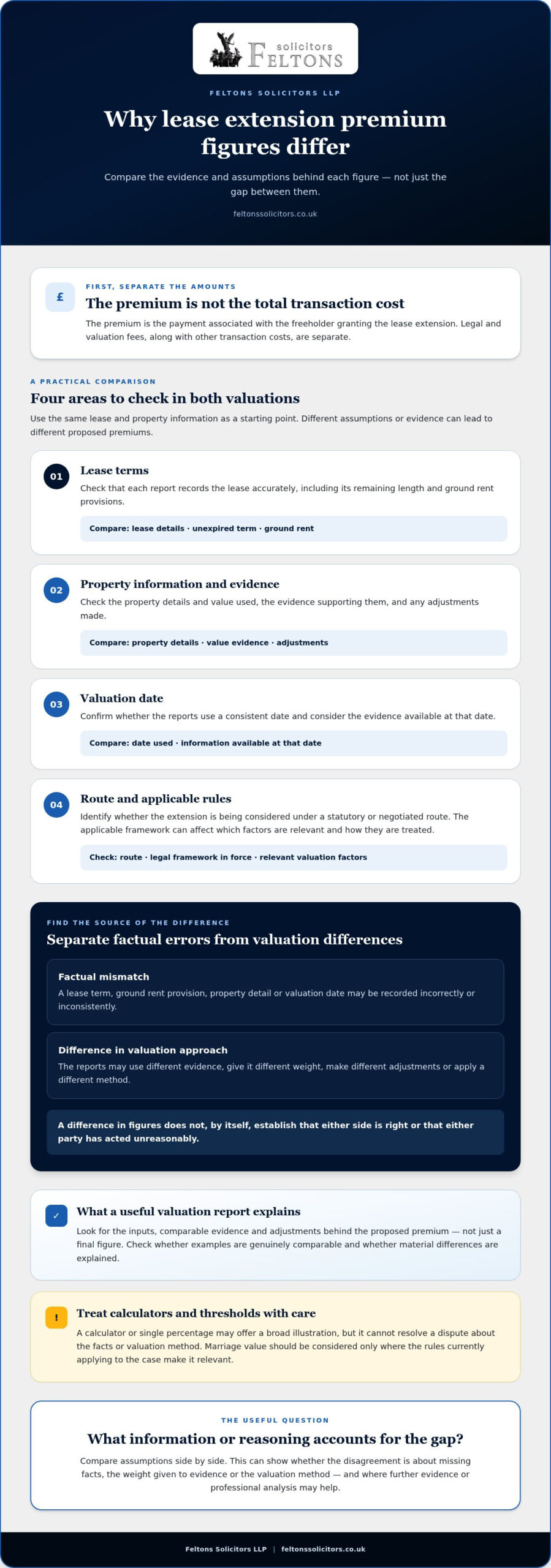
The premium is the payment associated with the freeholder granting the lease extension. It is separate from legal and valuation fees and other transaction costs. Keeping these amounts distinct makes it easier to identify what is disputed and compare like with like. The applicable legal valuation framework depends on the route taken and the law in force for the case.
Lease extensions sit within a framework shaped by legislation, including the historical Leasehold Reform Act 1967. That background does not, by itself, show how a particular premium should be calculated today. The applicable rules and the leaseholder’s circumstances must be considered together.
Why might the landlord and leaseholder disagree?
Each figure may be based on a different view of the lease and property. Relevant inputs can include the unexpired lease term, ground rent and property value, where applicable under the valuation route. The parties may also rely on different dates or information, or interpret evidence differently. A report based on incomplete lease details or outdated property information may not be a sound basis for comparison.
To understand the gap, identify the assumptions behind each calculation. Check whether both parties are using consistent information about:
- The lease terms, including its remaining length and ground rent provisions.
- The property’s value and the evidence used to support it.
- The valuation date and the route under which the extension is being negotiated.
- Any other inputs the valuers consider relevant to their calculations.
A premium dispute is a valuation disagreement to be tested against evidence, not simply a negotiation tactic. A difference in figures does not establish that either side has acted unreasonably. It identifies questions to examine. Comparing assumptions line by line can show whether the disagreement concerns missing facts, the weight given to evidence or the valuation method.
Before deciding how to respond, establish which assumptions differ and whether both figures address the same lease extension route. This gives negotiations a clearer focus and helps identify what further evidence or professional analysis may be useful.
How a lease extension valuation can produce different premium figures
A valuation is not produced by a universal formula. It must be prepared for the applicable statutory or negotiated route, using the legal framework in force for the case. The route can affect which factors are relevant and how they are treated. A calculator or single percentage may provide a broad illustration, but it cannot resolve a disputed premium when the parties disagree about the facts or method.
Depending on the route and circumstances, relevant inputs may include the unexpired lease term, ground rent provisions and the property’s value. The valuation date and evidence available at that date may also matter. Marriage value should be considered only where the rules currently applying to the case make it relevant. Don’t assume the answer from a headline threshold alone.
Which assumptions should the parties examine?
Start with the source information in each valuation. Is the lease term recorded correctly? Do the ground rent provisions match the lease? Are the property details and valuation date consistent? A factual error can affect the calculation, while different choices about evidence or adjustments may create a wider gap.
Compare the reports side by side and note where their assumptions diverge. One report, for example, may rely on different property evidence or make a different adjustment to it. The legal framework may prescribe relevant factors, so a difference is not necessarily just a matter of professional judgement. Understand what each report assumes and why.
For a house lease extension disputed premium, this comparison is more useful than treating either figure as one that must be accepted. It separates factual disagreements from differences in valuation opinion and gives negotiations a more precise focus.
What can a valuer’s report clarify?
A well-reasoned report should explain how the proposed premium was reached, not simply state a conclusion. It can set out the inputs, comparable evidence and adjustments relied on, helping you identify which parts of the calculation need closer scrutiny. Check whether the examples are genuinely comparable and whether the report explains material differences between them and the property being valued.
A valuation is only as reliable as the evidence and assumptions on which it rests. A different figure from the other party does not, by itself, mean a report is wrong. Instead, test whether the inputs are accurate, the evidence is relevant and the adjustments are explained.
A valuer’s opinion and legal interpretation have different roles. The valuation addresses the evidence and calculation; legal advice considers the applicable route, the lease documents and whether the approach fits the rules in force. Reviewing these together can help identify a proportionate response. Advice on leasehold extensions can bring the valuation basis and procedural position into the same discussion, without making formal determination the automatic next step.
Negotiation or formal determination: routes for a disputed premium
A disagreement over the premium doesn’t automatically mean the parties must go to a tribunal. The next step depends on the lease, the route already being followed and the relevant jurisdiction. A statutory process may provide defined rights and procedures if the leaseholder and property qualify and the required steps are followed. A voluntary extension is negotiated by agreement, so its terms and procedural position may differ.
For broader context on the routes and rights involved, see this leasehold enfranchisement guide. Identify the route before responding to a figure or considering formal determination.
When may continued negotiation be appropriate?
Negotiation may help when the parties can narrow the dispute by addressing specific assumptions. A reasoned counter-proposal can explain which evidence or calculation input you challenge and why. This gives the other side a practical point to consider, rather than an unexplained alternative figure.
If you reach agreement, record the terms clearly within the relevant process and make sure the written documents reflect what was agreed. Informal discussions alone should not be treated as offering the same protections or consequences as a properly pursued statutory claim.
When might formal determination be considered?
If a material issue remains unresolved, formal determination may be an option under the applicable procedure. The correct tribunal or other decision-making body, its jurisdiction and the application requirements depend on the property and route. Establish these procedural points before acting, as a mistaken assumption about the process can create avoidable difficulty.
Legal representation can help assess the evidence, frame the issue for decision and manage procedural requirements. It cannot guarantee that a tribunal will set a lower premium. Weigh formal determination against the strength of the valuation evidence and the practical consequences of continuing.
The routes can be compared at a high level, but the right choice depends on the facts:
| Route | May suit | Key consideration | Procedural caution |
|---|---|---|---|
| Continued negotiation | Parties willing to exchange evidence and discuss disputed assumptions | Use specific, reasoned counter-proposals | Record agreed terms and keep the correct process in view |
| Voluntary agreement | Parties seeking mutually agreed extension terms | Terms are negotiated by agreement | Don’t assume statutory protections apply in the same way |
| Formal determination | A qualifying dispute that remains unresolved | A decision-maker considers the issue under the applicable route | Verify jurisdiction, procedure and application requirements |
For a house lease extension disputed premium, a measured assessment can help avoid treating formal proceedings as the inevitable next move. Reviewing the valuation, negotiation history and procedural position together can clarify whether further discussion is worthwhile or a decision is needed. Pragmatic advice on lease extension disputes can help bring those considerations into focus.
What to do about a disputed lease extension premium
A clear evidence file turns a disagreement into questions that can be assessed and answered. Before making a counter-proposal or taking a procedural step, organise the documents, identify the valuation issues and establish which rules and deadlines apply. Use this sequence as a practical starting point.
- Collect the key documents. Bring together the lease, any formal notices, proposed premium figures, valuation reports and correspondence about the extension. Keep copies in one organised record and note when each document was sent or received.
- Compare the valuation assumptions. Set out each party’s position side by side. Check the lease details, property information, valuation date and evidence relied on, then mark the differences. Separate factual errors from differences of professional opinion.
- Record what remains unclear. List unanswered questions and identify which differences appear material to the proposed premium. This creates a focused brief for professional advice, rather than relying on a general statement that the figure seems too high.
- Establish the procedural position. Identify whether the extension is being pursued through a statutory or voluntary route and which jurisdiction’s process applies. Check notice dates and any response or application deadlines promptly against the current rules.
- Plan a considered response. Once you have reviewed the evidence and procedure, decide whether to seek clarification, make a reasoned counter-proposal or consider another route. Before agreeing a timetable or starting an application, understand how that step may affect your position.
Build a clear evidence file before responding
Keep the record complete and easy to use. A short comparison can note each disputed input, the figure or assumption used by each side and the evidence cited. If valuation reports rely on different property details, for example, record exactly what differs and where each detail appears. This helps show whether a point needs correction, further valuation analysis or legal interpretation.
Include the full negotiation history, not just the latest offer. Dated messages and letters can show what has already been explained, which questions remain unanswered and whether either party’s position has changed. Keep original documents alongside your summary so the source of each point remains clear.
Protect your position while discussions continue
Keep communications factual, dated and focused on the disputed valuation points. If a notice has been served or a formal process is under way, don’t assume discussions pause a deadline. Dates and procedural requirements depend on the route, jurisdiction and current law, so establish them before committing to a response or application.
The lease extension rights guide provides wider context on the statutory process. For a house lease extension disputed premium, Feltons Solicitors LLP can review the documents, valuation evidence and negotiation history together. Discuss your lease extension premium dispute with Feltons to assess the evidence and procedural options before deciding on a response.
How Feltons Solicitors LLP can help resolve a disputed premium
A disputed premium can involve more than a difference between two figures. The lease terms, notices, valuation evidence, negotiation history and procedural position may all affect the next step. Feltons Solicitors LLP advises on leasehold extensions and dispute resolution, bringing these strands together to help you understand the issues and consider a practical way forward.
A tailored review of the dispute
Feltons Solicitors LLP can review the proposed premium alongside the lease and relevant correspondence, including notices and previous offers. This helps establish how the disagreement developed and whether the parties are working from the same information. The residential property law guide provides wider context on related property issues.
The review can distinguish legal questions from valuation questions before considering how they interact. Valuation evidence may raise questions about its assumptions, while legal analysis considers the route being followed and the procedure that applies. Keeping these strands distinct makes it easier to identify what needs clarification without losing sight of how one issue may affect another.
Advice is tailored to the stage the dispute has reached. If discussions are continuing, the focus may be on clarifying the points in dispute and assessing whether a reasoned response could move matters forward. If the disagreement remains unresolved, advice can help assess whether formal determination is available and what procedural requirements or risks may apply. The appropriate route depends on the lease, property, jurisdiction and current law; disagreement does not automatically lead to a tribunal.
For a house lease extension disputed premium, this joined-up assessment can help you make a more informed decision about what to do next. It cannot guarantee agreement or a particular premium, but it provides a structured way to examine the evidence, negotiation history and available options before choosing a course of action.
Taking the next step with confidence
You can begin by outlining where the proposed figures differ and gathering documents such as the lease, notices, valuation reports and relevant correspondence. This gives the discussion a clear factual starting point. If you’re unsure which documents matter most, start with the notice or valuation that prompted your concern and the correspondence that followed.
Feltons Solicitors LLP takes a pragmatic approach, assessing the facts and explaining the options, whether you are considering further negotiation or formal determination. You can discuss your lease extension dispute with the documents available and consider the next step with a clearer understanding of the issues and procedure.
Take a considered next step
A difference in proposed premiums can be difficult to resolve, particularly when each side presents its figure with confidence. You don’t need to assume the matter belongs before a tribunal. First clarify the outcome you’re seeking, which issues remain open and what information would help you make a proportionate decision.
For a house lease extension disputed premium, Feltons Solicitors LLP can assess the lease, valuation material and negotiation history alongside the relevant procedural options. The firm advises on leasehold enfranchisement and extensions, and handles complex litigation and dispute resolution. This supports a measured approach, whether the facts point towards further discussion or formal determination. No route can promise a particular outcome, but clear advice can help you understand the choices ahead.
If you’re ready to consider your next step, discuss your lease extension premium dispute with Feltons.
Frequently Asked Questions
Can I challenge a landlord’s proposed lease extension premium?
Yes. You can question the proposed premium and seek to challenge it through the route available in your circumstances. Start by identifying the specific part of the calculation you dispute, such as a lease detail or the evidence used to assess the property. For a house lease extension disputed premium, a focused challenge supported by relevant documents is more useful than simply saying the figure seems too high.
Is a lease extension premium fixed by a standard formula?
No single standard formula gives a definitive premium for every lease extension. The applicable valuation method depends on the route and the law that applies to the case. A calculator may offer an indication, but it cannot resolve differing assumptions or establish whether the inputs are correct. Treat an estimate as a starting point for questions, not a guaranteed figure or a substitute for case-specific valuation analysis.
Can a lease extension premium be negotiated?
Yes, the parties may negotiate the premium, subject to the process and terms governing the extension. A useful counter-proposal explains the valuation point in dispute and the evidence supporting your position. If the reports use different property information, for example, identify the inconsistency and provide the relevant document. Before accepting revised terms, make sure the agreement is recorded clearly and understand how it fits within the chosen route.
What happens if the parties cannot agree on the premium?
If negotiation doesn’t resolve the dispute, formal determination may be available under the applicable procedure. The appropriate tribunal or decision-making body depends on the property, jurisdiction and route, so don’t assume the same process applies in every case. Check the application requirements and relevant dates before acting. A decision-maker assesses the issue presented, but starting proceedings doesn’t guarantee a reduced premium or that either party will obtain its preferred figure.
Does the 80-year point automatically determine my lease extension premium?
No. The 80-year point doesn’t automatically set the premium or decide the outcome of every valuation. Lease length is one factor, and its effect depends on the valuation rules currently applying to the case. If the lease is approaching or has passed that point, avoid relying on general online guidance alone. Consider the relevant route, current law and lease details before drawing conclusions about the figure.
Are legal and valuation fees part of the disputed premium?
No. Legal and valuation fees are separate from the premium itself. The premium is the payment associated with the lease extension; professional fees relate to the work involved in advising on or valuing it. Other transaction costs may also arise, depending on the route and circumstances. When comparing figures, check whether each document quotes the premium alone or groups it with separate costs, so you are comparing like with like.
Do lease extension rules apply in the same way throughout the UK?
No. Lease extension law and procedures aren’t uniform across the whole UK. England and Wales have their own applicable processes, while Scotland and Northern Ireland have different legal frameworks. Even within a jurisdiction, the route can depend on the property and leaseholder’s circumstances. Before relying on guidance or responding to a notice, establish which jurisdiction governs the property and check the current rules and procedural requirements for the case.